


Everest Base Camp Trek Cost from Singapore: The Ultimate 2026 Price & Planning Guide
What if the most challenging part of reaching the world’s highest base camp isn’t the thin air, but the confusing “hidden” costs that crop up once you leave Changi? You’ve likely spent hours admiring the Khumbu Icefall online, only to find yourself stuck on the Everest Base Camp trek cost from Singapore and wondering how much cash you actually need in your pocket. It’s frustrating to juggle exchange rates while worrying about flight reliability from Singapore to Kathmandu or whether your insurance truly covers a high-altitude helicopter rescue.
We’re here to turn that uncertainty into an actionable plan. This guide provides a clear, itemized budget in SGD for 2026, covering everything from international airfare to the price of a Wi-Fi card in Namche Bazaar. You’ll gain the confidence to choose the right logistics for your style, whether you prefer a rugged adventure or a premium service experience. From mandatory permit fees to the cost of a warm meal at 5,000 meters, we’ve mapped out every cent so you can focus on the adventure of a lifetime.
Key Takeaways
- Estimate your total Everest Base Camp trek cost from Singapore with a detailed 2026 breakdown of flights, permits, and daily trail expenses.
- Identify the essential gear to buy in Singapore versus what to rent in Kathmandu to optimize your budget without compromising on quality.
- Understand the critical role of specialized travel insurance and why high-altitude helicopter evacuation coverage is a non-negotiable safety requirement.
- Compare the differences between budget and premium packages to see how guide expertise and logistics influence your chances of reaching the base camp.
- Discover the logistical advantages of partnering with a Singapore-Nepal specialist to ensure a smooth transition from Changi to the Himalayas.
Budgeting for the Bucket List: Total Everest Base Camp Trek Cost from Singapore in 2026
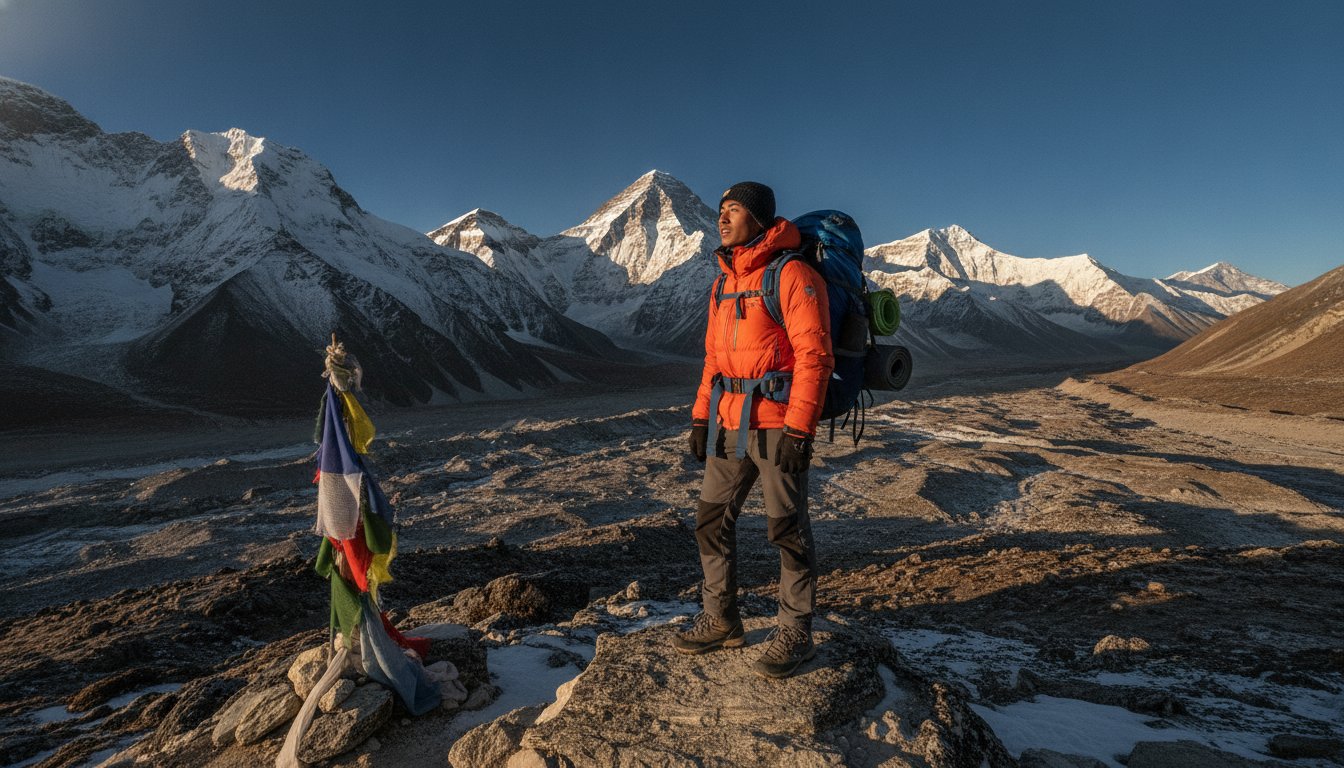
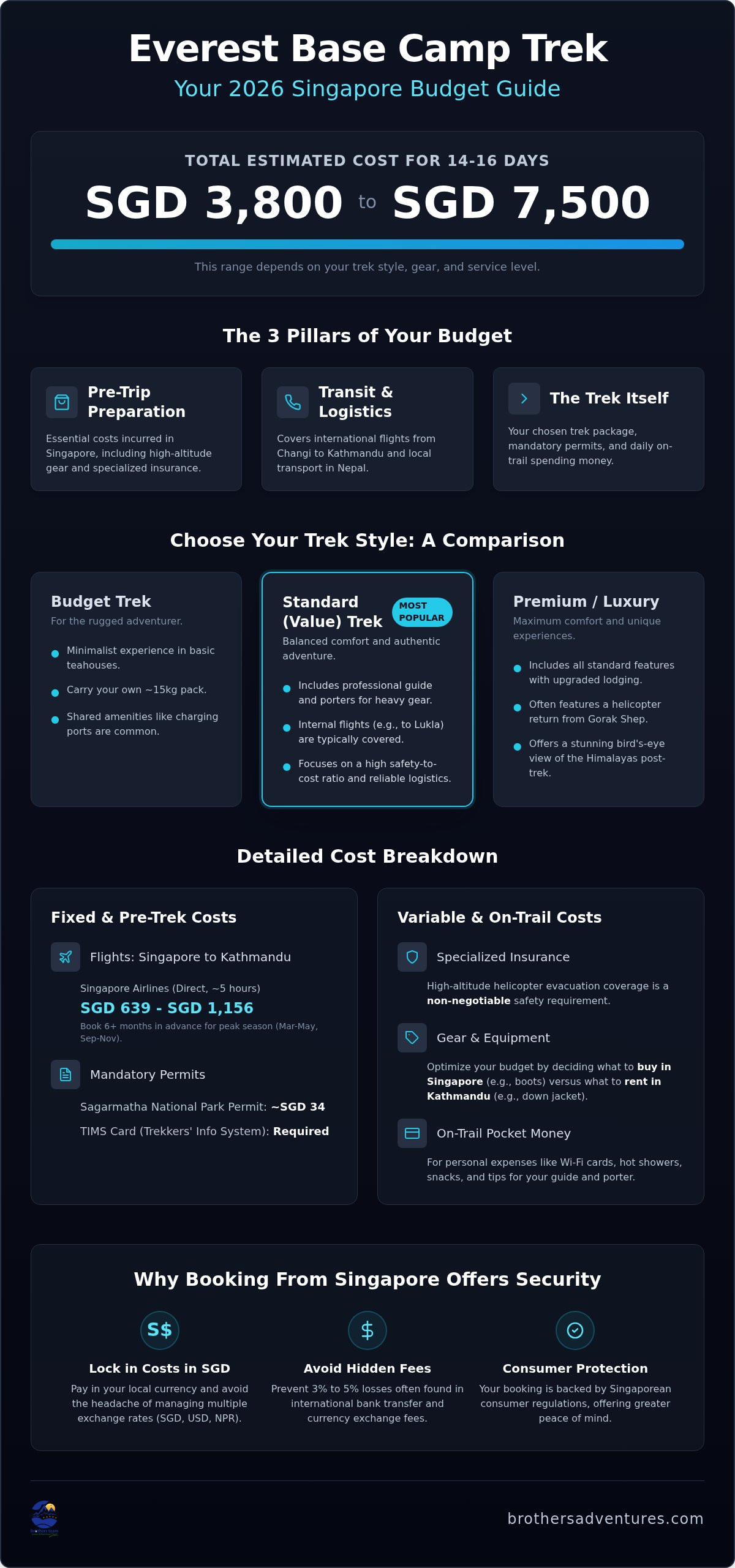
You’ve seen the photos of the prayer flags fluttering against a sapphire sky. Now, you’re ready to make it real. Planning your budget is the first step toward the Khumbu Valley. A comprehensive Everest Base Camp trek cost from Singapore for a 14 to 16-day expedition typically ranges from SGD 3,800 to over SGD 7,500. This total depends heavily on your comfort level, gear requirements, and flight choices. Think of your budget as three distinct pillars: pre-trip preparation including high-altitude gear and specialized insurance, transit costs from Changi to Kathmandu, and the trek itself, which covers your package and daily trail spending.
The 2026 landscape is all about transparency and quality. Pricing reflects a modernized tourism sector in Nepal that prioritizes better infrastructure and safety standards. While fixed costs like the Sagarmatha National Park permit (roughly SGD 34) remain, the value you get in return has improved significantly. We categorize journeys into “Value Trekking” and “Budget Trekking.” Budget options might seem attractive, but value trekking focuses on the safety-to-SGD ratio. It ensures you have the right guide-to-client ratio and reliable logistics to help you reach Everest Base Camp without unnecessary stress.
The 2026 SGD Price Range: From Economy to Luxury
In the budget tier, you’re looking at a minimalist experience. You’ll stay in basic teahouses where “luxury” means a charging port in the common room, and you’ll likely carry your own 15kg pack. Standard packages, the sweet spot for most Singaporeans, provide a balanced mix of comfort and authentic adventure. These usually include your internal Lukla flights, a professional guide, and porters to handle the heavy lifting. For those who want to skip the four-day trek back down, luxury packages featuring helicopter returns from Gorak Shep are a popular 2026 trend, offering a bird’s-eye view of the peaks you just conquered. Travelers who want to witness the Himalayas from above without committing to a full expedition may also want to explore the Everest mountain flight experience as a complementary or alternative way to see the world’s highest peaks.
Why Booking in Singapore Offers Financial Security
Dealing with fluctuating exchange rates between SGD, USD, and NPR is a headache you don’t need. Booking through a Singapore-registered agency like Brothers Adventures allows you to lock in your costs in local currency and avoid hidden 3% to 5% losses found in bank exchange fees. Understanding the Everest Base Camp trek cost from Singapore means looking beyond the sticker price to find the security of a local partner backed by Singaporean consumer regulations. Current market analysis suggests that average costs for Himalayan expeditions have risen by approximately 6% for the 2026 season due to increased demand for high-quality, small-group logistics. This investment guarantees that your journey, from Changi to the Khumbu, is handled by experts who understand both Singaporean expectations and Himalayan realities.
Fixed Costs: Flights, Permits, and Everest Base Camp Trek Packages
Locking in your fixed costs is the smartest way to manage your Everest Base Camp trek cost from Singapore. These are the non-negotiable expenses that form the skeleton of your budget. From the moment you clear immigration at Changi to the second your small twin-otter plane touches down on the sloping runway of Lukla, these logistics require precise timing and local expertise. Understanding these numbers upfront prevents “sticker shock” later and ensures your focus stays on the breathtaking Himalayan skyline rather than your bank balance.
Airfare from Singapore to Kathmandu
Your journey begins at Changi Airport. Singapore Airlines remains the premier choice for trekkers, offering the only direct, five-hour flight to Kathmandu. For the 2026 season, economy fares typically range from SGD 639 to SGD 1,156. While transit options through Bangkok with Thai Airways or Doha with Qatar Airways exist, they often add significant travel time. If you’re aiming for the peak spring (March to May) or autumn (September to November) windows, we recommend booking at least six months in advance to secure the lower end of that price range. For a deeper look at timing your trip, check out our Everest Base Camp trek from Singapore: The Ultimate 2026 Planning Guide.
Permit Fees and Lukla Logistics
Once you arrive in Nepal, three specific permits are mandatory for every trekker. The Trekkers’ Information Management System (TIMS) card costs approximately SGD 27, while the Sagarmatha National Park permit is roughly SGD 34. Additionally, you’ll need the Khumbu Pasang Lhamu Rural Municipality permit, which is collected locally on the trail. These fees contribute directly to trail maintenance and local infrastructure, ensuring the Khumbu remains pristine for future adventurers.
The flight from Kathmandu to Lukla is a legendary part of the experience, but it requires careful planning. During the busy 2026 seasons, many Lukla flights depart from Ramechhap instead of Kathmandu to manage air traffic. This involves a four-hour drive from the capital, a logistical hurdle that standard packages should always include. A well-structured Everest Base Camp Trek package will bundle these permits, internal flights, and ground transfers into one transparent price, saving you the stress of navigating local government offices or negotiating with transport drivers in a foreign currency. This organized approach is why many Singaporean trekkers prefer an all-in-one solution that covers everything from the airport pickup to the final farewell dinner.
The “Hidden” Expenses: Gear, Insurance, and Trail Pocket Money
While your package covers the big stuff, the true Everest Base Camp trek cost from Singapore includes several smaller, yet vital, expenses that can catch you off guard. We call these the “hidden” costs, though they’re simply part of the mountain experience. One non-negotiable is specialized travel insurance. You must ensure your policy covers helicopter evacuation up to 6,000 meters. Without it, a rescue could cost between USD 4,000 and USD 10,000. It’s the most important investment you’ll make before leaving Changi, typically costing between USD 50 and USD 250 depending on your coverage level.
Budget for tips at the end of your journey as well. It’s standard practice to set aside 10% to 15% of your total trek cost as a thank-you for your guides and porters. These hardworking individuals are the backbone of your expedition. They ensure your safety and comfort every step of the way, and this gratuity is a deeply appreciated cultural norm in the Himalayas. Don’t let these details dampen your spirit. Think of them as the small gears that keep your adventure moving smoothly.
Essential Gear for Singaporean Trekkers
Singapore’s outdoor shops like those in Queensway or Velocity offer excellent boots and moisture-wicking base layers. You don’t need to buy every single item new, though. High-quality down jackets and heavy-duty sleeping bags can be rented in Kathmandu for just a few dollars a day. This “rent vs buy” strategy is a brilliant way to manage your Everest Base Camp Trek Cost from Singapore: The Complete 2026 Price & Planning Guide. Invest in your boots early so you can break them in on the MacRitchie trails before you fly.
Daily Trail Expenses: Wi-Fi, Charging, and Showers
As you climb higher, prices rise with the altitude. Wi-Fi cards from Everest Link cost between NPR 500 and 1,000 (roughly SGD 6 to 12). Teahouses also charge for the luxury of a hot shower, usually between SGD 3 and SGD 6, and for charging your power banks in the common room. We recommend carrying a daily buffer of SGD 15 to 25 for these comforts. This covers your connectivity, battery life, and that inevitable Snickers bar or mug of hot ginger tea when you reach 4,000 meters. Having a little extra cash ensures you don’t have to skip the small joys that make the trek memorable.
Evaluating Everest Base Camp Trek Packages: What is Worth the Investment?
When you’re comparing quotes for your Everest Base Camp trek cost from Singapore, it’s tempting to gravitate toward the lowest number. However, in the high-altitude environment of the Khumbu, your package price is an investment in your safety and success rate. A cheaper package often means a higher guide-to-client ratio, where one person might be responsible for ten or more trekkers. In contrast, premium packages prioritize smaller groups or even one-on-one support. This ensures that if you’re struggling with the pace or showing early signs of altitude sickness, you have a dedicated expert focused entirely on your well-being.
Meal models also play a significant role in your final spend. Some budget operators use a “pay-as-you-eat” system, which can lead to budgeting anxiety as a single meal can cost up to NPR 1,200 (about SGD 13) at higher elevations. Choosing an all-inclusive model means you’ve locked in your costs before leaving Changi. You won’t have to worry about the rising price of dal bhat as you climb. Most importantly, professional packages include rigorous safety protocols, such as twice-daily oxygen saturation monitoring using pulse oximeters. These tools, combined with a guide’s expertise in Acute Mountain Sickness (AMS) protocols, are what truly make a trek worth the investment. To understand how proper Everest Base Camp trek acclimatization guide principles are built into a quality itinerary, see how these details come together when you explore our Everest Base Camp Trek options.
Safety and Guide Expertise
An experienced guide is your most valuable asset on the mountain. They don’t just show you the way; they manage the complex logistics of Lukla flight delays and coordinate emergency responses. The cost of a premium package covers the “invisible” essentials: comprehensive medical kits, satellite phones for areas without cell service, and the guide’s ongoing high-altitude training. These specialists understand the specific needs of Singaporean travelers and provide a bridge between local Nepalese culture and the high standards of service you expect. Learning how to identify these qualities is key to Choosing a Specialist Tour Operator: Your Guide to Adventure Travel in 2026.
Group vs. Private Treks
Deciding between a group departure and a private trek depends on your budget and social preferences. Group treks are fantastic for solo Singaporean travelers. they offer a built-in community of like-minded adventurers and a lower price point. Private treks carry a price premium but offer total flexibility. You can adjust your acclimatization days or daily walking pace without worrying about a group schedule. If you value a personalized rhythm and have a specific 2026 date in mind, the extra investment in a private journey provides a level of intimacy and customization that a standard group departure cannot match.
Booking Your 2026 Adventure with a Singapore-Nepal Specialist
Your journey to the roof of the world starts long before you step onto the trail. Navigating the Everest Base Camp trek cost from Singapore is much simpler when you have a partner who speaks your language and understands the local terrain. Since 1992, Brothers International Tours & Trading Pte Ltd has operated as a family-owned bridge between Singapore and the Himalayas. This heritage isn’t just a number; it’s a guarantee of reliability. Booking with a Singapore-registered company gives you financial peace of mind and legal protection that overseas-only agencies can’t offer. You can pay in SGD and visit our local office to discuss your gear list over a cup of tea, ensuring every detail is covered before you fly.
The Brothers Adventures Advantage
One of the biggest headaches in the Khumbu region is the unpredictable weather at Lukla. Because we maintain a dedicated, expert support team in Kathmandu, we manage flight delays and reshuffle logistics in real-time. You won’t be left stranded at an airport wondering what happens next. Our dual-office advantage means seamless communication from Changi to the base camp. If you’re looking for a taste of the Himalayas but need to keep your Everest Base Camp trek cost from Singapore lower, consider our The Ultimate 8-Day Nepal Adventure Tour Checklist & Itinerary (2026). This 8Days Nepal Adventure Tour is a perfect alternative for those on a tighter schedule who still crave a high-altitude experience. For those who want to witness the Himalayas from a completely different perspective, our ultimate Everest mountain flight experience guide for 2026 outlines how to see the world’s highest peaks from the air with a guaranteed window seat.
Planning Your 2026 Timeline
Don’t wait until the last minute to start your journey. The 2026 seasons are already seeing high demand from global trekkers. We recommend a six-month countdown to your departure. This gives you ample time for physical training, gear acquisition, and securing the best airfares. For the spring season in March and April, aim to have your deposit finalized by September. If you’re eyeing the crisp autumn views of October and November, start your consultation by March. This methodical approach ensures you get your preferred teahouse bookings and the most experienced guides available.
Ready to start? The process is straightforward. It begins with a personalized consultation where we tailor the itinerary to your fitness level. Once your deposit is placed, we provide a structured training guide to help you conquer the inclines. The 2026 season is calling, and the mountains are waiting. Reach out today to secure your spot on the trail and turn your Himalayan dreams into a reality.
Step Toward the Summit: Your 2026 Himalayan Journey Starts Now
Reaching the base of the world’s tallest peak is a triumph of planning as much as it is of physical endurance. You’ve now seen how to navigate the Everest Base Camp trek cost from Singapore, from securing your direct flights at Changi to budgeting for essential trailside comforts like hot showers and Wi-Fi. Remember that the true value of your expedition lies in the safety protocols you choose, such as specialized daily oxygen monitoring and the peace of mind that comes with veteran guidance. These details ensure you don’t just see the mountain; you experience it with total confidence.
Since 1992, Brothers Adventures has helped thousands of trekkers achieve their dreams with a family-oriented touch. With dedicated offices in both Singapore and Kathmandu, we provide a seamless support network that bridges the gap between your home and the Khumbu. Don’t let the logistics hold you back from this life-changing experience. View our 2026 Everest Base Camp Trek Packages and Prices to find the perfect fit for your adventure. The mountains are calling, and we’re ready to lead the way.
Frequently Asked Questions
How much should I tip my guide and porter on the EBC trek in 2026?
You should plan to tip approximately 10% to 15% of your total trek cost. This amount is typically pooled and distributed among your guide and porter team on the final day of the trek. It’s a standard way to show appreciation for the immense physical effort and expert care they provide throughout your journey in the Himalayas.
Is it cheaper to book an EBC trek package in Singapore or Kathmandu?
Booking in Singapore is often more cost-effective when you consider the total Everest Base Camp trek cost from Singapore. While Kathmandu prices might look lower at first glance, you’ll often face fluctuating exchange rates and high bank transfer fees. A Singapore-based agency allows you to pay in SGD and provides the legal protection of local consumer laws.
Does the Everest Base Camp trek package include travel insurance?
No, standard trekking packages do not include travel insurance. It’s your responsibility to secure a policy that specifically covers high-altitude trekking up to 6,000 meters. You must verify that your insurance includes emergency helicopter evacuation, as this is a mandatory requirement for your safety and permit processing before you start the trek.
What is the cost of a helicopter evacuation from Everest Base Camp?
A helicopter rescue from the Everest region typically costs between USD 4,000 and USD 10,000 depending on the altitude and weather conditions. This is a massive out-of-pocket expense if you aren’t properly insured. Most rescue operators require a guarantee of payment or insurance confirmation before they’ll dispatch a flight to the higher camps.
Can I use my Singapore credit card at teahouses on the trek?
No, you cannot use credit cards at teahouses along the trail. These remote lodges operate strictly on a cash-only basis using Nepalese Rupees (NPR). While some shops in Namche Bazaar might have card machines, they often charge a 3% to 5% transaction fee and connections are frequently unreliable due to the mountain weather.
How much extra money should I bring for Wi-Fi and charging on the trail?
We recommend bringing an extra SGD 15 to 25 per day to cover Wi-Fi, device charging, and hot showers. Wi-Fi cards from Everest Link cost between NPR 500 and 1,000. Teahouse owners also charge between SGD 3 and 6 for the electricity needed to charge your power banks or for the fuel used for a hot shower.
What is the average price of a meal on the EBC trek?
A typical meal at a teahouse costs between NPR 400 and 1,200, which is roughly SGD 4 to 13. Prices increase as you climb higher because every ingredient must be carried up by porters or yaks. This variability is why many travelers prefer all-inclusive packages to keep their Everest Base Camp trek cost from Singapore predictable and stress-free.
Are there any hidden taxes or service charges in EBC trek packages?
Reputable packages should clearly state that they include all government taxes, the Sagarmatha National Park permit, and local municipality fees. Always ask for a detailed breakdown to ensure there are no surprises. A transparent quote from an established specialist will bundle these fixed costs, so you don’t have to worry about extra payments while you are on the trail.


Comments are closed