


Everest Base Camp Trek Cost from Singapore: The Complete 2026 Price & Planning Guide
Standing at the foot of the world’s tallest peak shouldn’t feel like a financial guessing game. You’ve likely spent hours scrolling through “all-inclusive” packages only to wonder if your 2026 budget covers the actual reality of the Khumbu Valley. It’s perfectly normal to feel a bit of anxiety about the Everest Base Camp trek cost from Singapore or the logistics of flying from Changi to Kathmandu. We understand that you’re looking for more than just a trip; you’re looking for a life-changing adventure that’s as secure as it is spectacular.
This guide clears the fog, providing a precise breakdown of every expense you’ll encounter. Discover exactly how to budget for your journey, from the SGD 639 average flight fares to the specific 2026 permit fees and mandatory guide regulations. We’ll walk you through the itemized costs of the Khumbu Pasang Lhamu Rural Municipality entrance permit and the essential helicopter rescue insurance you’ll need. By the end, you’ll have a clear logistical map from Changi to the base of Everest, along with the confidence to choose a partner who treats you like an invited guest. Let’s start planning your ascent.
Key Takeaways
- Master the three financial pillars of your journey to ensure every dollar spent contributes to a safe and successful summit.
- Navigate the 2026 Everest Base Camp trek cost from Singapore with a detailed look at international airfares, local permits, and mandatory guiding fees.
- Protect your health and your investment by understanding how itinerary length directly impacts both your budget and your risk of altitude sickness.
- Prepare for often-overlooked expenses like high-altitude insurance and the nuances of sourcing quality gear in Kathmandu versus Singapore.
- Gain peace of mind by leveraging the direct operational control and local expertise of a family-owned agency with deep roots in both cities.
Understanding the Everest Base Camp Trek Cost from Singapore in 2026
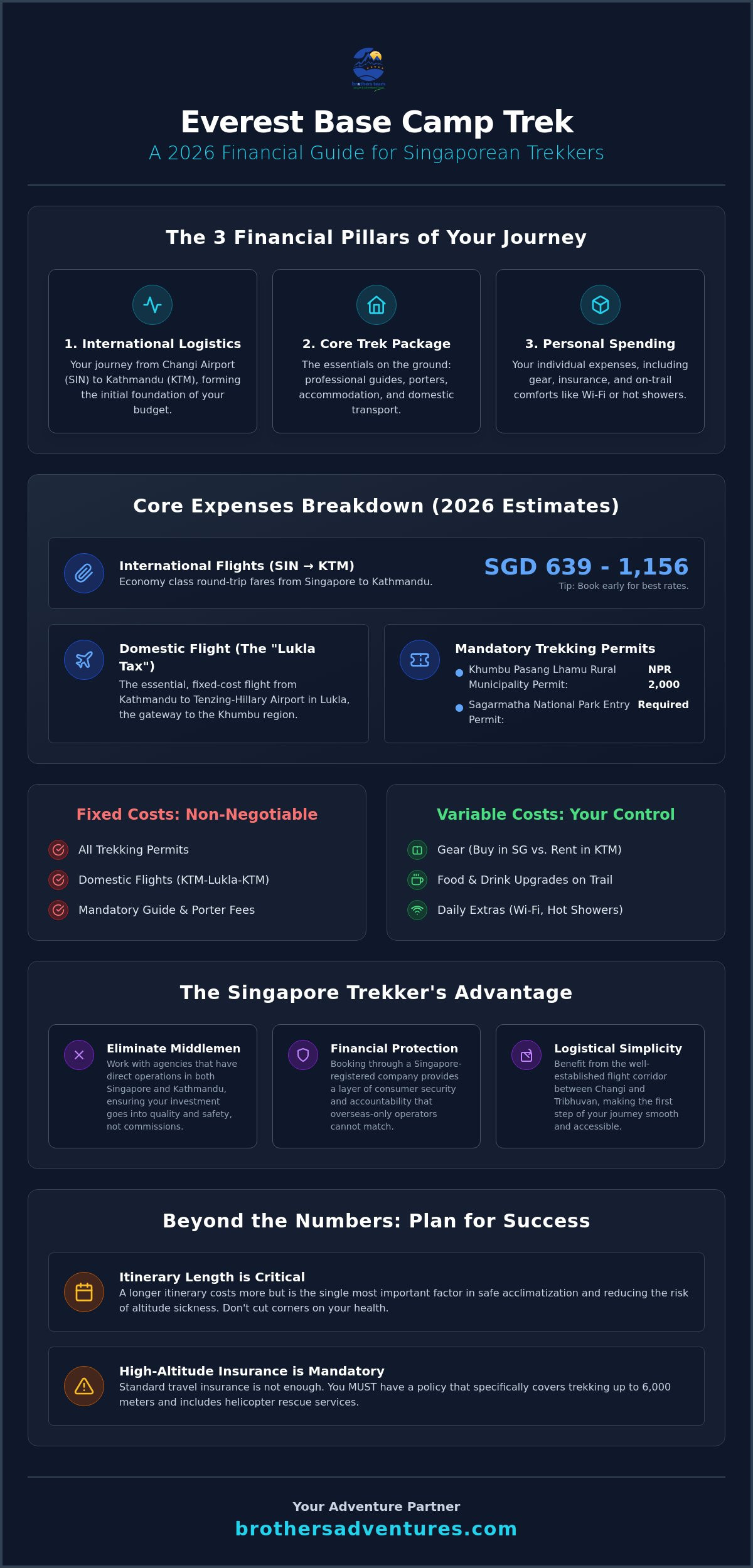
Reaching the legendary Everest Base Camp is a dream that requires both physical grit and smart financial planning. When you begin calculating the Everest Base Camp trek cost from Singapore, it helps to view the investment through three distinct pillars. First, you have international logistics, which covers your journey from Changi Airport to Kathmandu. Second is the core trek package, encompassing your guides, porters, and accommodation. Finally, there’s personal spending, which includes gear, insurance, and those small comforts on the trail that keep your spirits high.
While you’ll likely do your initial budgeting in SGD, the reality of the trail involves a mix of USD and Nepalese Rupees (NPR). In 2026, the trekking landscape offers everything from budget-conscious teahouse experiences to premium luxury treks featuring higher-end lodges. Choosing to partner with a specialized tour operator is often the most cost-effective route. These experts bundle essential permits and domestic flights, protecting you from the sudden price hikes or “hidden” fees that independent travelers often encounter when trying to piece a trip together themselves.
Fixed vs. Variable Costs: What to Expect
Your budget will consist of “non-negotiables” and flexible expenses. Fixed costs include the mandatory permits for the Sagarmatha National Park and the Khumbu Pasang Lhamu Rural Municipality, alongside the internal flights to Lukla’s Tenzing-Hillary Airport. These prices are set by local authorities and airlines. Variable costs are where you have more control. This includes gear rentals, food upgrades beyond standard meals, and daily extras like Wi-Fi or hot showers. If you’re traveling with a group of friends from Singapore, you’ll often find that the per-person Everest Base Camp trek cost from Singapore drops, as the costs for professional guides and porters are shared across the team.
The “Singapore Advantage”: Direct Flights and Agency Security
Singaporean trekkers enjoy a significant logistical advantage. The flight corridor from Changi (SIN) to Tribhuvan (KTM) is well-established, with options ranging from full-service carriers to regional budget airlines. Securing these flights early is the best way to keep your total spend down. Beyond the flights, there’s immense value in booking through a Singapore-registered agency. This provides a layer of financial protection and consumer security that overseas-only operators can’t match. By working with an agency that maintains its own office in Kathmandu, you eliminate the “middle-man” costs. This direct operational control ensures your money is invested where it matters most: in high-quality equipment, expert local guides, and rigorous safety protocols.
Core Expenses: Flights, Permits, and Professional Guiding
Your journey begins at Changi Airport, and the flight to Kathmandu is the first major variable in your budget. For 2026, economy class fares from Singapore typically range from SGD 639 to SGD 1,156. While budget carriers offer lower entry prices, many trekkers opt for the comfort of full-service airlines to ensure they arrive well-rested for the trail. Once in Nepal, you’ll face the “Lukla Tax”, which is the essential domestic flight to the Tenzing-Hillary Airport. This short, exhilarating hop into the mountains is a fixed cost that every trekker must account for, regardless of their total Everest Base Camp trek cost from Singapore.
Planning for these logistics can be overwhelming, but it’s the foundation of a successful trip. Most successful climbers find that bundling these international and domestic legs through a specialist agency removes the stress of coordinating tight connections. Beyond the flights, your budget must cover the regulatory requirements that keep the Khumbu region accessible and safe. These permits are non-negotiable and ensure the trails remain well-maintained for future generations.
Navigating the 2026 Permit Landscape
The permit system has evolved to prioritize local management. In 2026, the Khumbu Pasang Lhamu Rural Municipality entrance permit is the primary requirement, costing NPR 2,000. This has largely replaced the old TIMS card system for the Everest region. Additionally, you’ll need the Sagarmatha National Park entry permit, which is NPR 3,000. These fees directly fund the conservation of the stunning trails you’ll be walking on. Having your agency handle these documents beforehand means you won’t be stuck in queues at the trailhead, allowing you to focus entirely on the scenery.
The Value of Expert Guiding and Porterage
As of 2026, hiring a licensed guide is mandatory for all trekkers. This isn’t just a regulatory hurdle; it’s a critical safety investment. Professional Sherpa guides are trained to monitor symptoms of Acute Mountain Sickness (AMS) and manage emergency logistics that an independent trekker might miss. Beyond safety, your investment has a profound social impact. The fees you pay for guides and porters provide vital income for local families and support the mountain economy. If you’re ready to start your journey with a team that knows every turn of the trail, consider our Everest Base Camp Trek for a seamless and secure experience.
Analyzing Itinerary Length and Its Impact on Your Budget
Time is your most valuable currency when heading into the Khumbu Valley. While it is tempting to look for the shortest trip possible to save on leave days, your chosen Everest Base Camp trek itinerary is the single biggest factor determining your total spend. Every extra day on the trail adds to the cost of meals, accommodation, and guiding fees. However, the hidden cost of rushing is far higher. “Cheap” short itineraries often skip vital acclimatization days, which significantly increases the risk of Acute Mountain Sickness (AMS). A failed attempt due to illness not only ends your dream early but can lead to expensive emergency descents that far outweigh the price of a few extra trekking days.
When calculating the Everest Base Camp trek cost from Singapore, consider the difference between the classic 14-day route and extended variations like the Gokyo Lakes crossing. The classic route is a well-oiled machine of efficiency, while extensions add roughly three to four days of additional expenses. We also recommend accounting for “buffer days” in your planning. The weather at Lukla’s Tenzing-Hillary Airport is notoriously unpredictable. If flights are grounded for 48 hours, you’ll need the financial flexibility to cover extra nights in Kathmandu or Namche Bazaar without stress.
Classic 14-Day EBC Itinerary Breakdown
A standard 14-day journey balances cost with safety. Your daily expenses in 2026 will cover teahouse lodging and three hearty meals, which generally increase in price as you gain altitude. Acclimatization days in Namche Bazaar and Dingboche are non-negotiable investments in your success; while you aren’t moving toward base camp on these days, you are still paying for your guide’s expertise and your room. Building in at least two buffer days in Kathmandu is essential for Singaporean travelers to ensure that unpredictable Lukla weather doesn’t derail tight return flight schedules and workplace leave commitments.
Luxury and Custom Variations
If your schedule is tight but your budget is flexible, luxury variations offer a different way to experience the Himalayas. Many Singaporeans choose a helicopter return from Gorak Shep to Lukla or Kathmandu, which shaves three days off the return trek and provides a stunning aerial view of the peaks. You can also upgrade to luxury lodges in the lower Khumbu for a more comfortable experience. For executives and discerning travelers who want to witness the grandeur of the Himalayas without committing to a multi-week expedition, a 5 day Nepal itinerary luxury experience offers private helicopter access to Everest views and heritage hotel stays in the Kathmandu Valley. For those with a passion for high-altitude summiting, combining your EBC trek with an Island Peak climbing package is a popular way to extend the adventure and reach 6,189 meters in the same expedition. For those traveling in specialized groups, we frequently customize itineraries for family treks or student expeditions, ensuring the pace and the price point match the specific needs of the group. These tailored experiences allow you to prioritize safety and comfort while managing your Everest Base Camp trek cost from Singapore effectively.
Beyond the Package: Gear, Insurance, and Hidden Daily Costs
Budgeting for the Everest Base Camp trek cost from Singapore requires looking beyond the flight ticket and the tour fee. You need to account for the physical tools that will keep you warm and the financial tools that will keep you safe. While the base costs cover your movement and basic needs, these ancillary expenses are what truly define your comfort and security on the mountain. Many first-timers find themselves caught between purchasing brand-new gear in Singapore or relying on rentals in Kathmandu. It’s a balance of investment versus convenience that every trekker must strike before they leave Changi.
On the trail, your wallet needs to stay active for small but vital comforts. Teahouses often charge extra for hot showers, device charging, and Wi-Fi access. These small fees can add up to roughly US$15 to US$25 per day depending on how often you want to connect with home. Additionally, tipping your guides and porters is a deeply ingrained cultural practice. It’s an expression of gratitude for the people who literally carry the weight of your journey. Budgeting roughly 10% to 15% of your trek cost for tips ensures your crew feels valued for their incredible hard work. Ready to gear up for the climb? Explore our Everest Base Camp Trek packages to see how we handle the heavy lifting for you.
High-Altitude Gear: Invest or Rent?
Quality gear is your first line of defense against the elements. If you plan to trek frequently, investing in your own down jacket, four-season sleeping bag, and broken-in trekking boots is wise. You can find excellent technical equipment at specialty outdoor retailers in Singapore’s Novena or Queensway areas. However, for a one-time adventure, Kathmandu’s Thamel district offers a cost-saving alternative. You can rent high-quality, sanitized down jackets and sleeping bags for just a few dollars a day, which significantly lowers your initial Everest Base Camp trek cost from Singapore. Trekkers who plan to follow their EBC journey with a technical ascent should review the specialized gear requirements outlined in a dedicated Island Peak climbing package guide, as crampons and ice axes add a new dimension to your equipment checklist.
Safety First: Insurance and Emergency Funds
Don’t skip the fine print on your travel insurance. Most standard policies sold in Singapore exclude activities above 3,000 meters. You must verify that your provider explicitly covers trekking up to 6,000 meters and includes emergency helicopter evacuation. Based on 2026 data, a helicopter rescue from the Everest region can cost between US$4,000 and US$8,000 out of pocket if you aren’t insured. Always maintain an emergency cash reserve in USD or NPR for unexpected trail expenses or weather-related flight delays. This financial safety net is just as important as your physical training for a successful summit.
Planning Your EBC Adventure with a Specialist Singapore Agency
Navigating the logistics of a Himalayan expedition is significantly easier when you have a local partner just a phone call away in Singapore. While we’ve detailed the various components of the Everest Base Camp trek cost from Singapore, the final piece of the puzzle is ensuring your investment is protected by a registered, accountable agency. Having a physical office in Singapore for pre-trek briefings and face-to-face consultations provides a level of security that overseas-only operators simply cannot offer. You can settle payments in SGD, clarify permit requirements in person, and walk through your gear list with experts who understand the specific needs of Singaporean travelers.
Our dual-office structure is the bridge that connects your home in the tropics to the high-altitude trails of the Khumbu. By maintaining our own operational base in Kathmandu, we eliminate the middle-man fees that often inflate the Everest Base Camp trek cost from Singapore for other agencies. This direct control means we manage our own logistics, from the domestic Lukla flights to the quality of the teahouses we select. Whether you are organizing educational tours for a school group or a high-performance corporate team-building expedition, this integration ensures that every safety protocol is followed to the letter.
The Brothers Adventures Difference: 30+ Years of Expertise
Since 1992, Brothers Adventures has operated as a family-owned specialist with a deep passion for the mountains. We don’t just sell tours; we share a heritage of exploration that spans over three decades. This history allows us to provide 24/7 support that follows you from Changi Airport all the way to the foot of the world’s highest peak. We treat every trekker who joins us as an invited guest into our extended family rather than just a customer on a list. This philosophy is reflected in our guides, who prioritize your well-being and success above all else, ensuring you feel supported through every challenging kilometer of the trail.
Next Steps: Booking and Preparation
Locking in your 2026 Everest Base Camp Trek starts with a personalized consultation. Group size and departure dates can significantly influence the final quote, so we recommend reaching out early to discuss your specific requirements. Booking your spot well in advance is also the most effective way to secure promotional fares on Singapore Airlines, which can keep your total international logistics spend toward the lower end of the 2026 estimates. Don’t leave your dream to chance. Start your journey today by visiting our Singapore office for a consultation, and let us help you map out a successful, well-budgeted path to the roof of the world.
Begin Your Ascent to the Roof of the World
You now hold the complete financial roadmap for your 2026 Himalayan expedition. From calculating the specific permit fees in the Khumbu region to understanding why a 14-day itinerary is a vital investment in your safety, you’re ready to transition from dreaming to doing. Navigating the Everest Base Camp trek cost from Singapore doesn’t have to be a guessing game when you prioritize expert guiding and proper acclimatization over shortcuts. It’s about choosing a partner who brings professional authority and local heart to every step of the trail.
Since 1992, our family-owned team has served as a reliable bridge between Singapore and the Himalayas. With physical offices in both Singapore and Kathmandu, we offer seamless support and specialized high-altitude safety protocols that put your well-being first. We treat every trekker as an invited guest, ensuring your journey is as organized as it is adventurous. Plan your momentous Everest Base Camp journey with Brothers Adventures today! The grand peaks of the Khumbu are waiting for you. Take that first step and turn your 2026 ambition into an unforgettable reality.
Frequently Asked Questions
Is the Everest Base Camp trek worth the cost for a beginner?
Absolutely, provided you choose an itinerary that prioritizes acclimatization. While the initial investment might seem high, the experience of standing at the base of the world’s highest peak is a life-changing achievement that most beginners find priceless. We ensure your Everest Base Camp trek cost from Singapore translates into a safe, well-supported journey where expert guides manage the risks while you focus on the breathtaking scenery.
How much should a Singaporean traveler tip their guide and porter?
Customary tipping ranges from 10% to 15% of your total trek cost to be shared among the mountain crew. This is a deeply respected tradition in Nepal that honors the incredible physical labor and expertise of your Sherpa guides and porters. We recommend preparing this amount in USD or NPR and presenting it during a small “farewell ceremony” on your final evening in Lukla.
Can I use Singapore Dollars (SGD) during the trek in Nepal?
You cannot use SGD once you leave Kathmandu, as the tea houses only accept Nepalese Rupees (NPR). While you can exchange your SGD at the airport or in the Thamel district, it’s best to carry a mix of USD for larger payments and NPR for daily trail expenses. Most mountain villages don’t have ATMs, so ensure you withdraw enough cash before flying to Lukla.
Does the trek package include travel insurance for Singapore residents?
Trek packages do not include travel insurance, so you must secure a policy independently before departure. It’s critical to verify that your chosen provider covers trekking up to 6,000 meters and specifically includes emergency helicopter evacuation. Standard travel policies often exclude high-altitude activities, so double-check the fine print to avoid paying US$4,000 to US$8,000 out of pocket for a rescue.
How much does it cost to rent trekking gear in Kathmandu vs. buying in Singapore?
Renting gear in Kathmandu is significantly cheaper, with high-quality down jackets and sleeping bags costing roughly US$1 to US$3 per day. In contrast, purchasing a professional-grade Himalayan gear set in Singapore can cost upwards of SGD 800. If you don’t plan to trek regularly, renting allows you to lower your overall Everest Base Camp trek cost from Singapore while still using technical equipment.
What is the most expensive part of the Everest Base Camp trek?
Logistics and international airfares are typically the largest expenses for Singaporean trekkers. The combination of round-trip flights from Changi to Kathmandu and the essential domestic flight to Lukla accounts for a major portion of your budget. Following this, the investment in a licensed professional guide is the next most significant cost, ensuring your safety and regulatory compliance on the mountain.
Are there any hidden fees I should know about before booking?
You should budget for daily trail amenities like hot showers, battery charging, and Wi-Fi, which aren’t typically included in standard packages. These small fees can add US$15 to US$25 to your daily spend as you climb higher. Additionally, ensure your package explicitly covers the 2026 permit fees, such as the NPR 2,000 Khumbu Pasang Lhamu Rural Municipality entrance permit.
How much extra should I budget for food and water on the trail?
Budget roughly US$15 to US$25 per day for extra snacks, treats, and water purification. While most packages include three standard meals, you’ll likely want to purchase bottled water, ginger tea, or the occasional chocolate bar to keep your energy levels high. Prices for these items increase significantly with altitude, as every supply must be carried up the mountain by porters or yaks.


Comments are closed