


Everest Base Camp Trek from Singapore: The Ultimate 2026 Planning Guide
Your journey to the roof of the world doesn’t begin at 5,000 meters; it starts right here in the heart of the Lion City. Standing at the foot of the world’s most iconic peak is a dream that many Singaporeans share, yet the path from the flats of East Coast Park to the rugged terrain of Nepal can feel shrouded in mystery. You might worry that our local hills aren’t steep enough or that the complex logistics of permits and high-altitude safety are too much to handle alone. We understand those fears because we’ve been bridging the gap between Singapore and Kathmandu since 1992.
This ultimate 2026 guide is your roadmap to a successful everest base camp trek from singapore, offering the professional authority and local insight you need to trek with heart. We’ll show you how to turn HDB stairwells into training grounds and navigate the latest 2026 regulations, including mandatory guide requirements and seasonal flight shifts to Ramechhap. Get ready to discover a clear breakdown of visa costs, essential packing lists tailored for our tropical climate, and a day-by-day strategy to reach 5,364 meters safely. Your Himalayan adventure is waiting, and we’re here to ensure every step is as breathtaking as the view from the top.
Key Takeaways
- Master a six-month training roadmap specifically designed for the Singaporean lifestyle to build the endurance required for the world’s most iconic trail.
- Gain clarity on 2026 flight logistics from Changi to Kathmandu, including crucial details on peak season diversions that impact your travel time.
- Explore the non-technical path to 5,364 metres and why the South Base Camp route via Lukla is considered the gold standard for adventure seekers.
- Discover the safety advantages of booking your everest base camp trek from singapore through an agency with dual offices to ensure seamless logistics and expert oxygen monitoring.
- Get an insider’s look at the essential gear and 2026 permit requirements needed to turn your Himalayan dream into a reality.
Why the Everest Base Camp Trek is the Ultimate Goal for Singaporeans
Swap the humid bustle of Orchard Road for the crisp, thin air of the Himalayas. For many residents of the Lion City, the everest base camp trek from singapore represents the ultimate escape from an urban existence. It is often called the “Gold Standard” of trekking, a journey that tests your mettle without requiring the technical ice-climbing skills of a professional mountaineer. This is a high-altitude pilgrimage through the Khumbu Valley, leading you to the foot of the world’s highest peak. While Singapore offers world-class gyms and park connectors, nothing quite prepares your soul for the raw, prehistoric scale of the Nepalese giants. For those seeking a similar level of immersion in a different wild environment, check out Los Buzos for a unique adventure on Panama’s remote Pacific coast.
Beyond the physical challenge, this trek serves as a powerful mental reset. In a city where we’re constantly tethered to high-speed internet and demanding schedules, the mountains offer a rare chance to disconnect. You’ll find that the simple rhythm of “eat, trek, sleep” provides a profound sense of clarity. Reaching the Everest Base Camp at 5,364 metres isn’t just about the altitude; it’s about proving to yourself that you can thrive far beyond the comfort of the CBD.
Is the EBC Trek Suitable for You?
You don’t need to be an elite athlete to succeed, but you do need heart and steady legs. Most days involve 5 to 7 hours of walking on varied terrain, from suspension bridges to rocky slopes. We’ve seen trekkers from Singapore ranging from fit students—many of whom apply the same discipline they use for their studies at Learning Voyage Education Centre—to spirited retirees in their 60s. The beauty of this journey is that it’s non-technical. You won’t need an ice axe or crampons. If you can commit to a disciplined training block in the months leading up to your flight, the everest base camp trek from singapore is absolutely within your reach. For younger adventurers and school groups, our educational tours in Nepal for students offer a curriculum-aligned way to experience the Himalayas with expert safety support. Families looking to share the Himalayan experience with their children can also explore our dedicated family trek Nepal guide, which covers everything from kid-friendly routes to altitude safety for younger trekkers.
The Dream vs. Reality: What to Expect
The reality of the trek is a sensory explosion that no Instagram filter can truly capture. You’ll wake up to the smell of juniper incense and the sound of yak bells echoing through stone-walled villages. Meeting the Sherpa people, whose lives are inextricably linked to these peaks, adds a layer of cultural depth that stays with you long after you return home. For those interested in exploring similar connections to sacred traditions and holistic healing, Tribu Spirit offers a bridge to ancient shamanic wisdom. Yes, the air feels thin at 5,000 metres, and your breath will come short, but the first glimpse of Everest’s black pyramid against a cobalt sky makes every difficult step worthwhile. It is a physical challenge met with an emotional reward that defines a lifetime.
Understanding the Route: The Path to 5,364 Metres
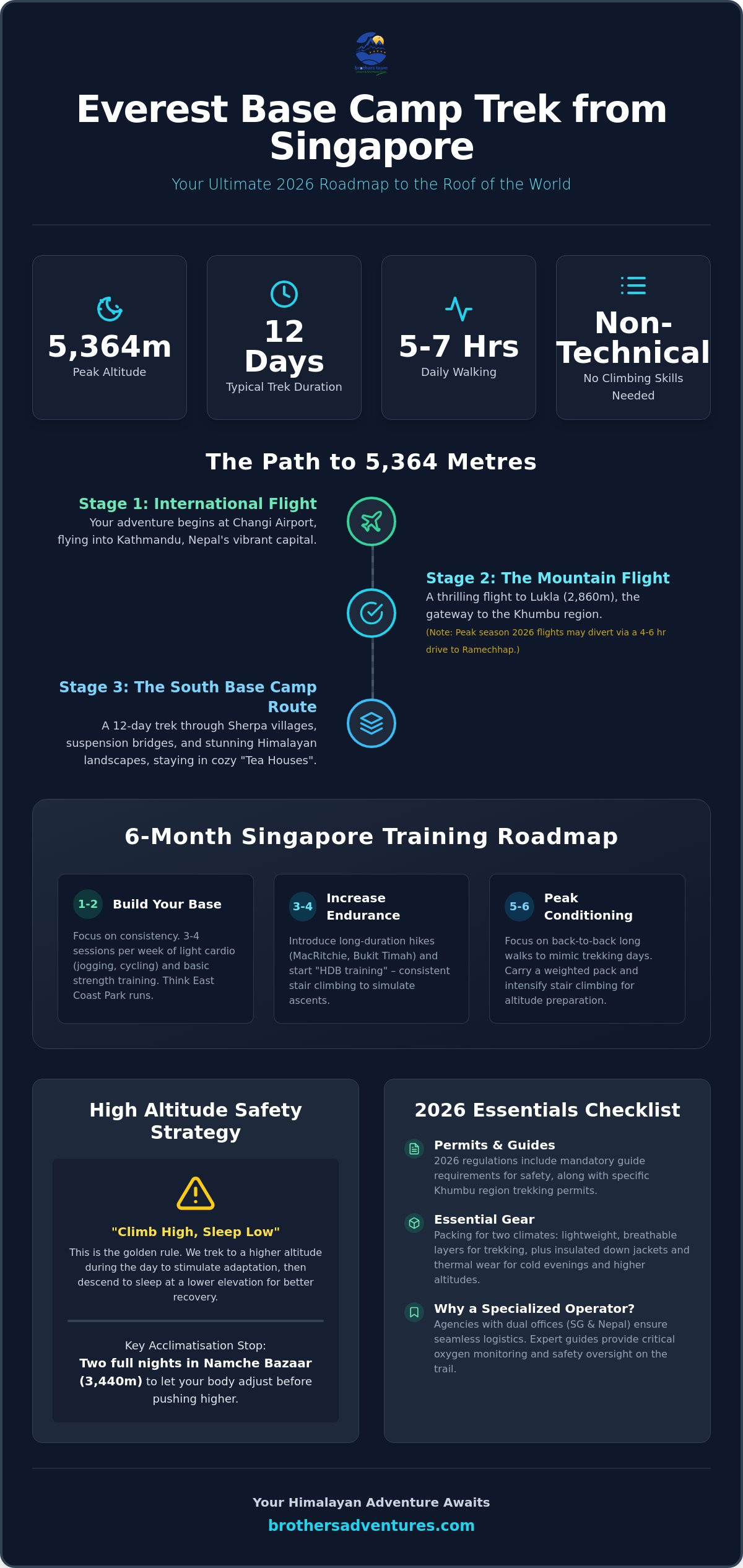
Your journey into the heart of the Himalayas begins with a flight that most trekkers never forget. Most travelers embarking on an everest base camp trek from singapore will find themselves at Changi Airport, bound for Kathmandu. From there, the real adventure kicks off with a flight to Lukla. During the peak 2026 trekking seasons of spring and autumn, be prepared for a 4 to 6 hour drive to Ramechhap, as flights are often diverted there to manage air traffic. This small adjustment is just the first step in a grander narrative of discovery. Once you touch down on Lukla’s famous mountain airstrip, you’re officially on the South Base Camp route, the premier choice for its stunning vistas and rich Sherpa heritage.
Life on the trail follows the “Tea House” model. These are cozy, family-run mountain lodges that serve as your sanctuary after a day of trekking. You’ll find a warm bed, hearty meals like Dal Bhat, and a communal dining hall where the air is thick with stories of the day’s climb. It’s a high-touch experience that makes you feel like an invited guest rather than just a tourist. To ensure you have the most reliable support on this path, our Everest Base Camp Trek provides seasoned guides who know every stone and stream of the Khumbu region.
Acclimatisation: The Science of Trekking High
Respecting the altitude is the secret to a successful summit. At 5,000 metres, the air contains significantly less oxygen than what we’re used to in Singapore. We strictly follow the “climb high, sleep low” rule. This involves hiking to higher elevations during the day to stimulate your body’s red blood cell production, then descending to a slightly lower altitude to sleep. This 12 day journey isn’t a race; it’s a methodical adaptation. We typically schedule two nights in Namche Bazaar to ensure your body is ready for the thinner air ahead.
Key Landmarks Along the Khumbu Trail
The path is a sequence of breathtaking highlights that keep your spirits high. You’ll first encounter Namche Bazaar, the vibrant Sherpa capital perched at 3,440m. It’s a bustling amphitheater of shops and cafes where you can soak in the local culture. Further up, the Tengboche Monastery offers a spiritual pause; hearing the monks’ morning chants with the majestic Ama Dablam in the background is a sensory marvel. Finally, you’ll aim for Kala Patthar. While Base Camp is the destination, this 5,545m viewpoint provides the absolute best look at the Everest summit, a sight that makes every step of the journey worthwhile.
Preparing in Singapore: Training and Gear
Success in the Himalayas is earned months before you step onto the tarmac at Changi. Preparing for an everest base camp trek from singapore requires a strategic shift in your daily routine. Since we lack high-altitude peaks, we focus on building a massive aerobic base and “mountain legs” through repetitive incline work. Aim for a six-month roadmap. Spend the first three months building cardiovascular endurance through swimming, cycling, or running. As you enter the final twelve weeks, pivot toward weighted strength training. This phase is about conditioning your joints and muscles to carry a pack for seven hours a day. It’s also a time for mental recalibration. You’re preparing to trade high-speed Wi-Fi and air-conditioned malls for the simple, rugged charm of a Sherpa tea house.
Mental toughness is just as vital as physical fitness. On the trail, you’ll be living without the immediate luxuries of city life. Hot showers become a rare treat and the air gets colder with every thousand metres of gain. Practicing a mindset of “comfortable discomfort” during your training sessions will pay dividends when you’re pushing through a windy afternoon in the Khumbu. Embrace the process and remember that every drop of sweat in Singapore is a step closer to the base of the world’s highest mountain. This spirit of resilience is shared by those who tackle the challenging Ho Chi Minh Trail on a motorcycle with Adrenalin Rush Trail, proving that adventure comes in many forms.
Singapore-Specific Training Spots
Stop looking for mountains and start looking for stairs. The “HDB Stairwell Method” is a local secret for success. Find a 40-story block, load a backpack with 10kg of water bottles, and start climbing. This builds the specific quad and glute strength needed for the “Himalayan Flat”, which is never actually flat. For outdoor sessions, Bukit Timah Hill is your primary training ground. Don’t just hike it once; do three or four repetitions of the main Summit Path to simulate a long day on the trail. On weekends, head to MacRitchie Reservoir. The 11km trail loop is perfect for testing your gear and building the long-distance endurance required to reach 5,364 metres. After these grueling sessions, you can discover Royal Bird’s Nest for a premium, freshly brewed treat to help your body recover.
The Essential 2026 Gear Checklist
Invest in quality over quantity. Your layering system is your lifeline. Start with moisture-wicking merino wool base layers, add a heavy-duty down jacket for those freezing nights above 4,000m, and finish with a breathable hardshell to block the wind. Preparing your kit for an everest base camp trek from singapore means being ready for temperatures that swing from 20°C to -15°C. Buy your trekking boots in Singapore at least four months early. Wear them everywhere, from your grocery runs to your Bukit Timah sessions, to ensure they’re perfectly broken in. While you can find bargains in Kathmandu, we recommend sourcing your core technical gear locally to ensure the fit is perfect. A high-quality 4-season sleeping bag is the final piece of the puzzle, ensuring you recover well each night even when the mercury drops well below zero.
Logistics and Timing: Planning Your 2026 Journey
Planning an everest base camp trek from singapore for 2026 requires a sharp eye on the calendar and a proactive approach. Nepal is bracing for a record breaking year, with projections reaching up to 1.5 million international visitors. This surge means the best tea houses and prime flight slots will fill up faster than ever before. To witness the Himalayas at their most majestic, aim for the two golden windows. The pre-monsoon spring from March to May offers vibrant rhododendrons and the exciting buzz of summit expedition teams. Alternatively, the post-monsoon autumn from September to November provides the crispest, most stable skies for those legendary mountain views. Booking your spot at least six to eight months in advance is the best way to ensure a seamless experience.
Navigating the paperwork is simpler than it used to be, but the rules have changed. As of 2026, you don’t need the old TIMS card for the Everest region. Instead, you’ll secure a Khumbu Pasang Lhamu Rural Municipality Entrance Permit and the Sagarmatha National Park Entry Permit. These fees help maintain the trails and protect the delicate mountain ecosystem. It’s also vital to remember that a licensed guide is now mandatory for all foreign trekkers. This regulation, enforced since 2023, ensures your safety and supports the local economy. Ready to secure your spot for the 2026 season? Explore our Everest Base Camp Trek packages to get your permits and logistics handled by professionals.
Getting to Nepal from Singapore
Your journey begins at Changi Airport. While direct flights are subject to seasonal schedules, most Singaporeans opt for a smooth transit through Bangkok or Kuala Lumpur before landing at Tribhuvan International Airport in Kathmandu. For those who decide to break up the journey with a stopover in Thailand, enjoying a sunset dinner at ECHO Phuket provides a luxurious culinary contrast to the rugged trails ahead. Flight prices for 2026 typically range between SGD 450 and SGD 900 depending on how early you book. Once you land, the 2.25 hour time difference is gentle, making it easy to adjust without heavy jet lag. Singaporean passport holders can conveniently obtain a visa on arrival. A 30 day tourist visa currently costs USD 50, allowing plenty of time for your trek and some post-hike exploration in Kathmandu.
Choosing the Right Itinerary Length
Don’t let “Express” itineraries tempt you. Coming from sea level Singapore, your body needs every minute of the standard 14 to 16 day itinerary to adjust to the thinning air. Rushing the ascent is the primary cause of altitude sickness. A longer schedule isn’t just about safety; it’s about enjoyment. It allows for those critical rest days and provides a vital buffer for Lukla’s unpredictable weather. Flights to the mountains are often delayed by morning fog. Having two extra days at the end of your trip ensures you won’t be stressed about missing your connection back to Changi if the mountain weather turns.
Why a Specialized Tour Operator Makes the Difference
Choosing who to trust with your life at 5,000 meters is the most critical decision in your planning phase. When you book an everest base camp trek from singapore, you aren’t just buying a ticket; you’re joining a support network that spans two nations. Brothers International Tours & Trading Pte Ltd operates a unique dual-office model that creates a seamless bridge between your home in the Lion City and the high trails of Nepal. Having a local Singapore presence means you get face-to-face preparation and gear advice, while our Kathmandu headquarters ensures that every permit, flight, and lodge booking is handled by people who live and breathe the Himalayas. This eliminates the uncertainty often found when booking with overseas-only agencies. For adventurers who value this level of local expertise in other iconic settings, Moab In A Day offers professional guided tours through the spectacular Arches and Canyonlands National Parks in the United States.
This high-touch service removes the confusion of dealing with distant third-party providers. We manage the logistics from the moment you leave Changi until you return home, ensuring that your journey is defined by wonder rather than worry. Whether you prefer the camaraderie of a fixed-price group or the flexibility of a private expedition, we tailor the experience to your pace and comfort. If you are also interested in exploring the natural beauty of other regions through a dedicated specialist, indonesiaentusmanos.com offers personalized travel experiences throughout the Indonesian archipelago.
Safety and Support on the Mountain
Safety is our obsession, not an afterthought. Every single day, our guides use pulse oximeters to monitor your blood oxygen saturation and heart rate. This proactive approach helps us spot the early signs of Acute Mountain Sickness (AMS) before they become serious. Choosing a specialized tour operator means having access to emergency oxygen cylinders and a team that is expertly trained in helicopter evacuation coordination. We don’t just hope for the best; we prepare for every scenario with professional authority and deep local knowledge. You’ll never feel like just another number on the trail.
The Brothers Adventures Heritage
Brothers International Tours & Trading Pte Ltd has been guiding Singaporean adventurers since 1992, making us one of the most established names in the region. As a family-oriented business, we treat every trekker like an invited guest rather than just a customer on a list. Our guides are more than just employees; they are Sherpas with deep local heritage who take immense pride in sharing their culture, stories, and mountain wisdom with you. This personal connection transforms a difficult hike into a shared journey of discovery. If you feel the full trek is too long for your current 2026 schedule, consider our 8-Day Nepal Adventure Tour for a condensed but equally magical experience. Families travelling together will also find our family trek Nepal adventures with kids in 2026 an inspiring way to introduce younger generations to the Himalayas with age-appropriate routes and expert support. Trust your Himalayan dreams to a team that has been building bridges to the mountains for over three decades. Schools and institutions looking to inspire the next generation can also explore our dedicated educational tours in Nepal for students, designed to build resilience and global perspective through curriculum-aligned Himalayan expeditions.
Step Into the Shadow of Giants
You’ve now seen that the path from the humid streets of Singapore to the iconic 5,364 metre mark is a journey of both physical preparation and logistical precision. By mastering your training on Bukit Timah and understanding the vital role of acclimatisation, you’re already ahead of the pack. Remember that a successful everest base camp trek from singapore isn’t just about reaching a destination; it’s about the safety and cultural richness found along the way. Your 2026 adventure is a chance to prove what’s possible when you trade the city skyline for the world’s most majestic peaks. For those who wish to explore other corners of the world with the same level of care, you can learn more about The Russell Travel Team (Lightning Travel) to discover how curated luxury vacations can offer their own unique brand of adventure.
Since 1992, our family-owned team has acted as a dedicated bridge between our offices in Singapore and Kathmandu. We prioritize your health with expert AMS safety monitoring and professional oxygen protocols, ensuring you can focus entirely on the wonder of the Khumbu Valley. Start your 2026 Everest journey with Singapore’s trekking experts and turn those mountain dreams into a breathtaking reality. The roof of the world is waiting for you.
Frequently Asked Questions
How much does an Everest Base Camp trek cost from Singapore?
Your total investment includes international flights, visas, permits, and daily trail expenses. Round-trip flights from Changi to Kathmandu for 2026 typically range from SGD 450 to SGD 900 depending on your booking lead time. You should also budget for a 30 day tourist visa at USD 50 and local permits, which cost approximately NPR 5,000 in total. Daily spending for extra snacks, hot showers, and device charging on the trail usually averages USD 25 to USD 40.
Is the Everest Base Camp trek dangerous for beginners?
The trek is a non-technical “walk-up” that doesn’t require ropes or climbing gear, making it accessible for fit beginners. The primary risk is Acute Mountain Sickness (AMS) rather than the terrain itself. If you follow a professionally paced itinerary with built-in acclimatisation days and listen to your guide, it’s a safe and deeply rewarding adventure. Most active Singaporeans who commit to a six-month training plan find the physical challenge manageable and exhilarating.
Do I need travel insurance for trekking in Nepal?
Yes, specialized travel insurance is an absolute requirement for this journey. Your policy must specifically cover high-altitude trekking up to 6,000 metres and include emergency helicopter evacuation. Many standard plans from Singaporean providers exclude “extreme sports” or altitudes above 3,000 metres, so read your policy wording carefully. Having this safety net ensures that any medical or logistical emergencies are handled professionally without massive out-of-pocket costs.
Can I do the EBC trek without a guide?
No, solo trekking is prohibited for foreign nationals as of 2026. All trekkers must hire a licensed guide to undertake the everest base camp trek from singapore. For those looking to connect with verified guides or find fellow adventurers to share the trail with, Travel Companion Hub offers a specialized platform to help you find the right support. This regulation was implemented to enhance safety and provide reliable support in the remote Khumbu region. A guide is your most valuable asset, handling everything from permit inspections to monitoring your health and navigating the seasonal flight diversions at Ramechhap airport.
What is the best month for Singaporeans to trek to EBC?
The premier windows are the pre-monsoon spring (March to May) and the post-monsoon autumn (September to November). Spring is famous for blooming rhododendrons and the buzz of Everest summit expeditions, while autumn offers the crispest, most stable skies for photography. We generally recommend avoiding the monsoon months of June to August, as heavy rains can cause flight cancellations and obscure those legendary mountain views you’ve traveled so far to see.
How do I avoid altitude sickness on the Everest trek?
The golden rule is to ascend slowly and stay hydrated. Drink at least four litres of water daily and never skip your scheduled acclimatisation days in Namche Bazaar and Dingboche. Our guides use pulse oximeters to monitor your oxygen saturation levels every evening, allowing us to catch early symptoms before they escalate. Avoid alcohol and tobacco during the ascent, and always tell your guide immediately if you develop a persistent headache or nausea.
What kind of food is available at the tea houses?
Tea house menus are surprisingly diverse and designed to fuel your climb. You’ll find everything from the traditional Dal Bhat (lentil soup with rice), which offers unlimited refills, to pasta, potatoes, and porridge. Most lodges also serve eggs, pancakes, and vegetable soups. To stay healthy, we suggest focusing on fresh, vegetarian meals at higher altitudes, as meat is often carried up the mountain by porters and may not stay fresh in the thinner air.
Is there Wi-Fi and electricity at Everest Base Camp?
Connectivity is available throughout the everest base camp trek from singapore, though it becomes more expensive as you go higher. Most tea houses offer Wi-Fi through prepaid cards like Everest Link or via a local Ncell SIM card. Electricity for charging phones and power banks is available in the communal dining areas for a small fee, typically ranging from USD 3 to USD 8 per charge. We recommend bringing a high-capacity power bank to stay powered between stops.



Comments are closed