


How to Manage Lukla Delays on an Everest Trek
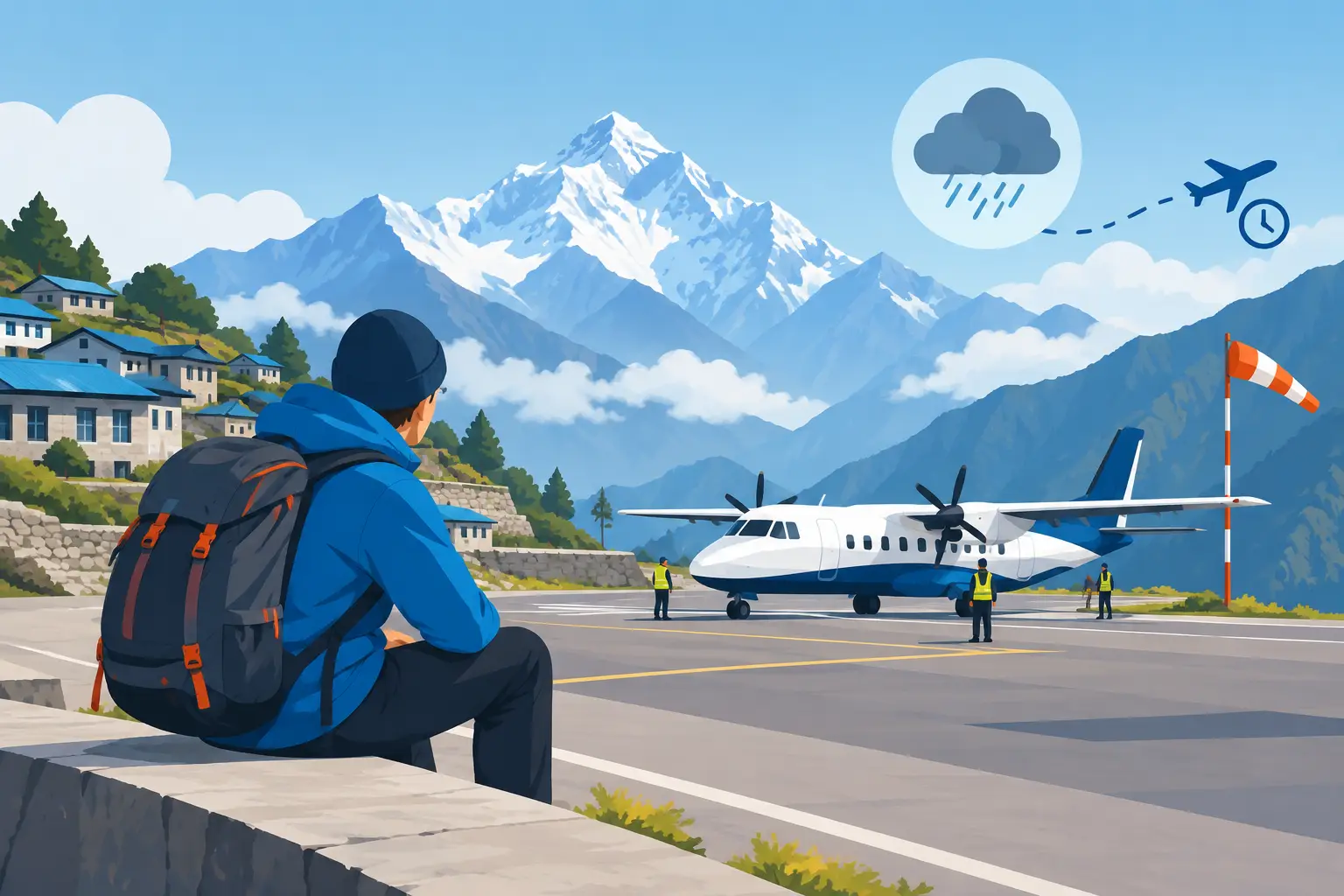
A Lukla flight is often the first great adventure of an Everest trek – and sometimes the first test of patience. Knowing how to manage Lukla delays is not about finding a guaranteed shortcut through Himalayan weather. It is about building enough flexibility into your holiday that a changed flight plan does not change the spirit of the journey.
Lukla’s Tenzing-Hillary Airport sits high in the mountains, surrounded by steep terrain and fast-changing cloud. Flights operate only when visibility, wind and runway conditions are suitable. That careful decision-making can feel frustrating when your trek is waiting, but it is also a vital part of travelling safely in the Khumbu.
Why Lukla flights are delayed
Weather is the main reason for delays and cancellations. A bright morning in Kathmandu does not necessarily mean clear flying conditions in Lukla, and conditions can improve or deteriorate rapidly. Low cloud, rain, wind and poor visibility may hold aircraft on the ground for hours or stop flights for the day.
Air traffic, aircraft positioning and the operating location can also affect timing. During the main trekking seasons, many Lukla flights are commonly operated from Ramechhap rather than Kathmandu to reduce pressure on Kathmandu’s busy airport. Ramechhap is roughly a four to five-hour road journey from Kathmandu, depending on traffic and road conditions, so an early flight day can begin in the middle of the night.
This is not poor organisation by your trekking team or airline. It is the reality of mountain aviation. The right approach is to plan for it before departure, then respond calmly if it happens.
Build buffer days into your Everest itinerary
The single best way to manage Lukla delays is to protect time at the end of your trek. We recommend allowing at least two contingency days before your international flight home. Three is even more comfortable for a longer Everest Base Camp, Gokyo Lakes or Cho-La Pass itinerary, particularly if you are travelling during peak season.
Why protect the end rather than only the beginning? A delayed outbound flight may mean you start walking a day later, adjust a rest day or take an alternative route. A delayed return flight from Lukla, however, can put your onward international arrangements under real pressure. Extra days in Kathmandu give you breathing room to return safely, enjoy the city, shop for handicrafts or simply rest after the mountains.
A buffer is not wasted holiday time. Think of it as part of the itinerary, much like acclimatisation days. If everything runs to plan, you have an unexpected bonus: time for Bhaktapur, Patan, a cooking experience or a relaxed meal with your trekking companions. If weather intervenes, you have made a sensible decision before the pressure begins.
It also helps to book international flights that can be changed, where possible, and to avoid scheduling major work commitments immediately after your planned return. Travellers with a fixed event the day after landing in Singapore or elsewhere can find a one-day delay disproportionately stressful.
What happens when your flight is delayed?
On a delay day, information can change frequently. Your guide, Kathmandu operations team and airline staff will monitor the flight status, weather windows and available seats. At Brothers Team, our local team works closely with guests and guides to explain the realistic options rather than making promises that mountain weather cannot keep.
If flights are temporarily held, the first option is usually to wait for conditions to improve. Lukla weather can clear later in the morning, although there are no guarantees. If all flights are cancelled, passengers are generally rebooked according to airline availability, which may take time during busy periods.
Your trekking itinerary may then need a practical adjustment. Depending on the route and the number of days lost, this could mean shortening time in Kathmandu, revising the walking stages, choosing a different return plan, or postponing the trek. A responsible operator will never try to recover lost time by pushing trekkers too quickly uphill. Acclimatisation remains more important than sticking rigidly to an original schedule.
Do not rush the ascent
This point matters especially for first-time Himalayan trekkers. If a delayed flight leaves fewer days before your homeward journey, it can be tempting to combine walking days or skip an acclimatisation stop at Namche Bazaar or Dingboche. That is rarely a good trade-off.
Altitude illness does not care about your calendar. A carefully paced itinerary gives your body time to adapt and gives your guide time to assess how you are feeling. The mountain will still be there; arriving healthy is the real success.
Helicopter transfers: useful, but never guaranteed
When commercial fixed-wing flights are disrupted, helicopter transfers may be available. They can be a valuable alternative for travellers with limited time, but they should be understood clearly.
Helicopters are also weather-dependent. They may be unable to fly in the same poor visibility that stops aeroplanes, and availability can be limited when many trekkers are seeking seats. Costs are normally considerably higher than a scheduled flight and are often based on sharing a charter, which means final pricing depends on passenger numbers and operational conditions.
A helicopter transfer may make sense if you have a tight but important onward connection, a small group willing to share the cost, or a weather window that makes the journey possible. It may not be worthwhile if forecasts suggest several days of poor conditions, or if taking the helicopter would force an unsafe change to your trekking pace.
Travel insurance should include helicopter evacuation for medical emergencies, but do not assume it covers a commercial helicopter ride arranged because of weather delays. Check the policy wording before you travel, including cover for trip interruption, cancellation, missed connections and additional accommodation.
Prepare before you leave home
Good preparation takes much of the anxiety out of an uncertain flight day. Keep essential medication, a warm layer, rain protection, phone charger, power bank, passport, insurance details and some Nepalese rupees in your hand luggage. Your main duffel may be handled separately, and you should be comfortable if you need to wait several hours or overnight.
Use a flexible mindset with accommodation too. If you are delayed in Kathmandu, extra hotel nights may be needed. If you are already in Lukla when poor weather arrives, lodge availability can become tight in peak season. A locally connected operations team can make a significant difference here, especially for groups, families and school expeditions that need coordinated rooms, meals and transport.
Before the trek begins, ask your operator how they handle flight cancellations. You should understand where flights are likely to depart from, what transport is included for a Ramechhap departure, who will communicate updates, and which additional costs could arise. Clear expectations are far more reassuring than vague assurances.
A practical response plan for delay days
When the weather closes in, focus on decisions you can control. Keep your international flight details and insurance contact information accessible, stay in contact with your guide or operations representative, and avoid making independent bookings before discussing the full picture with the team.
A sensible plan usually has five parts:
- Wait for the day’s confirmed flying decision rather than reacting to rumours.
- Review the remaining trekking days without compromising acclimatisation.
- Consider a helicopter only when weather, availability and cost make it a genuine option.
- Inform your airline or travel provider early if an onward connection may be affected.
- Keep your final Kathmandu buffer days intact whenever possible.
For organised groups, appointing one leader to receive updates and share them with the group helps avoid confusion. For independent travellers, patience and prompt communication are equally valuable. Airport queues and uncertain timings can be tiring, but a calm approach makes it easier for staff to support you effectively.
Choose the right season, but respect the weather
Spring and autumn are popular for Everest trekking because they often offer favourable walking conditions and clearer mountain views. They are also busy, so disrupted flights can create a backlog of passengers. Winter may have quieter skies but colder conditions, while the monsoon brings a higher likelihood of cloud and rain-related disruption.
There is no season in which Lukla is completely predictable. The best choice depends on your comfort with crowds, cold, rain, visibility and schedule flexibility. If your dates cannot move at all, consider whether an alternative Nepal trek with road access, such as parts of the Annapurna region, may suit your circumstances better.
A delayed Lukla flight can test even an experienced traveller’s patience, yet it also reflects the character of the Himalaya: conditions set the pace, and good journeys leave room for that truth. Arrive with buffer days, listen to your guide, protect your acclimatisation plan and let the first clear view of the Everest region remind you why the wait was worthwhile.

Comments are closed