


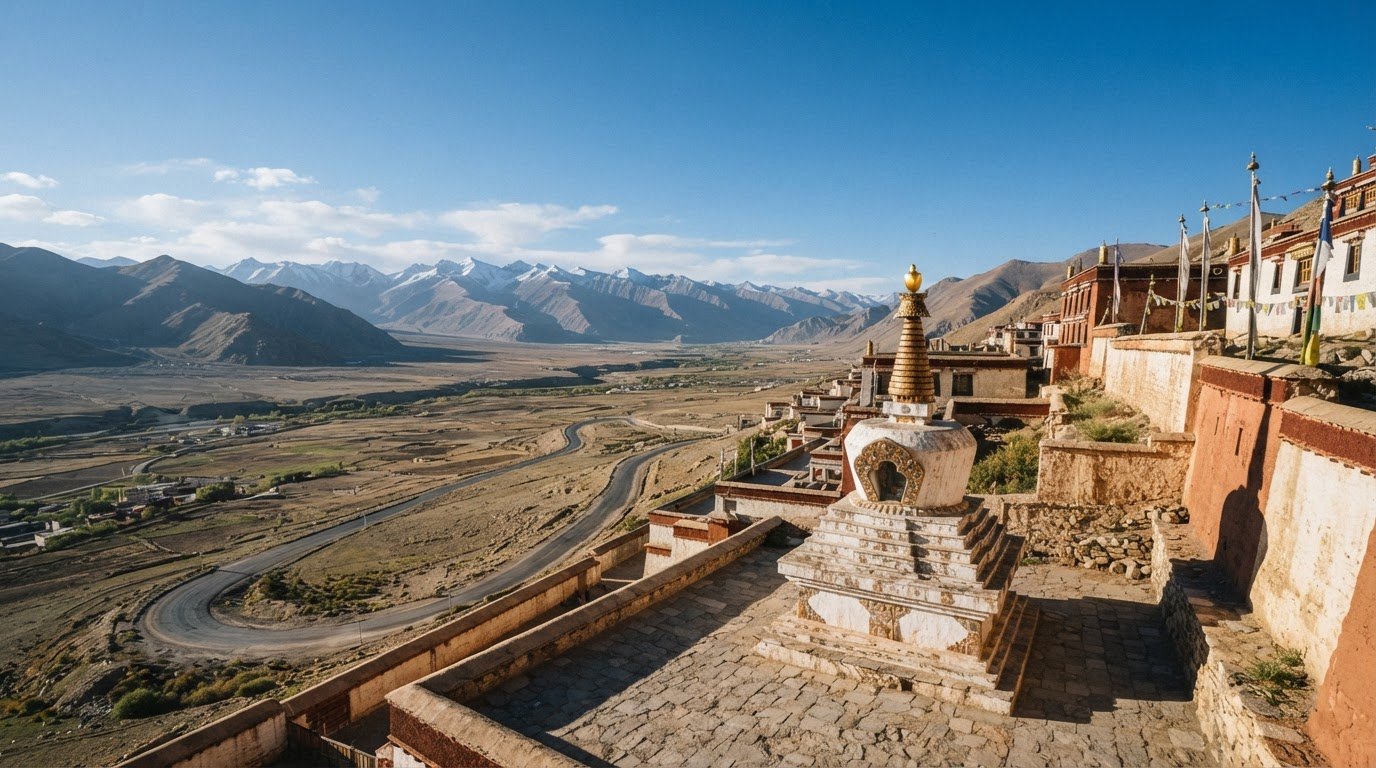
Shigatse and Gyantse Tour Package for Cultural Routes and Sights
A Shigatse and Gyantse tour package can bring together Lhasa’s Potala Palace, Jokhang Temple, Barkhor Street and Drepung Monastery with Gyantse’s Pelkor Monastery and Kumbum Stupa, then Tashilhunpo Monastery in Shigatse. The Lhasa-to-Gyantse-and-Shigatse drive is listed at about 360 kilometres and approximately seven hours, with time on the way for the region’s striking landscapes.
It’s a rewarding route for travellers who want more than a quick look at Tibet’s headline sights. Each stop reveals a different side of the journey, from Lhasa’s lively pilgrimage streets to Gyantse’s remarkable Buddhist art and Shigatse’s historic monastery.
Here, you’ll learn what to see along the cultural route and how travel permits, visa questions and seasonal pricing factor into planning from Singapore. We’ll also cover the route’s pace and key practical considerations, so you can picture the journey clearly and plan for an experience that balances heritage, scenery and time to acclimatise.
Key Takeaways
- Compare Gyantse’s monasteries and Kumbum Stupa with Shigatse’s Tashilhunpo Monastery to shape a culture-rich sightseeing plan.
- Use the route and driving times to set a realistic pace, and leave room to acclimatise in Lhasa before travelling onward.
- Build permit processing and visa arrangements into your planning, especially when entering Tibet from Kathmandu.
- Understand how travel season, room arrangements and what’s included affect tour pricing before choosing your dates.
Tashilhunpo Monastery
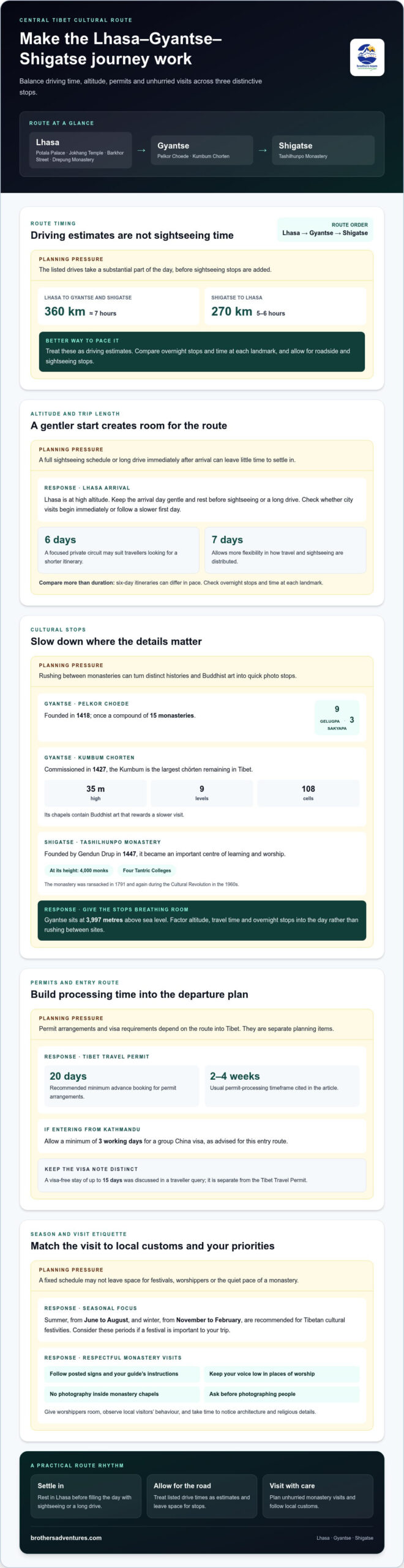
In Shigatse, Tashilhunpo Monastery offers a vivid introduction to Tibetan Buddhist heritage. Gendun Drup founded it in 1447, and it became an important centre of learning and worship. At its height, the monastery housed 4,000 monks and had four Tantric Colleges. These figures suggest the scale of its religious community, while its surviving halls and courtyards bring that history into view. The Nepalese army ransacked Tashilhunpo in 1791, and it was ransacked again during the Cultural Revolution in the 1960s.
Approach a monastery as an active place of worship, not simply a collection of historic buildings. Follow local signs and your guide’s instructions, keep your voice low and avoid interrupting people at prayer. Photography isn’t allowed inside monastery chapels, so put your camera away before entering. These simple steps help protect the quiet atmosphere and show respect for worshippers. Take time to notice the architecture and religious details instead of treating each room as a quick photo stop.
Gyantse adds another striking chapter through Pelkor Choede Monastery and the Kumbum Chorten, also called Gyantse Kumbum. Pelkor Choede was founded in 1418 and was once a compound of 15 monasteries. Nine belonged to the Gelugpa sect, while three belonged to the Sakyapa sect. Commissioned in 1427, the Kumbum stands 35 metres high, with nine levels and 108 cells. Its chapels contain Buddhist art that rewards a slower visit. The Kumbum is the largest chörten remaining in Tibet.
Gyantse sits at 3,997 metres above sea level, so build in an unhurried visit rather than rushing between sites. On a route that may also take in Yamdrok Lake, consider how travel time, altitude and overnight stops shape the day. Hotels and the balance between guided sightseeing and private time can influence how much space you have for exploring. At both monasteries, pause, observe local customs and let the carved details tell their story.
Central Tibet cultural tour routes through Lhasa, Gyantse and Shigatse
A well-paced itinerary combines Lhasa’s landmark sights with Gyantse’s monasteries and Shigatse’s Tibetan heritage. Choose the trip length based on travel time, acclimatisation and how deeply you want to explore each stop.
Lhasa Arrival and Acclimatization
Lhasa is at high altitude, so plan for a gentler arrival day. Resting after arrival gives you time to acclimatise before sightseeing or a long drive. Leave room to settle in rather than filling the first day with distant attractions. When comparing itineraries, check whether visits to the Potala Palace, Sera Monastery and other city sights begin immediately or follow a slower first day.
Route and Travel Time
The route runs from Lhasa to Gyantse, then Shigatse. The drive from Lhasa to Gyantse and Shigatse is listed as 360 kilometres and approximately seven hours. The return from Shigatse to Lhasa is listed as 270 kilometres and five to six hours. These are driving estimates, so consider sightseeing stops when judging how much time the itinerary leaves in each place.
A six-day private itinerary can suit travellers looking for a focused circuit, while a seven-day plan allows more flexibility in how sightseeing and travel are distributed. Six-day itineraries can also differ in pace, so compare overnight stops and time at each landmark, not just the total duration. Gyantse’s Pelkor Monastery and Kumbum Stupa are key cultural stops. Lhasa’s Potala Palace and Shigatse’s Tashilhunpo Monastery complete the circuit’s major sights.
Pack comfortable walking shoes, layered clothing and sun protection. Keep essentials, including water and personal items you rely on, within reach during drives. A small day bag is useful for monastery visits and walks through historic streets. Practical layers help you adjust to changing conditions along this high-altitude route.
Tibet travel permits and visa questions
For Shigatse and Gyantse, plan around the Tibet Travel Permit and the visa route matching your entry point. Travellers entering Tibet from Kathmandu are told to allow a minimum of 3 working days for a group China visa. A visa-free stay of up to 15 days was discussed in one August 2024 traveller query, separate from the Tibet permit.
Start planning early: travellers are advised to book their Tibet tour at least 20 days ahead for permit arrangements. Permit processing is usually about 2 to 4 weeks, so build this into your departure schedule rather than treating it as an airport transfer detail. Keep your travel dates and itinerary aligned with the permit process, especially if Kathmandu is part of your route.
The season can shape your cultural experience. Summer, from June to August, and winter, from November to February, are recommended for Tibetan cultural festivities. If a festival is important to your trip, consider these periods when planning. Travel conditions and the sightseeing schedule also affect how much time you have at each stop.
Respect local customs in monasteries and on busy streets in Lhasa. Follow posted instructions, speak quietly in places of worship and ask before photographing people. During visits connected with Tibetan Buddhism and the Panchen Lama, observe local visitors’ behaviour and give worshippers room.
Travel logistics deserve attention too. A journey record from Gyantse describes breakfast at 08:30, a roadside flour-mill stop at 10:15, and arrival in Shigatse at noon. Use that example to see how breakfast, stops and driving time can shape a day, not as a fixed timetable. Keep essential documents accessible during transfers, and organise airport arrival details around your planned route.
Tour price and seasonal pricing conditions
Tour costs depend on more than the route. Duration, season, room arrangements and package inclusions all affect the quote. Compare these details before weighing a cultural itinerary against other high-altitude journeys.
Per-Person Tour Pricing
For a Shigatse and Gyantse tour package, the price depends on the itinerary and is provided after a quote request. Season, trip duration, room occupancy, hotel standard, transport and included services affect the total. A listed low-season quote is based on two adults sharing a standard double room in a four-star hotel. Solo travellers may pay a single supplement, so compare the room basis before assessing a per-person price.
Season also matters when comparing quotes. Summer and winter are known for Tibetan cultural festivities, while a low-season quote is based on different assumptions. Dates, room type and accommodation standard all affect the price, alongside visits to sights such as the Potala Palace. Read the quote terms rather than treating one per-person amount as universal.
Tour Price Inclusions
Check what the package covers and separate included services from personal spending. One listed itinerary includes five nights in a private twin or double room at four-star hotels. Attraction entrance fees, lunches and dinners are excluded, so budget for them separately. Pay close attention to permit processing and transport arrangements when comparing itineraries.
Booking terms can change the payment schedule. One listed arrangement requires a 20% deposit, with the remaining balance due 65 days before departure. Treat this as an example, not a standard rule for every Chinese travel itinerary. Check the stated deposit, balance deadline and cancellation terms together before committing.
Choose based on the experience you want: ancient monasteries and spiritual heritage, or a different mountain journey. Explore the Everest Base Camp Trek for another high-altitude itinerary to compare with a cultural route.
Brothers International Tours & Trading Pte Ltd: 8Days Nepal Adventure Tour
Brothers International Tours & Trading Pte Ltd is a natural next step if you’re pairing cultural discovery with another Himalayan journey. After exploring Tibet’s monasteries and historic towns, consider the 8Days Nepal Adventure Tour for a change of scenery and a Nepal-focused adventure. For a gentler walking experience, the 8Days Scenic Nepal Mini Trek offers another route to consider. Travellers seeking a different style can explore the 5Day Nepal Luxury Tour or the 10Days Wonder Of Pakistan.
Choose the journey that best matches your interests, whether that means Nepal’s landscapes, a mini trek or a luxury tour. Visit brothersadventures.com to explore the available trips.
Take Your Next Journey Further
Your Tibet plans can be the beginning of a wider travel story. As you shape a Shigatse and Gyantse tour package around your preferred pace and cultural experiences, consider whether another journey belongs on the itinerary too. A separate Nepal trip can bring a different landscape and kind of adventure after your time in Tibet.
Brothers International Tours & Trading Pte Ltd offers the 8Days Nepal Adventure Tour, the 8Days Scenic Nepal Mini Trek and the 5Day Nepal Luxury Tour. Each offers a distinct way to experience Nepal, from an adventure-focused route to a mini trek or a luxury-style trip. Choose the journey that best fits the kind of discovery you want next.
For help exploring these travel options, contact Brothers International Tours & Trading Pte Ltd. Your next memorable journey can start with a plan that feels right for you.
Frequently Asked Questions
What can I see during the cultural tour?
Expect monasteries, pilgrimage sites and historic architecture across Lhasa, Gyantse and Shigatse. Lhasa’s highlights include the Potala Palace, Jokhang Temple and Barkhor Street; Gyantse is home to Pelkor Monastery and its Kumbum Chorten; Shigatse offers Tashilhunpo Monastery. To get more from each visit, leave time to observe religious art and local worship practices, not just the buildings’ exteriors.
What’s excluded?
For the listed itinerary, attraction entrance fees, lunches and dinners are excluded. Budget for these separately, including admission to monastery visits and meals on sightseeing days. Review the daily schedule to see when meal breaks fit and which stops require entry tickets. This helps you distinguish the tour’s stated inclusions from expenses you’ll cover yourself.
What’s included?
Brothers International Tours & Trading Pte Ltd’s multi-day travel packages include professional guide services, local transportation, accommodation and permit processing. For a Tibet itinerary, review the written details to see which nights and transfers each item covers. These inclusions do not necessarily cover meals or attraction admission.
Which Tibetan cities are a must-visit to cultural explorers?
Lhasa, Gyantse and Shigatse make a compelling cultural route, with each offering a distinct perspective. Lhasa centres on major pilgrimage landmarks, Gyantse is known for Pelkor Monastery and the Kumbum Chorten, and Shigatse’s Tashilhunpo Monastery adds to the Buddhist heritage experience. Visit all three for variety, or allow more time in Lhasa if you’re especially interested in religious sites and city life.
What does a Shigatse and Gyantse tour package usually include?
A Shigatse and Gyantse tour package usually sets out the route, transport, accommodation, guiding and permit arrangements. Compare the day-by-day plan, not just the service list: it should show where you stay, how you travel between towns and which sightseeing stops are scheduled. Check meals and attraction entry separately, as they may be outside the package.
How many days are needed for a Shigatse and Gyantse tour from Lhasa?
Allow six days for a focused Lhasa, Gyantse and Shigatse circuit; a seven-day itinerary gives you more room to spread out visits and travel. The right choice depends on how much time you want at each cultural stop and whether you prefer a brisk or relaxed pace. Factor in your Lhasa arrival time when deciding how soon to begin sightseeing.



Comments are closed