


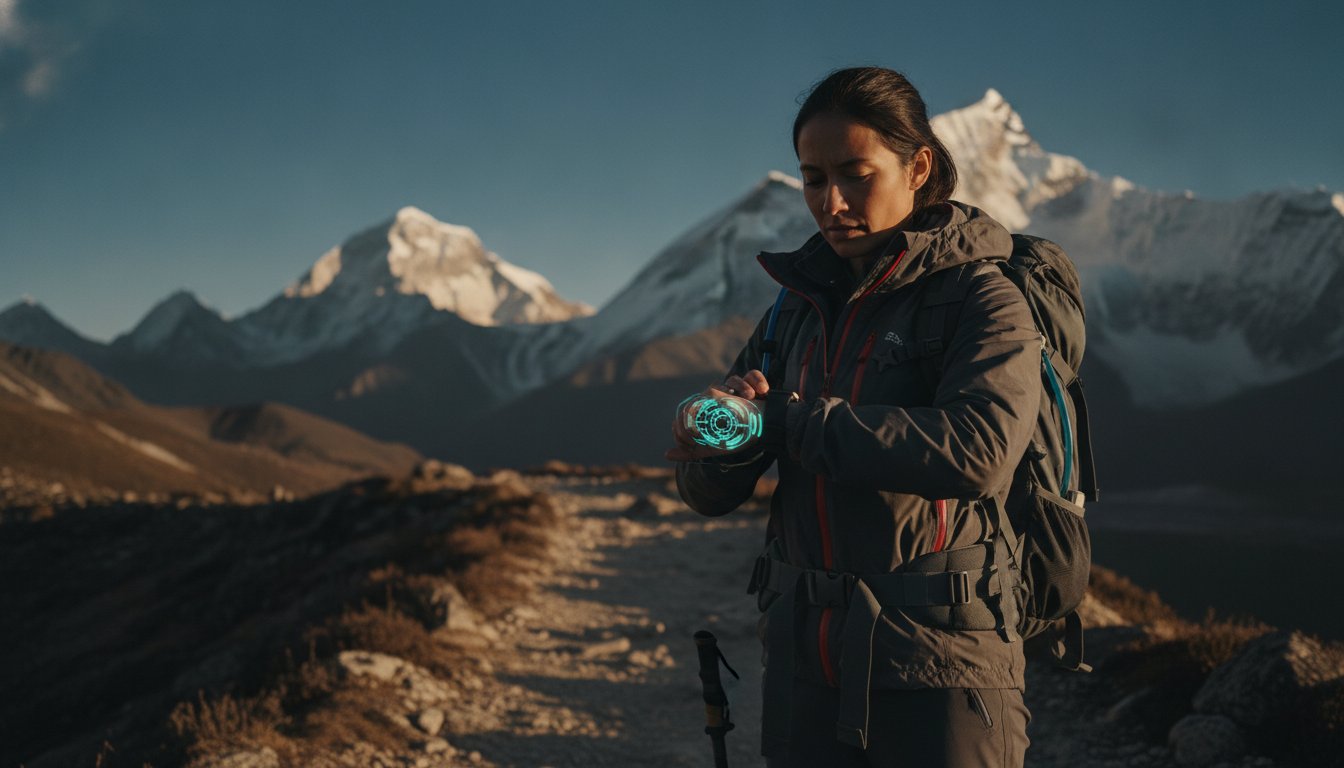
Everest Base Camp Trek Acclimatization Guide: The 2026 Safety Blueprint
The secret to standing at the foot of the world’s highest peak isn’t just about how many kilometres you’ve run on your local trails; it’s about how well your body hunts for oxygen. Most trekkers fail not because they lack physical strength, but because they treat adaptation like a passive waiting game. This Everest Base Camp trek acclimatization guide is your 2026 blueprint for transforming your physiology into a high-altitude machine. Since 1992, we’ve seen that the difference between reaching the Khumbu Glacier and turning back early often comes down to science, not just stamina.
We know you’re likely worried about being the one person in your group who has to descend, or perhaps you’re feeling confused by conflicting advice on Diamox and “death zone” myths. It’s perfectly normal to feel that pre-trip anxiety when you’re preparing to leave your familiar sea-level environment for the thin air of the Himalayas. We promise to clear the fog by providing an expert-led breakdown of how to adapt safely and successfully. You’ll discover a day-by-day adaptation schedule, learn the specific signs to monitor your own health using modern tools like pulse oximeters, and gain the absolute confidence needed to step onto that Lukla flight with total peace of mind.
Key Takeaways
- Discover why peak physical fitness doesn’t guarantee immunity to altitude and how your body actually adapts to thin air.
- Master the “climb high, sleep low” logic to safely navigate critical acclimatization stops like Namche Bazaar and Dingboche.
- Use this Everest Base Camp trek acclimatization guide to distinguish between professional oxygen monitoring and 2026 smartwatch trends.
- Learn to interpret your body’s signals, from resting heart rates to SpO2 levels, ensuring you stay ahead of altitude sickness.
- Gain peace of mind with a safety blueprint backed by 30 years of experience and dual support from Singapore and Kathmandu.
Understanding Acclimatization: Why It Is the #1 Factor for EBC Success
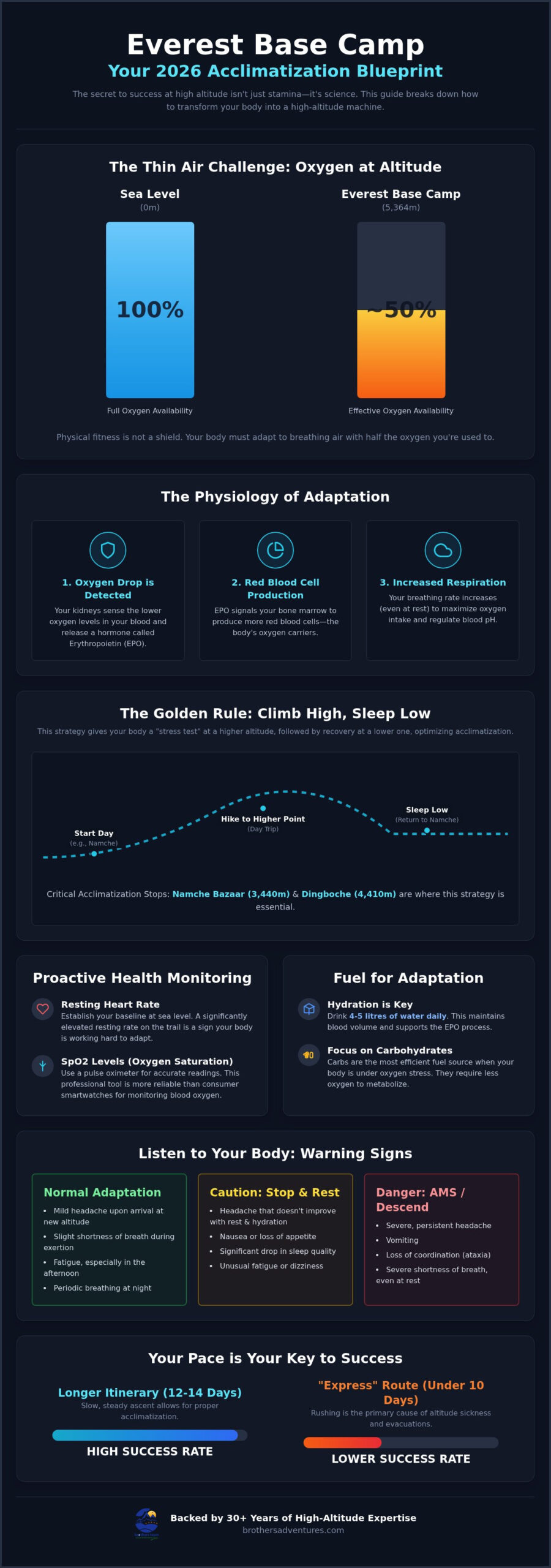
Acclimatization is your body’s brilliant way of responding to lower atmospheric pressure. It isn’t a passive state; it’s an active, internal transformation. Many trekkers arrive in Nepal with marathon-ready lungs only to find themselves struggling by the time they reach 3,000 metres. This happens because physical fitness is not a shield against altitude sickness. In fact, having significant muscle mass can sometimes be a disadvantage, as those muscles demand more oxygen than your thinning blood can easily provide. Think of this Everest Base Camp trek acclimatization guide as your manual for managing the “Thin Air” reality. By the time you reach the Everest Base Camp trek overview area, you’ll be breathing air that contains roughly 50% less oxygen than what you’re used to at sea level.
The Sea-Level Challenge
For our friends coming from Singapore, the challenge is unique. You’re starting from absolute sea level. The jump from Kathmandu (1,400m) to Lukla (2,840m) is already a significant physiological leap. Your heart rate will likely spike simply by standing on the tarmac. We recommend establishing a baseline resting heart rate at home before your flight. This data helps you track exactly how hard your heart is working once you hit the trail. Don’t let the excitement of the mountains trick you into moving too fast. Your body needs every minute of those early days to begin the complex process of chemical adjustment.
Success Rates and Altitude
Statistics consistently show that trekkers who choose longer, 12 to 14-day itineraries have significantly higher success rates than those attempting “express” routes. Rushing is the primary cause of emergency helicopter evacuations in the Khumbu region. Your body needs time to produce more red blood cells to carry what little oxygen is available. For 2026, we’re seeing more trekkers embrace the slow-and-steady approach, which is the most reliable way to ensure you reach 5,364 metres. The acclimatization threshold in the Khumbu is the altitude, typically around 3,000 metres, where the body’s rate of adaptation must strictly dictate the pace of ascent to prevent cellular oxygen starvation. Prioritize your health over your calendar to ensure you actually see the Khumbu Glacier in person rather than from a rescue chopper. For those who want to witness the majesty of the Himalayas before committing to the full trek, the Everest mountain flight experience offers a breathtaking aerial perspective of the summit and surrounding peaks.
The Physiology of Adaptation: How Your Body Fights for Oxygen
Your body is a remarkable adaptive engine. When you reach the higher reaches of the Khumbu, your kidneys detect the drop in oxygen and release a hormone called erythropoietin (EPO). This hormone triggers your bone marrow to produce more red blood cells, the tiny couriers that carry life-sustaining oxygen to your muscles. It’s a fascinating internal race against the thinning atmosphere. This Everest Base Camp trek acclimatization guide emphasizes that while you rest in Namche Bazaar, your breathing rate increases even while you sleep. This is your body’s way of blowing off excess carbon dioxide to manage your blood’s pH balance, which becomes more alkaline in the first 48 hours of exposure.
The “Golden Rule” of mountaineering is to climb high and sleep low. By hiking to a higher elevation during the day and returning to a lower altitude to sleep, you give your system a “stress test” followed by a period of recovery. This strategy is essential for a safe Everest Base Camp Trek, allowing your chemistry to stabilize before the next day’s ascent. It’s a proactive way to hunt for oxygen rather than just waiting for your body to catch up.
Early Warning Signs vs. AMS
It’s vital to distinguish between normal altitude fatigue and Acute Mountain Sickness (AMS). You should expect a mild headache or slight shortness of breath when you first arrive at 3,440 metres. However, the 2026 protocol for monitoring safety requires honesty. If a headache doesn’t disappear with hydration and rest, or if your sleep quality drops significantly, it’s a mandatory rest day. Following the CDC guidelines on altitude sickness ensures you don’t push through symptoms that could escalate into something more serious.
Hydration and Nutrition as Fuel for Adaptation
Your metabolism works overtime at altitude, requiring 4-5 litres of water daily to maintain blood volume and aid the EPO process. Focus on carbohydrates; they are the most efficient fuel for oxygen processing when your body is under stress. We advise our guests to avoid alcohol and limit caffeine entirely. Alcohol is a respiratory depressant that slows down your natural breathing rhythm, which is the last thing you want when your body is fighting for every molecule of oxygen. Proper fueling isn’t just about energy; it’s about giving your internal chemistry the best possible chance to succeed.
The ‘Climb High, Sleep Low’ Strategy: A Day-by-Day Logic
Climbing high and sleeping low is more than just a catchy mountain phrase; it’s the operational spine of a safe Everest Base Camp trek itinerary. While we previously explored the blood chemistry of adaptation, this strategy is how you apply that science on the trail. Success in the Khumbu isn’t about how fast you can march uphill; it’s about how effectively you use your rest days. This Everest Base Camp trek acclimatization guide advocates for ‘active recovery’-moving your body to higher elevations during the day to stimulate adaptation without the exhaustion of a full day’s trek. These hikes also provide a massive psychological boost. Seeing the massive peaks of Lhotse and Ama Dablam from a viewpoint above the clouds reminds you why you’re here, transforming altitude anxiety into a sense of wonder.
The Namche Bazaar Protocol
Namche Bazaar, sitting at 3,440 metres, serves as the first major physiological filter. We don’t just sit in the tea house here. Instead, we hike up to the Everest View Hotel at roughly 3,880 metres. This 440-metre gain provides a necessary ‘jolt’ to your system, forcing your lungs to work harder before you descend for a comfortable night’s rest. Monitoring your heart rate recovery after this climb is a key indicator of your readiness for higher ground. Sleeping at a lower elevation than your peak daily height is vital because it triggers the body to produce red blood cells while allowing the respiratory system to recover in a more oxygen-rich environment overnight. Following the CDC guidelines on high-altitude illness, we ensure our guests never ascend more than 300 to 500 metres in sleeping altitude per day once they’ve crossed the 3,000-metre mark.
The Dingboche to Lobuche Transition
Once you reach Dingboche at 4,410 metres, the air feels noticeably thinner, and the landscape turns beautifully stark. The transition from here to Lobuche involves crossing the Thukla Pass, a somber and powerful place marked by memorials for fallen climbers. The air pressure drop here is more pronounced than in the lower valleys, often causing a ‘heavy’ feeling in the legs that requires patience. Use your time in Dingboche to hike toward Nangkartshang Peak. This active push helps your body manage the pH shifts in your blood while preparing you for the 5,000-metre zone. Before leaving Dingboche, perform a final health check. Ensure your hydration levels are high and your pulse oximeter readings are within the expected range for this altitude before committing to the final push toward Base Camp.
Proactive Monitoring: Gear and Tech for 2026 Trekkers
Objective data is your best friend when the air gets thin. While some online forums suggest you can rely on simply “feeling okay”, a professional Everest Base Camp trek acclimatization guide prioritizes hard numbers to ensure your safety. We use pulse oximeters twice daily to track your SpO2, which is your blood oxygen saturation level. At sea level in Singapore, you’re likely sitting at a healthy 98% or 99%. By the time you reach 5,000 metres, seeing a reading between 75% and 85% is considered normal, but anything lower requires an immediate medical assessment. In 2026, we see many trekkers arriving with high-end smartwatches. While these are excellent for tracking your steps and sleep, they often struggle with oxygen accuracy at extreme altitudes due to cold skin temperatures. This is why choosing a specialist tour operator is vital; we provide medical-grade monitoring that doesn’t glitch when the temperature drops below freezing.
Protecting your respiratory system is just as important as monitoring your blood. The “Khumbu Cough” is a dry, persistent irritation caused by breathing cold, bone-dry mountain air directly into your lungs. You can easily prevent this by wearing a buff or a lightweight mask to pre-warm and humidify the air you breathe. It’s a simple gear fix that prevents significant discomfort during the final days of your journey.
The 2026 High-Altitude First Aid Kit
The Diamox debate is a constant topic of conversation in our Singapore office. Some trekkers prefer to take it as a preventative measure starting from Lukla, while others wait to see how their bodies react. You should always consult a travel doctor in Singapore before making this decision. Understand that emergency oxygen is a life-saving tool meant for rapid descent, not a “boost” to help you push to the base camp when you’re unwell. Additionally, don’t underestimate the sun. The thin atmosphere means UV rays are incredibly punishing, so use SPF 50+ and high-quality wrap-around sunglasses to avoid the risk of snow blindness.
Training Your Lungs Before the Trek
Your preparation should start at least three to six months before you land in Kathmandu. Focus on “Zone 2” training, which involves steady-state cardio like long walks or slow jogs where you can still hold a conversation. This builds the aerobic base your body needs to process oxygen efficiently under stress. Practice rhythmic breathing exercises to stay calm and focused during the steep climbs. As you calculate your Everest Base Camp trek cost from Singapore, remember to budget for quality training gear and perhaps a few sessions at a local climbing gym to build your leg strength. Ready to put this tech into practice? Explore our upcoming Everest Base Camp Trek dates and let our experts handle the monitoring while you focus on the adventure.
The Brothers Adventures Safety Net: 30+ Years of Expertise
Choosing the right partner for your expedition is the final, most crucial step in this Everest Base Camp trek acclimatization guide. At Brothers International Tours & Trading Pte Ltd, we’ve spent over three decades refining our safety protocols since our founding in 1992. Our dual-office presence in Singapore and Kathmandu creates a seamless safety net that larger, impersonal corporations simply can’t match. When you’re at 5,000 metres, knowing that our Kathmandu team is in constant communication with our Singapore base provides an immense sense of security. We treat you like an invited guest, not just another trekker on a list. This high-touch approach allows our guides to notice the subtle changes in your personality or appetite that might signal early altitude issues before they become emergencies.
We’ve found that integrating a Nepal cultural tour package mindset into our treks helps you relax. A relaxed mind adapts to altitude faster than one gripped by stress. By immersing yourself in the local heritage and the warmth of Sherpa hospitality, you find a rhythm that supports your physical journey. Our 1992-to-2026 evolution of safety protocols ensures that every journey is backed by real-world data and decades of successful summits. For Singapore travelers who wish to extend their Himalayan adventure beyond Nepal, our Bhutan luxury tour packages offer an extraordinary complement, pairing 5-star sanctuary stays with private cultural immersions in the “Last Shangri-La.”
Our Expert Guides and AMS Tracking
Our guides aren’t just mountain experts; they’re trained in AMS tracking and oxygen monitoring. Every morning and evening, we conduct thorough health checks, looking at more than just a pulse oximeter reading. We evaluate your mental clarity, coordination, and even your enthusiasm for dinner. The decision-making process for a ‘go/no-go’ is never taken lightly, but it’s always guided by 30 years of local knowledge. We can spot weather-related risks or physiological red flags long before they manifest as serious illness. This deep expertise is why this Everest Base Camp trek acclimatization guide remains the gold standard for sea-level travelers.
Your Journey Starts Here
As you prepare for your 2026 Everest expedition, keep this checklist in mind:
- Confirm your travel insurance covers helicopter evacuation up to 6,000m.
- Establish your baseline heart rate with your training team in Singapore.
- Consult your doctor about altitude medications well before departure.
- Finalize your gear list for the specific conditions of the 2026 season.
Whether you prefer a custom itinerary tailored to your specific pace or one of our fixed-price packages, we’re here to guide you. Book Your 2026 Everest Adventure with Brothers International Tours & Trading Pte Ltd today and start your journey with the experts who know the Khumbu best.
Master the Mountains with Absolute Confidence
Reaching the base of the world’s highest peak is a transformative experience that demands respect for the science of altitude. You now understand that success isn’t about speed. It’s about the proactive “climb high, sleep low” strategy and listening to your body’s physiological signals. This Everest Base Camp trek acclimatization guide has provided the blueprint you need to navigate the 2026 season safely. By prioritizing hydration, nutrition, and medical-grade monitoring, you’re already ahead of the curve.
At Brothers Adventures, we’ve been perfecting this journey since 1992. As a family-owned business with over 30 years of Himalayan expertise, we provide the personalized care and medical-grade AMS monitoring required for sea-level travelers to thrive. We invite you to join our family and experience the wonder of the Khumbu under the watchful eye of our seasoned experts. Don’t let fear hold you back from the adventure of a lifetime. Start Your Everest Journey with Brothers Adventures and let us turn your Himalayan dreams into a safe, spectacular reality. The mountains are calling; it’s time to answer.
Frequently Asked Questions
What is the best way to prevent altitude sickness on the EBC trek?
The most effective prevention is a gradual ascent combined with the “climb high, sleep low” strategy. This involves hiking to a higher elevation during the day and returning to a lower point to sleep, which provides a controlled stress test for your respiratory system. Following a structured Everest Base Camp trek acclimatization guide ensures you don’t exceed the safe vertical limit of 300 to 500 metres per day once you pass the 3,000-metre mark.
Should I start taking Diamox before I arrive in Kathmandu?
You should consult a travel clinic in Singapore before starting any medication, as Diamox is typically started 24 hours before you begin your ascent rather than before arriving in Kathmandu. While some trekkers use it as a preventative measure to stimulate breathing, others prefer to keep it in their first aid kit for symptom management. Always follow the specific medical advice provided by your healthcare professional based on your personal health history.
How many liters of water should I drink per day at high altitude?
Aim to drink between 4 and 5 litres of water every day to support your blood’s ability to transport oxygen. High altitude causes rapid dehydration through increased respiration and drier air, which can mimic or worsen altitude symptoms. Keeping your urine clear is a simple, practical way to verify you’re meeting your hydration goals while your body works overtime to produce more red blood cells.
Can I trek to Everest Base Camp if I live at sea level?
Yes, you can successfully reach Base Camp even if you live at sea level in Singapore, provided you choose an itinerary with adequate rest days. Travelers from low-altitude regions face a steeper physiological curve, so focusing on “Zone 2” cardiovascular training months in advance is essential. Our 30 years of experience show that sea-level dwellers who prioritize a slow pace have success rates equal to those from higher elevations. If you’re not yet ready for the full trek, consider the Everest mountain flight experience as a way to witness the Himalayas up close while planning your future ascent.
What should my oxygen saturation (SpO2) be at 5,000 meters?
At an altitude of 5,000 metres, a normal oxygen saturation (SpO2) reading typically falls between 75% and 85%. While a reading of 98% is standard in Singapore, the thinning air makes these lower numbers expected and safe for most adapted trekkers. Our guides use medical-grade pulse oximeters to monitor these levels twice daily, ensuring your oxygen levels remain within a healthy range for the specific elevation.
What happens if I get altitude sickness during the trek?
If you develop symptoms of Acute Mountain Sickness (AMS), the priority is to stop ascending immediately and, if symptoms persist, descend to a lower altitude. Minor headaches may resolve with rest and hydration; however, worsening symptoms like loss of coordination or a persistent cough require a rapid move to lower ground. Our guides are trained to make these “go/no-go” decisions to ensure your safety and coordinate emergency responses if necessary.
Is it better to have more rest days in Namche Bazaar or Dingboche?
It is essential to have rest days in both Namche Bazaar (3,440m) and Dingboche (4,410m) to allow your body to adjust to different atmospheric pressures. Namche serves as the first major physiological hurdle, while Dingboche prepares your system for the final push into the 5,000-metre zone. Skipping either of these critical stops significantly increases the risk of exhaustion and altitude-related complications during the latter half of the trek.
How does physical fitness affect my ability to acclimatize?
Physical fitness improves your recovery time and overall endurance, but it does not grant immunity to altitude sickness. Even elite athletes can suffer from AMS because the body’s ability to manage blood chemistry and pH levels is independent of muscular strength. This Everest Base Camp trek acclimatization guide emphasizes that a steady, moderate pace is always more effective than trying to power through the trail with raw fitness.


Comments are closed