


Teahouse Versus Camping Treks for Himalayan Walkers
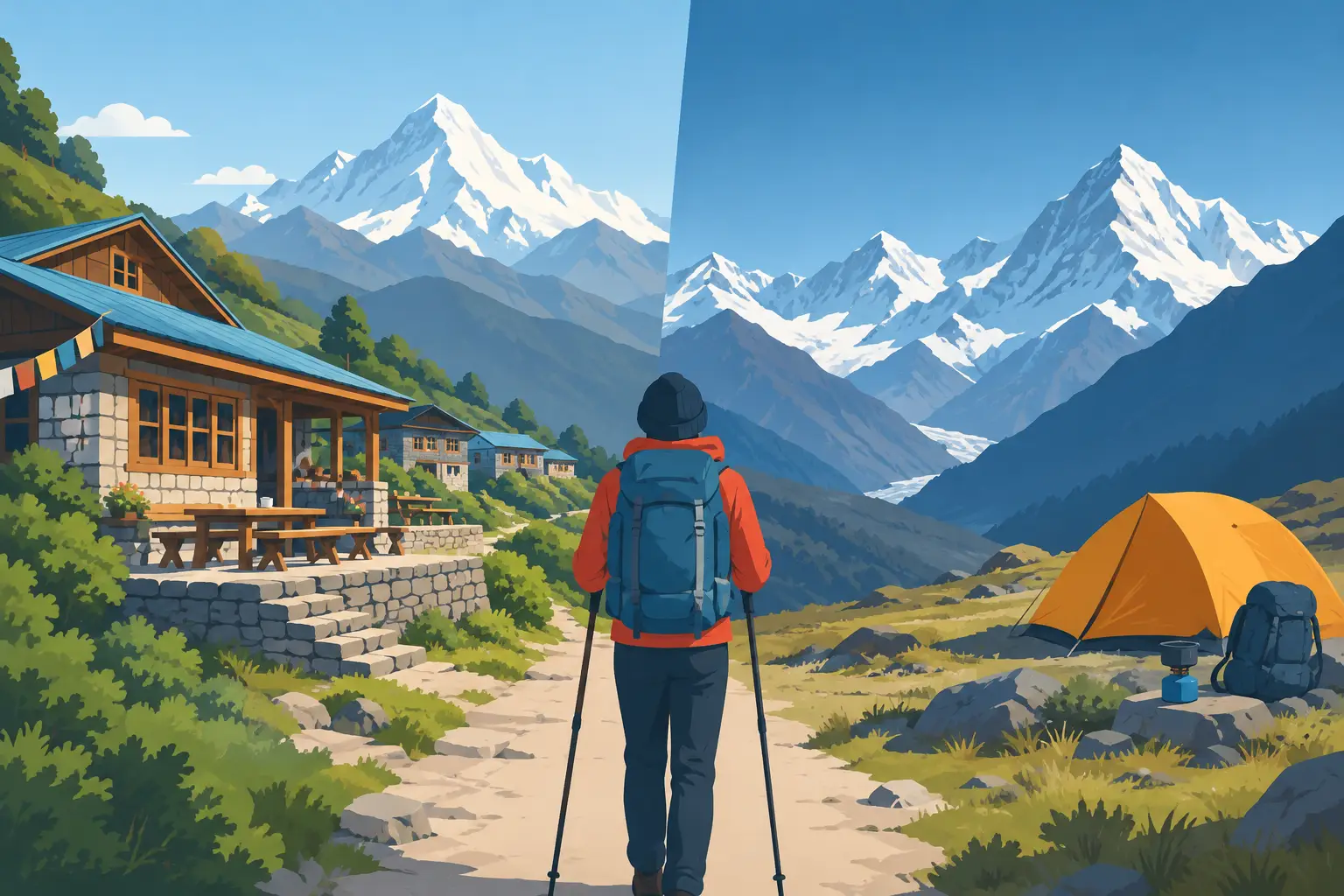
A warm dining room in Namche Bazaar, a hot plate of dal bhat and a bed waiting upstairs can feel wonderfully luxurious after a long uphill day. On another trail, that same evening may mean a tent pitched beneath high peaks, with your crew preparing dinner while the nearest village is several days away. When travellers compare teahouse versus camping treks, the decision is not simply about comfort. It shapes the route you can take, the people you meet, the level of support required and the kind of Himalayan memory you bring home.
Teahouse versus camping treks: the real choice
A teahouse trek follows a network of mountain lodges. You walk from settlement to settlement, eat in lodge dining rooms and sleep in private or shared rooms, depending on the route and season. This is the classic format on established Nepal routes such as Everest Base Camp, Gokyo Lakes, Poon Hill and much of the Annapurna region.
A camping trek is a self-contained journey supported by a field team. Tents, food, kitchen equipment and group gear travel with you, usually carried by porters or pack animals. Your camp is set up each afternoon, often in remote valleys where there are no lodges, or where the available facilities do not meet the needs of the group.
Neither style is automatically better. A first-time trekker may thrive with the sociable rhythm and easier logistics of teahouses. An experienced walker may find that a camping trek offers the solitude and wilderness they have been seeking. The right choice begins with the destination, then considers your expectations, fitness and appetite for simplicity.
Why many trekkers choose teahouses
Teahouse trekking makes the Himalaya accessible without making it tame. You still earn every viewpoint and contend with steep stone steps, changeable weather and high altitude. Yet at the end of the day, there is a roof, a dining room and a welcome pause from carrying a heavy pack.
On popular trails, the lodge experience adds a valuable cultural dimension. You may share a table with Sherpa guides, local families, fellow trekkers and climbing teams, swapping route news over ginger tea. Villages such as Namche, Tengboche and Ghorepani are part of the journey rather than places you merely pass through. Spending directly in local lodges also supports communities that depend on trekking.
For many guests, the practical benefits matter just as much. A lodge trek requires less equipment and a smaller personal packing list. Most trekkers carry a daypack while porters transport the main duffel bag. Meals are prepared to order, so there is no need to manage camp food or washing-up after a tiring day.
Comfort is relative, however. Rooms are often simple, with twin beds, shared toilets and limited heating away from the dining area. In busy trekking months, accommodation can be full and menus become less varied as altitude rises. Hot showers, charging and Wi-Fi may be available but usually cost extra and cannot be relied upon in poor weather. Going in with realistic expectations makes the experience far more enjoyable.
Best suited to established Himalayan routes
Teahouses work best where lodges are frequent and reliable. Everest Base Camp, including the Gokyo Lakes and Cho-La Pass extension, is a strong example. The Annapurna region also offers outstanding lodge-based options, from the shorter Poon Hill trek to longer journeys around the massif. These routes combine dramatic scenery with a well-developed trekking infrastructure.
That infrastructure allows guides to focus closely on pacing, acclimatisation and the daily wellbeing of the group. It also gives flexibility if someone needs an extra rest day or requires assistance moving down the valley.
What a camping trek gives you
Camping opens the door to quieter landscapes. In regions such as Upper Dolpo, Kanchenjunga, Makalu, Manaslu’s less-developed side valleys and remote areas beyond the main trails, tents may be the only sensible accommodation. The reward is a stronger sense of expedition: vast campsites, long stretches without crowds and an evening sky unbroken by village lights.
A good camp has its own reassuring rhythm. After walking, you arrive to find sleeping tents ready, a dining tent or sheltered eating area arranged, and hot drinks being prepared. The kitchen crew manages meals, safe water and camp routines, while guides monitor the route, weather and each trekker’s condition. This support is particularly meaningful on remote high-altitude journeys, where self-sufficiency must be planned rather than improvised.
Camping can also provide more control over food, sleeping arrangements and group privacy. This is useful for schools, colleges and private groups with specific dietary, educational or operational needs. A thoughtfully designed camp allows a group to eat together, hold an evening briefing and maintain a consistent routine in places without suitable lodges.
The trade-off is that life is more elemental. You may wash from a bowl, use a portable toilet tent and sleep with the sounds of wind, rain or yak bells outside. Weather affects camp more directly than a lodge. A wet afternoon means damp boots and careful organisation; a cold morning requires resolve before you leave your sleeping bag. For many trekkers, these are not drawbacks but part of the point.
The factors that should decide your trek style
Route comes first
Do not choose a camping trek merely because it sounds more adventurous, or a teahouse trek because it sounds easier. Start with the landscape and objective that excite you. If your dream is Everest Base Camp or Annapurna Poon Hill, a lodge itinerary is usually the most practical and enjoyable choice. If you hope to cross isolated passes, visit remote villages or explore a region with few facilities, camping may be essential.
Some itineraries are hybrid journeys. You might stay in lodges for part of the trek, then camp during a remote extension or on a demanding pass crossing. This can offer variety while keeping the expedition logistics focused where they are genuinely needed.
Comfort, hygiene and personal space
Teahouses provide a bed and walls, but they do not promise hotel-level privacy. During peak season, dining rooms can be lively and bathrooms busy. Camping offers more personal sleeping space, especially in a private tent, but fewer conventional facilities. Consider which matters more to you: access to a lodge shower and social atmosphere, or a quieter camp with simpler washing arrangements.
A sleeping bag remains important in both formats. Mountain nights are cold, and lodge blankets alone may not provide enough warmth. Your trekking team should advise on the correct temperature rating for the season and altitude.
Cost and logistics
Lodge treks often have lower operational costs because accommodation and meals are purchased along the route. Camping needs a larger team, additional equipment, food provisions and transport for supplies, so it is generally more expensive. That expense buys capability rather than luxury: safe catering, proper camp equipment, experienced staff and the ability to travel well beyond the lodge network.
On both styles, avoid comparing prices only by the headline figure. Ask what is included in permits, domestic flights or road transfers, porter support, meals, emergency planning and guide experience. Remote mountain travel rewards thorough preparation.
Altitude and safety
A lodge bed does not reduce altitude risk, and a tent does not create it. Acute mountain sickness is managed through sensible ascent profiles, acclimatisation days, hydration, honest communication and guides who recognise when plans must change. The itinerary matters more than whether you sleep in a lodge or camp.
This is where an experienced operator makes a clear difference. At Brothers Team, route planning considers not only the destination but also daily elevation gain, contingency time, access to support and the needs of the individual group. A summit, pass or base camp is never worth ignoring warning signs from your body.
How to choose with confidence
Choose a teahouse trek if you want a cultural, sociable Himalayan experience with straightforward daily logistics and a little more comfort after walking. It is an excellent first high-altitude trek and remains a favourite format for seasoned walkers who would rather focus on the trail than camp routine.
Choose a camping trek if the remoteness of the route is central to your goal, if you enjoy expedition-style travel, or if you are travelling with a group that benefits from a dedicated support structure. Be ready to exchange familiar comforts for places that few visitors reach.
Whichever format calls to you, allow enough days to acclimatise, prepare your footwear and fitness well before departure, and be open to the mountain setting the pace. The best trek is the one that lets you look up from the path, breathe deeply and feel fully present in the landscape around you.

Comments are closed