


Family Friendly Treks Nepal: The Ultimate 2026 Guide to Himalayan Adventures with Kids
What if your child’s most impactful classroom wasn’t found within four walls, but along the winding, rhododendron-lined paths of the Himalayas? It’s a bold thought, yet many parents hesitate because they fear the “Roof of the World” is simply too rugged for little legs. You might worry about altitude sickness, the quality of mountain tea houses, or whether your kids can truly handle the physical trek. We understand those concerns deeply because we’ve been guiding families through these peaks since 1992.
The truth is that family friendly treks Nepal are not only possible; they are life-changing when planned with a safety-first mindset. This guide reveals how your family can navigate the majestic Himalayas through expert-led itineraries designed for all ages and fitness levels. You’ll learn how professional support and high-altitude monitoring turn a challenging environment into a secure playground for discovery. We will preview the best routes for 2026, including the 8Days Scenic Nepal Mini Trek, and explain how to immerse your children in Sherpa culture while keeping everyone comfortable and energized. Get ready to turn your worries into a sense of wonder as we map out your next great family adventure.
Key Takeaways
- Discover why the Himalayas offer a “classroom without walls” for children, building resilience and cultural awareness through a pace tailored to the slowest walker.
- Learn to identify the best family friendly treks Nepal by prioritizing low-altitude routes with high visual rewards, such as the entry-level 8Days Scenic Nepal Mini Trek.
- Master essential safety protocols for young explorers, including how to recognize AMS symptoms and the importance of daily pulse oximeter monitoring.
- Get actionable advice on preparing your family with a three-month training timeline and a professional layering system for fluctuating mountain weather.
- Understand how a family-owned partner with over 30 years of experience provides the bridge between your logistical needs and an authentic Sherpa cultural experience.
Why Nepal is the World’s Premier Family Adventure Destination in 2026
Nepal has evolved far beyond its reputation as a playground for elite mountaineers. In 2026, it stands as the ultimate destination for family friendly treks Nepal, offering a unique blend of high-altitude wonder and accessible, supported exploration. A true family trek isn’t an endurance race or a test of grit for the kids. Instead, it’s a meticulously guided journey tailored to the pace of the slowest walker. This philosophy ensures that every member of the family, from curious seven-year-olds to active grandparents, feels empowered rather than exhausted.
At Brothers Adventures, our family-owned heritage since 1992 means we treat your journey with the same care we’d give our own relatives. We act as a bridge between your home and the high peaks, providing a personal, high-touch experience that large corporations simply can’t replicate. By 2026, improved infrastructure and communication technology have made the trails safer and more connected than ever before. You’ll find that the rugged charm of the Himalayas now coexists with the reliability modern families need to feel secure.
The “Classroom Without Walls” Experience
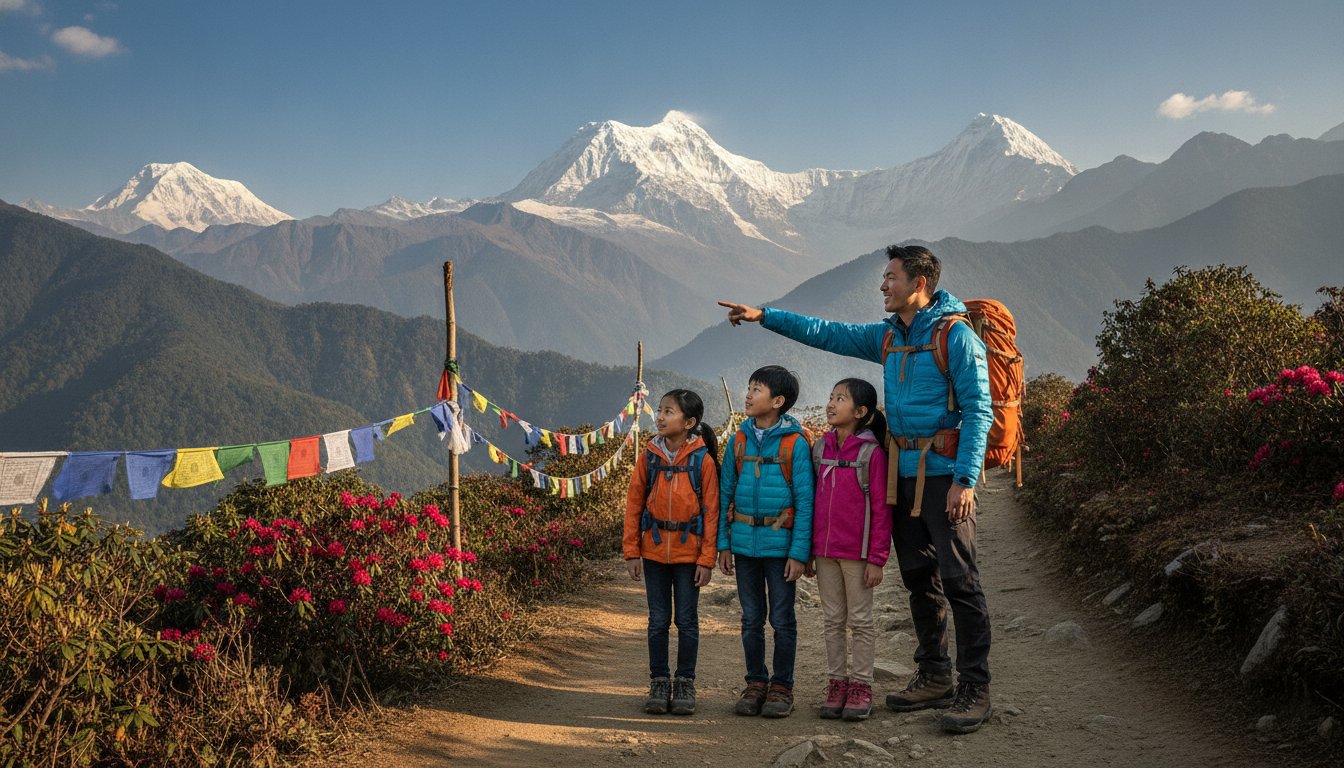
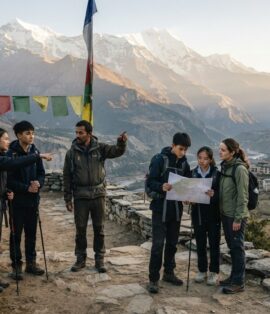
Imagine swapping a geography textbook for the living landscapes of the Annapurna Conservation Area. Here, children witness the transition from lush sub-tropical forests to alpine tundra in just a few days of walking. They’ll visit ancient monasteries, share stories with local students in mountain schools, and learn the rich traditions of Sherpa culture. These manageable challenges build a sense of “grit” and resilience in young explorers. They discover that they can achieve incredible things one step at a time, fostering a confidence that lasts long after they return home.
Modern Comforts in the Wilderness
The trekking experience in 2026 has seen a significant upgrade in amenities. Most tea houses on popular routes now offer high-speed satellite Wi-Fi and reliable solar-powered hot showers, allowing you to stay connected and comfortable. Choosing a specialist tour operator is essential for navigating these options, as we hand-pick accommodations known for their cleanliness and quality food. Our private guides are experts at monitoring child energy levels, frequently adjusting daily distances and stopping for “hot chocolate breaks” to ensure the journey remains joyful and never feels like a chore.
Selecting the Perfect Path: Best Family-Friendly Treks in Nepal
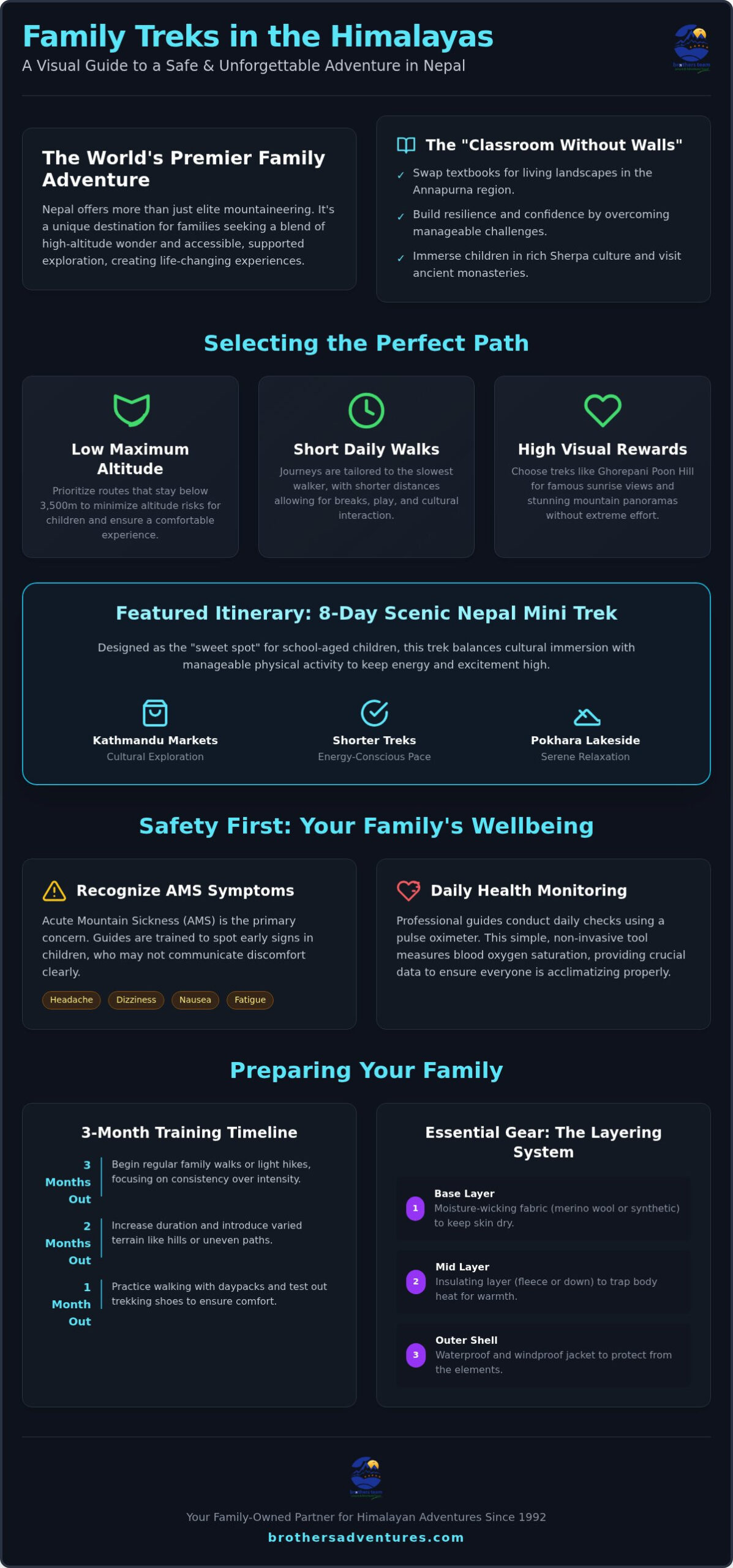
Choosing the right trail is the most important decision you’ll make for your Himalayan journey. For family friendly treks Nepal, we focus on the “Golden Ratio”: low maximum altitudes, short daily walking durations, and massive visual rewards. While many agencies suggest generic routes, we look for paths that offer a supported middle ground. This ensures you aren’t “roughing it” too much while still feeling the raw magic of the mountains. Before you set off, it’s a great idea to consult the latest health information for travelers to Nepal to ensure your family’s vaccinations and medical kits are up to date for the 2026 season.
The Annapurna Foothills remain a perennial favorite for families, specifically the Ghorepani Poon Hill circuit. It offers one of the most famous sunrises on earth without requiring you to climb above 3,210 meters. It’s the perfect introduction to mountain life, featuring well-maintained stone steps and plenty of vibrant villages where kids can interact with local communities and see colorful mule trains passing by.
The 8-Day Scenic Nepal Mini Trek
If you’re looking for the absolute “sweet spot” for school-aged children, our signature 8Days Scenic Nepal Mini Trek is the answer. This itinerary is designed to keep energy levels high and boredom low. We balance the excitement of Kathmandu’s bustling markets with the serene, lakeside relaxation of Pokhara. The actual walking days are shorter than standard treks, allowing plenty of time for hot chocolate breaks and spontaneous games of mountain soccer with local kids.
What makes this trek special is how it integrates elements of our Nepal cultural tour package. You aren’t just walking; you’re visiting ancient temples and learning about the living heritage of the Gurung people. It’s an educational adventure that feels like a holiday rather than a workout.
Everest Base Camp for Families: Is it Feasible?
We often get asked if children can reach the foot of the world’s highest peak. For families with active teenagers, our Everest Base Camp trek from Singapore is a manageable goal, provided you have a professional team monitoring oxygen levels daily. However, the Everest region is steeper and the air is thinner than in Annapurna. If your children are younger or you have limited time, we recommend our Mt Everest View Flight. It delivers those iconic “top of the world” views in a single morning, keeping the experience stress-free. If you’re unsure which route matches your child’s fitness level, you can always review our detailed itinerary guides to find your family’s perfect pace.
Safety First: Managing Altitude and Health with Young Explorers
Safety isn’t just a checkbox; it’s the heartbeat of our operations. When planning family friendly treks Nepal, the primary concern for most parents is Acute Mountain Sickness (AMS). Children can’t always articulate how they feel, so we train our guides to look for behavioral shifts. Is your child unusually irritable? Are they pushing away their favorite snack? These subtle cues are often the first signs of altitude adjustment. We don’t guess when it comes to your family’s health; we use professional tools to ensure every step is a safe one.
Our safety protocol is rigorous and data-driven. We use daily pulse oximeter checks to monitor oxygen saturation and heart rates for every family member. This isn’t just for the adults; it’s a fun “science check” for the kids that keeps everyone engaged in their own well-being. We also track hydration levels meticulously. Our “Golden Rule” is simple: climb high, sleep low, and always go “bistari, bistari” (slowly, slowly). If a situation requires more than a rest day, our Kathmandu office is on standby to coordinate helicopter evacuations, ensuring you’re never more than a few hours from medical care.
Altitude Awareness and Acclimatisation
We design itineraries with built-in “buffer days” to allow small bodies to adjust to the thinning air. This approach is central to our educational tours in Nepal for students, where health monitoring is the top priority. For younger or non-verbal children, we watch for changes in sleep patterns or activity levels. A slow, steady ascent is the best way to ensure the only thing your kids feel is the excitement of the next mountain view. We prioritize these safety-first family friendly treks Nepal to build confidence in young explorers without overextending their physical limits.
Dietary Safety and Hygiene on the Trail
Keeping kids fueled is vital for their energy and warmth. We rely on the “Dal Bhat” diet, which consists of lentil soup and rice. It’s fresh, calorie-dense, and remarkably safe. We’ve vetted every tea house on our routes for strict hygiene standards, ensuring that food is prepared safely and water is always properly treated. We recommend packing a family-specific medical kit with these essentials:
- Oral rehydration salts (flavored versions work best for kids).
- Broad-spectrum antibiotics (consult your doctor before travel).
- Antiseptic wipes and varied-size bandages.
- Children’s fever and pain relief medication.
- High-SPF sunscreen and lip balm to prevent mountain burn.
Preparing Your Family for the Himalayas: Training and Gear
Success on family friendly treks Nepal begins long before you land in Kathmandu. We believe that the preparation phase is the perfect time to start your family’s bonding experience. Think of it as a three-month countdown to the adventure of a lifetime. By involving your children in the planning and training, you transform potential anxiety into eager anticipation. Our role as your guide is to ensure you have the right roadmap for both your fitness and your kit bag.
Mental preparation is just as vital as physical training. Talk to your children about what mountain life looks like. Explain that tea houses are cozy but simple, often involving shared sleeping quarters and common areas. When kids know to expect long days of walking followed by evening card games by a central stove, they embrace the experience as a grand adventure rather than a hardship. This shift in mindset makes the journey smoother for everyone.
Training as a Family Unit
Don’t treat training like a chore. Start three months out with simple weekend walks in local parks. Gradually increase your distance while everyone carries light daypacks. This gets little shoulders used to the weight and helps you identify any gear issues early. Incorporate stairs or local hills into your weekly routine to prep those climbing muscles. Most importantly, test your gear! Trail-day blisters are easily avoided by wearing your boots on at least five long walks before your trip. If your kids can handle a four-hour walk at home, they’re ready for the rhythm of the Himalayas.
The 2026 Family Packing List
The Himalayas are a land of extremes. You’ll experience warm, sun-drenched valleys and crisp, frosty mornings. Use a “layering system” to stay comfortable. We recommend high-tech moisture-wicking base layers to keep sweat away from skin, topped with insulating fleece and a waterproof outer shell. While high-tech fabrics are great for movement, traditional wool socks remain a mountain staple for keeping toes warm at night.
- Footwear: Invest in high-quality, waterproof hiking boots with ankle support. Ensure they’re thoroughly broken in.
- Sun Protection: UV intensity increases significantly with altitude. Pack high-SPF sunscreen, lip balm, and wide-brimmed hats to protect young skin.
- Evening Essentials: Pack lightweight books, a deck of cards, and solar power banks to keep devices charged for evening entertainment.
Ready to start your countdown? Book your family adventure today and let us handle the logistics while you focus on the training.
Planning Your Multi-Generational Journey with Brothers Adventures
Choosing a partner for your Himalayan expedition is about more than just booking a guide; it’s about finding a team that treats your family’s safety and joy as their own. At Brothers International Tours & Trading Pte Ltd, we aren’t just a travel agency. We are a family-owned and operated business that has been building bridges between travelers and the mountains since 1992. This legacy allows us to design family friendly treks Nepal with a level of personal care that large corporations simply cannot match. We understand that a multi-generational journey requires a delicate balance of adventure for the kids and comfort for the grandparents.
Our dual-office structure in Singapore and Kathmandu provides a unique safety net. While many agencies outsource their logistics to third-party operators, we manage the entire experience in-house. This ensures that the high standards we promise during your initial consultation are exactly what you experience on the trail. From seamless airport transfers to hand-picked tea house accommodations, we handle the complex logistics so you can focus on creating life-changing memories with your loved ones.
The Benefit of Local-Singapore Heritage
Consulting with experts who understand the specific expectations of the national traveler makes a world of difference. Our Singapore presence allows for face-to-face communication and a deep understanding of your needs before you even board your flight. Because we maintain our own office in Kathmandu, there are zero communication gaps. If you need a last-minute adjustment to your itinerary or extra support on the trail, our teams are in constant contact. This 30-plus year reputation in adventure travel gives our guests the peace of mind that they are walking with seasoned, reliable experts who remain deeply passionate about exploration.
Booking and Customization Options
Every family is different, which is why we prioritize flexibility in our route mapping. Whether you are looking for the refined comfort of our 5-day Nepal luxury itinerary or the active engagement of an 8-day mini trek, we customize the pace to suit your slowest walker. Our process is collaborative and thorough. It begins with a personalized inquiry where we discuss your children’s ages, your fitness levels, and your specific goals for the trip.
We then create a route map that maximizes scenery while minimizing physical strain. We can add extra rest days, arrange for cultural workshops in local villages, or integrate educational elements for students. The Himalayas are waiting to welcome your family to a world of wonder. Plan your family adventure with the experts at Brothers Adventures today!
Your Himalayan Legacy Starts Here
The majestic peaks of Nepal are no longer just for solo adventurers; they’re the ultimate playground for your family’s next chapter. We’ve explored how family friendly treks Nepal thrive on expert planning, from selecting lower-altitude routes like our signature 8-day mini trek to mastering the layering system for mountain weather. By focusing on a pace tailored to your slowest walker, you transform a challenging environment into a secure classroom of discovery and resilience.
With Brothers Adventures, you aren’t just booking a trip; you’re joining a legacy of family-owned expertise that dates back to 1992. Our dual-office support in Singapore and Kathmandu means you’re never alone, while our daily health and altitude monitoring ensures every child and adult stays safe and energized. Don’t let the “Roof of the World” remain a distant dream. It’s time to build resilience, spark wonder, and strengthen your family bonds in the heart of the Himalayas.
Ready to take the first step? Explore Our Family-Friendly Nepal Trekking Packages and let’s map out your 2026 adventure together!
Frequently Asked Questions
What is the minimum age for a family trek in Nepal?
Most families find that children aged seven and older are best suited for walking the trails independently. For younger explorers, we can arrange specialized porter support to carry them in traditional carriers when they get tired. This flexibility ensures that family friendly treks Nepal remain accessible even for those with small children. We always recommend consulting with us to match a specific route to your child’s developmental stage and physical endurance.
How do we handle altitude sickness (AMS) with children on the trail?
Prevention through a slow ascent and consistent hydration is our primary strategy. If a child shows persistent symptoms like headaches or a loss of appetite, our rule is immediate descent to a lower altitude. Our guides carry comprehensive medical kits and maintain constant communication with our Kathmandu office for emergency coordination. We prioritize safety over reaching a specific destination, ensuring that every family member feels supported and secure throughout the journey.
What kind of food is available for picky eaters in Himalayan tea houses?
Himalayan tea houses offer surprisingly diverse menus beyond traditional dal bhat. Picky eaters can usually find familiar favorites like pasta, pancakes, omelets, and even mountain-style pizza or French fries. We suggest bringing a few familiar snacks from home, like granola bars or dried fruit, to provide a comfort boost during long walking days. Our guides also ensure that all meals are prepared with high hygiene standards to keep little tummies happy and healthy.
Do we need to carry our own gear, or are porters provided for families?
You won’t need to carry heavy loads; we provide professional porters for all our family groups. Each family member typically carries only a small daypack with essentials like water, sunscreen, and a light jacket. A single porter generally carries the gear for two people, up to a combined weight of 20kg. This service allows you to focus on the scenery and your children’s needs rather than struggling with a heavy rucksack.
Is there Wi-Fi and mobile connectivity available during the trek?
Connectivity has improved significantly, with satellite Wi-Fi now available at most tea houses along the major trekking routes in 2026. While speeds can vary depending on the weather and location, it’s usually sufficient for sending messages or quick photo updates to relatives. We recommend purchasing a local SIM card in Kathmandu for better mobile data coverage in lower regions. This allows you to stay connected while still enjoying the peacefulness of the mountain environment.
What is the best time of year for a family trek in Nepal?
The peak seasons for a family adventure are spring, from March to May, and autumn, from September to November. Spring offers the beauty of blooming rhododendrons and warmer temperatures, which is often easier for children. Autumn provides the crispest, clearest mountain views after the monsoon rains have cleared the air. Both seasons offer stable weather patterns and manageable trail conditions, making them the safest windows for family friendly treks Nepal.
Are there western-style toilets available in the trekking regions?
Many modern tea houses on popular routes now feature western-style sit-down toilets, especially in private rooms or upgraded lodges. However, as you climb higher or venture into more remote areas, you may encounter traditional squat toilets. We hand-pick accommodations that prioritize cleanliness and comfort for families. It’s always a good idea to carry a small supply of toilet paper and hand sanitizer in your daypack for use during the active walking hours.
How much training do children really need before a Nepal trek?
Children don’t need a grueling gym regime; they just need to be comfortable being active for several hours. We suggest starting a routine of weekend family hikes or long walks in local parks about two to three months before your trip. Focus on making it fun by playing trail games or practicing with their new hiking boots. If your child can enjoy a half-day outing without significant fatigue, they’re well-prepared for the trekking rhythm.


Comments are closed