


Can Seniors Trek Nepal? A Practical Guide
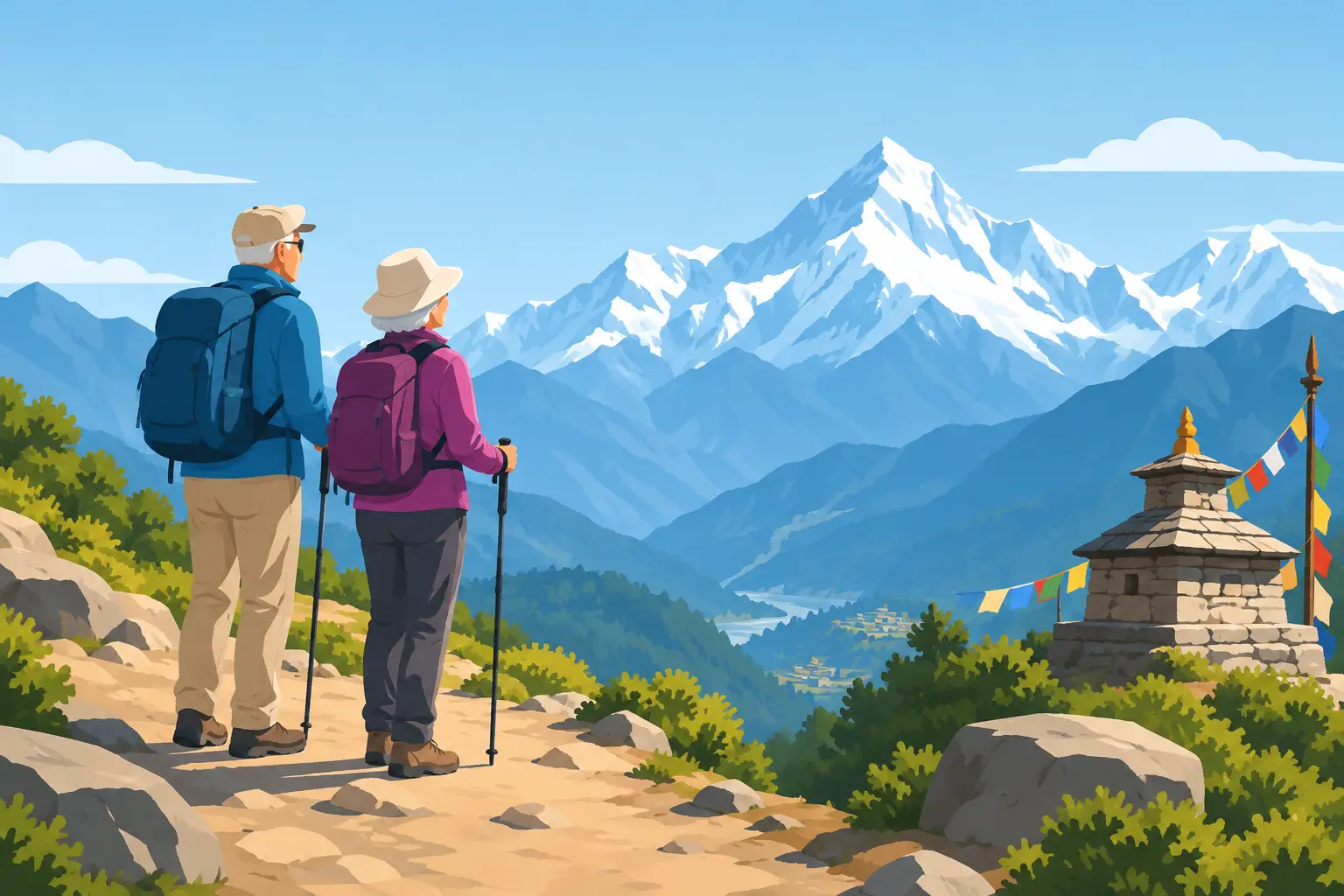
A sunrise over the Annapurna range, prayer flags lifting in a mountain breeze, and tea shared with a Nepali lodge family are not experiences reserved for the youngest person in the group. Can seniors trek Nepal? Very often, yes. The better question is which trek suits your current fitness, health, expectations and appetite for altitude.
Nepal is not one single kind of trekking destination. Some routes involve long days, high passes and remote terrain; others combine gentle walking, comfortable lodges and extraordinary Himalayan views. With the right itinerary, realistic preparation and an experienced local team, many travellers in their sixties, seventies and beyond enjoy a memorable trekking holiday here.
Can Seniors Trek Nepal Safely?
Age alone does not decide whether someone can trek. General fitness, mobility, cardiovascular health, previous experience at altitude and the willingness to walk at an unhurried pace matter far more than a birthday. A fit 70-year-old who walks regularly may be better prepared than a much younger traveller with a sedentary routine.
That said, Nepal’s mountains require honest planning. Trekking paths can be uneven, with stone steps, loose ground and sustained ascents. Lodges become simpler as trails climb higher, and altitude affects every traveller differently. It is not a test of toughness. It is a journey best enjoyed by choosing a route that leaves room to rest, look around and adjust when needed.
Before confirming a trek, speak with your GP or relevant specialist, particularly if you have heart, lung, blood pressure, joint or balance concerns, diabetes, or take regular medication. Ask specifically about exertion at altitude and whether any medicines require adjustment. A medical conversation is not a reason to abandon the idea – it is part of preparing well.
Travel insurance must also cover trekking at your planned altitude and emergency helicopter evacuation. This detail deserves attention before departure, not when conditions change in the mountains.
Choose the Trek, Not the Famous Name
Everest Base Camp is an inspiring goal, but it is not automatically the best first choice for every senior traveller. The route involves several days above 3,000 metres, colder conditions and a demanding walking schedule. It can be suitable for healthy, well-prepared older trekkers with sufficient time for acclimatisation, but it should never be selected simply because it is the most recognisable name.
For many, the Annapurna region offers a more comfortable introduction. The Ghorepani Poon Hill trek is especially rewarding: villages, rhododendron forests, welcoming lodges and a celebrated panorama of Dhaulagiri and Annapurna. The early start for sunrise is steep, but the trek can be paced carefully and tailored with extra nights where useful.
Lower-altitude village walks around the Annapurna foothills can provide a similarly rich experience with less exposure to altitude. You still gain mountain scenery, local culture and the satisfaction of reaching each day’s destination on foot. A well-designed itinerary may combine trekking with time in Kathmandu, Pokhara or Chitwan, creating a fuller Nepal holiday without making every day physically demanding.
Langtang is another beautiful option for those who want a more immersive mountain valley experience. Its suitability depends on the planned high point, daily distances and acclimatisation days. The key is to assess the actual itinerary, rather than relying on a route label alone.
What makes a senior-friendly itinerary?
A senior-friendly trek is not necessarily an easy trek. It is one built around sensible margins. Daily walking hours should be manageable, usually with time for lunch, photographs and pauses without feeling rushed. Extra acclimatisation nights are valuable at altitude, even for travellers who feel strong.
It also helps to have flexible logistics. A guide who can monitor how everyone is feeling, adjust the pace and arrange practical support makes a meaningful difference. Private or small-group travel often works particularly well because the schedule can respect individual walking speeds.
Good accommodation choices matter too. Mountain lodges are characterful rather than luxurious, but careful route planning can prioritise properties with cleaner rooms, reliable meals and better facilities where available. Expectations should be clear: hot showers, charging points and Wi-Fi may be limited or carry an additional charge at higher elevations.
Prepare Your Body for Nepal’s Trails
The most useful training is consistent walking. Start several months before travel if possible, gradually building up to walks of two to four hours on consecutive days. Include hills, stairs or a treadmill incline, because Nepal’s trails rarely stay flat for long. Walking downhill deserves equal attention; strong legs and good balance reduce strain on the knees.
Add simple strength work two or three times a week. Step-ups, squats to a chair, calf raises and supported lunges can all help. Core stability improves balance when carrying a daypack on rough ground. If you have had knee, hip or back problems, a physiotherapist can suggest exercises suited to your situation.
There is no need to train like an expedition climber for a modest trek. The goal is to arrive able to walk steadily, recover overnight and enjoy the next day. Build gradually rather than attempting one exhausting weekend hike and then stopping for weeks.
Walking poles are strongly recommended, especially on descents and stone staircases. They spread effort through the upper body and can provide welcome stability. Well-worn trekking boots with ankle support, comfortable socks and a lightweight waterproof layer are more valuable than filling a bag with unnecessary gear.
Altitude Needs Patience, Not Willpower
Altitude illness does not discriminate by age, fitness or trekking experience. The only reliable approach is gradual ascent, sufficient rest and prompt action if symptoms develop. Headache, nausea, unusual fatigue, dizziness and poor sleep can be early signs that the body needs more time.
A responsible itinerary builds in acclimatisation days and avoids climbing too high too quickly. Guides should check in regularly, explain symptoms clearly and have a plan for descent if required. Descent is the primary response to worsening altitude illness; no view is worth ignoring a safety concern.
Senior travellers should be particularly open about how they feel. Some people worry about delaying others, but a professional trek is not a race. Early communication gives the guide more options, whether that means a slower day, an extra rest stop or a change of plan.
Hydration, regular meals and keeping warm support acclimatisation, although they do not replace a sensible ascent profile. Alcohol is best kept to a minimum at altitude, especially during the first days of climbing.
The Value of Proper Support
Independent trekking can appeal to confident travellers, yet Nepal’s logistical details are easier when someone experienced is looking ahead. Permits, domestic flights or road transfers, lodge reservations, meals, porter arrangements and emergency procedures all need co-ordination. Weather can change plans quickly, particularly on mountain flight routes.
A knowledgeable local guide brings more than route-finding. They understand trail conditions, lodge standards, local culture and the realities of moving through high terrain. They can set a comfortable rhythm, make sure food and water needs are met, and notice small changes in a guest’s wellbeing before they become bigger issues.
Porters also make trekking more accessible. Carrying only a daypack with water, layers, sunscreen, camera and personal essentials can transform the experience, while a porter carries the main duffel within responsible weight limits. This is not taking a shortcut. It is a practical way to conserve energy for the trail and the moments that matter.
At Brothers Team, our Nepal-based operations and experienced guides allow trekking itineraries to be shaped around sensible pacing, acclimatisation and personal comfort. For senior travellers, that personal attention can be the difference between simply completing a route and genuinely enjoying it.
When a Trek May Not Be the Right Choice
There are circumstances when a mountain trekking itinerary should be postponed, shortened or replaced. Recent surgery, poorly controlled medical conditions, serious mobility limitations or a lack of time to acclimatise deserve careful consideration. A scenic mountain flight, a private drive through the foothills, or a cultural journey combining Kathmandu and Pokhara may be a better fit for that particular trip.
Choosing a different experience is not a lesser version of Nepal. The country offers ancient cities, wildlife, monasteries, lakeside towns and Himalayan viewpoints accessible without committing to a multi-day trek. The best itinerary meets you where you are now.
Nepal rewards travellers who arrive curious, prepared and willing to move at the mountains’ pace. Whether your goal is Poon Hill at dawn or a gentle village trail beneath the Annapurnas, choose the route that lets you return home with strong memories, not a story of having pushed too far.

Comments are closed