


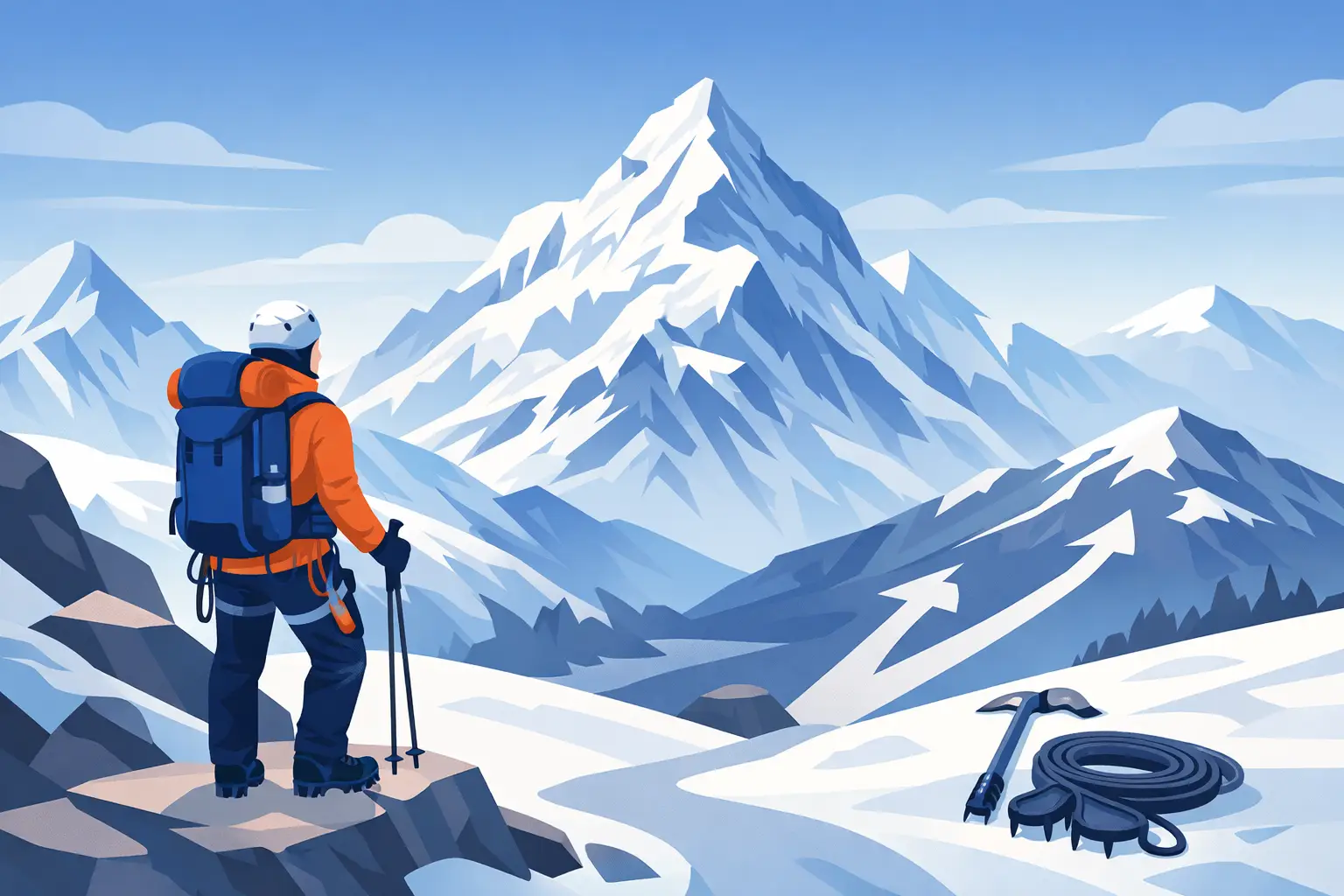
Mera Peak Climbing: Is It the Right Next Step?
The summit ridge of Mera Peak is where a Himalayan dream becomes wonderfully real. Ahead lies a broad sweep of snow, the air is thin, and the horizon opens towards Everest, Lhotse, Makalu and Cho Oyu. Yet Mera Peak climbing is not simply a harder trek with a summit added on. At 6,476 metres, it asks for steady fitness, sound judgement at altitude and a team that takes preparation seriously.
For travellers who have completed a high-altitude trek and want a meaningful next challenge, Mera Peak offers an outstanding introduction to Himalayan mountaineering. It combines the quieter trails of the Hinku Valley, Sherpa culture, glacier travel and a genuine summit day. The reward is considerable, but so is the responsibility to approach the mountain well.
What Makes Mera Peak Climbing Different?
Mera Peak is often described as Nepal’s highest trekking peak. That label can be helpful because the standard route does not usually demand advanced technical climbing experience. It can also be misleading. “Trekking peak” does not mean easy, particularly when the summit is well above 6,000 metres.
Most itineraries begin with a flight to Lukla before crossing into the Hinku Valley. The approach alone is a beautiful expedition through forests, riverside villages and increasingly open mountain terrain. Compared with the busier Everest Base Camp trail, the valley often feels more remote and peaceful. Days are spent gaining height gradually, with planned rest and acclimatisation days before reaching Mera Peak Base Camp and High Camp.
The final climb normally starts in the early hours. Climbers move roped together across a glacier, using crampons, an ice axe, harness and ascender under the direction of experienced guides. The snow slope towards the summit can feel demanding after hours of effort at altitude. A fixed rope may be used on the steeper final section, depending on conditions. The challenge is less about technical complexity than endurance, cold, altitude and the ability to keep moving carefully when every step requires patience.
Weather, snow conditions and individual acclimatisation can change the experience from one season to another. A strong walker may find the climbing skills manageable but still struggle with the cold or a headache caused by altitude. That is why a summit should never be treated as guaranteed.
Who Is Mera Peak Suitable For?
Mera Peak suits active travellers with a good base of cardiovascular fitness and a realistic attitude to high mountains. Previous Himalayan trekking experience is valuable, especially if you have spent time above 4,500 metres. Completing Everest Base Camp, the Gokyo Lakes route, Cho-La Pass or a comparable multi-day trek gives useful insight into how your body responds to thin air and sustained walking.
However, previous high-altitude experience is not the only measure. Some first-time climbers succeed with focused training, a sensible itinerary and careful guidance. The more relevant question is whether you are comfortable committing to several weeks of walking, basic mountain accommodation, changing weather and a summit day that may last eight to 12 hours.
Mera Peak may not be the right first Himalayan trip for everyone. If you are new to multi-day trekking, have limited time to prepare, or are uncertain about travelling in winter conditions, it may be wiser to begin with a well-paced trek. Building experience is not a compromise. It is often what makes a future climbing journey safer and far more enjoyable.
Training for the Mountain, Not Just the Summit
The best preparation begins several months before departure. Summit day is only one part of the journey. Your legs and lungs need to cope with consecutive days of ascent and descent while carrying a daypack, then retain enough energy for the glacier climb.
Aim for regular aerobic training three to four times a week. Hill walking, stair climbing, running, cycling and incline treadmill sessions all help, especially when workouts gradually become longer. Include strength work for your legs, core and back. Squats, lunges, step-ups and loaded carries are particularly useful because they reflect the movement required on uneven trails.
Long weekend walks are valuable, but do not train only on flat ground. Seek out hills or use stair sessions with a backpack. Practise moving steadily rather than racing. On Mera Peak, conserving energy is often more useful than being fast for an hour.
Technical instruction should be part of your preparation too. Before the summit push, a responsible team provides practice with crampons, an ice axe, harness, ropes and an ascender. If possible, take a basic winter-skills or mountaineering course at home beforehand. Familiarity reduces anxiety and helps you listen clearly when a guide gives instructions in cold, windy conditions.
Acclimatisation Is Your Most Important Safety Margin
No amount of gym training can fully prepare the body for altitude. Acclimatisation takes time, which is why a well-designed Mera Peak itinerary includes gradual ascent, rest days and opportunities to walk higher before sleeping lower.
Headache, poor sleep, loss of appetite and unusual fatigue can occur as altitude rises. These symptoms should be reported early, not hidden in the hope of staying on schedule. A guide’s role is to monitor the group, adjust pace, encourage hydration and make conservative decisions when somebody is unwell. If symptoms worsen, the correct response may be to descend. That can be disappointing, but it is never a failure of character.
A longer itinerary costs more time and may involve additional nights in the mountains, yet it gives your body a better chance to adapt. This is one trade-off worth making. Fast itineraries can look attractive on paper, but the mountain does not reward rushed acclimatisation.
What to Expect From Daily Life on the Route
The journey is not all about the summit. The Hinku Valley brings a side of the Everest region that many travellers remember just as vividly: prayer flags above high passes, warm meals in simple lodges, quiet evenings with fellow climbers and changing views as the landscape becomes alpine.
Accommodation varies by location and season. Lower down, tea houses provide comfortable, straightforward lodging, while higher camps are more basic. Meals are designed to fuel long days, often with familiar trekking staples such as rice, noodles, soup, potatoes, eggs and hot drinks. Appetite can fade at altitude, so making a conscious effort to eat and drink is part of the daily routine.
Packing needs careful thought. Layering is essential because a sunny trail can feel warm while High Camp and summit morning can be severely cold. Good boots, waterproof outer layers, insulated gloves, a warm down jacket and a properly fitted sleeping bag matter more than fashionable gear. Climbing equipment may be supplied or hired through your operator, but always confirm exactly what is included and ensure you have time to test the fit.
Choosing Support You Can Trust
A Mera Peak expedition involves far more than a permit and a summit guide. Flights, transport, accommodation, food, porters, climbing equipment, emergency planning and weather-related changes all need thoughtful coordination. Local knowledge makes a real difference when conditions shift or a group member needs extra support.
Ask how the itinerary handles acclimatisation, what guide-to-climber ratio is planned for summit day, and what happens if domestic flights are delayed. Find out whether the team carries first-aid and altitude-safety equipment, and whether guides are trained to make decisions that put wellbeing before summit pressure. Clear answers are a good sign.
Brothers Team combines Kathmandu-based operational knowledge with the personal attention of a long-established family-run specialist. For climbers travelling from Singapore or further afield, that means the confidence of having logistics carefully arranged while still being treated as an individual, not a booking number.
The Summit Is Only Part of the Achievement
Standing on Mera Peak is an extraordinary moment, but the real achievement is broader. It is found in the discipline of training when no one is watching, the patience to walk slowly at altitude, the trust built with guides and fellow climbers, and the wisdom to turn back if the mountain asks you to.
Approach Mera Peak with respect, allow enough time, and choose support that values your experience as much as your summit photo. The mountain will still be challenging – and that is exactly what makes the journey worth remembering.


Comments are closed