


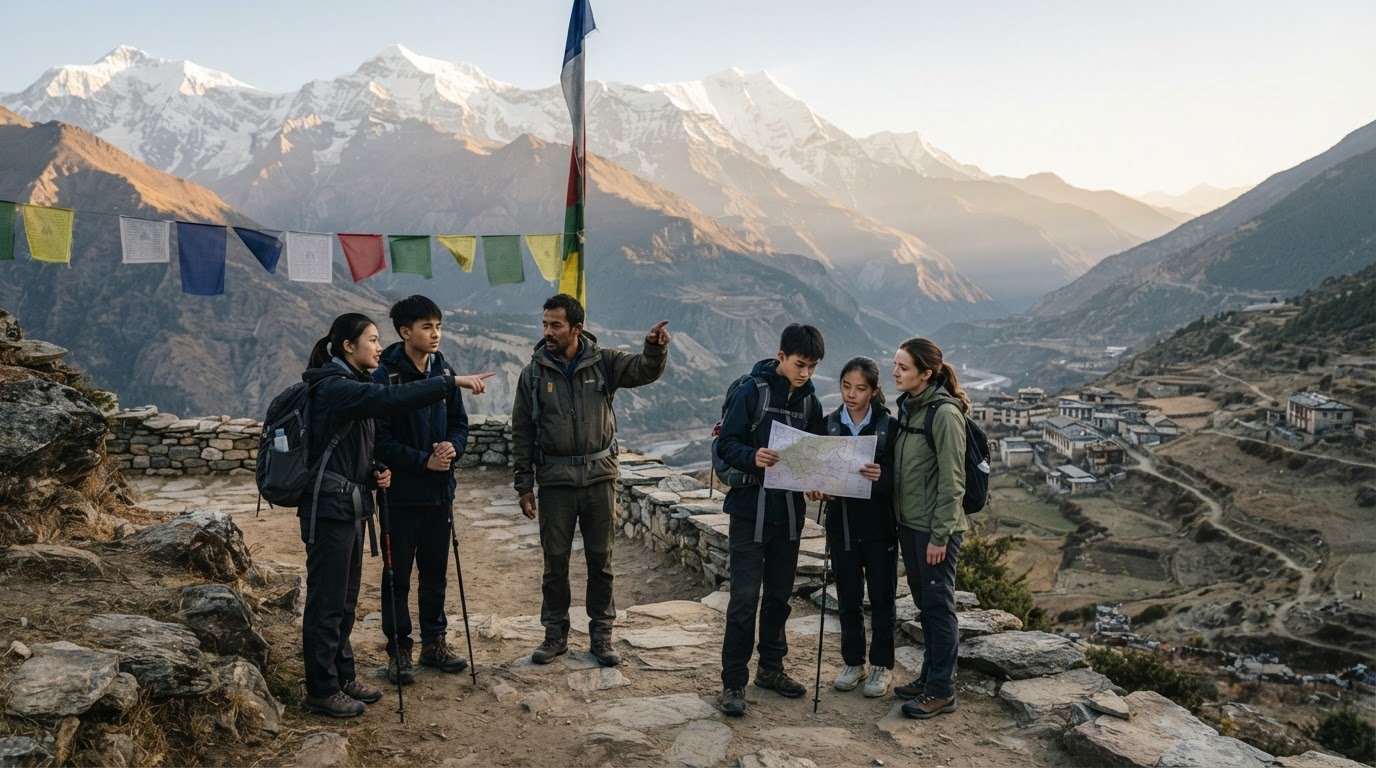
Overseas School Immersion Trip in the Himalayas: 2026 Guide
What makes an overseas school immersion trip Himalayas worthwhile? It isn’t necessarily a packed itinerary. It’s a journey that turns clear learning goals into meaningful experiences students can manage. Planning that balance takes more than choosing a destination: curriculum links, student readiness, group logistics and package inclusions all matter.
A well-planned trip can bring classroom themes to life while giving teachers a practical framework for decisions. This guide shows how to compare programmes by learning value, student needs and travel arrangements, so you can move from big ideas to a plan that works for your school.
Start by defining your educational priorities, then compare Nepal and Bhutan as Himalayan destinations and review the details that shape a school group trip. Brothers International Tours & Trading Pte Ltd is a family-owned travel agency established in 1992, offering School & College Trips. Package fees cover pre-arranged itineraries with guiding, local transportation, accommodation and permit processing. Use the framework below to bring purpose, planning and adventure together.
Key Takeaways
- Choose an overseas school immersion trip Himalayas by connecting learning goals with student readiness and practical group needs.
- Compare itineraries by learning fit, pace and logistics, and distinguish included arrangements from activities that can be tailored.
- Use a readiness checklist to assess whether the trip’s demands suit your students and the school’s capacity.
- Plan in sequence, from educational priorities and itinerary review to school approvals, documents and family communication.
- Brothers Adventures’ School & College Trip can bring a school’s educational aims and travel arrangements together through a tailored itinerary.
What makes an overseas school immersion trip in the Himalayas worthwhile?
A Himalayan school trip becomes an immersion experience when its activities connect to learning goals and give students time to notice, discuss and reflect. The mountain setting can prompt questions about geography, climate, communities and people’s relationship with their environment. The Himalayas encompass varied landscapes and cultures, but scenery alone does not create educational value. The itinerary and the way teachers frame the experience make the difference.
A school immersion trip is planned around what students will learn, notice and reflect on, not just what they will see. Sightseeing can introduce students to remarkable places; an immersion approach adds a learning purpose and helps students make connections before, during and after the journey. For an overseas school immersion trip Himalayas, begin with a practical question: what should students understand or be able to do differently afterwards?
Start with learning goals, not destination photos
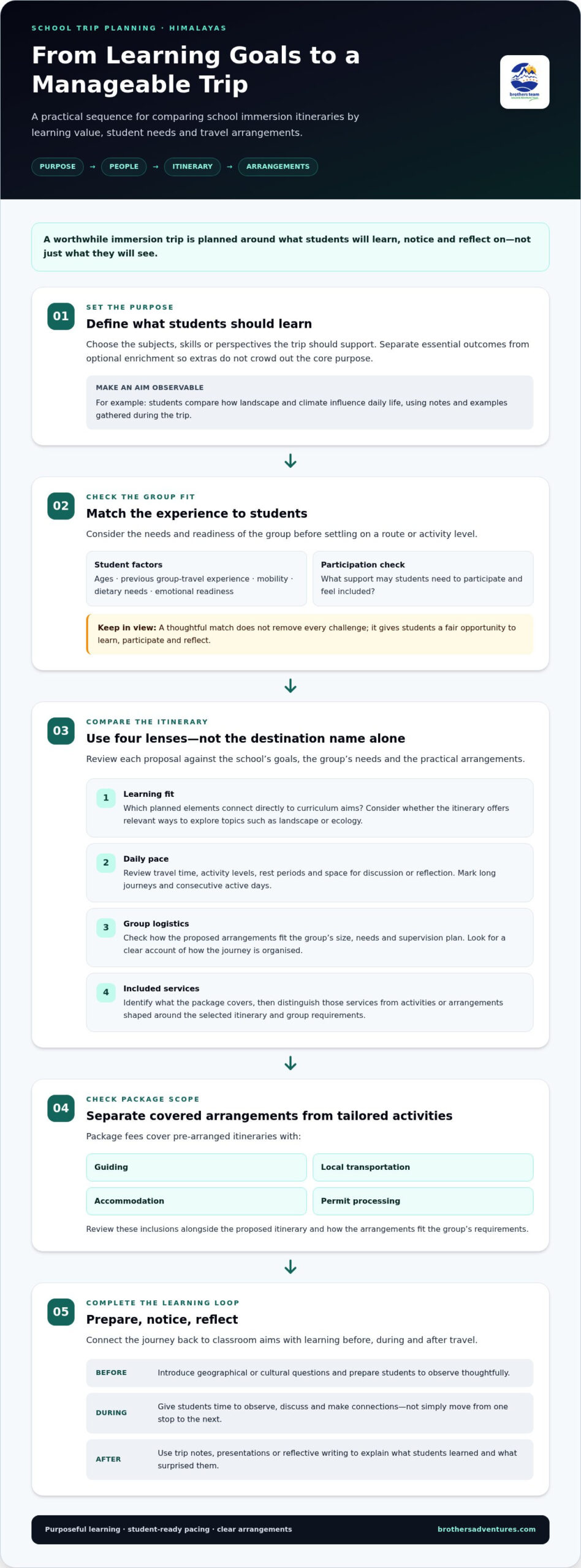
Identify the subjects, skills or perspectives the trip should support. Separate essential outcomes from optional enrichment so attractive extras do not crowd out the core purpose. Make each aim observable. Instead of “learn about the environment,” students could compare how landscape and climate influence daily life, using notes and examples gathered during the trip. Teachers can shape these tasks around the curriculum without assuming that a particular activity is automatically part of the itinerary.
Build learning into the time before and after travel as well. Pre-trip lessons can introduce geographical or cultural questions and prepare students to observe thoughtfully. Afterwards, students can use trip notes, presentations or reflective writing to explain what they learned and what surprised them. These steps connect the experience back to classroom aims and help teachers see whether the trip met its objectives.
Match the Himalayan experience to students
A compelling itinerary still needs to suit the group. Consider students’ ages, previous group-travel experience, mobility, dietary needs and emotional readiness. Then review the daily rhythm: travel time, opportunities to rest, walking demands and activity levels all affect whether students can participate comfortably and stay engaged.
There is no single itinerary that fits every school. Let the group’s needs and priorities guide the balance between travel, learning and downtime. Use questions like these to make the discussion concrete:
- What support may students need to participate and feel included?
- How could long travel days or a demanding pace affect the group?
- Which learning outcomes are essential, and which activities are optional?
Discuss these factors early with the school team and families. A thoughtful match does not mean removing every challenge. It means choosing a trip structure that gives students a fair opportunity to learn, participate and reflect.
How to compare Himalayan school immersion itineraries
A striking destination can catch students’ attention, but the itinerary determines whether that attention turns into learning. For an overseas school immersion trip Himalayas, compare each proposal against the school’s goals, the group’s needs and the practical arrangements. Do not choose by destination name alone.
The itinerary matters more than the destination alone because it shapes what students can learn, how fully they can participate and how manageable the journey is for the group. Use a simple comparison framework to make trade-offs clear:
Learning fit: Which planned elements connect directly to your curriculum aims? If environmental learning is a priority, consider whether the itinerary gives students a relevant way to explore topics such as landscape or ecology. WWF’s overview of the biodiversity of the Himalayas can help educators develop background questions.
Daily pace: Review travel time, activity levels, rest periods and space for discussion or reflection. A full schedule may look productive on paper but leave little time for students to absorb what they encounter.
Group logistics: Consider how the proposed arrangements fit the group’s size, needs and supervision plan. Look for a clear account of how the journey is organised, not just a list of places.
Included services: Identify what the package covers, then separate those services from activities or arrangements shaped around the selected itinerary and group requirements.
Evaluate the learning design and daily rhythm
Ask how each planned experience supports a learning objective. A route through areas with varied landscapes, for example, could support a geography focus if teachers provide relevant questions and time for reflection. Not every stop needs a formal lesson, but students should understand the purpose and have time to observe, discuss and make connections.
Read the schedule day by day. Mark long journeys, consecutive active days and opportunities to pause. A balanced rhythm helps students engage with the experience instead of simply moving from one stop to the next.
Understand what the trip package covers
Package fees cover pre-arranged itineraries with guiding, local transportation, accommodation and permit processing. Review these inclusions alongside the proposed itinerary and how the arrangements fit the group’s requirements. Keep included services distinct from activities the school may want to tailor; do not assume an activity is included simply because it comes up in a planning discussion.
Nepal and Bhutan are both Himalayan options. Compare them against your school’s objectives and the actual itinerary, rather than broad assumptions about either country. A tailored school itinerary can bring learning priorities and practical arrangements together. Explore school group travel planning to see how Brothers Adventures can help shape the trip around your priorities.
Can students manage a Himalayan immersion trip? Assess suitability and concerns
A meaningful trip can broaden students’ perspectives, but an inspiring destination does not remove the need for careful preparation. Assess individual needs as well as what the group can manage together. The aim is not to label students suitable or unsuitable based on one factor; it is to shape an itinerary and support plan around the learners taking part.
Before choosing a Himalayan school trip, assess students’ maturity, health and support needs alongside the itinerary’s pace, altitude, accessibility and group arrangements. Involve educators and decision-makers who understand the students, along with those responsible for approving and organising the travel.
Assess age, needs and group readiness
Age can influence how much independence students are ready to manage, while previous group-travel experience may affect how they respond to unfamiliar routines. Consider accessibility and mobility needs, dietary requirements, individual health concerns and the emotional demands of being away from familiar surroundings. These are prompts to understand what support or itinerary adjustments may be needed, not automatic reasons to rule out a student.
Discuss expectations before departure. Students should understand the group’s conduct guidelines, how to communicate with teachers and what participation in the planned programme involves. Include relevant school leaders and staff in the suitability conversation so educational aims, student welfare and practical capacity are considered together.
Review health, altitude and contingency planning
Altitude and exertion depend on the selected route and daily programme, so do not treat all Himalayan travel as physically identical. Altitude sickness is a risk for trekking in Bhutan above 8,000 feet, although not every Bhutan itinerary reaches that elevation. Review the actual route and planned activity, consider individual health needs with appropriate medical guidance, and avoid blanket assumptions about student fitness.
Keep general planning questions distinct from trip-specific medical or safety claims. Review who is responsible for student welfare, how the group will communicate and how an emergency response would be coordinated under the proposed arrangements. Check current destination guidance and the procedures for the specific itinerary before booking.
Use this readiness checklist to guide the discussion:
- Does the itinerary’s pace and activity level suit the group’s abilities and needs?
- Have accessibility, dietary, health and emotional support needs been considered?
- Do students understand expectations for conduct, communication and participation?
- Have school responsibilities and emergency communication arrangements been discussed clearly?
- Have destination requirements and itinerary details been reviewed using current guidance?
Clear answers help the school make a considered choice. If an itinerary does not fit the group as proposed, adjust its pace or structure before treating the destination as the problem.
Plan the school trip: a practical checklist for organisers
A clear planning sequence turns an educational idea into a trip the school can organise with confidence. For an overseas school immersion trip Himalayas, begin with the intended learning, then work through student needs, the itinerary, approvals and family communication. Keep a written record of decisions so everyone involved knows what has been planned and who is responsible.
- Set the learning purpose. Identify the curriculum aims and what students should be able to observe, discuss or reflect on during the trip.
- Map the group’s needs. Gather relevant information about accessibility, dietary requirements, health considerations, student experience and support needs through appropriate school channels.
- Review the itinerary. Read the day-by-day plan, including travel days, accommodation arrangements and planned activities. Decide whether the pace gives students time to participate and learn.
- Confirm school decisions. Identify the approvals required within your school and assign responsibilities for planning, student supervision, family communication and trip documentation.
- Prepare the group. Explain expectations for participation, conduct, communication and following group arrangements before departure.
Prepare students, families and school stakeholders
Explain why the school is travelling, what students are expected to take part in and how the itinerary is structured. Give families practical information about travel days, accommodation arrangements, group expectations and how the school will communicate updates. Invite families to share relevant student needs through established school channels, allowing organisers to consider them alongside the proposed itinerary.
Plan a pre-departure briefing and assign clear responsibilities. Cover the learning purpose, itinerary, student conduct and how to raise questions or share important information. Keep essential documents organised, such as school approvals, family consent records, participant details, relevant health information and emergency contact details. Use school policies to determine which records and approvals are required.
Check destination requirements and travel readiness
Entry requirements and permit details depend on the destination and trip plan. Check current passport, visa and permit requirements through relevant official sources before booking, and allow the school time to organise the necessary paperwork. Use current information, particularly when requirements differ by student nationality or planned route.
Review transport, accommodation and activity details with the trip organiser, and make sure the school understands how each part of the itinerary fits the group’s requirements. Package fees cover pre-arranged itineraries with guiding, local transportation, accommodation and permit processing. The exact arrangements relate to the selected itinerary and group. Make student responsibilities clear during travel, including following instructions and staying with the group.
For a Nepal-focused school programme, explore a guide to educational tours in Nepal for students when its itinerary and subject matter match your plans. Use an Everest Base Camp planning guide only if that route is part of the trip you are considering. To bring learning aims and practical arrangements together, plan your school group trip with Brothers Adventures’ School & College Trip offering.
Choose a Himalayan school immersion trip with Brothers Adventures
The decision comes down to fit: your school’s learning aims, students’ needs and the practical shape of the journey should work together. Brothers Adventures’ School & College Trip offering gives organisers a starting point for planning a guided, pre-arranged group itinerary in the Himalayas. The itinerary can be tailored to the school’s objectives and group requirements, bringing educational priorities and travel arrangements into one plan.
For an overseas school immersion trip Himalayas, tailoring the itinerary helps reflect the group’s age range, learning focus, preferred timing and practical needs instead of relying on a one-size-fits-all schedule. Nepal and Bhutan are possible Himalayan destinations; choose between them based on the school’s goals and the itinerary being planned.
What working with an established tour operator can simplify
Brothers International Tours & Trading Pte Ltd is a family-owned travel agency that has operated since 1992. Package fees cover a pre-arranged itinerary with professional guides, local transportation, accommodation and permit processing. Bringing these arrangements together in a planned itinerary gives organisers a clear basis for reviewing the journey, aligning school priorities and preparing students and families.
Review the proposed programme as a whole. Consider how its schedule, travel arrangements and included services fit the learning plan and the group’s needs. Then identify what the school will organise or communicate separately, such as internal approvals, family information and student preparation. This keeps planning grounded in the actual trip rather than assumptions about what a Himalayan journey includes.
Turn your school’s goals into a trip brief
A useful trip brief can be concise. Give the planning discussion a clear direction by outlining:
- The students’ age range and relevant group needs
- The subjects, skills or perspectives the school hopes to support
- Preferred timing and the amount of time available for travel
- Priorities for itinerary pace, accommodation arrangements or accessibility
- The school’s expectations for participation and learning before and after the trip
Separate essential outcomes from optional ideas. If geography is a key focus, for example, describe the questions students should explore rather than assuming a particular activity will deliver the learning. This gives the itinerary room to reflect the school’s educational aims while keeping expectations clear.
Schools planning a Nepal programme can also use a guide to educational tours in Nepal for students as a related resource when considering learning themes and trip priorities. Bring student ages, objectives and group requirements into the planning process, then explore the school and college trips offering to shape your Himalayan group journey.
Take the first step towards your Himalayan school journey
Give your idea a practical starting point: write a short trip brief that captures what students should gain, what the school needs the journey to accommodate and what would make the experience meaningful. A shared direction helps teachers, school leaders and families move from possibility to a considered plan.
An overseas school immersion trip Himalayas can become a defining learning experience when its purpose is clear and the itinerary is shaped around the students taking part. You do not need every detail settled before planning begins. Start with the questions that matter most to your school, then use them to guide the next decisions.
Brothers Adventures can help bring those priorities into a school group travel plan. Explore Brothers Adventures’ school and college trips and take the next step towards shaping a journey with purpose, discovery and room for students to grow.
Frequently Asked Questions
What is an overseas school immersion trip in the Himalayas?
It is a school journey that connects travel with structured learning about the destination, its people and its natural or cultural setting. For an overseas school immersion trip Himalayas, teachers might ask students to keep a field journal, recording observations and questions linked to a class topic. The planned experience varies by destination and itinerary, so define what students will explore and how they will reflect on it.
Is a Himalayan school immersion trip suitable for younger students?
It may suit younger students when the itinerary and support arrangements match their age, needs and readiness. Consider how students manage unfamiliar routines, time away from home and travelling as a group. For example, teachers can review whether the daily schedule allows enough time for meals, rest and transitions. Involve families and relevant school decision-makers in reviewing the specific programme rather than relying on a universal age cut-off.
How long should an overseas school immersion trip last?
There is no single ideal duration. Start with the learning objectives and review how much time the proposed itinerary needs for travel, planned experiences and reflection. A focused programme might centre on a small number of curriculum questions, while a wider set of aims may need more time. Compare the day-by-day plan, including travel between locations, rather than treating trip length alone as a measure of educational value.
What is usually included in a school trip package?
Brothers Adventures’ pre-arranged travel packages include professional guide services, local transportation, accommodation and permit processing. How these arrangements apply depends on the selected itinerary and group requirements, so use the proposed trip details to plan the school’s remaining arrangements. Standalone flights, travel insurance and gear rental are not package inclusions. Account for any separate arrangements the school needs through its own planning process.
What should schools consider about altitude on a Himalayan trip?
Review the itinerary’s altitude profile and planned physical demands, not just the destination name. Consider how the schedule handles changes in elevation, exertion and rest, then weigh those details alongside students’ individual health needs. A general description of a Himalayan destination cannot establish whether a particular route suits every student. Use current official health guidance and appropriate medical advice to inform decisions for the specific group and itinerary.
Are Nepal and Bhutan both options for a Himalayan school trip?
Yes. Nepal and Bhutan are Himalayan destination options, and the right fit depends on the school’s learning aims and planned itinerary. Compare the actual journey, including its educational focus and practical arrangements, rather than assuming the countries offer interchangeable experiences. Entry and permit requirements can differ by destination and traveller, so check current information through relevant official sources before finalising plans.
How can teachers prepare students for an overseas immersion trip?
Give students a practical way to get curious before departure. Teachers can introduce a few destination-related questions, invite students to develop their own, then ask them to record observations during the trip and revisit those questions afterwards. Explain group expectations and share relevant arrangements with families. Use school channels to gather information about individual support needs, and connect classroom preparation to the selected itinerary.


Comments are closed