


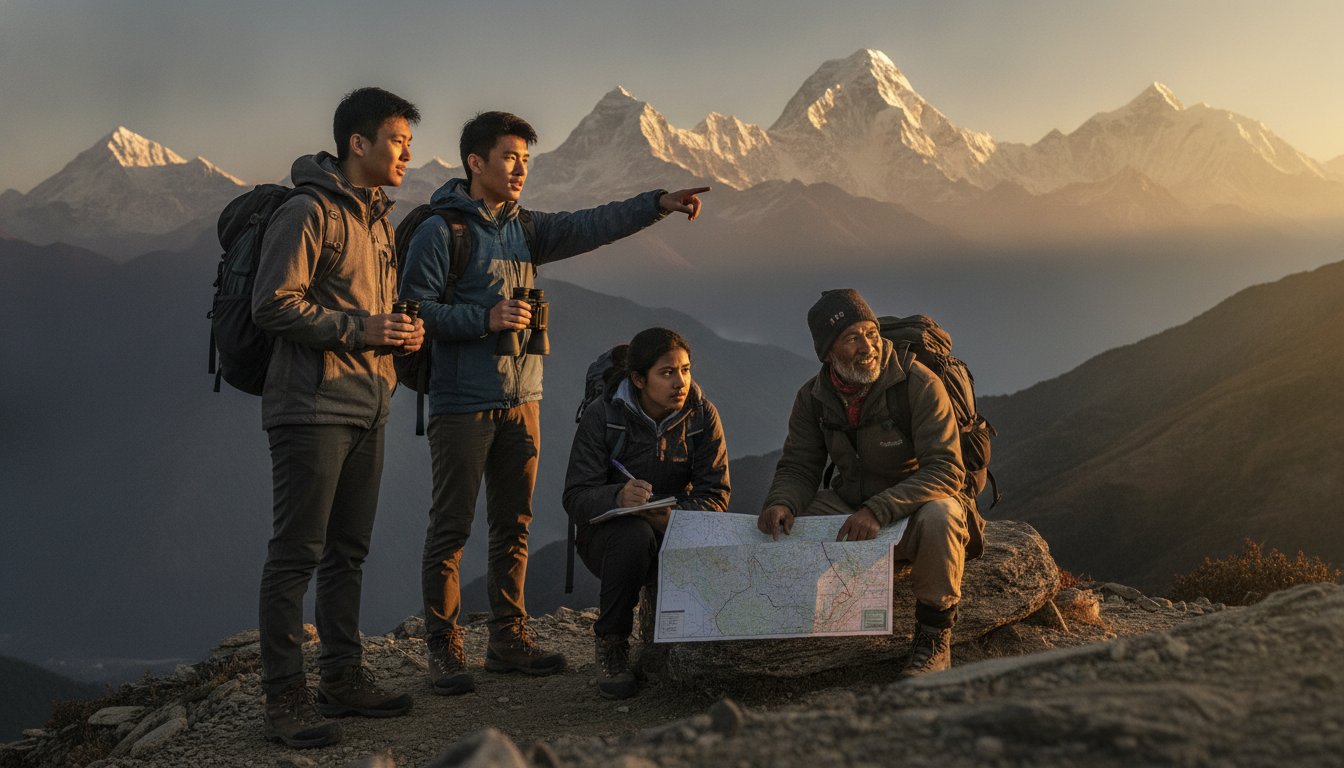
Educational Tours in Nepal for Students: The Ultimate 2026 Planning Guide
What if the most impactful lesson your students ever learn happens at 4,000 meters above sea level? You know that a true education goes beyond the whiteboard, yet the thought of managing high-altitude safety and complex logistics in a developing country can feel overwhelming. It’s natural to worry about health risks or whether the trip will provide real character development rather than just a scenic holiday. When planning educational tours Nepal for students, you need a strategy that balances adventurous discovery with rigorous safety standards.
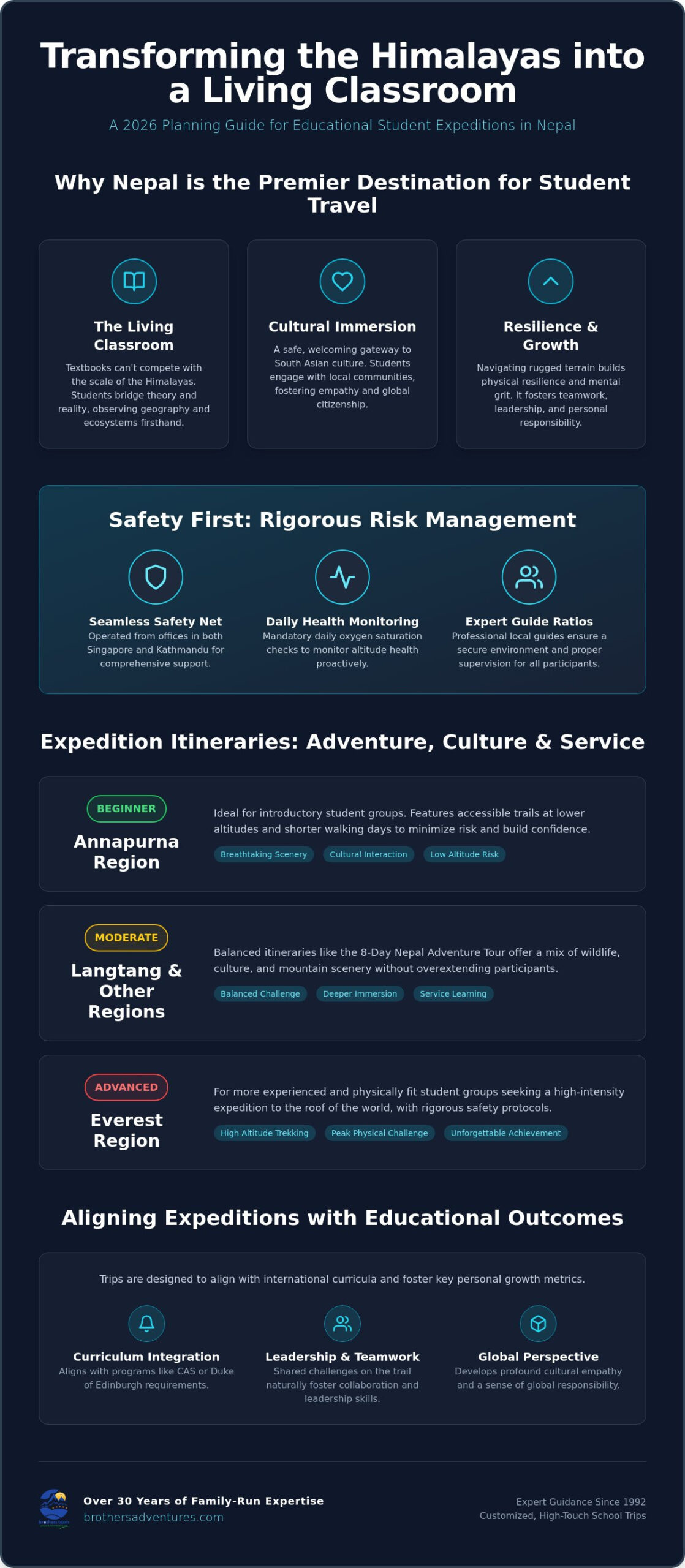
We’re here to help you bridge that gap. Since 1992, our family-owned team has operated from offices in both Singapore and Kathmandu to provide a seamless safety net for every expedition. This 2026 planning guide promises to show you how to design a curriculum-aligned journey that builds resilience and global perspective. We’ll preview essential logistics, from navigating current visa fees to monitoring altitude health with professional local support. Get ready to turn the Himalayas into a living classroom where your students can truly thrive.
Key Takeaways
- Learn how to transform the Himalayas into a living classroom by aligning expeditions with CAS or Duke of Edinburgh requirements to build student resilience.
- Master essential safety protocols, including daily oxygen saturation checks and expert guide ratios, to ensure a secure environment for every participant.
- Discover the most effective ways to plan educational tours Nepal for students that balance high-altitude adventure with deep cultural immersion and service learning.
- Explore diverse itineraries across the Annapurna, Langtang, and Everest regions, specifically designed to match your group’s fitness levels and learning objectives.
- Leverage over 30 years of family-run expertise and local Kathmandu support to customize a seamless, high-touch school trip that minimizes logistical stress.
Why Nepal is the Premier Destination for Student Group Travel in 2026
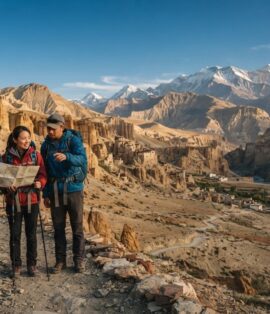
Imagine a classroom where the ceiling is the clear blue sky and the walls are the highest peaks on Earth. In 2026, student group travel in Nepal has evolved far beyond simple sightseeing. It’s now a sophisticated blend of outdoor education and deep cultural study. This “Living Classroom” concept proves that textbooks simply cannot compete with the sheer scale of the Himalayas. When students stand at the foot of a 6,000-meter peak, they don’t just read about geography; they feel the pulse of the planet. We’ve seen how these transformative educational tours Nepal for students bridge the gap between theoretical knowledge and real-world application, creating memories that stick long after the final exam is over.
Nepal serves as a remarkably safe and welcoming gateway to South Asian culture. The recent growth in Tourism in Nepal has brought improved infrastructure and professionalized safety standards, making it the ideal year for international expeditions. Your students will find themselves in a country that prioritizes hospitality, where the “Namaste” greeting isn’t just a word, it’s a genuine invitation into a different way of life. This environment allows young learners to step out of their comfort zones within a secure, supportive framework.
The Educational Impact of High-Altitude Environments
Navigating the rugged terrain of the Himalayas builds a specific kind of physical resilience and mental grit that’s hard to replicate in a gym or a local park. Students learn to manage their pace, listen to their bodies, and support their peers through shared physical challenges. It’s geography in action. They can observe tectonic shifts in the jagged rock faces and witness glacial ecosystems firsthand. These journeys naturally foster teamwork and leadership as the social dynamics of a group trek require every student to contribute to the collective success of the expedition.
Cultural Immersion and Global Citizenship
True global citizenship starts with empathy, and empathy grows through interaction. By moving beyond the standard tourist trails, students engage directly with local communities. They might share a meal in a village home or learn about Sherpa heritage and Buddhist traditions directly from monks in ancient mountain monasteries. We specifically design our School & College Trip itineraries to include community-led service projects. These initiatives help students develop a profound sense of responsibility and cultural empathy. It’s about understanding that while our daily lives may look different, our shared human values are exactly the same. This is why educational tours Nepal for students have become the gold standard for schools seeking to develop well-rounded, compassionate leaders. Families who want to extend this experience beyond the school setting can also explore a family trek Nepal adventure designed to bring children and parents together in the Himalayas.
A Roundup of Educational Tour Itineraries: Adventure, Culture, and Service
Choosing the right path for your students is about matching their physical capabilities with your specific educational goals. We generally categorize our itineraries into three distinct levels of intensity. You might opt for a low-impact cultural walk, a moderate trek through foothills, or a high-intensity expedition to the roof of the world. For many schools, the 8-Day Nepal Adventure Tour serves as a perfectly balanced starting point. It offers a taste of wildlife, culture, and mountain scenery without overextending younger participants. These educational tours Nepal for students thrive on custom-built itineraries that prioritize adventure-based leadership over passive sightseeing.
The Annapurna Region: Ideal for Beginner Student Groups
The Annapurna foothills offer some of the most accessible yet breathtaking trails in the country. Our 8Days Scenic Nepal Mini Trek is specifically designed as a gentle introduction to Himalayan trekking. It keeps groups at lower altitudes and involves shorter walking days, which significantly reduces the risk of fatigue or health issues. Along the way, students can participate in school-based community interactions. They’ll meet local children and learn about rural education systems in the shadow of the Machhapuchhre peak. It’s an impactful way to build confidence before tackling more demanding terrain.
Cultural and Historical Journeys in the Kathmandu Valley
Not every lesson requires a trekking pole. The Kathmandu Valley is a dense tapestry of history and religious studies. Students can explore UNESCO World Heritage sites like Kathmandu Durbar Square and the sacred Pashupatinath temple. We recommend checking the U.S. State Department travel advisory during your planning phase for the latest safety updates. Our Nepal Cultural Tour Package integrates these sites into a narrative of living heritage. It’s a deep dive into the spiritual heart of South Asia that challenges students to think critically about global history. Schools looking to broaden their Himalayan curriculum even further may also consider exploring Tibet tour packages from Singapore, which offer a complementary perspective on high-altitude Buddhist culture and the greater Himalayan region.
The Everest Base Camp Challenge for Older Students
For senior students looking for the ultimate resilience test, the Everest Base Camp Trek from Singapore is the gold standard. This journey requires significant pre-trip preparation and a high level of physical fitness. It’s a rigorous mental and physical challenge that pushes students to their limits. Reaching the base of the world’s highest peak isn’t just a trophy; it’s proof of their adaptability and grit. If you want to see how these challenges shape young leaders, consider booking a tailored school expedition with our specialist team.
Safety First: Evaluating Risk Management for Student Expeditions
Safety isn’t just a footnote in our planning process. It’s the very foundation of every journey we lead. When you’re organizing educational tours Nepal for students, you aren’t just looking for a guide; you’re looking for a comprehensive safety net. Brothers International Tours & Trading Pte Ltd has spent over 30 years refining risk assessment frameworks to satisfy even the most stringent school health and safety boards. This starts with our strict guide-to-student ratios and professional certifications. Every lead guide is trained in wilderness first aid and high-altitude medicine, ensuring they can make critical decisions whether you’re near UNESCO World Heritage Sites in Nepal or on remote high-altitude trails.
Ensuring this level of safety and reliability often involves a robust logistical backbone; for schools looking at broader South Asian travel, experienced regional conglomerates like Shazad International demonstrate how industrial infrastructure and logistical expertise support high-quality tour operations.
Altitude Management and Medical Support
Altitude Sickness (AMS) is a primary concern for many educators, and rightly so. We address this gap by using rigorous monitoring tools that many traditional agencies overlook. Our lead guides conduct mandatory health checks every morning and evening. They use pulse oximeters to measure daily O2 saturation levels and track symptoms on a formal monitoring log. This data-driven approach allows us to spot potential issues long before they become emergencies. If a situation does escalate, we have immediate access to a robust network of local hospitals and helicopter evacuation services. We also prioritize dietary safety, ensuring students maintain high levels of hydration and proper nutrition, which are the first lines of defense against the physical demands of high-altitude travel.
The Importance of a Dual-Office Support System
Choosing a specialist tour operator with a physical presence in both Singapore and Kathmandu provides a unique level of security. Since 1992, Brothers International Tours & Trading Pte Ltd has used this dual-office model to bridge the gap between parents at home and students on the ground. Our Singapore team provides a familiar point of contact for pre-trip briefings, while our Kathmandu office acts as the ultimate safety net for real-time logistics. This means we have 24/7 ground support and direct communication channels always open. We personally vet every transport provider and accommodation standard to ensure they meet international safety expectations. It’s this high-touch approach that allows teachers to focus on the educational experience while we handle the complexities of the environment.
Aligning Nepal Expeditions with School Curricula and Personal Growth
A trek through the Himalayas is more than a physical journey; it’s a measurable academic asset that fits perfectly into modern school frameworks. We’ve seen how these expeditions provide the ideal environment for students to fulfill their CAS (Creativity, Activity, Service) or Duke of Edinburgh Award requirements. By mapping the journey to specific learning outcomes, teachers can transform a mountain trail into a rigorous field study. Our School & College Trip offerings are designed to ensure every kilometer walked contributes to a student’s portfolio. When you organize educational tours Nepal for students, you’re investing in a curriculum that textbooks can’t replicate.
Developing soft skills like adaptability and problem-solving happens naturally when students face the unpredictable nature of the mountains. We encourage active reflection throughout the trek. Whether it’s through evening journaling or facilitated group discussions around a tea house fire, students learn to process their experiences in real-time. This practice builds emotional intelligence and helps them articulate their personal growth. It’s this deep level of engagement that helps you pitch the “ROI” of a Nepal trip to school boards and parents. You aren’t just selling a holiday; you’re offering a laboratory for character development.
Geography and Environmental Science in the Field
The Himalayas offer a front-row seat to the most pressing environmental issues of our time. Students can study the visible impacts of climate change on Himalayan glaciers firsthand in regions like Sagarmatha and Annapurna National Parks. They’ll observe unique biodiversity and learn about the delicate balance of high-altitude ecosystems. We also integrate lessons on waste management and sustainable tourism. Seeing how mountain communities handle resources teaches a powerful lesson in global responsibility that stays with them long after they return home.
Leadership and Character Development
We believe in giving students ownership of their journey. By rotating student leadership roles during the daily trek, individuals take turns managing group pace, morale, and logistics. This builds “grit” in a supportive environment where overcoming physical challenges leads to a profound sense of accomplishment. These moments foster cross-cultural communication and global empathy as students interact with our local team. If you’re ready to see your students evolve into confident global citizens, you can start planning your custom school expedition with us today.
Planning Your School Trip with Brothers International Tours & Trading Pte Ltd: Expert Guidance
Experience matters when you’re responsible for a group of young explorers. Since 1992, Brothers International Tours & Trading Pte Ltd has bridged the gap between the classroom and the clouds. We don’t operate as a faceless corporation; instead, we act as your personal consultants from our offices in Singapore and Kathmandu. This dual-office presence ensures that the person you speak with during a parent briefing in Singapore is part of the same team managing the logistics on the ground in Nepal. When organizing educational tours Nepal for students, this level of continuity is what creates a truly seamless experience. We understand the paperwork, the risk assessments, and the high standards of care that schools require.
A successful expedition starts long before you reach the airport. We recommend beginning the planning process 6 to 12 months in advance to allow ample time for student preparation and administrative approvals. During this period, Brothers International Tours & Trading Pte Ltd supports educators by providing comprehensive documentation and hosting information sessions for parents. We address every concern, from flight logistics to dietary requirements, ensuring that every stakeholder feels confident and excited. Our goal is to handle the heavy lifting of travel coordination so you can focus on the pedagogical goals of the journey. Parents who are inspired by their child’s experience may also wish to consider a family trek Nepal itinerary with kids to continue exploring the Himalayas together.
The Customization Process
Every school has a unique culture and different learning objectives. We specialize in tailoring our School & College Trip offerings to fit your specific student demographic. Whether your group consists of high-energy teenagers ready for a challenge or younger students who need a more moderate pace, we select the right difficulty level to match. We can integrate specific educational workshops, such as sessions with local environmentalists or visits to mountain medical clinics. For schools that also want to provide students with the tools for global communication, you can check out Learning Explorer to discover how language courses can complement their international experience. Our flexible budgeting approach focuses on creating value-driven itineraries. We prioritize quality where it counts, like expert guiding and safe transport, without compromising the overall impact of the experience.
Next Steps for Educators and Group Leaders
Taking the first step is simple. You can request a sample itinerary for a School & College Trip to see how we balance adventure with curriculum-aligned activities. Our experts in Singapore and Kathmandu are available for direct consultations to help you navigate your school’s specific risk assessment requirements. We provide the data, the certifications, and the 30-year track record you need to gain board approval. Don’t settle for a generic tour when you can provide a transformative expedition. Contact our team today to embark on a journey that changes lives and builds the global leaders of tomorrow. These educational tours Nepal for students are the ultimate investment in your students’ future.
Transform Your Classroom into a Himalayan Adventure
Planning a journey of this magnitude requires a partner who understands the delicate balance between academic goals and mountain safety. We’ve explored how rigorous AMS monitoring and our dual-office support in Singapore and Kathmandu provide the ultimate safety net for your group. By aligning your expedition with CAS or Duke of Edinburgh requirements, you turn a rugged trail into a powerful academic asset. These educational tours Nepal for students aren’t just holidays; they’re foundational experiences that build lifelong resilience and global empathy.
Since 1992, Brothers International Tours & Trading Pte Ltd has specialized in crafting School & College Trip itineraries that inspire wonder while maintaining professional authority. We’ve refined every detail to ensure your students return with a broader perspective and a sense of genuine achievement. We’re ready to bridge the gap between your school and the summit. Plan your transformative student expedition with Brothers International Tours & Trading Pte Ltd today and give your learners a classroom without walls. The peaks of Nepal are waiting to tell their story.
Frequently Asked Questions
What is the best time of year for a student group travel trip to Nepal?
The best times for student expeditions are the spring season from March to May and the autumn season from September to November. Spring offers vibrant rhododendron blooms and warmer temperatures, while autumn provides the clearest mountain views and most stable weather. These windows ensure the safest trekking conditions and the most reliable flight schedules. We recommend avoiding the monsoon months of June to August to keep students dry and trails accessible.
How do you manage altitude sickness (AMS) for younger students?
We manage Altitude Sickness through a combination of conservative ascent schedules and rigorous daily health monitoring. Our lead guides use pulse oximeters to check oxygen saturation levels every morning and evening. This data-driven approach allows us to identify symptoms early. If a student shows signs of AMS, our protocols prioritize immediate descent. Having a local Kathmandu office ensures we can coordinate medical support or evacuations instantly if required.
Do students need a specific visa for educational tours in Nepal?
Students enter Nepal on a standard tourist visa, as there is no specific category for educational tours Nepal for students. You can obtain this on arrival at Tribhuvan International Airport or apply online in advance. As of 2026, a 15-day visa costs USD 30 and a 30-day visa is USD 50. Remember that children under 10, except US citizens, are eligible for a Gratis visa which is issued free of charge.
What is the typical guide-to-student ratio on your treks?
Our typical ratio is one professional guide for every five to eight students, depending on the specific terrain and group age. This ensures every participant receives personal attention and constant supervision on the trail. We always deploy a lead guide supported by assistant guides and a dedicated porter team. This structure allows the group to split safely if different students need to walk at varying paces during the day.
Can you cater to specific dietary requirements in the mountains?
We can easily cater to a wide range of dietary requirements, including vegetarian, vegan, and specific food allergies. The staple mountain meal, Dal Bhat, is naturally nutritious, vegetarian, and gluten-free. Our team coordinates with tea house kitchens in advance to ensure safe meal preparation. Just provide us with a detailed list of your group’s dietary needs during the booking phase so we can plan the logistics accordingly for your student group.
How do we handle emergency communications with parents during the trip?
We maintain emergency communication through a multi-layered system involving satellite phones and local cellular networks. Our offices in Singapore and Kathmandu act as a 24/7 relay point for parents back home. In the event of an issue, the lead guide contacts our Kathmandu base, who then updates the Singapore team to provide real-time information to families. This dual-office support system ensures that someone is always reachable, regardless of the time zone.
What kind of physical preparation is required for a student trek?
Students should begin a basic physical conditioning program at least two to three months before departure. Focus on cardiovascular endurance by incorporating regular hiking, swimming, or stair-climbing sessions into their weekly routine. It’s also vital that they wear their trekking boots during these practice sessions to avoid blisters on the trail. Physical readiness builds the confidence needed to enjoy the School & College Trip experience without excessive fatigue.
Are there specific vaccinations recommended for students traveling to Nepal?
We recommend that all students consult a travel clinic or their GP at least eight weeks before the trip. Standard recommendations often include vaccinations for Hepatitis A, Typhoid, and Tetanus. Depending on your specific itinerary and the time of year, a doctor might also suggest Polio or Japanese Encephalitis boosters. Always check the latest health advisories to ensure your group meets all current medical requirements for travel to South Asia.


Comments are closed