


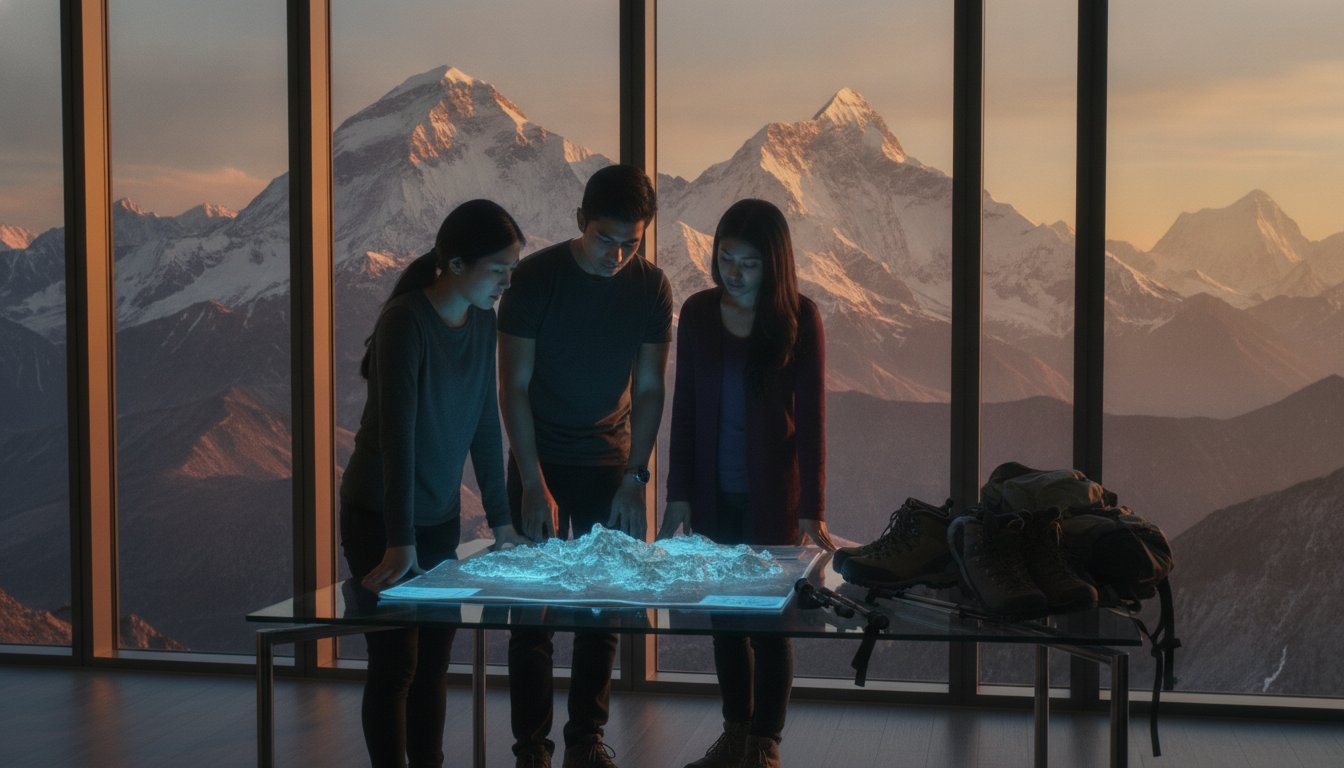
Singapore to Everest Base Camp: 2026 Budget & Logistics
What if the most daunting part of reaching 5,364 meters isn’t the Khumbu Icefall, but the confusing math of your bank account? For many Singaporean adventurers, the dream of standing at the foot of the world’s tallest peak often stalls at the planning stage. You know you want to go, but the actual Everest Base Camp trek cost from Singapore feels like a moving target. It’s perfectly normal to feel a bit of “sticker shock” or worry about hidden fees when you’re transitioning from the humidity of Orchard Road to the thin air of the Himalayas.
We’ve built this guide to replace that uncertainty with absolute clarity for your 2026 expedition. You’ll get a transparent breakdown of every essential expense, from Singapore Airlines flights and mandatory Nepal visa fees to the tactical “trail tax” for hot showers and gear rentals. We’re walking you through a complete timeline that covers logistics, physical prep, and budgeting. By the end of this roadmap, you’ll have the confidence to stop wondering “what if” and start packing your bags for the ultimate mountain journey.
Key Takeaways
- Learn how to calculate the total Everest Base Camp trek cost from Singapore by accounting for pre-departure training, international flights, and daily trail expenses.
- Discover the 2026 flight landscape from Changi to Kathmandu, including the strategic benefits of booking direct versus transit options through regional hubs.
- Get a clear breakdown of mandatory 2026 permits and the latest guide requirements to ensure your expedition remains fully compliant with local regulations.
- Master your gear strategy by identifying which high-tech items to purchase in Singapore and what to rent affordably in Kathmandu to optimize your budget.
- Understand the vital financial protection offered by booking with Singapore-registered agencies that maintain their own direct operations on the ground in Nepal.
The Big Picture: Budgeting for Everest Base Camp from Singapore in 2026
Planning your ascent to the world’s most famous landmark requires more than just physical grit; it demands a clear financial blueprint. When calculating the Everest Base Camp trek cost from Singapore, it’s vital to view the journey as a total investment rather than just a single package price. Many travelers make the mistake of only looking at the sticker price of a tour, forgetting that “door-to-door” expenses include everything from your training sessions at Bukit Timah to that celebratory steak in Kathmandu after you descend.
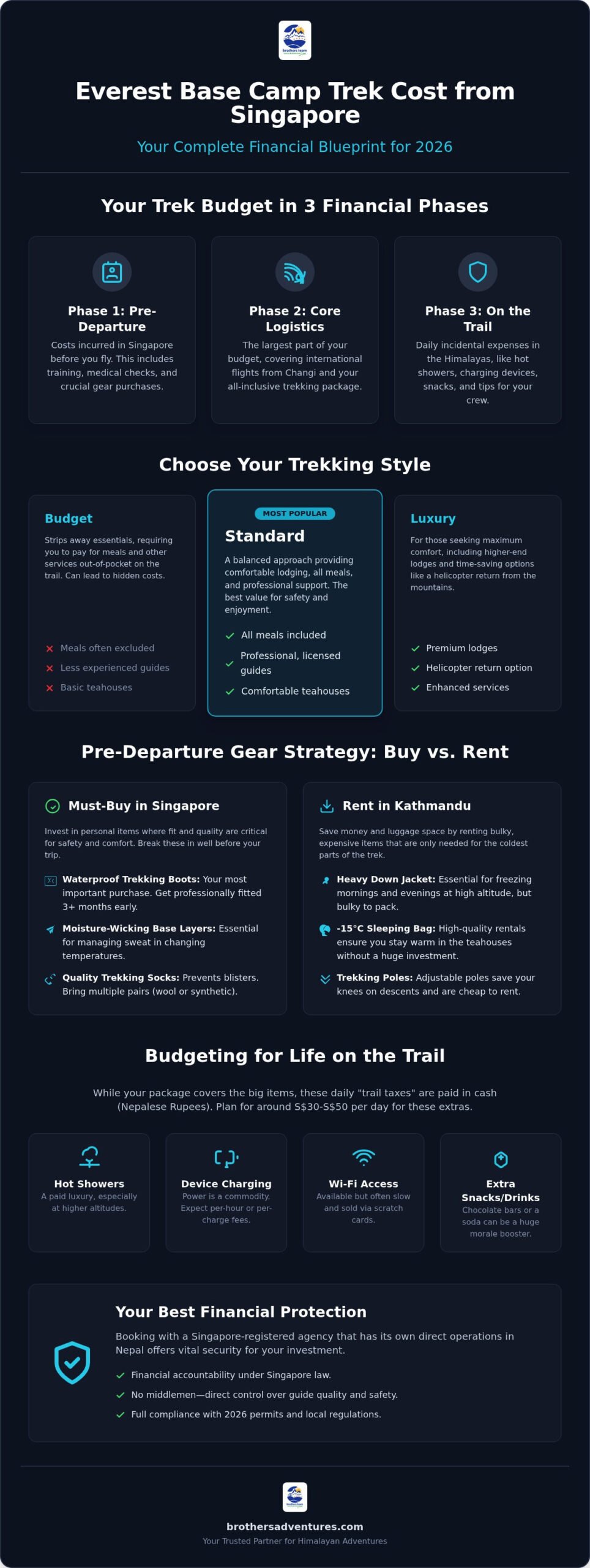
Your 2026 budget falls into three distinct phases. First, the Pre-departure phase covers gear, vaccinations, and physical preparation. Second, the Core Logistics involves your international flights and the professional trekking package. Finally, the Incidental phase includes daily trail taxes like charging your phone or buying extra snacks. In 2026, costs reflect updated post-pandemic logistics and new sustainability fees designed to protect the fragile Himalayan environment. While it’s tempting to hunt for the cheapest deal, remember that “budget” operators often hide costs by excluding meals or using less experienced guides, which can compromise both safety and enjoyment.
Determining Your Trekking Style: Budget vs. Standard vs. Luxury
Your choice of comfort level significantly dictates your final bill. A budget trek often strips away essentials like daily meals or internal Lukla flights, leaving you to pay out of pocket as you go. Most Singaporean adventurers opt for the Standard style, which provides a balanced mix of comfortable teahouses, all meals, and professional support. For those wanting to save their knees on the way down, luxury options now frequently include helicopter returns from Gorak Shep directly to Kathmandu, offering a breathtaking aerial view of Everest Base Camp while shaving three days off the itinerary.
The ‘Singapore Factor’ in Your Budget
Living in Singapore presents unique financial advantages and hurdles. While the SGD remains strong against the Nepalese Rupee, international transactions are typically pegged to the USD, so keep an eye on exchange rates when planning your 2026 expedition. You’ll likely spend a significant portion of your pre-trek budget in Singapore on high-quality technical gear. Since local humidity isn’t exactly the best testing ground for sub-zero down jackets, investing in reputable brands early is key. We recommend securing your 2026 slot with an initial deposit at least six to nine months in advance to lock in current rates and ensure flight availability from Changi, as this is a major component of the Everest Base Camp trek cost from Singapore.
Phase 1: Pre-Departure Prep—Training, Gear, and Medical Costs
Your journey to the roof of the world begins long before you step onto a plane at Changi. Success at high altitude is built on a foundation of physical readiness and the right equipment. When calculating the total Everest Base Camp trek cost from Singapore, you must factor in the “hidden” expenses of preparing your body and your kit bag. These initial investments are what ensure you don’t just reach the base camp, but actually enjoy the view when you get there.
Equipping Yourself in Singapore
Singapore offers excellent options for technical gear, but you need to be strategic about what you buy locally versus what you rent in Kathmandu. Your most critical investment is a pair of high-quality, waterproof trekking boots. Buy these in Singapore at least three months before your trip. Visit specialized outdoor retailers in areas like Funan or Queensway Shopping Centre to get a professional fitting. You’ll need time to break them in on the trails of Bukit Timah to avoid debilitating blisters on the mountain.
- Must-buy in SG: Trekking boots, moisture-wicking base layers, and high-quality trekking socks.
- Consider renting in Nepal: Heavy down jackets and -15°C sleeping bags. High-end rentals in Kathmandu cost only a few dollars a day, saving you hundreds of dollars and precious luggage space.
Medical and Physical Readiness
Physical training in our tropical climate requires creativity. You don’t need an expensive gym membership; the 25-story HDB blocks in your neighborhood are the perfect training ground. Spend an hour three times a week climbing stairs with a weighted pack to simulate the vertical gain of the Khumbu region. Complement this with long weekend hikes at MacRitchie Reservoir to build endurance.
On the medical front, consult a travel clinic for a health screening and necessary vaccinations. You’ll likely need shots for Hepatitis A and Typhoid. It’s also the time to secure your supply of Diamox for altitude sickness. For authoritative guidance on health risks, review the CDC health information for Nepal trekkers, which details essential prevention strategies for acute mountain sickness. Finally, never skip high-altitude travel insurance. A policy covering helicopter evacuation up to 6,000 meters is mandatory; without it, a rescue could cost you upwards of USD 10,000 out of pocket. If you’re ready to start planning your specific requirements, our team can help you customize your Everest Base Camp Trek experience from the ground up.
Phase 2: Core Logistics—Flights from Changi and Trekking Packages
Once you’ve broken in those boots at Bukit Timah, it’s time to tackle the core logistics. This phase represents the largest portion of your Everest Base Camp trek cost from Singapore. It’s the moment where you secure your passage to the Himalayas and ensure a professional team is ready to meet you in Kathmandu. Managing these high-value items early gives you the best chance at securing preferred dates and better pricing.
Booking Your International Flights
Singapore Airlines offers the most seamless experience with direct flights from Changi to Kathmandu. For the 2026 season, economy fares typically range between SGD 639 and SGD 1,156. If you’re looking to save, transit routes through Kuala Lumpur, Bangkok, or Delhi can be more budget-friendly, though they add significant travel time. Pay close attention to baggage allowances. While international carriers are often generous, the domestic flight to Lukla has a strict 15kg total limit for both check-in and carry-on bags. For 2026, many Lukla flights will depart from Ramechhap during peak months to manage air traffic. This requires a four-hour drive from the capital, so check that your package includes this transfer to avoid a logistical headache on your first morning.
Evaluating Trekking Package Inclusions
Choosing an expedition team is about the quality of your support system. A standard 2026 package should be all-inclusive to prevent “bill shock” on the mountain. This typically covers your Kathmandu stays, domestic Lukla flights, all meals on the trail, and mandatory permits. In 2026, you’ll need the Khumbu Pasang Lhamu permit (NPR 2,000) and the Sagarmatha National Park entry (NPR 3,000). As of 2026, hiring a licensed guide is mandatory for all trekkers. This move is designed to enhance safety and support the local economy, so ensure your operator provides fully certified staff.
Look for a guide ratio that prioritizes your well-being. We suggest one guide for every four trekkers. This means if one person needs to descend due to altitude, the rest of the group can continue safely. Accommodation usually involves cozy teahouses, but you can upgrade to lodges with private bathrooms in lower villages. Most professional Everest Base Camp Trek packages offer flexible meal plans, ensuring you get the high-calorie fuel required for the thin air ahead. By selecting a comprehensive package, you lock in the majority of your expenses before you even leave Singapore.
Phase 3: Life on the Trail—Daily Expenses and Hidden Extras
Once you touch down in Lukla, the economy of the trail takes over. While your professional package covers your roof and three square meals, the daily “trail tax” is where many travelers lose track of their Everest Base Camp trek cost from Singapore. Budgeting an additional USD 15 to USD 25 per day for extras is a smart move for 2026. These small comforts make a massive difference in your morale as the air thins and the temperature drops. Remember that teahouses operate on a cash-only basis and only accept Nepalese Rupees (NPR); credit cards are not a viable option once you leave the main hubs.
Daily Incidental Budget Checklist
The phenomenon of “Altitude Inflation” is real. As you climb higher, the price of basic goods rises because every item must be carried up by porters or yaks. A bottle of water that costs cents in Kathmandu can be five times more expensive by the time you reach Gorak Shep. To save money and reduce plastic waste, bring water purification tablets or a filtered bottle. Connectivity is another factor to consider. Wi-Fi cards from providers like Everest Link are available, but they aren’t free. Similarly, charging your phone or power bank usually incurs a fee of a few dollars per device because solar power is a limited resource at these heights.
- Hot Showers: Expect to pay for gas-heated water in the lower villages. Above 4,000 meters, most trekkers switch to wet wipes to save money and stay warm.
- Snack Cravings: That Snickers bar at 5,000 meters is a delicious but pricey luxury. Pack some of your favorite snacks from Singapore to keep costs down.
- Laundry: Prices are calculated per piece and are only available in the first few days of the trek.
The Tipping Guideline for Singaporeans
Tipping is a deeply ingrained part of the trekking culture in Nepal. It is the primary way to show appreciation for the incredible physical labor your guides and porters perform. A standard benchmark for 2026 is to budget 10% to 15% of your total trek cost for tips. This amount is usually pooled and distributed among the crew on the final night in Lukla. It is a celebratory moment of gratitude that marks the end of your journey. While USD is appreciated, giving tips in NPR is much more practical for the local staff as it saves them a trip to a money changer. If you want a worry-free experience where these logistics are clearly explained before you fly, consider booking our comprehensive Everest Base Camp Trek package today.
Why a Singapore-Based Specialist is Your Best Financial Protection
Investing in your dream expedition is a significant commitment. When you evaluate the Everest Base Camp trek cost from Singapore, you aren’t just paying for a permit and a plane ticket; you’re paying for peace of mind. Booking with a Singapore-registered agency licensed by the Singapore Tourism Board (STB) provides a vital layer of financial protection that overseas operators simply cannot match. This local accountability ensures that your funds are handled according to strict regulatory standards, protecting your adventure from the moment you pay your deposit at our local office until you return home.
Beyond financial security, a specialist acts as your personal bridge to the Himalayas. We offer pre-trek briefings and face-to-face gear consultations right here in Singapore. This high-touch service helps you avoid expensive mistakes, like buying the wrong technical layers or failing to prepare for the specific logistical shifts of the 2026 season. Having a team that understands both the humidity of Changi and the frozen trails of the Khumbu makes your preparation seamless and stress-free. Our dual-office advantage means you get local Singaporean support combined with direct, expert operations in Kathmandu.
Avoiding the ‘Cheap Trek’ Trap
It’s tempting to opt for the lowest quote you find online, but cut-rate prices usually come at a steep cost to your safety. Low-budget operators often hire inexperienced guides who lack the medical training to spot early signs of altitude sickness. They might also lack the robust logistical networks required for swift emergency evacuations. If a medical crisis occurs at 5,000 meters, you want a team that can coordinate a helicopter rescue instantly, not an operator who cuts corners on communication equipment. For more details on vetting your expedition team, read our guide on Choosing a Specialist Tour Operator.
Brothers International Tours & Trading Pte Ltd: Your 2026 Himalayan Partner
Founded in 1992, Brothers International Tours & Trading Pte Ltd is a family-owned business with a unique dual presence in both Singapore and Kathmandu. This means we manage our own operations on the ground, ensuring that every dollar of your Everest Base Camp trek cost from Singapore goes directly toward high-quality service and fair wages for our staff. We specialize in crafting customizable itineraries for everyone from solo trekkers to school groups, ensuring your Everest Base Camp trek from Singapore is perfectly tailored to your fitness level. To begin your journey, reach out to our team for a personalized consultation and take the first step toward the summit of your dreams.
Take the First Step Toward the Roof of the World
The dream of standing amidst the world’s highest peaks is closer than you think. By breaking down the Everest Base Camp trek cost from Singapore into manageable phases, you’ve replaced uncertainty with a concrete plan for your 2026 adventure. Success depends on more than just your budget. It’s about the quality of your preparation and the reliability of the team standing beside you in the thin air. You now understand the importance of professional logistics, from securing Changi departures to navigating the altitude inflation of the Khumbu region.
Don’t leave your safety to chance with unverified operators. Our family-owned team at Brothers International Tours & Trading Pte Ltd brings over 30 years of expertise and a unique dual presence in both Singapore and Kathmandu to ensure every detail of your journey is seamless. We combine rigorous safety protocols with the warm, personal touch of a seasoned companion. We act as your bridge to the Himalayas, providing the local support you need before you even leave home.
Book Your 2026 Everest Base Camp Adventure with Brothers International Tours & Trading Pte Ltd today and let us help you turn this roadmap into a reality. The mountains are calling, and we’re ready to lead the way.
Frequently Asked Questions
What is the average Everest Base Camp trek cost from Singapore in 2026?
A typical 14 to 16 day expedition ranges from SGD 3,800 to over SGD 7,500. This total investment depends on your chosen comfort level, gear purchases, and how early you book your international flights. While the package price is the largest portion, you must also account for pre-trip training and incidental trail expenses. Planning for this total Everest Base Camp trek cost from Singapore ensures a smooth journey without financial surprises.
Are flights from Singapore to Kathmandu included in most trek packages?
Most standard trekking packages exclude international flights from Changi, though some all-inclusive Singapore-based agencies offer them as a bundle. You should budget separately for your Singapore Airlines or transit flights unless the itinerary explicitly states otherwise. Domestic flights between Kathmandu and Lukla are almost always included in professional packages. Always verify if the airport transfers and the drive to Ramechhap are covered to avoid unexpected transport fees.
How much should I budget for tips for guides and porters?
Plan to set aside 10% to 15% of your total trek cost for tipping your support team. This collective thank-you is shared among your lead guide, assistant guides, and porters on the final night of the trek. It’s best to distribute these tips in Nepalese Rupees to make it easier for the local crew to use immediately. This small gesture reflects the deep appreciation for the incredible physical labor provided by your mountain family.
Is it cheaper to buy trekking gear in Singapore or Nepal?
Buy your essential footwear in Singapore but consider renting heavy technical gear in Kathmandu. High-quality trekking boots require months of breaking in on local trails like Bukit Timah to prevent blisters. Conversely, you can rent professional-grade down jackets and sleeping bags in Nepal for just a few dollars a day. This strategy reduces your initial Everest Base Camp trek cost from Singapore and keeps your luggage light for the flight to Lukla.
Do I need special travel insurance for Everest Base Camp?
You absolutely need a specialized policy that covers emergency helicopter evacuation up to 6,000 meters. Standard travel insurance often excludes high-altitude trekking or caps coverage at 2,500 meters, which is insufficient for the Khumbu region. Expect to pay between USD 50 and USD 250 for this coverage. Without it, a single rescue flight can cost you over USD 4,000 out of pocket, making specific insurance a non-negotiable safety expense.
How much does it cost to charge a phone or use Wi-Fi on the EBC trail?
Budget approximately USD 15 to USD 25 per day for connectivity and power on the trail. Teahouses often charge small fees to use their solar-powered charging stations for phones and camera batteries. Wi-Fi access via Everest Link or local SIM data is available but becomes more expensive as you gain altitude. Bringing a high-capacity power bank and a local Ncell SIM card can help manage these tactical daily costs effectively.
What are the visa fees for Singaporeans visiting Nepal in 2026?
For the 2026 season, a 15-day tourist visa costs USD 30, while a 30-day visa is USD 50. Most trekkers opt for the 30-day version to allow for weather delays or extra rest days in Kathmandu. You can apply for your visa on arrival at Tribhuvan International Airport or online before you depart. Ensure your passport has at least six months of validity left to avoid any issues at the immigration counter.
Should I bring Singapore Dollars, USD, or Nepalese Rupees for the trek?
Carry a mix of USD for your visa and NPR for all trail expenses. While you can exchange Singapore Dollars in Kathmandu, USD is the preferred currency for official fees and larger payments. Once you begin the trek, teahouses and shops accept only Nepalese Rupees in cash. Credit cards and ATMs are non-existent in the higher villages, so withdraw enough cash in Kathmandu to cover your planned incidental spending and tips.



Comments are closed