


Poon Hill Sunrise Trek: What to Expect and How to Plan
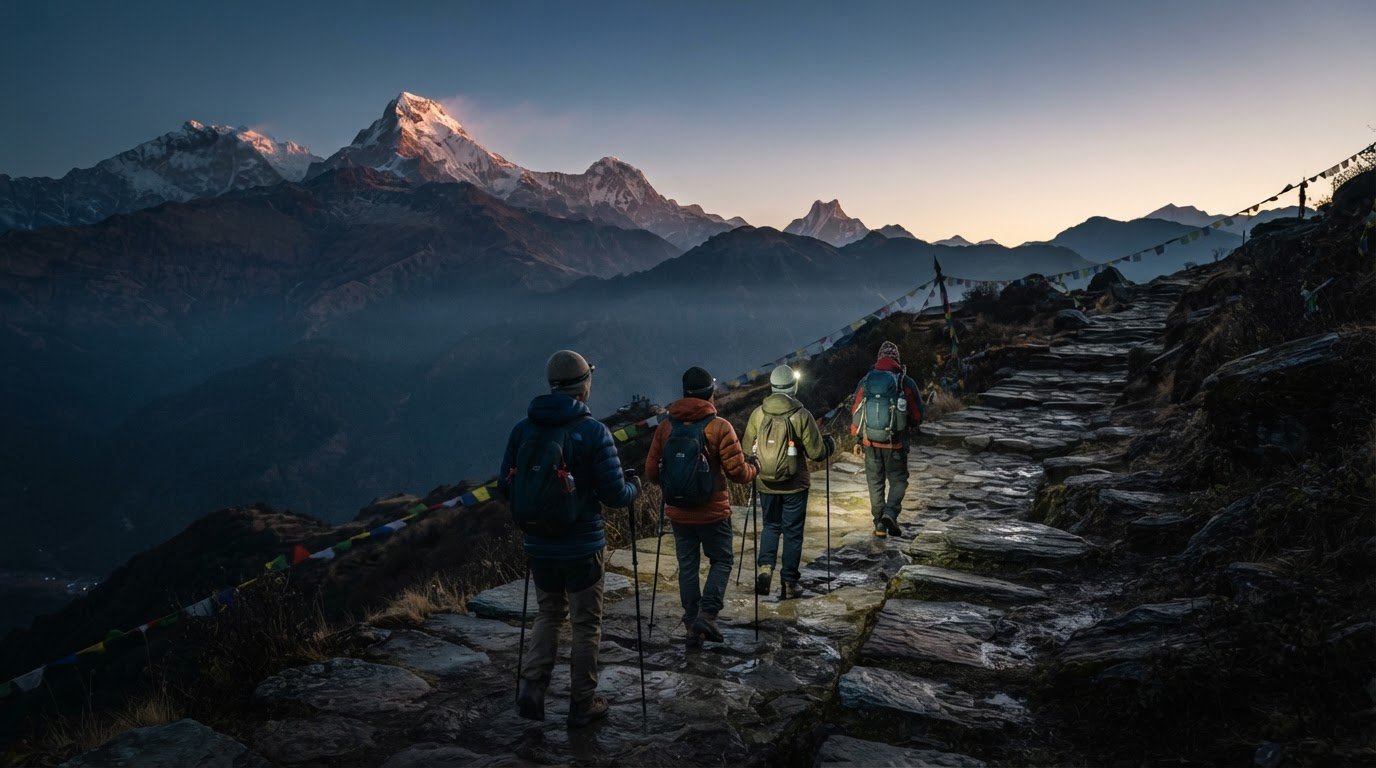
The Poon Hill sunrise trek begins before dawn, with a walk to a viewpoint at 3,210 metres. When skies are clear, the first light reveals a wide Himalayan panorama. The early start takes planning, and the view depends on the weather, but a steady pace and the right layers can make the outing more comfortable and rewarding.
It helps to know what the walk involves, what to wear in changing conditions, and how the viewpoint outing fits into the full trek. This guide covers practical preparation, pacing and season planning, so you can choose an itinerary that matches your walking confidence and travel plans.
The sunrise is one highlight of a longer journey, not a guaranteed spectacle or a standalone visit. The Annapurna Base Camp Trek via Poon Hill includes the viewpoint as part of a guided, multi-day itinerary. Plan for the walk and the wider trek, keep expectations flexible, and leave room to enjoy the scenery along the way.
Key Takeaways
- The Poon Hill sunrise trek includes an early walk to a mountain viewpoint, where dawn can reveal changing light and dramatic silhouettes when conditions allow.
- Prepare the night before and follow a steady early-start routine. Timing varies with your pace, group needs, daylight and trail conditions.
- Consider the viewpoint outing separately from the full trek, then choose an itinerary to suit your walking confidence, stamina and comfort with early mornings.
- Pack adaptable layers, suitable footwear, a light, water and personal essentials for changing temperatures and visibility.
- A guided multi-day itinerary can coordinate the sunrise outing with the wider journey and its logistics.
What makes the Poon Hill sunrise trek a memorable Himalayan experience?
The Poon Hill sunrise trek is an early walk from your overnight stop to a mountain viewpoint, where you can watch dawn light spread across the Himalayan landscape. It is one part of a multi-day journey, alongside the walking, rest and scenery of the wider route. The shift from a dim, quiet trail to mountain silhouettes against a brightening sky gives the morning its own rhythm. Clouds and visibility, however, influence what you see.
For a general overview of the viewpoint and its setting, read about Poon Hill. Keep expectations flexible: the experience is being there as the landscape brightens, not a promise of a cloud-free panorama.
What happens during the sunrise outing?
The outing starts with an early wake-up and a walk towards the viewpoint in darkness or dim light. Once at the open viewing area, trekkers spend time outdoors as the sky changes, then return along the trail. The cool air, quiet and crunch of footsteps can make this walk feel quite different from daytime trekking.
The schedule depends on your itinerary, walking pace, daylight and conditions. Your group’s needs also shape the timing. Allow time for a steady climb and a comfortable return rather than treating the outing as a race.
What can trekkers see from Poon Hill?
On a clear morning, the viewpoint can offer broad Himalayan panoramas. Ridges may first appear as dark silhouettes against the brightening sky; as the light shifts, their outlines can become more distinct and warmer in tone. Give yourself time to watch the scene unfold rather than focusing only on the moment the sun appears.
Cloud, haze and seasonal conditions can soften or obscure the view. Some mornings bring a wide-open outlook, while on others the mountains appear only in glimpses. Enjoy the atmosphere and gradual dawn even if visibility differs from what you imagined.
Think of sunrise as a highlight, not a standalone visit. The wider trekking experience includes the days of walking and the time spent on the trail before and after that early morning. A well-paced multi-day itinerary gives the outing context and makes the journey rewarding as a whole. For example, the Annapurna Base Camp Trek via Poon Hill places the viewpoint within a broader guided trek.
How the Poon Hill sunrise trek unfolds from early start to return
The Poon Hill sunrise trek follows a straightforward routine: prepare before bed, set out early with your guide, walk to the viewpoint, spend time there, then return and continue with the day’s planned trek. The route and schedule depend on your itinerary and current arrangements, so do not assume your start time will match another traveller’s.
In low light, follow your guide’s instructions and keep the group’s steady pace. Use your light to see the trail, watch your footing and avoid rushing to catch up. Walking speed, daylight, weather and the needs of fellow trekkers can all affect the timing.
How should you prepare the night before?
Lay out warm layers, a headlamp, water and personal essentials before turning in. Keep your pack light and carry only what you will need for the outing. Listen carefully to your guide’s briefing about the departure time, route and group plan. Having your gear ready makes an early start simpler and less hurried.
Before the trek, use the Nepal Tourism Board as an official source for general travel and trekking information. For the outing itself, follow your itinerary guidance and your guide’s updates on route arrangements and conditions.
What should you expect on the walk back?
After time at the viewpoint, return along the planned route with your group. As daylight builds, the trail may feel different from it did on the ascent, so stay attentive and keep a comfortable pace. Take breaks when they suit the group, and do not rush simply to get back to the overnight stop.
Cloud, wind and other changing conditions can affect how long you stay outdoors and when you return. The wider trekking plan continues once you are back, so a measured pace helps you enjoy the sunrise without turning it into a dash.
A guided multi-day itinerary brings the early outing into the wider journey, with guiding, local transport, accommodation and permit processing coordinated as part of the package. Explore the Annapurna Base Camp Trek via Poon Hill to experience the viewpoint within a broader trek.
Is the Poon Hill sunrise trek difficult? Compare the real demands
The Poon Hill sunrise trek has two distinct demands: waking early and walking to the viewpoint before dawn, then managing the repeated walking of the wider itinerary. The viewpoint outing is one segment of a multi-day trek, so earlier effort, sleep, weather and how your body responds can affect how it feels. There is no single difficulty level that applies to every traveller.
How does the sunrise walk compare with the full trek?
Consider more than the early climb. The viewpoint outing means walking in low light and starting before your usual routine. The full trek also requires you to keep moving over successive days. This comparison describes the type of effort, not fixed distances or timings, which vary with the itinerary and conditions.
| Factor | Sunrise outing | Full itinerary |
|---|---|---|
| Effort | A single early walk, with the added challenge of starting in the dark. | Repeated walking days can build fatigue, even when each day feels manageable on its own. |
| Time on foot | Depends on the route, group pace and conditions that morning. | Varies by itinerary and daily walking plan. Consider the cumulative time, not just one day. |
| Itinerary context | A morning outing within the trek. | A broader journey that includes walking, rest and recovery across several days. |
Following your guide’s pace helps the group stay together and gives you room to move carefully, especially in low light. For broader information about mountain tourism in Nepal, see the Nepal Mountaineering Association.
Who may want a gentler pace or more preparation?
First-time trekkers, travellers returning to exercise, and anyone unsure about stamina may benefit from building up gradually before departure. Practise regular walks and, if possible, include longer sessions so you can notice how your energy changes over time. Tell your guide about your pace needs, and choose an itinerary that allows for a steady rhythm instead of a rushed schedule.
Comfort with early starts matters too. A short night can make walking feel harder, so plan for rest and prepare what you need in advance. If you have a health concern that could affect exertion or travel at altitude, seek advice from a qualified medical professional before setting out. Choose a trek to suit your fitness and circumstances, not someone else’s account.

When to go and what to pack for a Poon Hill sunrise trek
Choosing dates is only part of the plan. Visibility and temperatures vary, and conditions at the viewpoint may differ from those lower on the trail. Even a carefully chosen travel window cannot guarantee a clear panorama, so plan for the walk and the mountain atmosphere, not only a perfect sunrise. Review current local conditions and your itinerary guidance before settling on dates or finalising what to carry.
What clothing and essentials help before dawn?
Dress for a cool, dark start and the possibility of warming up as you walk. Adaptable layers let you adjust without carrying a bulky load. Wear comfortable footwear you have already broken in, and keep essentials easy to reach.
- Layers: Bring warm clothing you can add or remove as conditions change.
- Footwear: Choose comfortable, broken-in shoes suitable for walking on a trail.
- Light and water: Carry a headlamp and enough water for the outing.
- Personal essentials: Pack useful items, such as any personal medication you need.
Set everything out the night before. A compact pack is easier to manage when you are waking early and walking in low light.
How should you choose your trekking season?
Seasonal conditions can affect temperatures, trail comfort and the chance of an open view, but no date promises clear skies. Before choosing, compare current local conditions and route guidance with your own preferences. Your itinerary’s latest advice can help you prepare for the conditions expected during your travel period.
Use this quick check before you commit:
- Season: Have you reviewed current local conditions instead of relying on a general “best month” claim?
- Pace: Does your itinerary allow a walking rhythm that feels manageable for you?
- Comfort: Are you prepared for an early start, changing temperatures and the possibility of limited visibility?
If conditions shift, stay flexible and follow your guide’s direction. The experience can still be memorable for its quiet trails and changing dawn light, even if clouds soften the mountain views.
For a guided journey that includes the sunrise within a broader trekking itinerary, explore the Annapurna Base Camp Trek via Poon Hill.
Plan the Poon Hill sunrise as part of a guided Nepal trek
The sunrise is a vivid moment, but the journey around it matters just as much. A guided multi-day package brings itinerary planning, guiding, accommodation, local transport and permit processing together, reducing the number of separate arrangements you need to manage. Review how each part of the journey fits together rather than treating the viewpoint as a standalone outing.
The Annapurna Base Camp Trek via Poon Hill places the sunrise within a broader trekking experience. The dawn walk becomes one highlight among the trail days, changing scenery and time spent travelling on foot. Your guide coordinates the day’s plans and keeps the group’s pace in view, while organised logistics support the wider journey.
What does a guided trek package help organize?
A coordinated package makes it easier to see how transport, accommodation, guiding and permit processing fit with your route and daily plan. That matters for an early outing: the sunrise walk needs to fit the wider trek, without leaving you unprepared for the rest of the day. For more planning factors, read this guide to specialist tour operator planning and use the Nepal adventure itinerary checklist as a planning reference.
How can you choose an itinerary that fits your goals?
Start with the time you have, then consider your walking pace and how much of a broader trekking journey you want. A viewpoint-focused morning may sound appealing, but compare the complete itinerary: consecutive walking days, opportunities to rest, and where the sunrise outing fits into the schedule. Choose a pace that feels sustainable rather than building your decision around one dramatic moment.
Brothers International Tours & Trading Pte Ltd is a family-owned travel agency operating since 1992. It offers guided multi-day journeys across Nepal and other destinations in South and Central Asia. Explore its guided Nepal trekking journeys and choose an itinerary that makes the sunrise part of a rewarding journey.
Make the Sunrise Part of a Journey Worth Taking
The Poon Hill sunrise trek is more than an early climb. Prepare for changing conditions, follow a pace that suits your fitness, and give the wider trek as much thought as the viewpoint. Clear skies are never guaranteed, but a flexible plan can help you enjoy the morning whatever it brings.
A guided multi-day package coordinates key travel logistics around the trekking journey. Brothers International Tours & Trading Pte Ltd is a family-owned travel agency operating since 1992, and its Annapurna Base Camp Trek via Poon Hill includes the sunrise within a broader Himalayan adventure.
Ready to explore an itinerary that fits your pace and travel goals? Explore guided Nepal trekking journeys and start planning your mountain experience.
Frequently Asked Questions
How long does the Poon Hill sunrise trek take?
The classic Poon Hill trek usually takes four to five days, with the sunrise outing as one early walk within the itinerary. The viewpoint walk itself varies with your starting point, pace, group, daylight and trail conditions, so there is no single fixed duration. Allow time for the return and the day’s onward plan too, rather than planning only around the time at the viewpoint.
Is the Poon Hill sunrise trek difficult for beginners?
It can suit beginners who are comfortable with regular walking, but the effort varies by person and itinerary. The early start, walking in low light and repeated trekking days can all add to the challenge. Build up your walking beforehand, keep a steady pace and discuss your needs with your guide. If you have health concerns, seek advice from a qualified medical professional before travelling.
What can you see at sunrise from Poon Hill?
When visibility allows, the viewpoint offers broad Himalayan panoramas, with mountain ridges appearing as silhouettes against the brightening sky. As dawn progresses, the light can reveal more detail and warmer tones. Clouds, haze and weather may obscure or soften the view, so a clear panorama is not guaranteed. Give yourself time to take in the changing scene, whatever the morning brings.
When is the best time for the Poon Hill sunrise trek?
Autumn, particularly October and November, is often favoured for clearer skies, while spring, especially March and April, can bring rhododendron blooms. Conditions vary from year to year, and neither season guarantees clear views. Check current local conditions and your itinerary’s latest guidance before choosing dates. Consider the broader trekking experience you want, not only the chance of seeing a particular sunrise.
What should I pack for the Poon Hill sunrise walk?
Pack warm, adaptable layers for the cold early start, comfortable footwear you have already broken in, a headlamp and water. Add essential personal items, such as any medication you need. Keep your pack light and carry only what will be useful for the outing. Set everything out the night before, and follow your guide’s advice on clothing and items suited to current conditions.
Do I need a guide for the Poon Hill sunrise trek?
Yes. As of October 2026, current Nepal trekking rules require foreign trekkers to use a licensed guide from a registered agency for the Poon Hill trek. A guide can also coordinate the group and provide direction on the route, especially during the pre-dawn walk. Rules and access arrangements can change, so review the latest guidance before travel.
Can I do the Poon Hill sunrise viewpoint as a standalone trip?
The sunrise viewpoint is reached on foot as part of a trekking route, rather than as a simple stop accessible directly by vehicle. Plan it within a trek itinerary that includes the walk to and from the viewpoint, as well as the wider route and its logistics. The classic trek usually takes several days, so review current access arrangements and itinerary guidance before making plans.




Comments are closed