


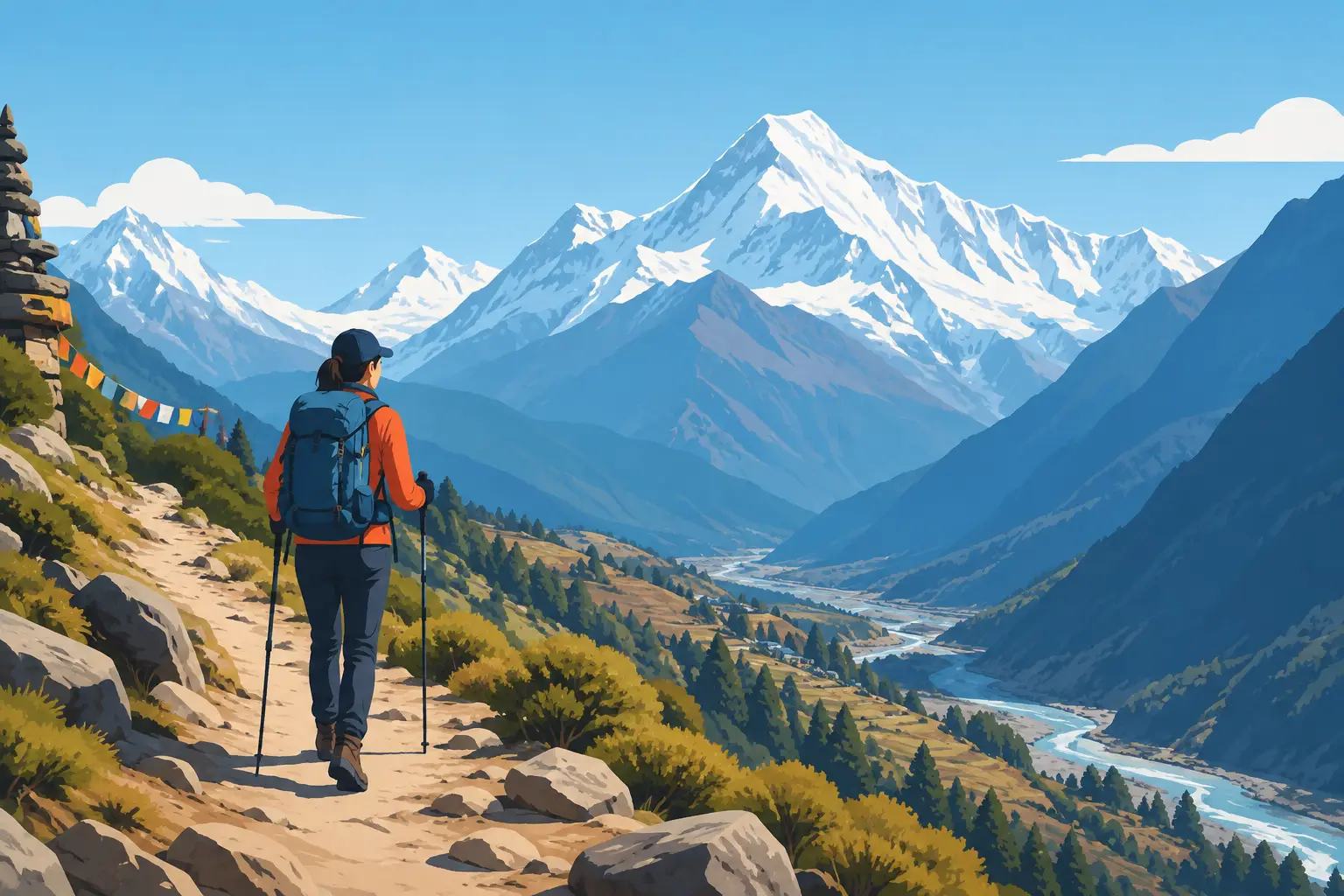
Annapurna Circuit Experience: What the Trail Feels Like
The Annapurna Circuit experience does not begin at Thorong La Pass. It begins with the first sight of snow peaks above a deeply carved valley, the rhythm of walking from village to village, and the realisation that the landscape changes dramatically with every day on the trail. This is a trek of contrasts: warm lowland forests, dry Tibetan-influenced settlements, busy tea houses, quiet monasteries and, finally, a high pass at 5,416 metres.
For many travellers, the circuit feels like a complete Himalayan journey rather than simply a route to a viewpoint. It asks for patience, sensible pacing and respect for altitude, then rewards that effort with some of Nepal’s most varied mountain scenery.
What Makes the Annapurna Circuit Experience Different?
Unlike a trek that follows one valley in and out, the Annapurna Circuit travels around the Annapurna massif. You see the Himalaya from changing angles while moving through several distinct cultural and geographical regions. One morning may bring terraced fields and subtropical vegetation; a few days later, the landscape can resemble a high-altitude desert framed by Nilgiri, Gangapurna and Annapurna peaks.
The variety is the route’s greatest strength, but it also means the trek is not a single, uniform challenge. Lower sections can be warm and humid, particularly in spring and autumn afternoons. Higher up, cold mornings, wind and thin air become the main considerations. Travellers who expect only dramatic snow mountains are often surprised by how much they remember the villages, local meals and conversations in tea houses.
The route has changed over the years as roads have reached parts of the valleys. A well-planned itinerary therefore matters. It can use quieter walking trails where possible, avoid unnecessary road sections and allow time for the places that give the circuit its character.
The Days That Stay With You
Walking through the Manang Valley
As the trail rises beyond Pisang, the mountains begin to feel much closer. The route towards Manang reveals broad valleys, striking cliffs and traditional settlements built from stone. This is usually where trekkers start to understand why acclimatisation cannot be rushed.
Manang is more than an overnight stop. It is a valuable place to spend an extra night, take a gradual acclimatisation walk and assess how everyone is feeling. A short hike to a higher viewpoint before returning to sleep lower follows a simple principle that can make a meaningful difference at altitude: climb high, sleep low.
There is also time to slow down here. Prayer walls, small bakeries, mountain views and the changing light across the valley make Manang a memorable pause before the more demanding days ahead.
Crossing Thorong La Pass
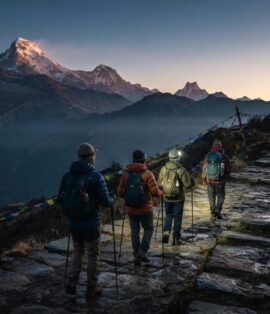
Thorong La is the physical and emotional high point of the Annapurna Circuit experience. The crossing normally starts before dawn, often under headtorches, because clear mornings generally offer the best conditions and weather can change later in the day. The ascent is not technical in normal trekking season, but it is long, cold and demanding because of the altitude.
Reaching the prayer flags at the pass is a genuine moment of achievement. Yet the day is only partly complete. The descent to Muktinath is steep and can feel harder on tired knees than expected. Good footwear, walking poles and a steady pace are practical comforts, not luxuries.
The pass should never be treated as a race. Weather, snow conditions and individual health can alter the plan. A responsible guide team monitors the group closely and is prepared to make cautious decisions when conditions call for them.
Arriving in Muktinath
After the exposed high mountain terrain, Muktinath brings a different atmosphere. Revered by both Hindu and Buddhist pilgrims, it is a place of spiritual importance as well as a welcome milestone for trekkers. The dry Mustang landscape, apple orchards lower down and the sound of wind through the valley create a distinct contrast with the greener eastern side of the circuit.
For many, this is where the trek’s scale becomes clear. You have crossed from one world of the Himalaya into another, on foot.
Altitude Is the Real Challenge
Fitness helps on the Annapurna Circuit, but it does not make anyone immune to altitude sickness. Even strong walkers can develop headaches, nausea, poor sleep or unusual fatigue as they gain height. The best protection is an itinerary with enough acclimatisation, a gradual ascent, good hydration and honest communication with the guide.
Travellers should not dismiss symptoms in the hope of reaching the pass. Rest, an additional acclimatisation day or descent may be the right choice depending on how symptoms develop. This is why shorter versions of the circuit are not always better value. Saving a day on paper can remove the flexibility that makes a high-altitude trek safer and more enjoyable.
A specialist operator should plan the route around realistic walking times rather than ambitious distances. At Brothers Team, our Kathmandu-based support and experienced local guides help ensure that logistics, lodge arrangements and altitude awareness are looked after throughout the journey.
Life in the Tea Houses
The tea-house experience is central to the trek. Lodges are generally simple, welcoming and practical, with dining rooms that become lively gathering places in the evening. You may meet independent walkers, families, climbers preparing for higher objectives and fellow travellers from across the world.
Rooms are usually basic, and facilities become more limited as altitude increases. Hot showers, charging and Wi-Fi may carry an additional cost or be unavailable at times. That is part of the trade-off for sleeping in remote mountain villages rather than camping.
Meals are more substantial than many first-time trekkers expect. Dal bhat, Nepal’s filling rice-and-lentil meal, is a reliable choice after a long day. Noodles, soup, potatoes, eggs and chapati are widely available, while menus may become simpler at higher elevations. Eating enough and drinking regularly are among the least glamorous but most useful habits on the trek.
When Should You Go?
Spring, broadly March to May, brings warming temperatures, rhododendron blooms in lower areas and busy trails. Autumn, from October to November, is often prized for stable weather and clear mountain views. Both seasons can be popular, so early planning is useful for groups and travellers with fixed dates.
Winter offers quieter paths and crisp views, but snow around Thorong La can cause delays or require changes to the itinerary. During the summer monsoon, the eastern side of the circuit is wetter, though the rain-shadow landscapes around Manang and Mustang can still be appealing. The right season depends on whether your priority is flowering forests, clear skies, solitude or flexibility.
Preparing Well Without Overpacking
The right kit makes the trail more comfortable, but a huge bag does not. Layering is far more useful than carrying one heavy item for every condition. A warm insulated jacket, waterproof outer layer, gloves, sun protection, comfortable broken-in boots and a good sleeping bag are all important. Temperatures can vary sharply between a sunny afternoon and an early morning at high altitude.
Train for consecutive days of walking rather than one heroic weekend hike. Regular hill walking, stair sessions and longer walks with a daypack build the endurance needed for sustained trekking. If you live in Singapore or another flat city, stair training is especially useful, but do not overlook simple preparation such as practising with your boots and learning to use walking poles.
Why Pacing Shapes the Whole Journey
The best Annapurna Circuit itineraries leave room for the unexpected: a slow acclimatisation day, a change in weather, a traveller who needs more rest, or simply an extra hour in a village worth enjoying. A packed schedule may look efficient, but the mountains rarely reward haste.
This trek is a personal milestone, whether it is your first Himalayan holiday or one route among many. Walk steadily, listen to your body and let the journey unfold village by village. The pass is unforgettable, but the full circuit is remembered for the many small moments that lead you there.

Comments are closed