


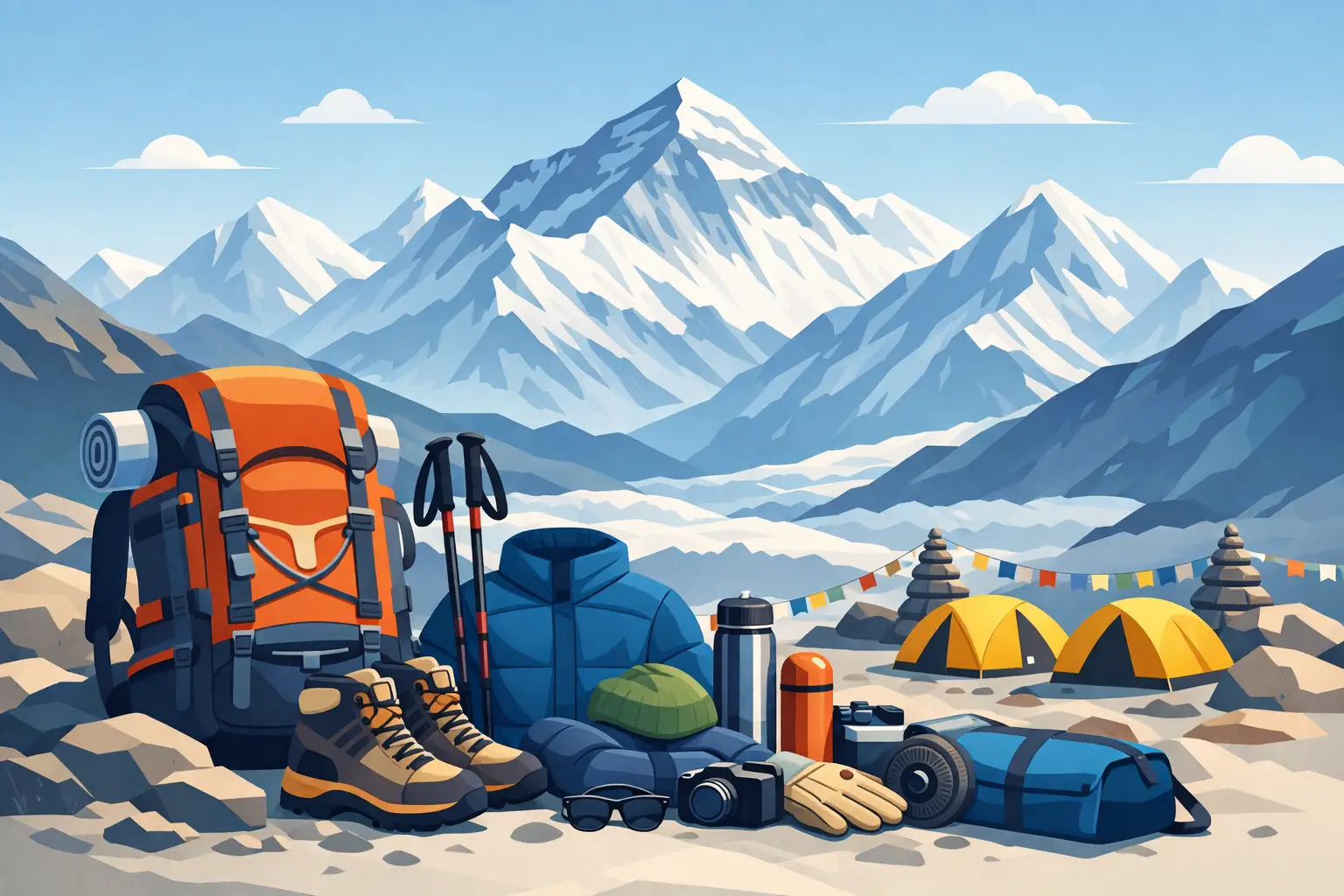
Everest Base Camp Trekking Packing List Made Simple
The right everest base camp trekking packing list is less about carrying more and more about carrying what will keep you comfortable when the temperature falls, the trail climbs and your duffel is loaded onto a yak or porter. On the Everest trail, a sunny morning can become a cold, windy afternoon quickly. Pack with layers, not guesswork.
For most trekkers, the route to Everest Base Camp is a lodge trek rather than a camping expedition. Teahouses provide rooms, hot meals and shared dining spaces, so you do not need tents, cooking equipment or days of food. Your packing should support steady walking, reliable warmth and good recovery between trekking days.
Everest Base Camp trekking packing list: begin with weight
A practical target is a main duffel of around 10 to 12 kg for porter or yak transport, plus a daypack of roughly 25 to 35 litres. Your daypack stays with you and should hold water, waterproofs, warm layers, snacks, valuables, medicines and anything you need before reaching the next lodge.
Exact limits vary by itinerary and domestic flight arrangements, so always confirm your allowance before departure. Do not assume that a larger duffel means you should fill it. The higher you trek, the more every unnecessary item feels like a burden – even when someone else carries your main bag.
A durable, soft-sided duffel is generally better than a hard suitcase. It is easier to load into mountain transport and easier for porters to manage. Use waterproof packing sacks or sturdy dry bags inside it. They keep clothing organised and protect it from dust, rain and spilled water.
Clothing: pack a layering system, not one heavy outfit
Your clothing needs to work from the warm lower valleys around Lukla to freezing mornings above Dingboche and Gorak Shep. Layering lets you add or remove warmth without becoming damp from sweat, which matters in cold mountain air.
Start with two or three moisture-wicking base-layer tops. Merino wool or technical synthetic fabric works well. Avoid cotton for trekking days because it stays wet and cold after exertion. Add one or two long-sleeve trekking shirts, a lightweight fleece and a warmer mid-layer such as a fleece jacket or insulated synthetic jacket.
Your essential outer warmth comes from a good-quality down jacket. It is not usually worn while climbing uphill, but it becomes invaluable at rest stops, in the lodge after sunset and during early starts. Choose one with a hood and enough room to fit over your other layers.
A waterproof, windproof shell jacket and waterproof trousers should stay accessible in your daypack. Even outside the monsoon, rain, sleet and strong wind are possible. Check that your shell fits over your insulation rather than treating it as a close-fitting rain jacket for city use.
For your lower half, two pairs of trekking trousers are usually enough. One pair can be lighter for lower elevations and another slightly warmer or roomier for a base layer. Bring thermal leggings for cold mornings and lodge evenings. One comfortable set of clothes reserved for sleeping can make a real difference to morale after a long day.
For underwear and socks, you do not need a fresh set for every day. Most trekkers manage well with four or five pairs of underwear and three to four pairs of good trekking socks, washing small items where practical. Bring one warmer pair of socks for sleeping. Lodge drying is slow in cold weather, so rotate rather than rely on laundry facilities.
Protect hands, head and neck
Cold hands can turn a scenic ascent into an unpleasant one. Pack a warm beanie, a sun cap, a buff or neck gaiter, liner gloves and insulated outer gloves. The two-glove approach is useful because you can wear the lighter pair while walking and add the warmer pair when wind picks up or temperatures drop.
Sunglasses with proper UV protection are equally essential. At altitude, sunlight reflects strongly off snow and pale rock. Add sun cream and SPF lip balm to your daily kit, even on overcast days.
Footwear that will carry you to Base Camp
Your boots are the one item worth testing well before Nepal. Choose broken-in, supportive trekking boots with good grip and enough room in the toe box for thicker socks. Blisters and bruised toenails are commonly caused by boots that are too small, too new or poorly laced on long descents.
Waterproof boots are helpful, but breathability and fit matter just as much. If you already own comfortable mid-height hiking boots, they are often suitable for the standard Everest Base Camp trek. Heavy mountaineering boots are unnecessary unless your itinerary includes technical climbing or winter conditions requiring specialist equipment.
Carry camp shoes, trainers or light sandals for the lodges. Taking off your boots at the end of the day is a small luxury with a large payoff. Gaiters are optional for the main trail but can be useful in snow, rain or dusty conditions.
The small equipment that earns its place
Trekking poles reduce strain on knees, particularly on the long downhills after acclimatisation days and the return journey. Adjustable poles are easiest to pack, but practise using them before your trek so they support your rhythm rather than interrupt it.
A head torch is essential. Power cuts happen, lodge corridors can be dim and summit-day-style early starts for Kala Patthar begin long before daylight. Carry spare batteries, as cold conditions drain power faster.
A reusable water bottle or insulated flask is preferable to relying on disposable bottles. You will also need a reliable method of treating drinking water, whether purification tablets, drops or a filter suited to mountain use. An insulated bottle is particularly useful above Namche, where water can become very cold.
Your core equipment should include:
- A head torch with spare batteries
- Trekking poles and a rain cover for your daypack
- A reusable bottle or flask and water-treatment method
- Sunglasses, sun cream and SPF lip balm
- A small quick-dry towel and personal toiletries
- Charging cable, power bank and a universal adaptor
Bring a modest amount of cash in Nepalese rupees for charging, hot showers, snacks and drinks in the lodges. These services tend to cost more as you gain altitude because supplies are carried up the valley.
Health, hygiene and altitude preparation
Your personal first-aid kit should cover minor issues, not replace the medical support and safety procedures of an organised trek. Include blister plasters, antiseptic wipes, pain relief that you know you can take, rehydration salts, diarrhoea treatment, any personal prescription medicines and a small supply of plasters.
Discuss altitude medication with your doctor or travel-health clinic before travelling. Medication can be appropriate for some travellers, but it is not a substitute for a well-paced itinerary, hydration, rest and honest communication about symptoms. Headache, poor sleep and reduced appetite can occur at altitude. Persistent or worsening symptoms must be taken seriously.
Hand sanitiser, tissues and wet wipes are useful, although wipes should be carried out rather than left on the trail. A small wash kit is enough. Keep toiletries compact and choose refillable bottles where possible.
Travel insurance documents, passport copies, emergency contacts and travel money should stay in a waterproof pouch in your daypack. Keep a digital copy of key documents on your mobile phone as a backup, but do not rely on battery power alone.
What to leave behind
Overpacking often starts with well-meant contingency items. A large camera kit, several spare outfits, heavy books and full-sized toiletries may sound reasonable at home, but they add up quickly. A mobile phone with a capable camera, a paperback or e-reader, and one or two carefully chosen comforts are normally enough.
You can hire selected items in Kathmandu, including down jackets and sleeping bags, which may suit occasional trekkers. The trade-off is fit, condition and availability. For boots, socks, base layers and personal hygiene items, bringing your own is usually the more comfortable choice.
A sleeping bag rated for cold conditions is recommended even when staying in teahouses. Blankets may be available, but hygiene standards and warmth vary by lodge and season. A silk or thermal liner adds warmth and makes the sleeping arrangement feel more personal.
Pack for your route and season
The standard trekking seasons of spring and autumn usually offer the most stable conditions, but cold nights remain part of the experience. Winter demands warmer layers, while monsoon trekking requires stronger rain protection and tolerance for disrupted flights and wet trails.
A longer route via Gokyo Lakes and Cho-La Pass calls for more serious cold-weather preparation than the direct Everest Base Camp route. Likewise, school groups and first-time trekkers may benefit from a more conservative packing approach, with spare gloves, a dependable insulated jacket and a carefully checked first-aid supply.
At Brothers Team, our guides help trekkers check their kit before heading into the Khumbu, because the best packing list is one that fits the individual, the season and the route. Bring gear you trust, leave room for flexibility, and let the mountains be the biggest thing you carry with you.


Comments are closed