


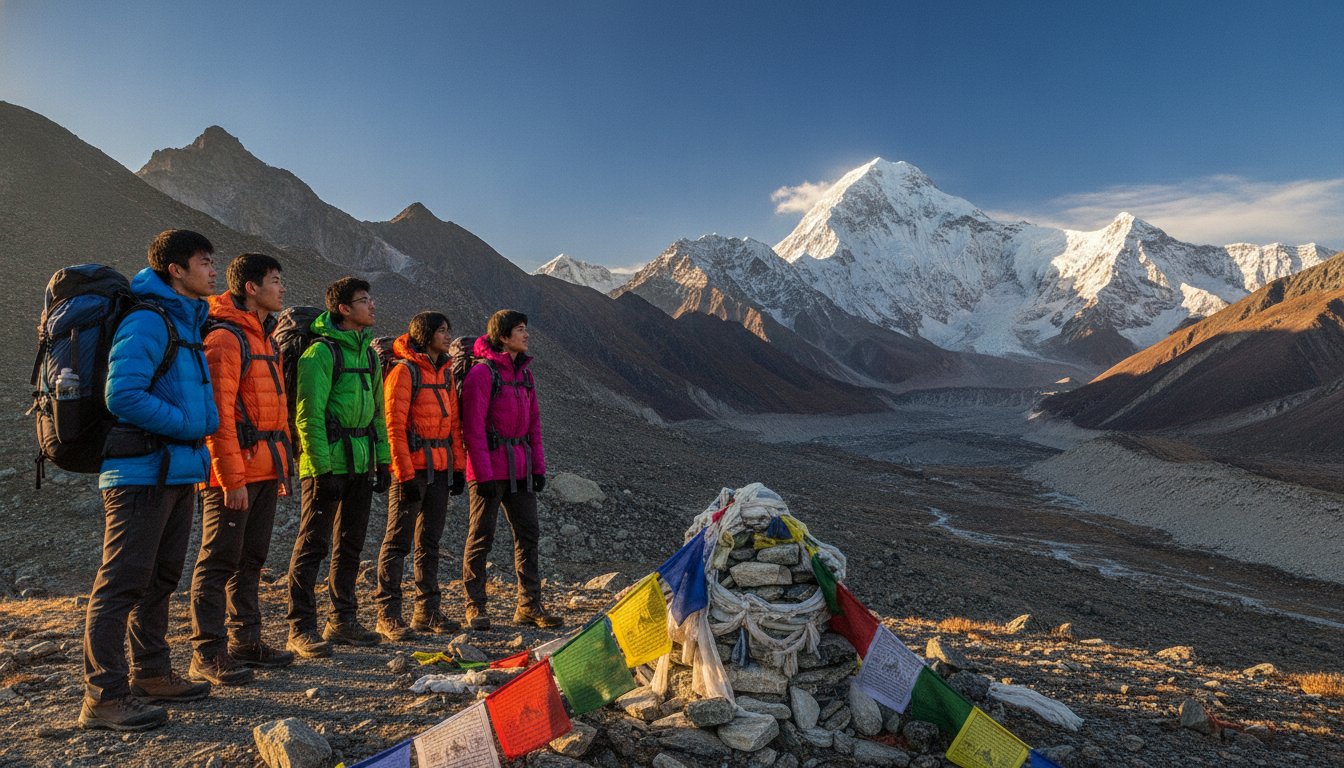
Himalayan School Trips: The Ultimate 2026 Guide to Student Expeditions
What if the most impactful classroom your students ever enter doesn’t have four walls, but instead sits 5,000 meters above sea level? Planning Himalayan school trips is a massive undertaking that requires more than just a map and a sense of adventure. It’s about bridging the gap between a standard holiday and a transformative leadership laboratory. You’re likely weighing the incredible potential for student growth against the logistical hurdles of altitude safety and international permits.
We understand that the safety of your students is your top priority. It’s ours too. This ultimate 2026 guide simplifies the path to a high-impact journey, ensuring every detail from digital E-TIMS registration to local cultural immersion is handled with professional precision. We’ll walk you through the latest 2026 regulations, the best seasonal windows for trekking, and how our dual presence in Singapore and Kathmandu provides a constant safety net. By the end of this article, you’ll have a clear roadmap for an expedition that builds resilience, fosters deep cultural respect, and creates memories that last a lifetime.
Key Takeaways
- Transform student character through multi-disciplinary outdoor education that aligns with 21st-century leadership and resilience goals.
- Navigate the complexities of altitude safety and health protocols to plan Himalayan school trips that prioritize student well-being above all else.
- Identify the best regional destinations for 2026 by comparing the unique curriculum links and accessibility of Nepal, Bhutan, and India.
- Secure a successful journey by implementing a strategic 18-month planning timeline that involves parents and school boards from the very start.
- Leverage the local expertise of a specialist with dual operations in Singapore and Kathmandu to manage logistics and permits with total confidence.
The Educational Value of Himalayan School Trips
Himalayan school trips are far more than simple trekking excursions; they are multi-disciplinary outdoor education journeys designed to challenge the mind as much as the body. In 2026, educational standards are shifting toward 21st-century character development goals like adaptability, critical thinking, and cross-cultural collaboration. These expeditions provide a raw, unscripted environment where these skills are forged through real-world experience. Students move beyond the static pages of a textbook and step into a dynamic world where every trail turn offers a new lesson in resilience.
Think of the mountains as a “Living Classroom.” Stretching across the heart of Asia, The Himalayas offer a profound look at geography, history, and sociology in action. Students don’t just read about tectonic plates; they stand on the very ground shaped by their collision. They witness the impact of climate change on receding glaciers and explore the ancient trade routes that once connected vast empires. This immersive approach ensures that academic concepts stick, rooted in the sensory memory of the crisp mountain air and the scale of the peaks surrounding them.
Beyond the Classroom: Personal Growth and Resilience
Stepping out of a comfortable city life and into the rugged terrain of a high-altitude trek is a powerful catalyst for psychological growth. When students face a steep climb or a sudden change in weather, they learn to manage stress and push past perceived limits. It’s in these moments that long-term confidence is built. They realize they’re capable of much more than they imagined. We also prioritize student leadership throughout the journey. Whether it’s rotating “leader of the day” roles to manage group pacing or helping organize camp logistics, students take ownership of their experience. These group trekking dynamics teach them that true leadership is about service and supporting those around them.
Cultural Immersion and Global Citizenship
True global citizenship begins with empathy and understanding. Interacting with Sherpa communities and Buddhist traditions provides a perspective-shifting experience that stays with students forever. By visiting remote monasteries and sharing meals in village teahouses, they gain a deep respect for a way of life that prioritizes community and spiritual heritage over material wealth. Integrating educational tours in Nepal for students allows for meaningful service learning. Whether it’s contributing to a local school project or learning about sustainable mountain farming, these interactions foster a sense of responsibility toward the wider world. Students return home not just as travelers, but as informed young adults with a broader, more compassionate worldview.
Safety First: Managing High-Altitude Logistics for Groups
Safety is the bedrock of every successful expedition. When parents ask about Himalayan school trips, their primary concern is almost always altitude. It’s a valid worry. Acute Mountain Sickness (AMS) isn’t something to take lightly, and managing a group of students at 4,000 meters requires more than just a first aid kit. As a specialist tour operator, we believe that safety is engineered, not left to chance. Our philosophy is built on three decades of experience, ensuring that every student feels supported and every parent feels at peace.
Rigid logistics are essential for group well-being. We strictly adhere to the government-regulated ratio of one licensed guide for every seven trekkers. This ensures that no student is ever out of sight and that individual needs are met immediately. Beyond the trail, we maintain a 24/7 communication bridge between our field teams and our offices in both Singapore and Kathmandu. If a challenge arises, the response is instantaneous. This dual-country support system acts as a constant safety net, providing a level of oversight that traditional agencies simply cannot match.
AMS Monitoring and Altitude Safety Protocols
We don’t wait for symptoms to appear; we look for them. Every morning and evening, our guides conduct health checks using pulse oximeters to monitor blood oxygen levels and heart rates. We record these figures on a standardized chart to track acclimatization trends for every student. Our teams carry Portable Altitude Chambers (PAC bags) and bottled oxygen on all high-altitude routes. These tools are life-saving in the rare event of severe AMS. If a student needs to descend, our pre-arranged helicopter evacuation protocols ensure they reach medical care in Kathmandu within hours. You can explore our School & College Trip planning resources to see how these protocols fit into your specific itinerary.
The Role of Local Experts and Professional Guides
The human element is your greatest asset in the mountains. Our guides are high-altitude first aid certified and possess a deep, ancestral understanding of the terrain. Sherpa knowledge is irreplaceable when it comes to reading shifting weather patterns or assessing trail conditions after a rainstorm. They know when to push forward and, more importantly, when to hold back. Our Kathmandu office provides real-time logistical support, managing everything from permit updates to supply chains. This local expertise, combined with our professional Singaporean standards, ensures a seamless and secure experience from the moment you land until the final flight home.
Top Himalayan Destinations for Student Expeditions in 2026
Selecting the perfect backdrop for Himalayan school trips depends entirely on your curriculum goals and the experience level of your students. The geography of the region is incredibly diverse. You might find yourself walking through the humid, lush foothills of the Annapurna range one day and crossing stark, wind-swept alpine passes the next. For younger students or schools embarking on their first expedition, we often suggest “Scenic Mini Treks.” These shorter journeys provide the awe-inspiring mountain views students crave without the intense physical demands of a multi-week expedition.
Nepal: The Heart of Adventure
Nepal remains the undisputed hub for student exploration. Our Everest Base Camp trek from Singapore serves as a flagship program for older students looking to test their endurance and leadership in the shadow of the world’s highest peak. If your school calendar is tight, the Nepal adventure tour 8 days offers a balanced itinerary of heritage sites and moderate hiking. The Annapurna Conservation Area is particularly valuable for geography students, as it showcases a dramatic transition from subtropical forests to high-altitude desert in just a few days of walking.
Bhutan: Sustainability and Gross National Happiness
Bhutan presents a masterclass in conscious travel. Its “High Value, Low Volume” tourism model ensures that students experience an environment that is pristine and culturally intact. The core educational takeaway here is the Gross National Happiness philosophy, which challenges students to think about success beyond just financial metrics. The Druk Path trek is an ideal school route. It connects the valleys of Paro and Thimphu through ancient trails, offering a manageable yet profound immersion into Bhutanese mountain life and high-altitude ecology.
India: History and Spiritual Heritage
The Indian Himalayas offer a rich tapestry of history and spirituality. In the north, Ladakh provides a “Little Tibet” experience where students can study Buddhist traditions and desert ecology in a high-altitude plateau. For schools interested in colonial history or economics, the regions of Sikkim and Darjeeling are perfect for exploring the legacy of the British Raj and the intricacies of the global tea industry. Meanwhile, the headwaters of the Ganges in the Garhwal region offer a deep dive into the spiritual heart of India, making it a powerful destination for religious and cultural studies.
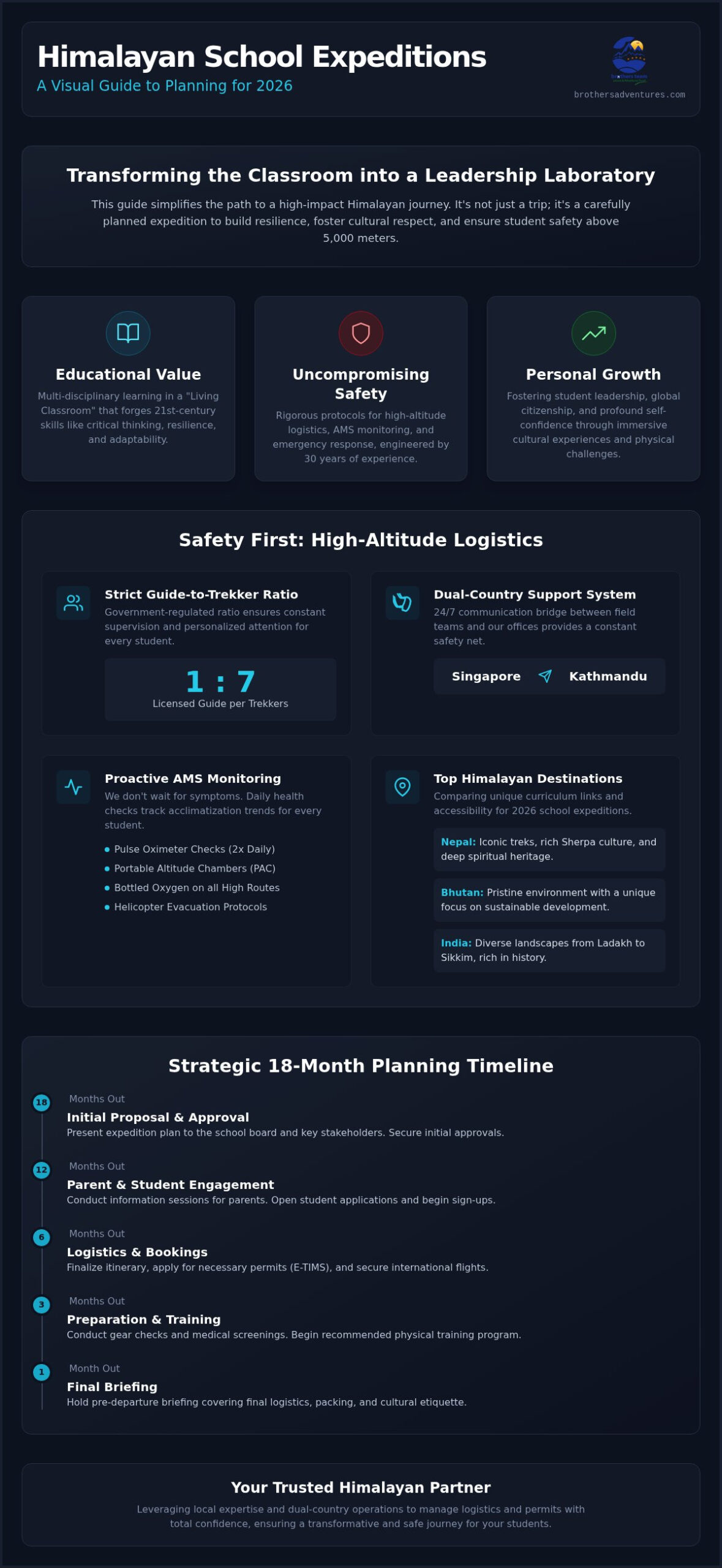
Step-by-Step: Planning Your 2026 School Journey
Planning successful Himalayan school trips for 2026 requires a disciplined approach to timing. We recommend starting your journey 18 months before departure. Start early. This generous lead time isn’t just about logistics; it’s about culture building within your school. It gives you the necessary runway to secure the best flight rates and manage complex permit applications. Most importantly, it provides a window for deep curriculum integration. This ensures the trek isn’t just a holiday but a core part of their educational development. You want to build momentum, not rush the process.
Securing SMT and Parental Approval
Gaining approval from school boards and Senior Management Teams (SMT) is often the most daunting step. You must present a bulletproof case for safety and educational value. Provide your board with a comprehensive package that includes our specific safety certifications and layered contingency plans. Safety is non-negotiable. Once you’ve secured institutional backing, the focus shifts to parents. Host an engaging “Himalayan Information Night” to address concerns about altitude and health. Showing parents the direct link between our Singapore office and our local Kathmandu team builds immediate trust. We provide all the risk assessment documentation you need to make this process transparent and professional.
Physical Prep and Mental Readiness
The physical transformation of your students should begin at least 6 months before you land in Kathmandu. A structured training schedule focusing on cardiovascular health and leg strength is vital. Encourage students to swap the elevator for the stairs. Organize group hikes to build team cohesion. This physical preparation reduces the risk of fatigue-related injuries on the trail. It’s about building stamina and confidence simultaneously.
Mental readiness is equally important. In an age of constant connectivity, the lack of digital access in the mountains can be a shock. Frame this as a “digital detox” that allows for deeper reflection and peer bonding. We also emphasize “Leave No Trace” environmental ethics during our pre-trip sessions. Teaching students to respect the fragile beauty of the peaks ensures they travel as responsible global citizens. If you’re ready to begin this transformative process, explore our specialized School & College Trip options to find the perfect fit for your students.
Why Brothers Adventures is Your Trusted Himalayan Partner
Choosing a partner for Himalayan school trips is about more than just booking a trek; it’s about finding a team that cares as much about your students as you do. We aren’t a cold, distant corporation. Since 1992, Brothers Adventures has operated as a family-run specialist, building a bridge between Singapore and the high peaks of the Himalayas. Our dual presence in both Singapore and Kathmandu ensures that your logistical needs are met with local precision and international standards. We invite you to co-design your 2026 expedition with us, ensuring a journey that is as safe as it is inspiring.
Our commitment extends beyond the students to the very communities we visit. We believe in ethical tourism, which means providing fair pay and comprehensive insurance for our local crews. When your students walk the trails, they’re supported by porters and guides who are treated with dignity and respect. This creates a positive, high-energy environment where students can form genuine bonds with their mountain hosts. We manage every permit and local guide directly, cutting out the middlemen to ensure total accountability at every step of the journey.
A Heritage of Trust: From Singapore to Kathmandu
Our local roots in both countries mean there are zero communication gaps. When you speak to our team in Singapore, you’re talking to the same family that manages the operations in Kathmandu. This “Brothers” philosophy ensures that every student is treated like an invited guest rather than just a customer. We maintain direct control over every aspect of our Nepal tour packages, from the quality of the teahouses to the freshness of the trail meals. This high-touch approach allows us to pivot quickly if weather conditions change, providing a level of reliability that large global aggregators simply can’t match.
Customization for Every Curriculum
We don’t believe in one-size-fits-all itineraries. Every school has unique learning objectives, and we’re here to help you meet them. Whether your Geography department wants to study glacial retreat or your PE department is focused on elite-level resilience, we tailor the route to fit. We can scale the difficulty of our treks for different age groups, from 12-year-olds on their first mountain walk to 18-year-old students pushing for a summit. Our bespoke approach ensures that student safety and personal growth are always the primary metrics of our success. Let’s work together to build a 2026 expedition that reflects your school’s values and sparks a lifelong passion for discovery in your students.
Empower Your Students Among the World’s Highest Peaks
The path to the high peaks is more than just a physical trek; it’s a journey that redefines what your students believe is possible. By integrating rigorous safety protocols with deep cultural immersion, you create an expedition that serves as the ultimate laboratory for character and leadership. Whether you choose the rugged trails of Nepal or the sustainable valleys of Bhutan, the key to success lies in early planning and partnering with experts who understand the unique needs of educational groups. Himalayan school trips require a delicate balance of logistical precision and heart.
As a family-owned specialist since 1992, we’ve spent over thirty years refining this balance. Our dual presence in Singapore and Kathmandu provides a seamless safety net, ensuring your group is supported from the first parent meeting to the final descent. We are specialized School & College Trip experts ready to help you navigate every permit, altitude check, and curriculum link. We don’t just organize travel; we facilitate transformation.
Don’t let another year pass without offering your students the chance to stand among the giants. Begin Planning Your 2026 Student Expedition with Brothers Adventures and watch your classroom transform into a world of wonder. The mountains are calling, and we’re here to guide you every step of the way.
Frequently Asked Questions
What is the best age for students to participate in a Himalayan school trip?
Students between the ages of 12 and 18 are ideally suited for these expeditions. For younger groups, we recommend lower-altitude routes that focus on cultural immersion and moderate hiking. Older students often have the physical stamina for more demanding high-altitude challenges. We customize every itinerary to match the emotional and physical maturity of the specific year group, ensuring the challenge is always achievable and inspiring.
How do you manage Acute Mountain Sickness (AMS) for student groups?
We manage Acute Mountain Sickness through a prevention first strategy. This includes built-in acclimatization days and twice-daily health checks using pulse oximeters to monitor oxygen saturation. Our guides are trained to spot early symptoms before they become serious. For every group, we carry Portable Altitude Chambers and bottled oxygen. If a student’s health doesn’t improve, our Kathmandu office triggers immediate helicopter evacuation protocols to ensure they reach medical care quickly.
What is the ideal group size for a school trekking expedition?
The ideal group size for school trekking expeditions ranges from 10 to 20 students. This scale allows us to maintain a safe 1:7 guide-to-student ratio while fostering a strong sense of community and team bonding. If your group is larger, we simply divide the students into smaller trekking pods with their own dedicated guides. This ensures that every individual receives personalized attention and safety monitoring throughout the entire journey.
How long should a typical school trip to the Himalayas last?
Most Himalayan school trips last between 8 and 14 days. An 8-day itinerary is perfect for cultural adventure tours or low-altitude scenic treks during shorter school breaks. However, if your goal is a high-altitude destination like Everest Base Camp, you’ll need at least 12 to 14 days. This longer duration is essential for safe acclimatization, giving the students’ bodies enough time to adjust to the thinning air as they ascend.
Do students need previous trekking experience before joining?
Students don’t need previous trekking experience to join our expeditions. We design routes that cater to all levels, from beginners to seasoned young adventurers. While prior experience isn’t required, a commitment to our 6-month physical training schedule is essential. Walking, swimming, and stair-climbing help build the stamina needed for the trail. Our professional guides provide all the technical support and encouragement students need to succeed in the mountains.
How do you handle dietary requirements and hygiene in remote mountain areas?
We take dietary requirements and hygiene very seriously in remote areas. Our kitchen teams are experts at managing allergies and specific diets, including vegetarian, vegan, and gluten-free options. We only use boiled or treated water for drinking and food preparation to prevent illness. Every meal is prepared using fresh ingredients managed through our Kathmandu supply chain. We also provide clear protocols for hand hygiene and sanitation to keep the entire group healthy.
What safety certifications and insurance do your guides and agency hold?
Our agency holds all mandatory licenses in both Singapore and Nepal. Every guide we employ is government-licensed and holds specialized high-altitude first aid certification. We also ensure that our local crews have comprehensive insurance that covers medical emergencies and mountain rescue. This professional framework, backed by our 30-year history, provides a reliable safety net for schools and parents alike. We prioritize accountability and transparency in every safety protocol we implement.
How far in advance should we start planning our 2026 Himalayan trip?
You should start planning your 2026 Himalayan trip at least 12 to 18 months in advance. This lead time is crucial for securing the best flight rates and managing the digital E-TIMS and national park permit processes. It also gives you ample time to host information nights for parents and implement a structured physical training program for the students. Starting early ensures a stress-free experience for the school’s organizing team and the students.




Comments are closed