


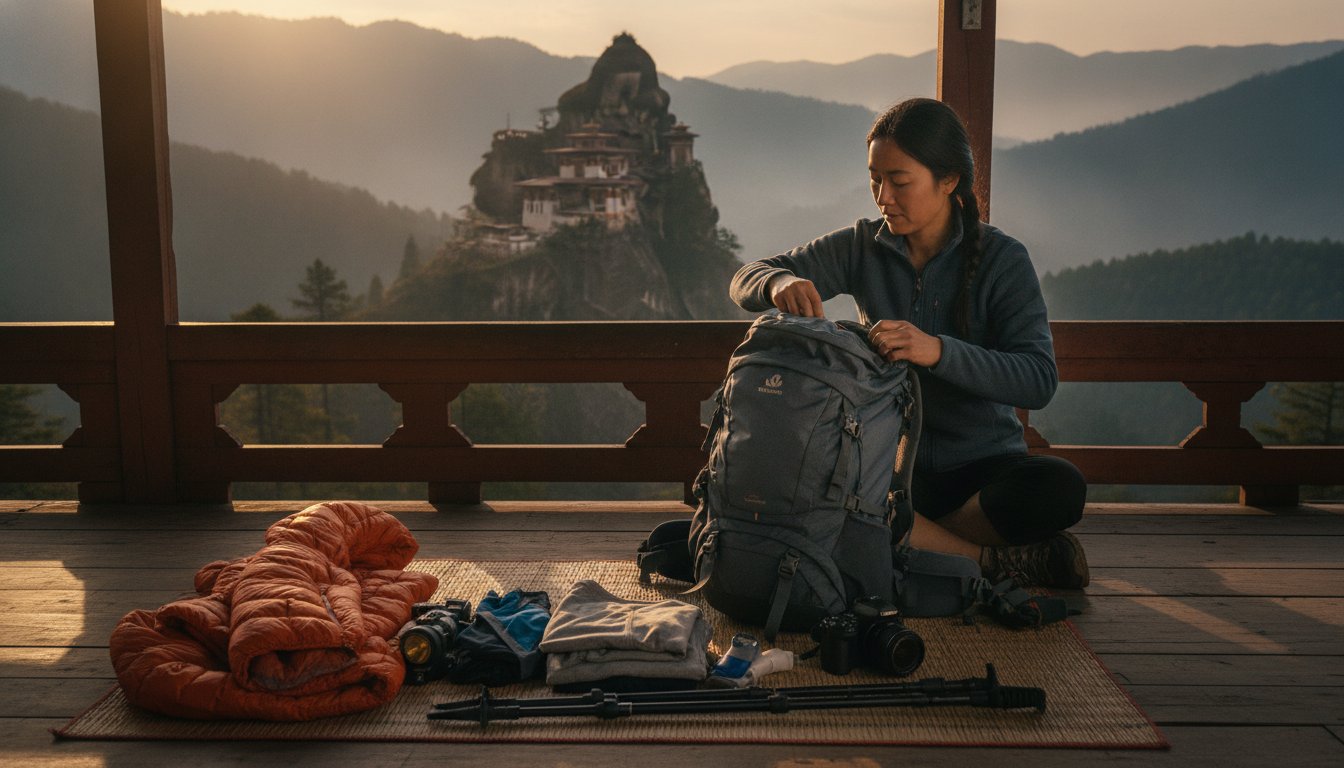
The Ultimate Bhutan Trekking Packing List: A Comprehensive 2026 Guide
Could a single forgotten base layer be the difference between marvelling at a Himalayan sunrise and shivering through the most uncomfortable night of your life? When you’re standing at the edge of a high-altitude pass in the Land of the Thunder Dragon, your gear is your lifeline. We know that figuring out what to pack for Bhutan trek adventures feels like a high-stakes puzzle. You’re likely balancing the fear of freezing at 4,000 meters against the strict 15kg weight limit for pack animals, all while trying to respect local traditions in the emerald valleys below.
It’s a common worry, but you don’t have to guess. We’ve spent decades guiding explorers through these rugged peaks, and we’re here to help you master the art of Himalayan layering with professional precision. This guide provides a foolproof checklist to ensure you’re prepared for every sudden temperature swing and rocky mountain trail. You’ll learn how to balance high-tech performance gear with cultural modesty, ensuring you feel confident and comfortable from the moment you land. From moisture-wicking fabrics to the perfect pair of broken-in boots, we’re diving into the essentials that will make your 2026 Bhutanese journey truly legendary.
Key Takeaways
- Master the three-pillar layering system to stay comfortable through Bhutan’s dramatic temperature swings, from sun-soaked valleys to freezing alpine ridges.
- Optimize your gear to stay within the 15kg baggage limit for pack animals while ensuring you have every technical essential for high-altitude success.
- Learn exactly what to pack for Bhutan trek journeys to balance technical performance with the cultural modesty required for visiting sacred monasteries and temples.
- Select the ideal footwear for diverse terrain, including muddy forest trails and ancient stone stairs, to keep your feet protected and blister-free.
- Focus on your adventure while we handle the heavy lifting of tents and mess kits, leaving you with a light daypack and a clear mind.
Understanding the Bhutanese Trekking Environment
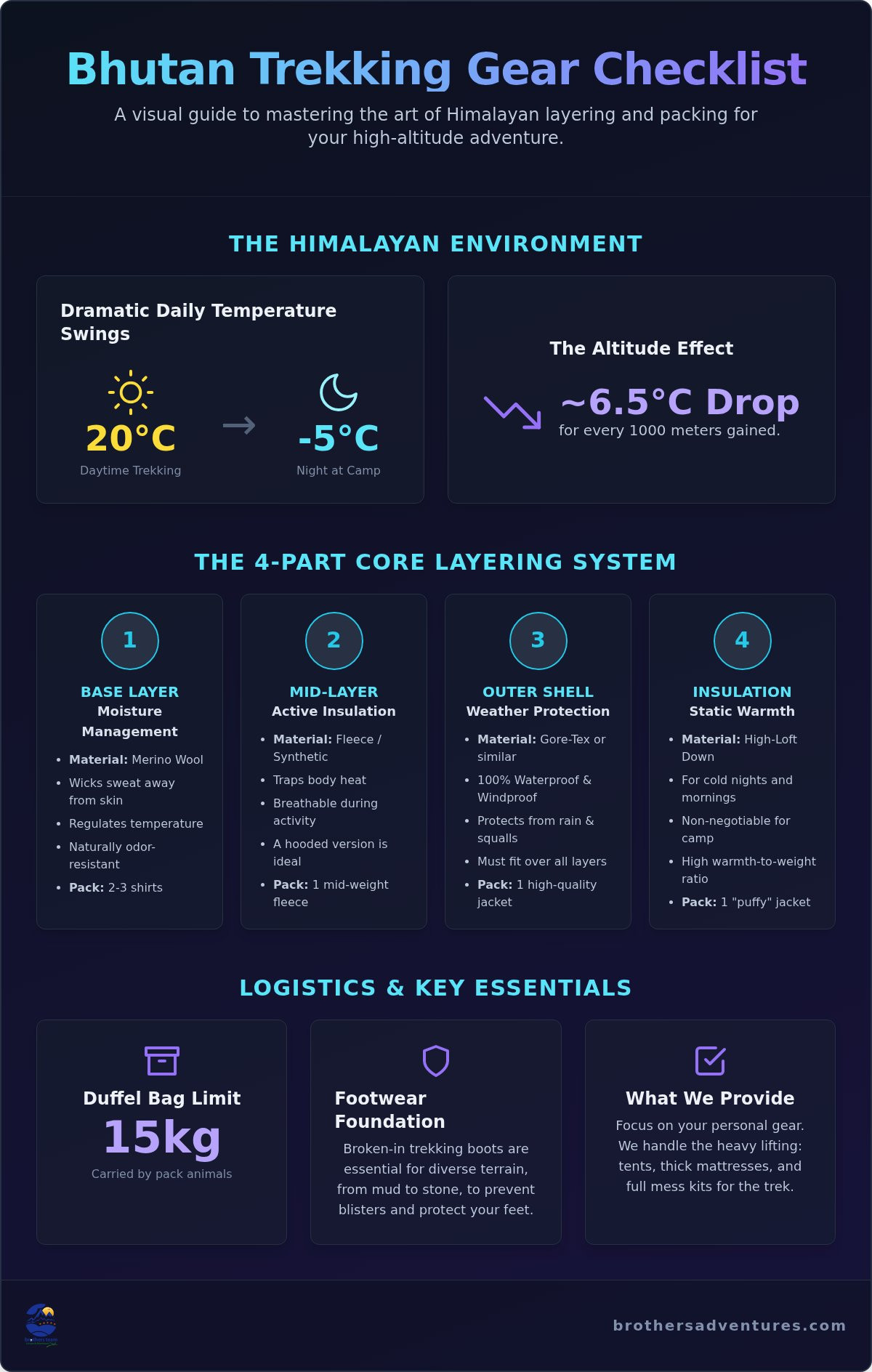
Bhutan is a land of vertical extremes. One moment you’re trekking through a humid, subtropical forest, and the next, you’re standing on a windswept ridge overlooking a glacial lake. This is the Himalayan Microclimate in action. It’s a dynamic environment that dictates exactly what to pack for Bhutan trek expeditions. Because the weather can shift from a sun-drenched 20°C in the afternoon to a bone-chilling -5°C once the sun dips behind the peaks, your strategy must be built on versatility. You aren’t just packing for a trip; you’re packing for four seasons in a single day.
For those planning their 2026 adventure, timing is everything. Spring brings a riot of color as rhododendrons bloom across the hillsides, though you might encounter occasional mist. Autumn offers the gold standard of trekking weather: crisp air and crystal-clear skies that reveal the full majesty of the high peaks. Regardless of the season, Bhutan’s unique approach to Tourism in Bhutan ensures your trails remain pristine and uncrowded, but it also means you must be self-sufficient with your personal gear. Preparation is the key to enjoying these ancient paths without distraction.
Altitude and Temperature Variance
Physics plays a major role in your comfort. As a general rule, the temperature drops about 6.5°C for every 1000 meters you climb. When you’re ascending toward the high passes of the Druk Path, that cooling effect is dramatic. Don’t let the bright sun fool you; while UV radiation is significantly more intense at these heights, the air itself remains thin and cool. There is also a massive difference between “trekking temperature” and “camp temperature.” While your body generates heat during the climb, the cold settles in instantly the moment you stop moving at sunset. This makes high-quality insulation non-negotiable for those chilly evenings under the stars.
The Logistics of a Guided Trek
The good news is that you don’t need to be a pack mule. In Bhutan, we rely on the strength of local pack ponies or porters to move the heavy equipment. When you book a journey like our 10-Day Bhutan Druk Path Trek, we handle the bulky items. We provide the tents, thick mattresses, and full mess kits. Your responsibility is your personal duffel bag, which is typically capped at a 15kg weight limit for the ponies. Packing light isn’t just a suggestion; it’s a logistical necessity for the health of the animals and the efficiency of the camp move. You’ll carry only a small daypack with your water, camera, and daily layers, keeping your focus on the stunning scenery rather than a heavy load.
The Core Layering System: Clothing for All Elevations
Mastering the layering system is the absolute secret to a successful Himalayan adventure. When you’re deciding what to pack for Bhutan trek routes, think of your clothing as a modular shield. Each piece has a specific job, working together to keep you dry when you’re working hard and warm when the mountain air turns sharp. This system allows you to adapt instantly to the environment without ever having to stop for a full wardrobe change.
Start with your foundation: the base layer. We always recommend moisture-wicking merino wool as the gold standard for Bhutan. Unlike traditional synthetics, merino wool regulates your body temperature across a wide range of conditions. It stays warm even if it gets slightly damp from sweat and naturally resists odors. This is a game-changer when you’re on a multi-day journey and laundry isn’t an option. It feels soft against the skin and provides that immediate sense of comfort as you start your morning climb.
Your mid-layer is your “active insulation.” A high-quality fleece or a breathable synthetic jacket traps your body heat while allowing moisture to escape. This is the layer you’ll likely wear for most of the trekking day. However, you also need a fortress against the elements. A technical outer shell must be 100% windproof and waterproof to handle sudden mountain squalls. Finally, pack a high-loft down jacket. This “puffy” is non-negotiable for those freezing nights at camp. It’s the first thing you’ll reach for once the sun dips behind the ridges.
Upper Body Technical Layers
Pack two or three lightweight base layers to allow for a clean rotation. This ensures you always have a fresh, dry layer ready for the next day’s ascent. We suggest a mid-weight fleece that includes a built-in hood; it provides essential neck protection against biting winds on the high passes. Your rain jacket, ideally a Gore-Tex or high-performance equivalent, needs to be sized generously. It must fit comfortably over all your other layers, including your fleece, without restricting your range of motion as you navigate steep sections of the trail.
Lower Body and Extremities
Versatility is your best friend on the trail. Convertible trekking trousers are perfect for the transition from chilly 6:00 AM starts to the intense heat of a high-altitude afternoon. For the higher passes and sleeping, a pair of heavyweight thermal leggings is essential. Don’t forget your extremities, as they lose heat the fastest. A wide-brimmed sun hat protects your face from the fierce mountain sun, while a thermal beanie is a must-have for camp. If you’re ready to test your gear on the legendary 10-Day Bhutan Druk Path Trek, having this system dialed in ensures you focus on the views rather than the cold.
Footwear and Technical Trekking Gear
Bhutan’s trails are legendary for their variety. You’ll encounter everything from slippery, leaf-covered forest paths to ancient, uneven stone stairs that lead toward high-altitude monasteries. This rugged variety is why your choice of footwear is the most critical decision when considering what to pack for Bhutan trek expeditions. While some seasoned trekkers advocate for the agility of technical trail shoes, we generally recommend high-cut waterproof boots for the Druk Path. The extra ankle support is a lifesaver on rocky descents, and a waterproof liner keeps your feet dry during the occasional muddy stretch or mountain drizzle.
Don’t overlook the importance of trekking poles. They aren’t just for balance; they significantly reduce the impact on your knees during the long, steep descents typical of Bhutanese topography. Using poles can save up to 25% of the impact force on your joints, which becomes vital over several days of hiking. Once you reach camp, your feet will crave freedom. A pair of lightweight sandals or slip-ons is a small luxury that makes a massive difference, allowing your boots to air out while you relax in the mess tent after a rewarding day on the trail.
Choosing Your Primary Trekking Boot
Focus on quality and traction. Look for boots with Vibram soles for superior grip on wet rocks and stone steps. Our “Golden Rule” is simple: break in your boots at least 2 months before you start your 10-Day Bhutan Druk Path Trek. Wear them on local trails, up stairs, and even around the house to ensure there are no hot spots. A brand-new boot on day one is a recipe for blisters. Pair your boots with a “liner and wool” sock strategy. A thin liner sock reduces friction against the skin, while a thick wool-blend trekking sock provides the necessary cushioning and moisture management.
Hardware and Hydration
Your daypack is your mobile command center. Choose a 25-35 liter pack with a sturdy hip belt to transfer weight away from your shoulders and onto your hips. Ensure it includes a built-in rain cover to protect your camera and layers. For hydration, we suggest a hybrid approach: use a 2-liter bladder for easy sipping while you’re moving and carry a 1-liter Nalgene bottle for use at camp. Finally, pack a high-lumen headlamp with at least 200 lumens. It’s essential for navigating camp after dark. Always bring spare batteries, as the cold mountain air can drain power faster than you might expect during your 2026 adventure.
Health, Hygiene, and Cultural Modesty
Trekking in Bhutan is as much a spiritual journey as it is a physical one. You’ll often find yourself transitioning from a dusty trail directly into a sacred monastery or ancient temple. This unique “Trail to Temple” flow is a core part of the experience, but it requires a thoughtful approach to what to pack for Bhutan trek preparations. Beyond the technical gear, you need to consider the cultural footprint you leave behind and how you maintain your well-being in a remote, high-altitude environment.
The Himalayan sun is deceptively powerful. At high elevations, the atmosphere is thinner, providing less protection from UV rays. Pack a high SPF sunscreen (50+), a medicated lip balm, and polarized sunglasses to prevent snow blindness or eye strain. For hydration, help us preserve Bhutan’s pristine environment by avoiding single-use plastic. Bring water purification tablets or a portable UV filter to treat water sourced from mountain springs, ensuring you stay healthy while keeping the trails clean.
The Monastery Dress Code
Respecting local traditions is paramount. When entering a dzong or temple, both men and women must have their shoulders and knees covered. While your trekking trousers are usually fine, avoid tank tops or shorts on days when temple visits are scheduled. A lightweight pashmina or “etiquette scarf” is a brilliant addition to your daypack; it provides instant coverage and adds a layer of warmth. Since you’ll need to remove your shoes before entering sacred spaces, wearing boots that are easy to unlace or slip off will save you time and effort.
Altitude and Health Essentials
Safety is our first priority. We recommend consulting your doctor about Acute Mountain Sickness (AMS) medication before your trip. Understanding high altitude trekking safety is essential for anyone venturing above 3,000 meters. Your personal “Himalayan pharmacy” should include rehydration salts, a comprehensive blister kit, and any personal prescriptions. For hygiene, biodegradable wet wipes and hand sanitizer are your best friends for “mountain showers” when traditional facilities aren’t available. Mastering these essentials of what to pack for Bhutan trek health and safety ensures you can focus on the wonder of the journey. Ready to experience the magic of the Himalayas? Explore our 10-Day Bhutan Druk Path Trek and let us handle the logistics while you focus on the discovery.
Final Checklist and Planning Your Bhutan Journey
You’ve dialed in your technical layers and broken in your boots. Now it’s time to secure the final logistical details. Knowing what to pack for Bhutan trek success involves more than just gear; it requires a precise approach to your documentation. Double check your travel pouch before heading to the airport. You must have your visa clearance letter, a passport with at least six months of validity, and proof of travel insurance that specifically covers high-altitude evacuation. Keep physical copies of these in a waterproof folder. Digital backups are helpful, but paper never runs out of battery when you’re miles from the nearest outlet.
Mental preparation is the final layer of your kit. Once you have finalized what to pack for Bhutan trek adventures, shift your focus to the rhythm of the trail. Bhutanese trekking is about discovery and presence. By organizing your gear and logistics early, you clear the mental space needed to truly connect with the “Last Shangri-La.”
Electronics and Power Management
Bhutanese power outlets typically accommodate Type D, G, and C plugs. A universal multi-adapter is a mandatory addition to your electronics kit. Keep in mind that high-altitude cold is a notorious battery killer. To prevent your phone and camera from dying prematurely, keep your power banks and spare batteries inside your sleeping bag at night. Your body heat will preserve their charge for the next day’s climb. You will likely take more photos than you ever imagined, so bring extra memory cards. The scale of the Himalayan vistas is vast, and you don’t want to be deleting precious memories while standing on a high mountain pass.
Booking Your 2026 Bhutan Adventure
Planning a journey to the Land of the Thunder Dragon is a rewarding challenge, but choosing an experienced tour operator simplifies the entire process. When you book our 10-Day Bhutan Druk Path Trek, we take the administrative weight off your shoulders. Our team processes your mandatory visa, handles the Sustainable Development Fee (SDF) of USD 100 per night, and secures all necessary trekking permits. We manage the pack animals and camp logistics, ensuring your main duffel stays within the 15kg limit while you enjoy the freedom of a light daypack. Consult with our specialists today for personalized gear advice and start your journey with total confidence.
Begin Your Bhutanese Adventure with Confidence
You’ve now mastered the essentials of what to pack for Bhutan trek success. From the moisture-wicking power of merino wool to the respectful etiquette needed for sacred monasteries, you have the knowledge to navigate the Himalayas with ease. By balancing technical performance with cultural awareness, you ensure your journey is comfortable, respectful, and safe. Your 2026 expedition is no longer a checklist of worries; it’s a gateway to discovery.
At Brothers Adventures, we’ve been perfecting these high-altitude paths since 1992. Our family-owned team provides full logistical support, including all necessary permits and professional porterage, so you can focus on the horizon rather than the weight on your back. We prioritize your well-being with specialized high-altitude safety protocols and expert local guides. Explore our 10-Day Bhutan Druk Path Trek Packages and let us handle the details while you embrace the wonder. The peaks of the Land of the Thunder Dragon are calling, and we can’t wait to show you the way.
Frequently Asked Questions
Do I need a heavy winter jacket for trekking in Bhutan?
You don’t need a massive, heavy winter parka while walking, but a high-loft down jacket is essential for when you stop. While hiking, your body heat keeps you warm in layers. Once you reach camp at 4,000 meters, the temperature drops instantly. A lightweight, compressible down “puffy” provides the best warmth-to-weight ratio for your 15kg duffel limit. It’s the most important item when deciding what to pack for Bhutan trek nights.
Can I rent trekking gear in Bhutan or should I bring my own?
You should bring all your own personal technical gear and clothing. There are no dedicated trekking equipment rental shops in Bhutan. While we provide the heavy camp infrastructure like tents and mattresses, you must arrive with your own broken-in boots, waterproof shells, and base layers. Bringing your own gear ensures a perfect fit and high performance, which are critical for safety in the unpredictable Himalayan climate.
What is the baggage weight limit for flights into Paro?
Most flights into Paro via Druk Air or Bhutan Airlines allow 30kg for checked luggage in economy class. However, the most important limit is the 15kg restriction for the pack animals that carry your gear on the trail. We recommend using a sturdy duffel bag for the ponies and a small daypack for your essentials. Staying within these limits ensures the welfare of the animals and smooth camp logistics.
How much cash should I bring for a Bhutan trek?
Plan to bring approximately USD 200 to 300 in cash for personal expenses. Since your tour package and Sustainable Development Fee are prepaid, you only need cash for tipping your guide and trekking crew, purchasing local handicrafts, or buying occasional drinks in town. Bhutanese Ngultrum is pegged to the Indian Rupee, and while some shops in Paro accept cards, cash remains king in the mountains.
Is there Wi-Fi or mobile signal on the Bhutanese trekking trails?
Expect very limited to no mobile signal or Wi-Fi once you leave the main trailheads. While you might find a weak signal on certain high ridges, the Druk Path is a place to disconnect and embrace the wilderness. We recommend finishing all urgent communications in Paro or Thimphu before the trek begins. This digital detox allows you to fully immerse yourself in the pristine beauty of the “Last Shangri-La.”
What kind of footwear is best for the Druk Path Trek?
High-cut waterproof boots with a sturdy Vibram sole are the best choice for the Druk Path Trek. You’ll encounter a mix of rocky ascents, muddy forest sections, and uneven stone steps that require significant ankle support. While trail runners are popular elsewhere, the variable terrain in Bhutan makes a traditional boot much safer. Ensure your footwear is fully broken in at least two months before your departure date.
Do I need to bring my own sleeping bag for a Bhutanese trek?
We strongly recommend bringing your own high-quality sleeping bag rated to at least -10°C (14°F). While we provide comfortable tents and thick sleeping mats, having your own bag ensures better hygiene and a guaranteed level of warmth tailored to your needs. A four-season down bag is ideal because it compresses easily into your trekking duffel, helping you manage what to pack for Bhutan trek weight limits effectively.
How do I manage charging my phone and camera while camping?
You must be self-sufficient with power by carrying high-capacity portable power banks. There are no charging outlets available at the mountain campsites. We suggest bringing at least two 20,000mAh power banks to keep your phone and camera batteries topped up. Remember to keep your electronics and batteries inside your sleeping bag at night, as the freezing temperatures will drain their charge much faster if left out in the cold.


Comments are closed