


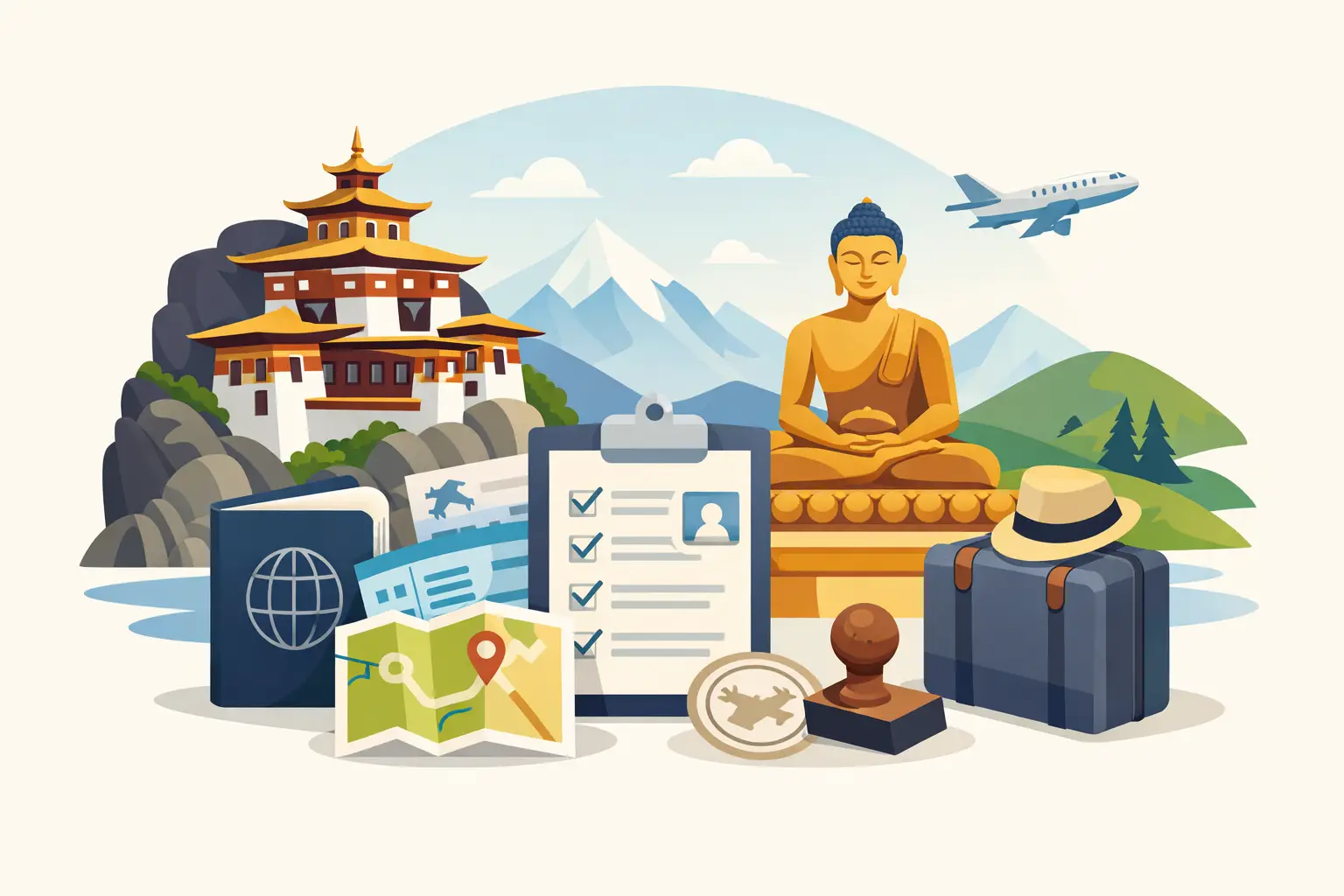
Bhutan Visa Requirements for a Smooth Journey
A Bhutan holiday often begins long before the landing into Paro. Flights are limited, itineraries are carefully paced and Bhutan visa requirements need to be arranged before you travel, rather than at an airport desk on arrival. The process is straightforward when your route, dates and accommodation are confirmed, but it rewards early planning – especially if you hope to combine monasteries and valleys with a trek in the high Himalaya.
For many travellers, Bhutan’s entry system is part of what keeps a journey there feeling considered. Visitor numbers, environmental contributions and access to remote areas are managed with care. That means a little more preparation than a typical city break, but also the confidence of arriving with the essential details already in place.
Bhutan visa requirements for most international visitors
Most overseas passport holders need an approved Bhutanese visa before entering the country. You should not rely on obtaining a tourist visa on arrival. Instead, the application is made through Bhutan’s official tourism and immigration system, either directly where permitted or with assistance from a licensed Bhutanese operator or a specialist travel company arranging your holiday.
Once approved, you receive a visa clearance or confirmation before departure. Keep a printed and digital copy with your passport, flight details and accommodation information. Airline staff may ask to see the clearance before allowing you to board a flight to Bhutan.
Your passport should generally be valid for at least six months beyond your intended arrival date and should have sufficient blank pages for immigration stamps. Names, passport numbers and dates must match exactly across your visa application, airline booking and travel insurance documents. A single misplaced digit can cause an avoidable delay.
Travellers commonly need to provide passport details, a recent digital photograph, arrival and departure dates, accommodation details and contact information. Depending on your application route and nationality, you may also be asked for further supporting information. Submit clear scans and avoid making flight changes while the application is being processed unless your travel organiser has confirmed the revised plan can be accommodated.
Indian nationals and entry permits
Indian citizens are usually treated differently from other international visitors. Rather than applying for a standard tourist visa, they normally obtain an entry permit for Bhutan. A valid Indian passport is the simplest travel document; in certain cases, a voter identity card may also be accepted for entry by land or air. Children require their own appropriate identification and supporting documents.
Permit conditions, payment requirements and permitted travel areas can change, so Indian travellers should confirm the latest rules before booking non-refundable flights. The rules for residents of India who hold another nationality, and for travellers from neighbouring South Asian countries, may not be identical to those for Indian citizens. Always apply based on the passport you will use to enter Bhutan.
Fees, the Sustainable Development Fee and what they cover
A Bhutan visa involves more than an application form. Most non-Indian visitors should expect a visa application fee and a Sustainable Development Fee, usually known as the SDF. The SDF is generally charged by night and contributes to Bhutan’s approach to protecting its environment, culture and visitor infrastructure.
Rates can differ by nationality, age, length of stay and current government policy. Bhutan has revised its tourism charges in the past, including temporary concessions, so it is wiser to verify the current amount when your dates are firm than to plan around an old online figure. Ask for a clear breakdown showing the visa fee, SDF, accommodation, transport, guide arrangements, meals and any trekking permits. This is particularly useful when comparing a basic cultural tour with a more involved journey involving camping, domestic flights or remote valleys.
The visa fee and SDF are not substitutes for your holiday costs. Hotels, meals, vehicle support, guide services and activities are priced separately unless they are included in a package. For an active Bhutan itinerary, the value lies in understanding exactly what has been arranged and who is responsible for each part of the journey.
When to apply for a Bhutan visa
Apply once your route, accommodation and entry point are settled. While approvals can sometimes be processed relatively quickly, allowing two to four weeks provides a sensible buffer for busy seasons, public holidays, group travel and any passport corrections. For school groups or larger parties, start planning much earlier. Collecting accurate passport information from every traveller can take longer than expected.
Spring, from roughly March to May, and autumn, from September to November, are popular for clear mountain views, festivals and trekking. Flights and well-located hotels may be the first items to become limited, rather than the visa itself. An early application supports better itinerary choices in Paro, Thimphu, Punakha, Gangtey and Bumthang.
Do not book a tight onward connection after your scheduled departure from Bhutan. Weather in the Himalaya can affect flights to and from Paro, particularly in the monsoon and winter. Build a little flexibility into your plans and make sure your visa dates cover the full intended stay.
Extra permits for trekking and remote travel
A tourist visa or entry permit is only the first layer of paperwork for an adventure holiday. Certain regions, trails, border areas and protected landscapes may require additional permissions. These can include trekking permits, protected-area approvals or route-specific documentation arranged through the local operator handling your trip.
For classic cultural journeys through Paro, Thimphu and Punakha, the process is usually simpler. For high routes such as the Druk Path Trek, Jomolhari region, Laya or Snowman Trek, detailed planning matters far more. Your operator will need your final itinerary, campsites, guide and support arrangements, transport plan and sometimes contingency dates. Changes are possible in the mountains, but they should be managed locally rather than improvised at a checkpoint.
Whether a licensed guide is required can depend on your nationality, itinerary and the rules in force at the time of travel. Even where independent travel is possible, a knowledgeable local guide makes a substantial difference on remote routes. They help with permits, trail logistics, cultural etiquette, weather decisions and the practical realities of travelling at altitude.
Documents worth carrying on the journey
Keep your passport, visa clearance or entry permit, travel insurance certificate and flight details accessible throughout the trip. Store paper copies separately from the originals and keep secure digital copies on your mobile phone. If you are trekking, share your emergency contact details, medical information and insurance policy number with your guide before leaving the roadhead.
Your insurance should specifically cover the activities you intend to do. A standard policy may not cover trekking above a stated altitude, helicopter evacuation, mountaineering or hiking on remote trails. Bhutan’s valleys can be gentle and welcoming, but routes rise quickly. If your itinerary includes a high pass or multi-day trek, arrange cover that matches the real maximum altitude, not just the first few days of the holiday.
It is also wise to carry evidence of your accommodation and onward travel, even if these details are already held digitally by the immigration system. Mobile signal is not reliable in every valley, and a printed itinerary is useful when travelling between districts.
A calmer way to plan your entry
The best Bhutan itineraries do not treat the visa as a last-minute formality. Confirm the season you want, choose a route that suits your fitness and interests, then organise the entry process around a realistic schedule. A five-night cultural holiday has different needs from a 12-night journey with a trek, festival visit and overland continuation into India or Nepal.
Brothers Team can help travellers shape those moving parts into one properly supported holiday, from visa guidance and accommodation planning to guides, transport and high-altitude preparation. The final responsibility for holding valid documents remains with each traveller, but experienced support removes much of the uncertainty.
Leave room in your plan for Bhutan’s quieter rewards: a prayer flag line lifting in the wind above Dochula, the sound of monks chanting beyond a courtyard wall, or a slow morning in a valley before the trail climbs. With the paperwork settled early, you are free to give those moments your full attention.


Comments are closed