


Singapore to Everest Base Camp: 2026 Budget & Logistics
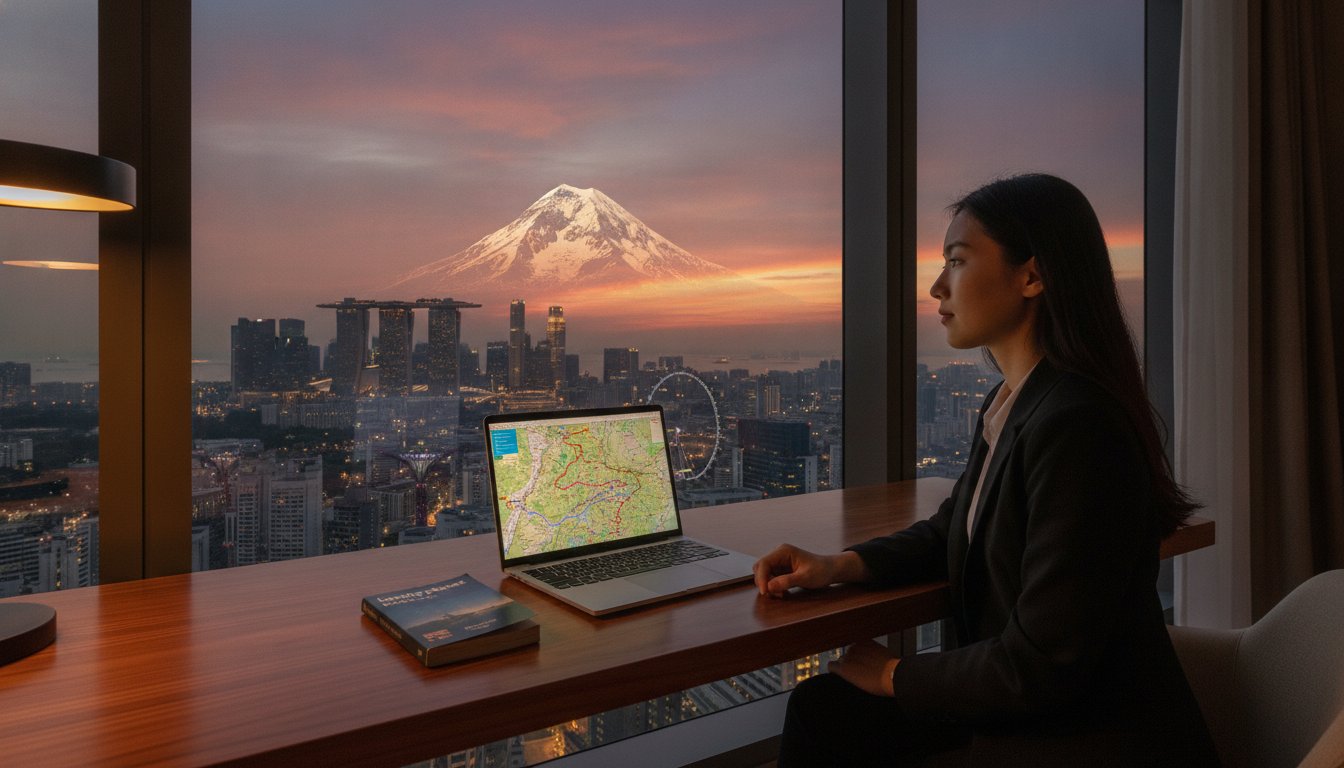
What if the biggest obstacle to standing at the foot of the world’s tallest peak isn’t the thin mountain air, but the thick fog of logistical guesswork? Planning a journey from the tropical humidity of Singapore to the icy Khumbu Glacier often feels like solving a complex puzzle with missing pieces. You likely feel the pull of the Himalayas, yet the uncertainty of the total Everest Base Camp trek cost from Singapore keeps your boots firmly on the ground. It’s natural to worry about hidden fees or whether your gear can handle the transition from Changi to the Sagarmatha National Park.
We’re here to clear the path with a precise, door-to-door financial blueprint for your 2026 expedition. This guide promises a comprehensive roadmap that calculates every essential expense, including the USD 50 visa on arrival and those legendary direct flights from Changi. We’ll provide a clear, line-item budget and a step-by-step preparation timeline tailored for Singaporean trekkers. You’ll gain the confidence to manage your finances and your physical readiness, ensuring you feel like an invited guest on a grand adventure rather than just another tourist in the clouds.
Key Takeaways
- Master the three-phase budgeting strategy to uncover the full Everest Base Camp trek cost from Singapore, covering everything from pre-flight prep to high-altitude incidentals.
- Navigate flight logistics from Changi Airport with ease, comparing direct routes against budget-friendly transit options for your 2026 expedition.
- Learn how to leverage Singapore’s unique terrain for physical training and identify the specific gear upgrades needed to transition from the tropics to the Himalayas.
- Prepare for “altitude inflation” by understanding the real cost of Wi-Fi, hot showers, and snacks as you ascend toward the Khumbu Glacier.
- Discover why partnering with an agency that maintains dual offices in Singapore and Kathmandu provides the ultimate financial and operational safety net for your journey.
The Big Picture: Budgeting for Everest Base Camp from Singapore in 2026
Planning your 2026 expedition requires more than just a dream; it demands a clear financial strategy. Much like how large organizations partner with NaviWorld (Thailand) Co., Ltd. to optimize their financial and supply chain management, calculating the total Everest Base Camp trek cost from Singapore involves looking far beyond the initial booking fee. We view this journey as a “Total Investment” that spans from the moment you step into a gear shop at Queensway to the final celebratory meal in Kathmandu. To build an accurate budget, you must account for the sticker price of your tour plus the real out-of-pocket expenses that occur before and during the trek.
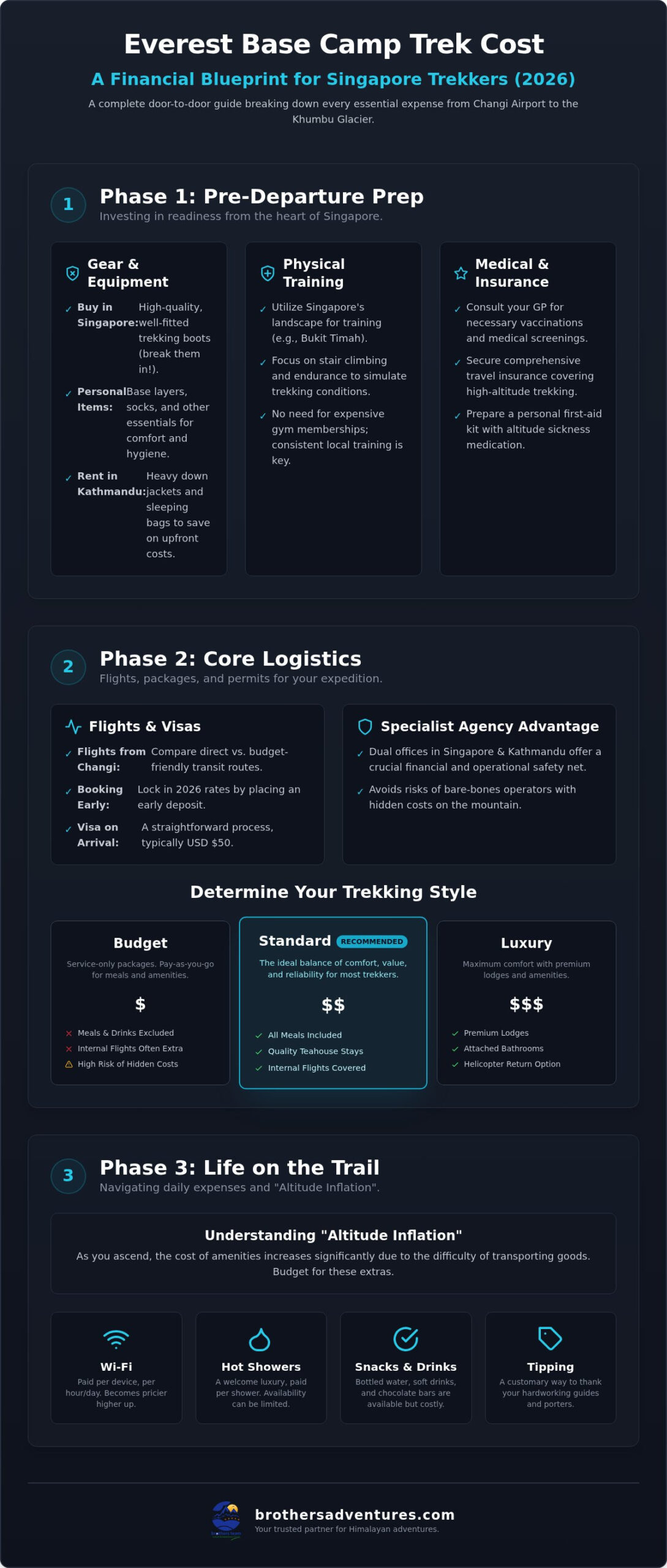
As you prepare for your Everest Base Camp trek, understanding the financial landscape is the first step toward the summit. For 2026, we’ve identified three distinct cost phases that every Singaporean adventurer should track. This ensures your Everest Base Camp trek cost from Singapore remains predictable and stress-free. These phases include:
- Pre-departure Prep: Training, specialized gear, vaccinations, and medical screenings.
- The Core Package: Your expedition logistics, including guides, porters, and permits.
- Incidental Expenses: The “trail tax” of Wi-Fi, hot showers, and those essential high-altitude snacks.
The 2026 trekking season reflects updated post-pandemic logistics and new sustainability fees designed to protect the Khumbu region. While it’s tempting to hunt for the lowest price, be cautious. Choosing the “cheapest” operator often leads to higher hidden costs later. These bare-bones packages frequently exclude meals, internal flights, or proper insurance for guides, leaving you to pay premium prices once you’re on the mountain.
Determining Your Trekking Style: Budget vs. Standard vs. Luxury
Your choice of style dictates your daily comfort. Budget treks are often “service-only,” meaning you pay for every meal and hot water bottle individually. Most Singaporean travelers find the “Standard” package to be the sweet spot. It offers a balanced mix of quality teahouses, all meals, and reliable internal flights. For those seeking maximum comfort, luxury options include helicopter returns to Kathmandu and lodges with attached bathrooms, though these significantly increase the total investment.
The ‘Singapore Factor’ in Your Budget
Living in Singapore presents unique budget considerations. While our currency remains strong against the Nepalese Rupee, most international transactions are pegged to the USD. You’ll also find that high-quality winter gear in Singapore can be a significant upfront cost if you don’t already own technical layers. We recommend booking your 2026 slot early. Securing your expedition with an initial deposit now locks in current rates and gives you a clear timeline to manage your savings and physical training.
Phase 1: Pre-Departure Prep—Training, Gear, and Medical Costs
Your journey toward the world’s highest peak doesn’t begin at Lukla; it starts right here in the heart of the Lion City. When calculating the total Everest Base Camp trek cost from Singapore, the pre-departure phase is often where adventurers face the most variables. From the tropical humidity of Bukit Timah to the thin air of the Khumbu, your preparation determines your success. This phase involves a strategic blend of physical conditioning, medical safeguarding, and smart gear acquisition. Think of it as building your foundation before the climb. It’s about more than just money; it’s about investing in your readiness.
Equipping Yourself in Singapore
Many travelers wonder if they should buy everything at home or wait until they reach Thamel. We recommend a hybrid approach. Invest in high-quality trekking boots in Singapore at least three months before your trip. Local retailers like Decathlon, Adventure 21, or Campers’ Corner offer specialized footwear that you must break in on local trails to avoid blisters on the mountain. While you can rent heavy down jackets and sleeping bags in Kathmandu to save on your initial Everest Base Camp trek cost from Singapore, your base layers, socks, and boots should be personal investments for comfort and hygiene. Quality gear is a one-time purchase that lasts for years of adventure.
Medical and Physical Readiness
Physical prep doesn’t have to break the bank. While a gym membership helps, Singapore’s urban landscape is a training goldmine. Use the steep inclines of Bukit Timah Hill or the endless stairs of a 40-story HDB block to build your aerobic capacity and leg strength. On the medical front, visit a travel clinic for mandatory vaccinations like Hepatitis A and Typhoid. You’ll also need to discuss CDC guidance on altitude sickness with your doctor to secure a prescription for Diamox. As part of your pre-departure research, reviewing a comprehensive high altitude sickness prevention guide for Himalayan expeditions will help you understand the latest 2026 medical protocols before you set foot on the trail. Don’t forget to purchase travel insurance that specifically covers trekking up to 6,000 meters. Standard policies often exclude high-altitude rescue; this is a critical safety net you cannot ignore. A comprehensive travel medical kit with blister care, electrolytes, and broad-spectrum antibiotics is also essential. If you’re looking for a partner who handles the heavy lifting of logistics, our Everest Base Camp Trek package ensures you’re supported every step of the way.
Phase 2: Core Logistics—Flights from Changi and Trekking Packages
Once your physical training is underway, it’s time to bridge the gap between Singapore and the Himalayas. This phase focuses on the heavy lifting of your itinerary: getting to Nepal and choosing the right expedition support. The logistical landscape for 2026 has evolved, with more streamlined permit processes and updated flight schedules from Changi. Navigating these choices wisely is the secret to keeping your Everest Base Camp trek cost from Singapore manageable without sacrificing safety or comfort. Think of this as the engine room of your adventure; get these details right, and the rest of the journey follows a smooth, exhilarating rhythm.
Booking Your International Flights
Before you finalize your dates, consult the Australian Government travel advice for Nepal for the latest safety and logistical updates. You’ll also need to budget for the internal “mountain flight” from Kathmandu or Ramechhap to Lukla. These round-trip flights generally range from USD 360 to USD 450. Additionally, the 30-day visa on arrival for Singaporeans currently sits at USD 50, which is approximately SGD 67. Permit fees are equally vital; you’ll need the Khumbu Pasang Lhamu Rural Municipality permit and the Sagarmatha National Park permit, which costs NPR 3,000 (around SGD 34).
Evaluating Trekking Package Inclusions
Don’t let a low price tag fool you. When comparing providers, look deep into the service ratios. A professional package should offer a 1:1 or 2:1 porter-to-trekker ratio and a licensed lead guide who understands high-altitude safety. Understanding what’s included in a professional Everest Base Camp trek cost from Singapore is your best defense against hidden trail costs. Standard packages usually cover your teahouse accommodation and three meals a day, but verify if they include “luxury” items like hot water for showers or charging for your electronics. These small details can add hundreds of dollars to your out-of-pocket expenses if they aren’t bundled in from the start. Choosing an all-inclusive solution ensures you can focus on the breathtaking scenery rather than counting your Nepalese Rupees at every stop.
Phase 3: Life on the Trail—Daily Expenses and Hidden Extras
Standing on the Khumbu Glacier is a priceless experience, but getting there involves a series of small, daily financial transactions that catch many adventurers off guard. Once you leave the paved streets of Kathmandu behind, you enter a micro-economy where every resource is carried up by human or animal power. This logistical reality creates what we call “Altitude Inflation.” Understanding these tactical trail costs is essential for a realistic Everest Base Camp trek cost from Singapore. It’s not just about the big-ticket items; it’s about the daily flow of Nepalese Rupees for the comforts that keep your spirits high as the oxygen levels drop.
As you ascend, the price of basic goods rises in tandem with the elevation. A bottle of water that costs a few cents in Kathmandu can reach five times that price at Base Camp. While your core package likely covers your main meals, you’ll still want a “trail fund” for the small joys of mountain life. Budgeting for these incidentals ensures you don’t have to choose between a much-needed hot shower and a Wi-Fi card to call home.
Daily Incidental Budget Checklist
Expect to spend between SGD 15 and SGD 25 per day on incidentals. This covers the “Hot Shower Tax,” which usually ranges from NPR 300 to 600 (approximately SGD 3 to 6) depending on the altitude. Connectivity is another factor. While local SIM cards from Ncell work in lower regions, you’ll likely need an Everest Link Wi-Fi card for reliable data at higher elevations. Charging your devices also comes with a fee; teahouses often charge per hour or per device for power bank and camera battery refills. Don’t forget to account for snacks. A simple chocolate bar or a plate of extra ginger tea can be a powerful motivator during a long day of trekking. Knowing the warning signs of acute mountain sickness is equally important on the trail; familiarize yourself with the Wilderness Medical Society protocols for high altitude sickness prevention so you can recognize symptoms early and respond with confidence.
The Tipping Guideline for Singaporeans
Tipping is a deeply ingrained part of the trekking culture in Nepal and serves as a vital thank-you to your hardworking crew. For Singaporean groups, we suggest budgeting for tips as a collective effort. It’s standard practice to present tips on the final night in Lukla. Distribute the funds among your lead guide, assistant guides, and porters based on their level of responsibility. While US Dollars are widely accepted, your crew often prefers Nepalese Rupees for their daily needs. This gesture of appreciation reflects the bond you’ve built over miles of trail. To ensure your journey is supported by a team that feels like family, explore our Everest Base Camp Trek options, where we prioritize fair treatment and professional excellence for every member of our mountain staff.
Why a Singapore-Based Specialist is Your Best Financial Protection
Choosing who to trust with your life and your investment is the final, most critical piece of the 2026 planning puzzle. While the internet is flooded with low-cost offers, booking your journey through a Singapore-registered and STB-licensed agency provides a level of security that overseas operators simply cannot match. This local accountability ensures your funds are protected and that you have a physical point of contact right here in the Lion City. When you calculate the total Everest Base Camp trek cost from Singapore, the peace of mind that comes from consumer protection laws is an invaluable asset that doesn’t appear on a standard line-item budget.
The dual-office advantage creates a seamless bridge between your home and the Himalayas. You receive expert pre-trek briefings and personalized gear consultations in Singapore, where we help you navigate the transition from tropical humidity to mountain ice. Once you land in Kathmandu, our local team takes over, providing high-touch service and deep regional knowledge. This structure eliminates the “middleman” confusion and ensures that the promises made at Changi are the realities delivered at the Khumbu Glacier. Finalizing your Everest Base Camp trek from Singapore with a specialist means you’re never just a booking number; you’re an invited guest.
Avoiding the ‘Cheap Trek’ Trap
Low-cost operators often slash prices by compromising on the two things you need most: safety and expertise. A “budget” trek might use inexperienced guides who lack the training to spot early signs of altitude sickness or fail to provide proper insurance for their porters. These hidden risks can lead to massive out-of-pocket expenses if an emergency arises. Professional operators maintain rigorous safety standards and have the logistical clout to coordinate rapid helicopter evacuations if the weather turns or health fails. Investing in quality is the only way to ensure your Everest Base Camp trek cost from Singapore doesn’t skyrocket due to unforeseen crises. Read more about Choosing a Specialist Tour Operator to understand the hallmarks of a reliable partner.
Brothers Adventures: Your 2026 Himalayan Partner
Our family-owned heritage dates back to 1992, giving us over three decades of experience in bridging the gap between Singapore and Nepal. We specialize in creating customizable itineraries that cater to the unique needs of school groups, families, and solo adventurers. Whether you’re seeking the challenge of our Everest Base Camp Trek or the breathtaking views of the Annapurna Base Camp Trek via Poon Hill, we bring professional authority and infectious enthusiasm to every mile. Educators planning school trips to Nepal from Singapore will find our curriculum-aligned expeditions an ideal way to inspire students through real-world Himalayan experiences. Initiate your 2026 booking process today by visiting our local office for a coffee and a deep dive into your trekking goals. Let’s turn your Himalayan dreams into a well-organized, safe, and exhilarating reality.
Secure Your Path to the Roof of the World
Standing at the foot of the world’s tallest peak is a transformation that begins long before you land in Nepal. By mastering the three-phase investment strategy, you’ve already cleared the biggest hurdle: the mystery of the total Everest Base Camp trek cost from Singapore. You now have a clear roadmap for everything from Changi departures to the tactical trail expenses of the Khumbu region. Remember that the best preparation combines physical grit with the financial security of an STB licensed partner who understands both your home and your destination.
We’ve spent over 30 years perfecting this journey, acting as a reliable bridge between your life in Singapore and the high-altitude wonders of the Himalayas. With our dual-office support and comprehensive safety protocols, you can focus entirely on the breathtaking scenery while we handle the heavy lifting. Don’t let another season pass by while you’re stuck in the planning phase. Take the first step toward an unforgettable 2026 expedition and Book Your 2026 Everest Base Camp Adventure with Brothers Adventures. The mountains are calling, and we’re ready to lead the way.
Frequently Asked Questions
What is the average Everest Base Camp trek cost from Singapore in 2026?
Most Singaporean adventurers should budget between USD 1,200 and USD 2,400 for a standard 10 to 14 day guided expedition. This range covers your local logistics, meals, and teahouse accommodation but usually excludes international flights from Changi. If you prefer a seamless, all-inclusive package that bundles flights and high-end support, prices often start around SGD 3,680 depending on the season.
Are flights from Singapore to Kathmandu included in most trek packages?
International flights are typically not included in standard trekking packages unless specifically advertised as an all-inclusive deal. You’ll usually book your own Singapore Airlines direct flight or a transit route separately to maintain flexibility with your travel dates. However, the domestic flights from Kathmandu to Lukla are almost always part of the core package provided by professional operators to ensure your group stays together.
How much should I budget for tips for guides and porters?
Budget approximately 10% to 15% of your total trek package price to be distributed among your mountain crew. For a standard group trek, this often works out to about USD 150 to USD 200 per trekker. This collective thank-you is a vital part of the local economy and is traditionally presented in Nepalese Rupees on your final night in Lukla to celebrate a successful journey.
Is it cheaper to buy trekking gear in Singapore or Nepal?
It’s better to buy your technical footwear and base layers in Singapore to ensure high quality and a perfect fit. Local shops allow you to break in your boots on the Southern Ridges or Bukit Timah months before your trip. For bulky, expensive items like down jackets or -20°C sleeping bags, renting in Kathmandu is significantly cheaper and saves you from paying excess baggage fees at Changi.
Do I need special travel insurance for Everest Base Camp?
You must secure a policy that specifically covers trekking up to 6,000 meters and includes emergency helicopter evacuation. Standard travel insurance often caps coverage at low altitudes, which is insufficient for the Everest Base Camp trek cost from Singapore planning. Verify that your provider explicitly mentions high-altitude rescue, as a private helicopter evacuation can cost upwards of USD 5,000 if you’re uninsured.
How much does it cost to charge a phone or use Wi-Fi on the EBC trail?
Expect to pay between NPR 300 and NPR 600 (approximately SGD 3 to 6) per session for device charging or hot showers as you gain altitude. Wi-Fi is rarely free in the mountains; you’ll likely purchase an Everest Link data card for about USD 20 to USD 30. These small daily expenses are essential for maintaining the solar-powered infrastructure in the remote Khumbu region.
What are the visa fees for Singaporeans visiting Nepal in 2026?
Singaporean citizens currently pay USD 50 (approximately SGD 67) for a 30-day tourist visa on arrival at Tribhuvan International Airport. If you’re planning a shorter trip, a 15-day visa is available for USD 30. The process is straightforward for Singapore passport holders, but we recommend carrying exact USD cash to avoid any delays at the immigration counters in Kathmandu.
Should I bring Singapore Dollars, USD, or Nepalese Rupees for the trek?
Carry a mix of USD cash for your visa and Nepalese Rupees for all daily trail expenses like bottled water and snacks. While Singapore Dollars can be exchanged in Kathmandu, they are not accepted once you fly to Lukla. Use the ATMs in Thamel to withdraw enough Rupees for your entire trek, as there are no reliable machines available at higher altitudes.



Comments are closed