


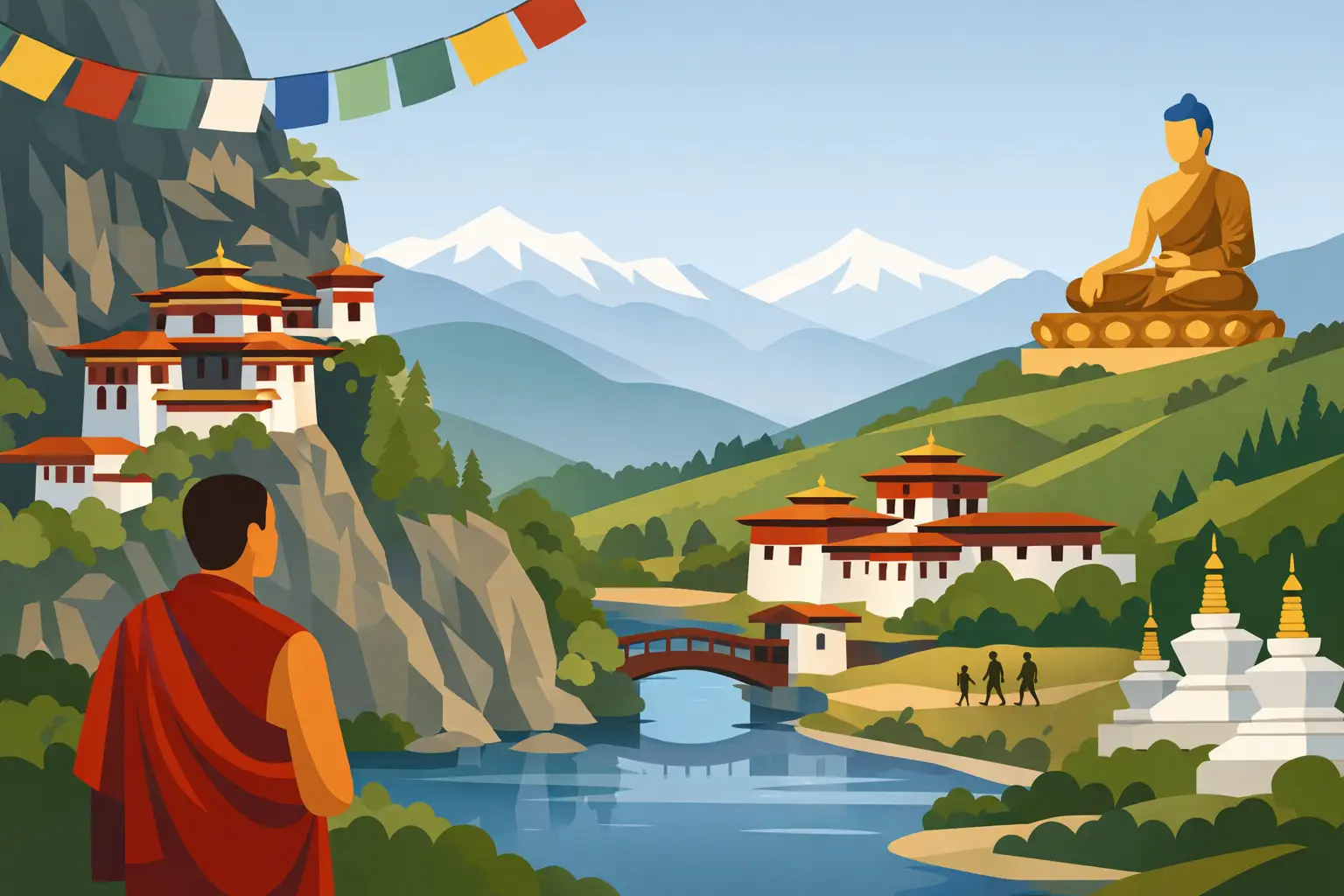
A Thoughtful 8-Day Bhutan Cultural Tour Itinerary
The first glimpse of Bhutan often comes through an aircraft window: steep forested slopes, whitewashed farmhouses and a narrow valley approaching Paro. A well-paced Bhutan cultural tour itinerary should hold on to that sense of arrival. Rather than rushing between monuments, it should allow time to understand why a fortress is also an administrative centre, why prayer flags stand on high passes, and why a short walk to a village temple can be as memorable as a famous landmark.
For most first-time visitors, eight days offers the right balance of mountain scenery, living Buddhist culture and gentle activity. This route links Paro, Thimphu and Punakha, three places with distinct character and manageable driving distances. It is suitable for couples, families, small groups and school parties seeking a meaningful Himalayan journey without committing to a strenuous trek.
Why eight days works for Bhutan
Bhutan is compact on a map but deliberately unhurried on the road. Mountain driving takes time, weather can affect flight schedules, and the most rewarding visits do not fit neatly into a hurried checklist. An eight-day programme gives travellers two full days in Paro, time in the capital Thimphu, and a proper stay in the warmer Punakha Valley.
The route also introduces altitude gradually. Paro sits at around 2,200 metres and Thimphu slightly higher, while the Dochu La pass rises above 3,000 metres. These elevations are comfortable for most healthy travellers, but a relaxed first few days, regular water and sensible pacing make the experience more enjoyable. This is not high-altitude trekking, yet mountain conditions still deserve respect.
Bhutan cultural tour itinerary: 8 days
Day 1: Arrive in Paro and continue to Thimphu
After landing in Paro, meet your local guide and drive to Thimphu, usually around one and a half hours depending on road conditions. The journey follows river valleys and offers an immediate introduction to Bhutan’s clean air, traditional architecture and wooded hillsides.
Keep the afternoon light. Settle into your hotel, take an easy walk through the town, and visit the Memorial Chorten, where local people circle the shrine with prayer wheels and quiet purpose. It is a gentle first encounter with daily religious life, not a staged performance for visitors. An early dinner and rest will help you adjust to the journey.
Day 2: Thimphu’s living heritage
Thimphu is a capital city, but it retains a scale and character unlike other Asian capitals. Start with the enormous Buddha Dordenma statue overlooking the valley, then visit the National Memorial Chorten or the National Textile Museum, depending on your interests and opening arrangements. The textile displays are particularly worthwhile for travellers curious about Bhutanese weaving, colour and ceremonial dress.
Later, visit a traditional paper-making workshop or a craft centre, where artisans work with wood, fabric and handmade paper. These stops give context to the items sold in local shops and create opportunities to buy thoughtfully. In the evening, the Tashichho Dzong may be viewed from outside, its white walls and red roofs particularly striking as daylight fades.
A guide makes a real difference here. Dzongs are active institutions, and access can change with government functions, religious events and visiting hours. Good planning means adapting the day without losing its purpose.
Day 3: Thimphu to Punakha via Dochu La
Leave Thimphu after breakfast for Punakha. The road climbs through blue pine and rhododendron forest to Dochu La, a high pass marked by 108 memorial chortens. On a clear morning, the snow peaks of the eastern Himalaya form a remarkable backdrop. Clouds are common, however, so treat any mountain view as a gift rather than a guarantee.
Descend into the lower, greener Punakha Valley, where the climate is noticeably milder. After lunch, visit Chimi Lhakhang, a hilltop temple reached by an easy walk through rice fields and a traditional village. The temple is associated with the Divine Madman, a much-loved 15th-century Buddhist teacher whose unconventional approach remains part of Bhutanese folklore.
Day 4: Punakha Dzong and valley life
Punakha Dzong stands at the meeting point of the Pho Chhu and Mo Chhu rivers and is one of Bhutan’s great architectural and spiritual landmarks. Its courtyards, carved woodwork and setting beneath the surrounding hills reward an unhurried visit. Dress modestly, follow your guide’s advice, and be prepared for photography restrictions in certain areas. These rules protect sacred spaces and should be treated as part of the cultural experience.
In spring, a walk to the nearby suspension bridge or through the valley offers a change of pace. The route can be adapted for the group: some travellers prefer a relaxed riverside stroll, while active guests may enjoy a longer village walk. Punakha is also an excellent place to try Bhutanese dishes such as ema datshi, made with chillies and cheese. Ask for a mild version if needed – Bhutanese chillies are often treated as a vegetable rather than a seasoning.
Day 5: Return to Paro at a relaxed pace
Travel back to Paro, retracing the mountain road through Dochu La and Thimphu. This is a longer transfer day, but it need not feel like lost time. Stops can be planned around weather, road conditions and the interests of the group, whether that means a simple tea break, a viewpoint or a local handicraft stop.
Arrive in Paro by late afternoon and settle in for three nights. A quiet evening is worthwhile before the following day’s visits. Bhutan rewards travellers who leave space in the programme for a slower meal, a conversation with their guide, or simply the sight of the valley changing colour at dusk.
Day 6: Paro Dzong, museums and a village walk
Paro offers some of Bhutan’s most recognisable sights, yet it remains a working valley of farms, schools and monasteries. Visit Rinpung Dzong, crossing the traditional bridge to reach its imposing entrance. The dzong is particularly famous during Paro Tshechu, when masked dances and religious ceremonies fill the courtyard.
Continue to the National Museum, housed in a former watchtower above the dzong, subject to opening arrangements. Its collections provide useful background on Bhutanese history, natural heritage and religious traditions. In the afternoon, choose a gentle walk through the valley or visit Kyichu Lhakhang, one of Bhutan’s oldest temples. The contrast between the grand dzong and the intimate temple helps explain the many layers of Bhutanese spiritual life.
Day 7: Hike to Tiger’s Nest Monastery
A visit to Taktsang, widely known as Tiger’s Nest Monastery, is the physical and emotional high point of many Bhutan holidays. Clinging to a cliff high above Paro Valley, it is one of the country’s most sacred sites. The walk usually takes several hours there and back, with a sustained uphill section and uneven stone paths.
You do not need to be a seasoned trekker, but reasonable fitness and patient pacing are essential. Start early, use walking poles if helpful, carry water, and allow time to rest at viewpoints. Horses may be available for part of the ascent, though the final approach involves steps and is completed on foot.
The effort changes the experience. Arriving at the monastery after walking through pine forest and prayer flags creates a powerful sense of place that no roadside viewpoint could provide. After returning to Paro, enjoy a well-earned final dinner and reflect on the journey.
Day 8: Depart Paro
Your departure flight from Paro is often scenic in its own right. Keep valuables and a warm layer accessible, as mountain weather can be cool even when the valley is bright. If flights allow, a final short stroll near your hotel is a fitting way to leave Bhutan – with no need to rush the last moments.
When to travel and what to plan for
Spring, from March to May, brings clear mornings, flowering valleys and pleasant walking conditions. Autumn, from September to November, is another excellent season, often with sharp mountain views and festival dates that attract cultural travellers. Festival travel needs early planning, as flights and accommodation can be in high demand.
Winter can be quieter, clearer and good value, particularly in Paro and Punakha, although mornings are cold and higher passes may be affected by snow. Summer is lush and less crowded, but rain, cloud and occasional road disruption are more likely. The best season depends on whether your priority is festivals, mountain photography, comfortable walking or a quieter holiday.
Bhutan’s visitor arrangements, permits, accommodation requirements and sustainable development charges can change. It is wise to confirm current requirements before booking rather than relying on old online advice. A specialist operator can coordinate flights, guides, transport, hotels and permits while building in sensible flexibility for weather and local events.
Brothers Team plans Bhutan journeys with the same careful attention it brings to Himalayan travel: experienced local support, realistic driving times and itineraries that leave room for the moments travellers remember most. Choose dates with care, pack for changing mountain weather, and let Bhutan reveal itself one valley, prayer flag and welcoming conversation at a time.


Comments are closed