


Everest Mountain Flight from Kathmandu Explained
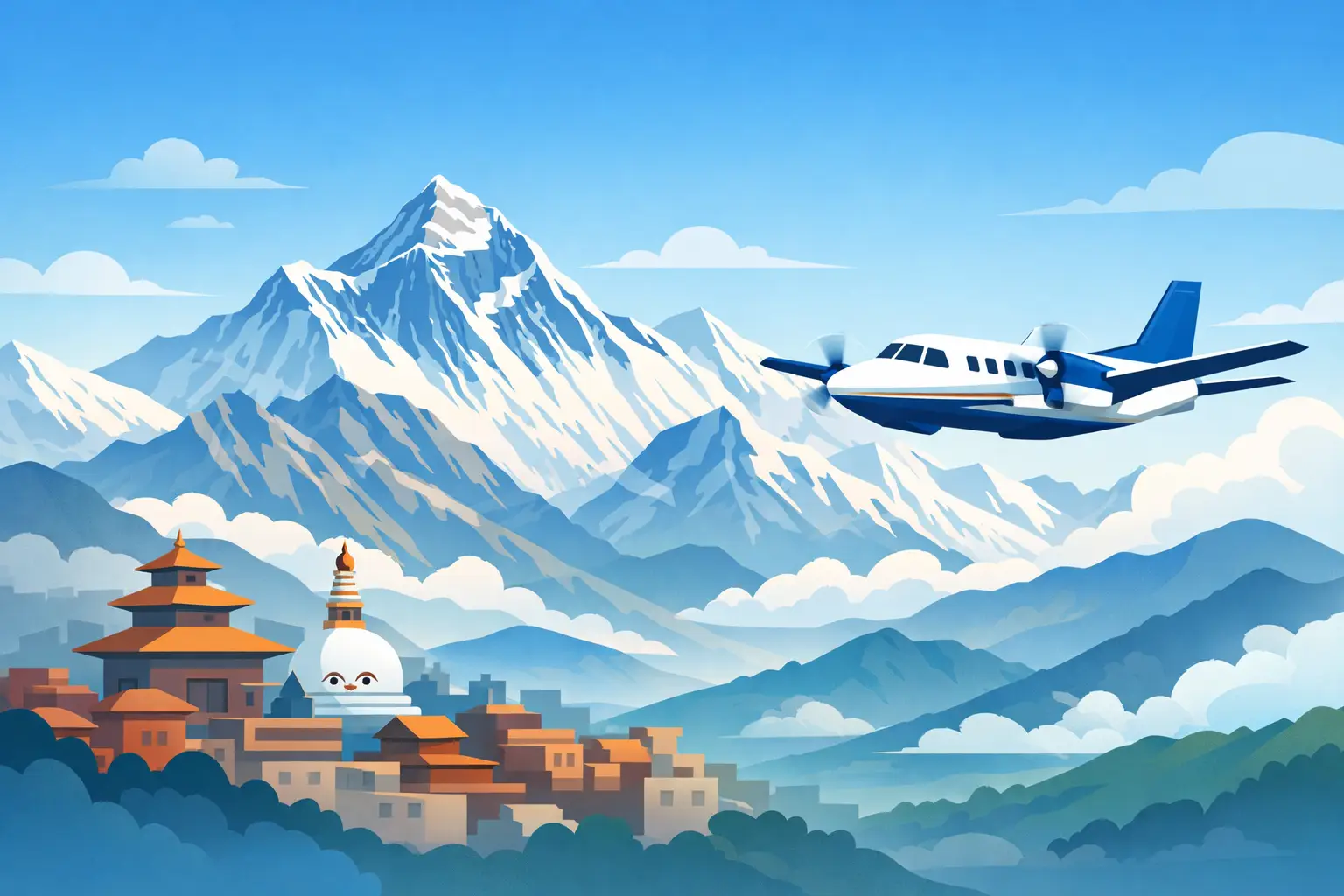
The first light over Kathmandu can feel unremarkable from the street. Forty minutes later, through an aircraft window above the cloud line, the Himalaya fills the horizon and Everest rises among a procession of enormous peaks. An Everest mountain flight from Kathmandu is one of the most accessible ways to experience the world’s highest mountain – particularly for travellers with limited time, families, or those who cannot trek at altitude.
It is not a replacement for walking through the Khumbu valleys, hearing yak bells on the trail and arriving at Everest Base Camp under your own effort. It is a different kind of Himalayan experience: short, weather-dependent and remarkably powerful. With the right expectations and careful planning, it can become a defining morning of a Nepal holiday.
What an Everest mountain flight from Kathmandu is really like
Most mountain flights depart from Kathmandu early in the morning, when skies are often clearest and the air is generally calmer. The journey usually takes around an hour, although the total time needed from hotel pick-up to return can be several hours depending on airport procedures and weather conditions.
You will fly eastwards from the Kathmandu Valley towards the high Himalaya. As the landscape changes from hills and farmland to snow-covered ridges, the aircraft turns along a line of major peaks. The exact route and viewing order vary by airline and conditions, but the experience commonly includes close views of Langtang, Dorje Lakpa, Gauri Shankar, Cho Oyu, Lhotse, Makalu and, of course, Mount Everest.
The aircraft are usually small fixed-wing planes rather than large jets. This gives passengers a more immediate sense of the landscape, but also means the cabin can feel compact and the ride may be less smooth than a long-haul flight. Crew members generally indicate significant peaks, and passengers are often given a chance to view the mountains from both sides of the aircraft. Do not expect every photograph to be perfect. Window glare, cloud and a moving aircraft are all part of the experience. The view itself, however, rarely needs improving.
Why the early start is worth it
A pre-dawn wake-up is standard for good reason. Mountain weather builds quickly, especially outside the clearest seasons. Morning flights provide the strongest chance of seeing the Himalayan range before cloud rises from the valleys and settles around the summits.
Spring and autumn are usually the preferred periods. From March to May, the mountains can be crisp and bright, although haze occasionally affects lower-level visibility. October to November often brings clear skies after the monsoon, with particularly sharp views. December through February can also be excellent, with cold, clear mornings and fresh snow on the peaks.
The monsoon months, broadly June to September, are less predictable. Flights still operate when conditions allow, but cloud cover and delays are more likely. If seeing Everest is a major priority, it is wise to schedule the flight near the beginning of your Nepal itinerary rather than on your final morning. That gives you room to try again if weather causes a cancellation.
What you will see from the aircraft
Everest is not usually the first mountain to appear. That is part of what makes the flight so memorable. The Himalaya unfolds peak by peak, helping you appreciate how vast the range truly is before Everest comes into view.
At 8,849 metres, Everest stands behind other high summits when viewed from the south. From the aircraft, its distinctive summit plume may be visible – snow blown from the top by high winds. Nearby Lhotse, the world’s fourth-highest mountain, often looks imposing in its own right, while Makalu’s striking pyramid shape is another highlight further east.
A good mountain flight offers more than a tick on a bucket list. It gives context to Nepal’s trekking regions. Travellers planning an Everest Base Camp trek can see the scale of the terrain they will later enter. Those heading to Annapurna, Chitwan or Bhutan often find that the flight adds a dramatic Himalayan chapter to a broader cultural holiday.
Seating, photography and practical comfort
Window access matters on a mountain flight, so confirm how seating is handled when booking. Airlines may allocate seats in advance, rotate passengers during the flight or invite people forward in turn for a closer look. Procedures differ, and operational requirements always come first.
Wear comfortable layers. Kathmandu can be cool before sunrise, while the airport terminal and aircraft may feel warmer later. There is no need for trekking gear, but keeping a light jacket with you is sensible. Eat something small before leaving your hotel if early starts do not suit you, and carry water for after the flight.
For photographs, clean your phone or camera lens before departure and keep it close to the window without pressing it against the glass. Switching off flash is essential. A phone camera can capture excellent memories, but take time to put it down as well. The range is too expansive to experience only through a screen.
If you are prone to motion sickness, speak with a pharmacist or doctor before travelling about suitable remedies. Conditions are often smooth in the early morning, but mountain air currents can cause occasional bumps. Most passengers manage comfortably, especially when prepared.
Weather, cancellations and the value of flexibility
No responsible operator can promise an Everest view on a particular day. Pilots and airline operations teams make decisions based on visibility, wind and aviation safety, and weather-related cancellations are normal in the Himalaya. They are not a sign of poor organisation.
This is where booking through a specialist can make a meaningful difference. A well-planned itinerary allows flexibility, communicates changes promptly and considers alternatives if a flight cannot operate during your stay. Brothers Team can coordinate mountain flights alongside your hotel, sightseeing and onward travel, so a weather change does not derail the rest of your programme.
When comparing prices, check what is included and how cancellations, refunds or rebooking are managed. Airline fares can change with season and availability. The cheapest-looking option is not always the most useful if it offers little clarity when weather intervenes.
Is a mountain flight suitable for everyone?
For many travellers, yes. It is especially appealing for people who want to see Everest but do not have the time, fitness or desire for a multi-day trek. It can work well for older travellers, children accompanied by adults, and groups with varied activity levels.
The cabin is pressurised, and the flight does not involve sleeping or exerting yourself at high altitude, so altitude illness is not normally a concern in the same way it is on a trek. However, anybody with a significant medical condition, recent surgery, severe anxiety about flying or concerns about small aircraft should seek medical advice and discuss their needs before booking.
Travellers who are determined to stand beneath Everest, rather than simply see it, will find deeper fulfilment in a trek. Everest Base Camp, Gokyo Lakes and the Cho-La Pass offer immersion, physical challenge and time with Sherpa culture that an hour in the air cannot replicate. But those journeys require training, acclimatisation days and a realistic commitment of time. A flight offers the grandeur without those demands.
How to build it into a Nepal itinerary
Keep the morning free. Avoid arranging a tight connection, a long road journey or an important appointment immediately after the scheduled return. Flights may be delayed while crews wait for better visibility, and a relaxed schedule makes the experience far more enjoyable.
For a short Nepal visit, place the mountain flight on day two or three, after you have recovered from your international journey. You can then combine it with Kathmandu’s heritage sites, including the temples, stupas and historic squares that reveal another side of the country. For longer holidays, it is a rewarding opening before a trek or a gentle finale after days in the mountains.
Bring your passport or the identification required for domestic check-in, listen carefully to airport instructions and be patient with operational changes. Himalayan travel rewards a little flexibility. When the clouds part, the reason becomes immediately clear.
A clear morning over Everest is never something to rush through. Leave space afterwards for breakfast, conversation and the quiet satisfaction of having seen the Himalaya from a perspective few landscapes can match.


Comments are closed