


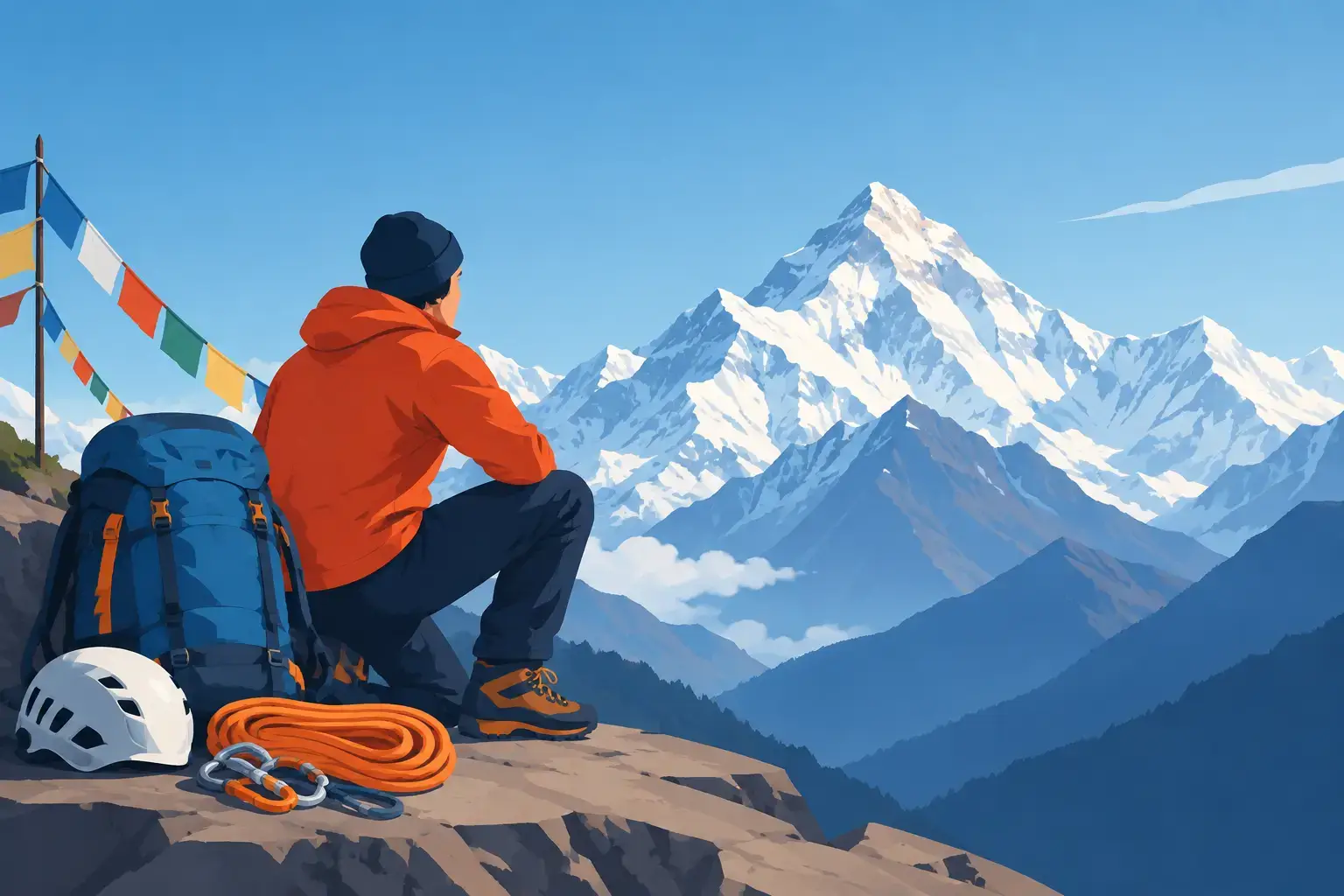
How to Prepare for Peak Climbing in Nepal
A summit morning in Nepal usually begins long before sunrise. Your headtorch picks out a narrow line of snow, your breath hangs in the cold air, and every careful step brings the horizon closer. Peak climbing is not simply a harder trek: it is a properly planned high-altitude journey that asks for fitness, patience, technical guidance and respect for the mountains.
For many travellers, a trekking peak offers the ideal step between a classic Himalayan trek and a full-scale expedition. You can experience the satisfaction of standing on a Himalayan summit while travelling through Sherpa, Tamang or high-mountain communities, sharing lodge evenings with your team and building up gradually towards the climb. The reward is significant, but so is the preparation.
What Peak Climbing in Nepal Really Involves
Nepal’s trekking peaks are often described as accessible, but this can be misunderstood. Accessible does not mean easy. It generally means that the peak can be climbed without the lengthy expedition structure required for the country’s highest and most technical mountains. You will still be operating at serious altitude, often crossing glaciers or snow slopes and using equipment such as crampons, an ice axe, harness and fixed rope.
A typical itinerary combines several days of trekking with acclimatisation stops, a move to high camp or a climbing base camp, technical instruction, and an early summit attempt. Summit day may involve six to 12 hours of effort, depending on the peak, snow conditions, group pace and weather. Reaching the top is only halfway: a safe descent to camp matters just as much.
The experience varies considerably by objective. Island Peak is a popular choice for strong trekkers ready to learn basic mountaineering skills, with a steep summit section that requires confidence on fixed ropes. Mera Peak is physically demanding because of its altitude and long approach, although its ascent is often less technically steep. Lobuche East can suit climbers seeking a more challenging and rewarding ridge. The right choice depends on your trekking history, fitness, comfort with exposure and the amount of time you can allow for acclimatisation.
Choose the Peak for Your Experience, Not Your Ambition
The most memorable climbs are not always the highest or hardest. A peak that matches your present ability gives you space to enjoy the journey, learn from your guides and make sensible decisions if conditions change.
If you have completed a multi-day trek and cope well with long uphill days, a well-paced first climbing peak may be appropriate with focused training. If this is your first time at altitude, consider completing a trek such as Everest Base Camp, Gokyo Lakes or Annapurna first. These journeys help you understand how your body responds above 3,000 metres and whether you enjoy the rhythm of mountain travel.
Previous rock climbing is useful but not essential for every trekking peak. More valuable is all-day endurance, sure-footedness on uneven ground and the ability to stay calm when cold, tired or exposed. Technical skills can be taught during a pre-climb training session, but a guide cannot create fitness or acclimatisation on the day.
It is also wise to be honest about your preferred travel style. Some climbers relish camping at high altitude and the uncertainty of a summit window. Others would enjoy a lodge-based trek more. There is no lesser choice in the Himalaya. The mountain will still be there when you have gained more experience.
Train for Long Days, Not Just the Summit Photo
A good training plan should begin at least three to six months before departure, particularly if you live in Singapore or another low-lying location. The goal is not to mimic altitude at home. It is to build the strength and endurance that let you move efficiently, recover overnight and retain good judgement when the climb becomes demanding.
Start with regular aerobic work: hill walking, stair sessions, hiking with a loaded daypack, cycling or running can all help. Increase time on your feet steadily rather than chasing one punishing workout each week. Long weekend walks are especially valuable because they teach your body to keep working after the first few hours.
Add strength work two or three times weekly, concentrating on legs, hips, core and balance. Step-ups, squats, lunges, calf raises and loaded carries are practical choices. Downhill strength deserves attention too. Many people train for the ascent but find the long descent harder on their knees and concentration.
If possible, practise in the boots you intend to bring and carry a pack close to your expected trekking weight. Do not arrive with brand-new footwear or a training routine that stops once you board the flight. The final weeks should maintain fitness while allowing your body to arrive rested.
Acclimatisation Is Your Most Valuable Safety Tool
No level of fitness makes a person immune to altitude illness. A fast runner can struggle at 4,500 metres, while a slower walker may acclimatise very well. The difference is often itinerary pacing, hydration, sleep, previous altitude exposure and the willingness to communicate early.
A sensible itinerary gains height gradually and includes acclimatisation days where you walk higher before returning to sleep lower. These are not spare days. They are an active part of the programme, giving your body time to adapt and your guides time to monitor how everyone is coping.
Headache, poor sleep, loss of appetite and unusual fatigue can occur at altitude. They should never be ignored or hidden for fear of slowing the group down. Your guide needs an accurate picture of how you feel. If symptoms worsen, the right decision may be a rest day, a change of plan or descent. This is not failure. It is sound mountain judgement.
Choose an operator that treats acclimatisation as more than a line on an itinerary. At Brothers Team, route planning, local guide support and practical altitude awareness are built around giving each traveller the best possible chance to climb safely and enjoy the wider journey.
Learn the Essential Skills Before Summit Day
Most guided climbs include a skills session at base camp or before the ascent. Use it fully. Ask your guide to check the fit of your boots, crampons and harness, then practise walking in crampons on gentle ground before you face a steep slope in darkness.
You should understand how to hold and use an ice axe, attach safely to a rope when required, move efficiently on fixed lines and manage your layers without exposing bare hands to the cold. Small actions become harder when you are tired. Knowing where your headtorch battery, water bottle, gloves and down jacket are can save time and energy.
Listen carefully to turnaround times. A summit is an aim, not an entitlement. Weather can deteriorate rapidly, snow may be softer than expected and a team member may not be well enough to continue. Experienced guides make these calls from knowledge of the route and conditions, not from a lack of ambition.
Pack for Function and Comfort
Your kit list will depend on the peak and season, but warmth, reliable footwear and a simple layering system are central. A moisture-wicking base layer, insulating mid-layer and waterproof shell allow you to adjust as effort and weather change. For summit day, warm gloves with a spare pair, a well-fitting hat, UV-protective sunglasses and a headtorch with spare batteries are essential.
Mountaineering boots must be compatible with the crampons provided or hired. This is one area where fit matters more than fashion. Break them in well before travel, but replace boots that are worn out or give you persistent pain. Blisters at altitude can turn an enjoyable trip into a difficult one.
Keep personal items organised in waterproof bags inside your duffel or rucksack. Cold affects batteries quickly, so keep your phone and spare power bank close to your body. Bring familiar snacks if they encourage you to eat, but do not rely on them instead of regular meals and fluids.
Leave Room for the Journey Beyond the Summit
The finest Himalayan climbs are rarely defined by one photograph at the top. They are remembered in the slower moments: a hot cup of tea after a cold training walk, prayer flags moving above a village, the encouragement of a climbing partner and the quiet concentration of your guide checking every attachment before dawn.
Prepare thoroughly, choose a peak that suits where you are now, and give the mountain enough time. With a sensible itinerary and a supportive team, peak climbing can become not only a personal milestone, but a journey you will carry long after the snow has left your boots.



Comments are closed