


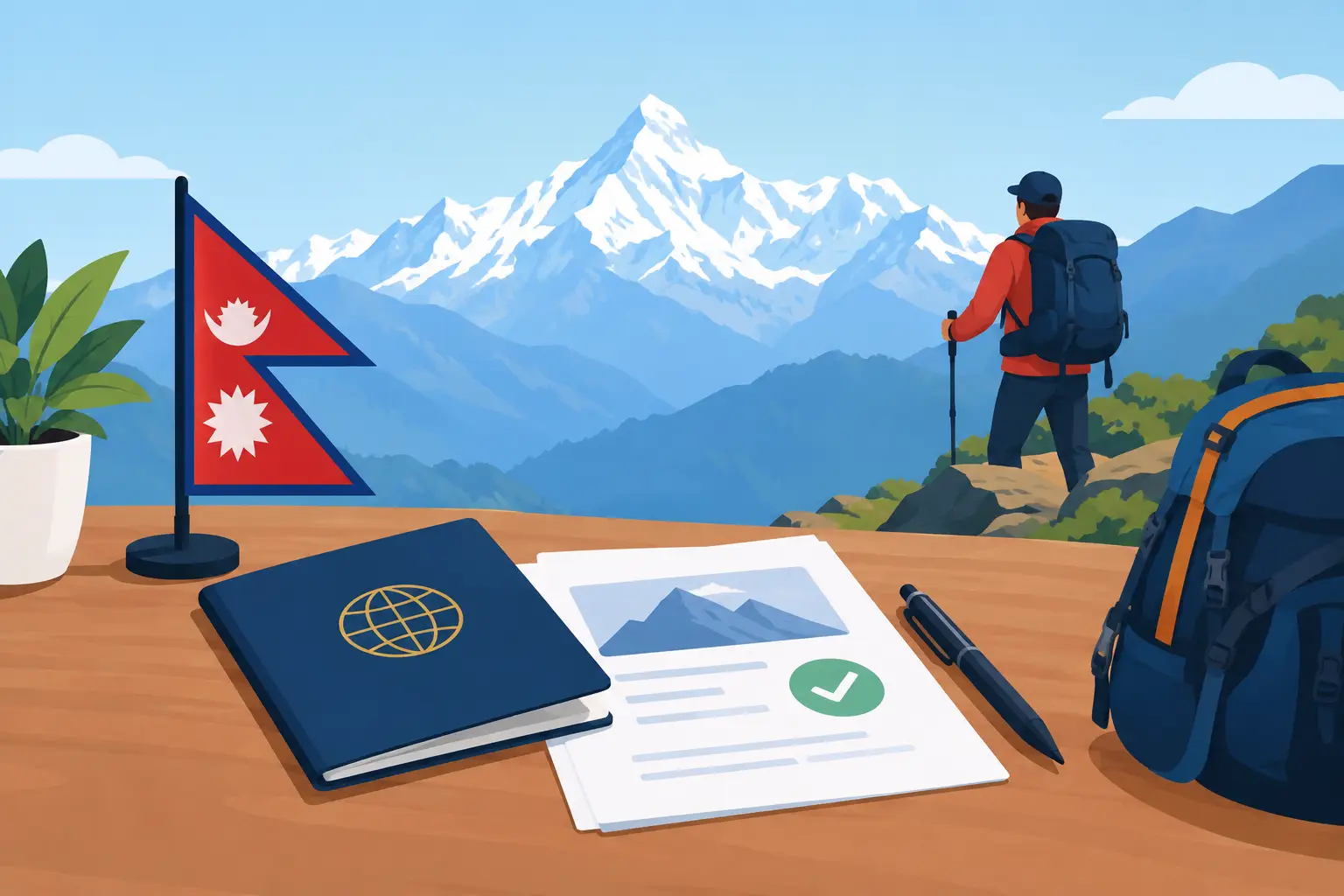
How to Obtain Nepal Permits for Your Trek
The permit desk is not the most glamorous part of a Himalayan holiday, but it can decide whether you reach the trailhead on time. Knowing how to obtain Nepal permits before you fly helps you avoid last-minute changes, missed flights and the disappointment of being turned back at a checkpoint. The good news is that most popular treks are straightforward when your route, dates and documents are properly planned.
Nepal permits: what you actually need
There is no single permit that covers every trek in Nepal. What you need depends on where you are walking, whether the area is a national park, conservation area or restricted region, and whether you are travelling independently or with an organised group.
Your Nepal entry visa is separate from trekking permits. It gives you permission to enter the country, but it does not replace the documents checked on trails in the Everest, Annapurna, Manaslu or Kanchenjunga regions. Likewise, a domestic flight ticket to Lukla, Pokhara or Nepalgunj is not proof that you may enter a protected area.
For many classic routes, you will need a national park or conservation area entry permit. Some regions also require a local municipality fee, collected at a trailhead or checkpoint. Restricted areas have a different process altogether: they require a restricted-area permit, a registered trekking agency and, usually, a minimum of two foreign trekkers travelling together.
Rules, fees and collection points can change. Treat any fixed price you see online as a guide rather than a guarantee, particularly if it was published several trekking seasons ago.
How to obtain Nepal permits before your trek
Start with your exact itinerary, not just the name of a region. “Everest Base Camp” may involve the Khumbu Pasang Lhamu Rural Municipality fee and Sagarmatha National Park entry, while an Annapurna trek may require Annapurna Conservation Area entry. A Manaslu circuit involves restricted-area paperwork alongside conservation and national park permits, depending on the route.
Once the route is confirmed, provide your passport details, Nepal visa information when available, passport-sized photographs if requested, travel insurance details and your arrival and departure dates. Your permits must match your itinerary and passport spelling. A small typo can create an avoidable delay at the office or checkpoint.
For standard protected-area permits, an agency can normally arrange paperwork in Kathmandu or Pokhara before departure, or advise where it will be issued. In some areas, permits are checked electronically or at designated counters; in others, a paper document remains essential. Carry the original permit, not merely a photograph on your phone, and keep it dry in a waterproof pouch.
If you are arranging a trek yourself, leave enough time in Kathmandu or Pokhara for permit formalities before travelling to the trailhead. This is especially sensible during spring and autumn, when offices and transport routes are busy.
Popular trekking areas and their permit approach
Everest treks commonly involve a local Khumbu entry fee and Sagarmatha National Park permit. Annapurna routes generally require Annapurna Conservation Area entry, while the exact collection point can differ between approaches. Langtang trekkers need Langtang National Park entry.
The Manaslu region is more tightly managed. Trekkers need a restricted-area permit for the controlled section and must travel through a registered agency with the required group arrangement. Upper Mustang, Nar Phu, Dolpo and parts of Kanchenjunga also have special conditions. These are wonderful journeys, but they are not the places to rely on vague plans or paperwork arranged after reaching a remote village.
Prepare the documents your operator will ask for
A clear colour scan of your passport is usually the starting point. Your passport should have adequate validity for travel, and every name should be written exactly as it appears in the machine-readable section. If your group includes children, make sure their documents are supplied separately rather than assuming they can be added informally to an adult’s permit.
You should also share a firm itinerary. Permit dates are tied to the route and restricted-area permits are particularly date-sensitive. If poor weather delays a mountain flight or you decide to extend your trek, your guide or agency may need to arrange an amendment. Build a little flexibility into your overall holiday rather than scheduling an international departure immediately after your expected trek finish.
For schools, colleges and private groups, a single coordinator should collect passport scans early and check them against the group list. This prevents the common problem of one missing document holding up an entire departure.
Allow time for permits and mountain weather
Do not leave permits until the evening before an early flight. Kathmandu to Lukla flights, road transfers into Annapurna and journeys towards Manaslu all depend on weather, road conditions and seasonal demand. A well-paced itinerary allows time to complete documentation before the group moves into the mountains.
The best approach is to confirm permits as soon as flights, transport and trekking dates are settled. For restricted regions, this is even more valuable because the agency needs time to submit the application and organise the required guide and group details. Last-minute changes are sometimes possible, but they may limit your choices or add unnecessary cost.
Keep printed copies of your passport, insurance certificate, emergency contact details and permits with you. Your guide may carry the principal documents, but you should know which permits apply to your route and where they are stored. At checkpoints, travellers are often asked to sign in or show documentation more than once.
Restricted-area permits need a licensed local arrangement
Restricted areas are protected for cultural, environmental and border-management reasons. The rules are not a formality. Independent trekking is generally not permitted in these zones, and the minimum group requirement is applied to the foreign trekking party rather than counting guides or porters.
This is where a specialist operator earns its place. Beyond submitting the permit application, the team must coordinate a licensed guide, transport, accommodation, food planning and realistic walking stages. In high and remote areas, a permit is only one part of a safe plan. Acclimatisation, communications, contingency days and evacuation procedures matter just as much.
Brothers Team can arrange route-appropriate permits as part of a supported Nepal programme, with Kathmandu-based coordination and guides who understand the checkpoints, trail conditions and practical rhythm of the mountains.
At the trailhead: protect your paperwork
Before leaving town, check that the names, passport numbers, route and dates are correct. Ask your guide which checkpoints you will pass and whether local fees are paid in advance or on arrival. Keep permits accessible rather than buried at the bottom of your duffel bag.
Respectful travel also means accepting the purpose of these controls. Permit income supports protected landscapes, local administration and visitor management in places under real pressure from tourism and climate change. Rangers and local officials are there to protect both the region and the people travelling through it.
A Nepal trek should feel like a personal adventure, not a paperwork puzzle. Confirm the route early, use the correct permit process and leave room for mountain conditions – then you can give your attention to the prayer flags, high passes and warm welcomes that make the journey memorable.

Comments are closed