


Altitude Sickness Trekking Nepal Made Safer
A clear morning in Namche Bazaar or Manang can make the mountains feel wonderfully close. It can also tempt trekkers to push on too quickly. Searches for “altitude sickness trekking Nepal” usually come from people planning carefully, and that is exactly the right place to start: altitude is manageable when your itinerary, decisions and support team allow your body time to adjust.
Nepal’s great trekking routes are not technical expeditions for most walkers, but they do take you into an environment where good fitness alone is not enough. Everest Base Camp, Gokyo Lakes, Cho-La Pass, the Annapurna Circuit and high Himalayan side valleys all demand respect for altitude. The aim is not to remove every challenge. It is to build a journey where the challenge is rewarding rather than reckless.
Why altitude sickness happens in Nepal
As you climb, the percentage of oxygen in the air stays broadly the same, but air pressure falls. Each breath delivers less oxygen to your body. Your breathing, heart rate and sleep may change while you acclimatise, and this adjustment takes time.
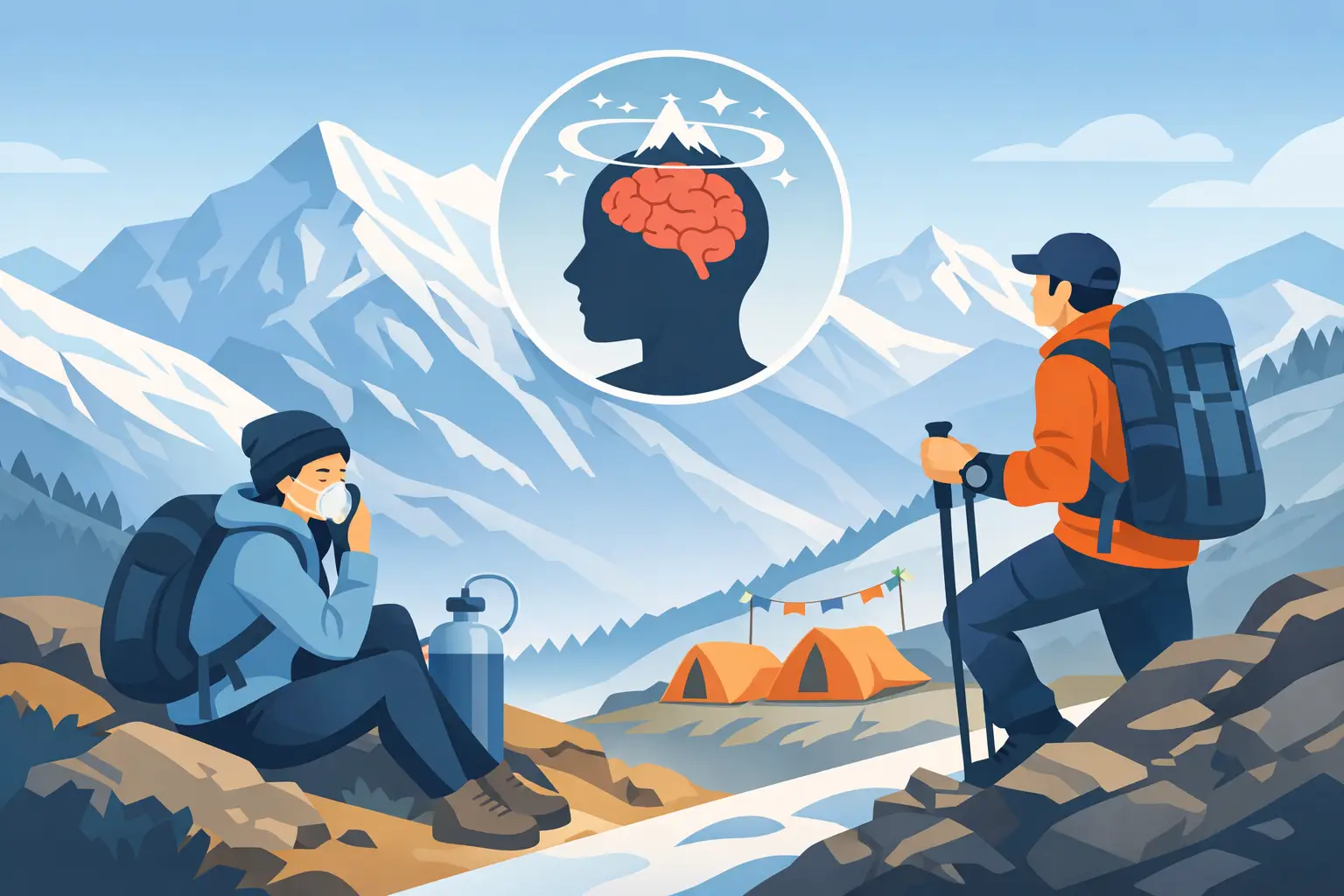
Acute mountain sickness, often shortened to AMS, is the most common altitude illness. A headache is often the first sign, especially when it comes with poor sleep, unusual tiredness, dizziness, nausea or loss of appetite. These symptoms can be mild, but they should never be brushed aside simply because the next village or viewpoint is close.
Severe altitude illnesses are less common, but urgent. High-altitude cerebral oedema affects the brain, while high-altitude pulmonary oedema affects the lungs. Both require immediate descent and medical attention. A good trekking plan has room to respond early, before a minor problem becomes a serious one.
Altitude sickness does not choose only inexperienced walkers. A very fit runner can develop symptoms, while someone with modest hill-walking experience may acclimatise well. Previous experience at altitude can inform planning, but it cannot guarantee how your body will respond on this trip.
Altitude sickness trekking Nepal: prevention starts with pace
The best defence is a sensible ascent profile. On many treks above 3,000 metres, a common guideline is to increase sleeping altitude by no more than around 300 to 500 metres a day, with an extra acclimatisation day after every 1,000 metres of ascent or every three to four days. These are guidelines, not a licence to ignore symptoms. Your route, weather, starting point and personal condition all matter.
This is why a well-designed Everest region itinerary usually includes at least two acclimatisation days, often at Namche Bazaar and Dingboche. They are not days spent doing nothing. A short hike to a higher point, followed by sleep at a lower altitude, helps the body begin adapting while keeping the day enjoyable. In the Annapurna region, a carefully timed pause at Manang can play the same role before crossing Thorong La.
A shorter itinerary may look attractive on paper, particularly when annual leave is limited. The trade-off is clear: a faster schedule reduces the margin for weather delays, fatigue and proper acclimatisation. Adding one or two days can make the trek safer, more comfortable and far more enjoyable. It also gives you time to notice monasteries, villages and changing landscapes rather than simply counting kilometres.
Your guide should check in regularly, not merely lead the way. Honest answers matter. If you have a headache, nausea or unusual breathlessness, say so early. A guide can help assess whether you need rest, medication under medical advice, a change of plan or descent. No summit, pass or lodge booking is worth concealing symptoms for.
The habits that help on the trail
Good acclimatisation is supported by ordinary, disciplined choices. Drink regularly enough that you are not thirsty, but avoid forcing excessive amounts of water. Eat regular meals even if your appetite is lower than usual. Carbohydrate-rich foods can be especially appealing at altitude, and warm soups, rice, noodles and potatoes are practical lodge meals.
Avoid alcohol during the early acclimatisation phase and when you have any symptoms. It can worsen dehydration and disturb sleep, which is already often lighter at altitude. Sleeping tablets and sedating medicines also need particular caution because they may affect breathing. Discuss all regular medication and any planned altitude medication with your GP or a travel-medicine professional before leaving home.
Diamox, also called acetazolamide, is commonly discussed by trekkers. It can assist acclimatisation in appropriate circumstances, but it is not a substitute for a gradual itinerary and it should be taken only on individual medical advice. It does not make it safe to continue ascending with worsening symptoms. The same principle applies to painkillers: they may ease a headache, but they must not be used to hide an altitude problem while you keep climbing.
Bring layers, protect yourself from the sun and avoid exhausting yourself on the first few days. Cold, poor sleep, dehydration and a chest infection can all make a trek feel harder. A steady “slowly, slowly” pace is one of the most effective skills you can bring to the Himalaya.
Know the signs that mean descend
Mild symptoms may improve with rest at the same altitude, fluids, food and close observation. However, worsening symptoms or any concern about coordination and breathing need decisive action. In the mountains, descent is the most reliable treatment.
Treat the following as urgent warning signs:
- A severe or worsening headache, especially with vomiting or confusion.
- Loss of balance, clumsiness, unusual drowsiness or difficulty walking in a straight line.
- Breathlessness while resting, persistent cough, chest tightness or a bubbling sound in the chest.
- Blue or grey lips, extreme weakness, or a rapid decline in how the person looks or behaves.
Do not leave an unwell trekker alone, and do not wait for morning if symptoms are serious. Descending even a few hundred metres can be significant. Depending on the location, weather and condition of the trekker, local teams may arrange further assistance, including evacuation. Travel insurance that specifically covers trekking at your planned maximum altitude is essential, and it should include emergency helicopter evacuation where relevant.
Choose an itinerary with options, not pressure
A responsible trek is not one that follows a timetable regardless of circumstances. It is one with enough flexibility to take a rest day, descend to a lower lodge, or wait out a weather delay without turning every decision into a crisis.
For first-time Himalayan trekkers, classic Everest Base Camp and Annapurna itineraries with built-in acclimatisation are often better choices than an aggressively shortened route. More experienced trekkers considering Gokyo Lakes and Cho-La Pass need an even stronger margin. The pass is high, conditions can change quickly, and the combination of altitude, long walking days and cold can be demanding even for capable walkers.
Before booking, ask practical questions. What is the highest sleeping altitude? Where are acclimatisation days placed? What happens if someone develops symptoms? Is there a guide trained to monitor altitude concerns, and what communication and evacuation arrangements are available? Clear answers are a sign that safety is part of the trip design, not an afterthought.
At Brothers Team, this planning begins before the flight to Nepal. A realistic route, experienced local guidance and carefully co-ordinated lodge and transport arrangements give trekkers the support to make good decisions on the mountain. For schools and organised groups, that structure is especially valuable: leaders need a clear plan, but also a team capable of adapting it responsibly.
Prepare before you reach the trailhead
Training improves your enjoyment, even though it cannot prevent altitude sickness. Build walking endurance with regular hikes, stairs and longer days carrying the pack weight you expect to use. Practise in your boots, and include downhill walking to prepare your legs for the descent. Arrive in Kathmandu well rested where possible, rather than beginning a demanding trek after a frantic work week.
Share relevant medical information with your travel provider in advance. Conditions affecting the heart, lungs or circulation, as well as pregnancy and significant previous altitude illness, deserve professional medical advice before committing to a high route. This is not about excluding people from adventure. It is about choosing the right trek, pace and safeguards for each person.
The Himalaya reward patience. Leave space in your itinerary, listen when your body speaks, and let the mountains be something you remember for their scale, warmth and wonder – not for a decision to hurry when a slower step would have carried you safely onwards.




Comments are closed