


Paro Taktsang Hike Guide: Trekking to Bhutan’s Tiger’s Nest in 2026
Scaling a cliffside monastery at 10,240 feet isn’t just a fitness test; it’s a profound spiritual transformation that begins long before you reach the first fluttering prayer flag. You’ve likely stared at photos of the golden roofs clinging to the sheer granite cliffs of the Paro Valley and felt a mix of intense wonder and quiet nerves. It’s completely normal to worry about whether your legs are ready for the 900-meter climb or if the thin Himalayan air will cut your journey short.
Our comprehensive Paro Taktsang hike guide is here to turn that hesitation into a clear, actionable plan for your 2026 adventure. We’ll help you master the logistics of Bhutan’s mandatory guide policies and the latest Sustainable Development Fee (SDF) updates while ensuring you’re physically prepared for the five-to-seven-hour trek. You’ll discover the ancient legends of Guru Rinpoche, learn exactly what to pack for the mountain’s shifting moods, and find out how to time your ascent to avoid the crowds. From navigating the 2,000 Ngultrum entrance fee to reaching the final lookout safely, we’re providing the steady, expert hand you need for a seamless pilgrimage to the Tiger’s Nest.
Key Takeaways
- Learn the exact trail statistics, including the 900-meter elevation gain and 9-kilometer round-trip distance, to prepare your body for the climb.
- Navigate the latest 2026 entry requirements with our Paro Taktsang hike guide, covering the mandatory licensed guide rule and the Sustainable Development Fee (SDF).
- Discover how to acclimatize properly in Paro to avoid altitude sickness and what specific gear you need for Bhutan’s variable mountain weather.
- Understand the sacred legends of Guru Rinpoche and the cultural dress codes required to enter the monastery’s inner temples.
- Find out the best times to start your trek to avoid the midday heat and afternoon crowds for the most serene photography experience.
The Legend and Spiritual Significance of Paro Taktsang
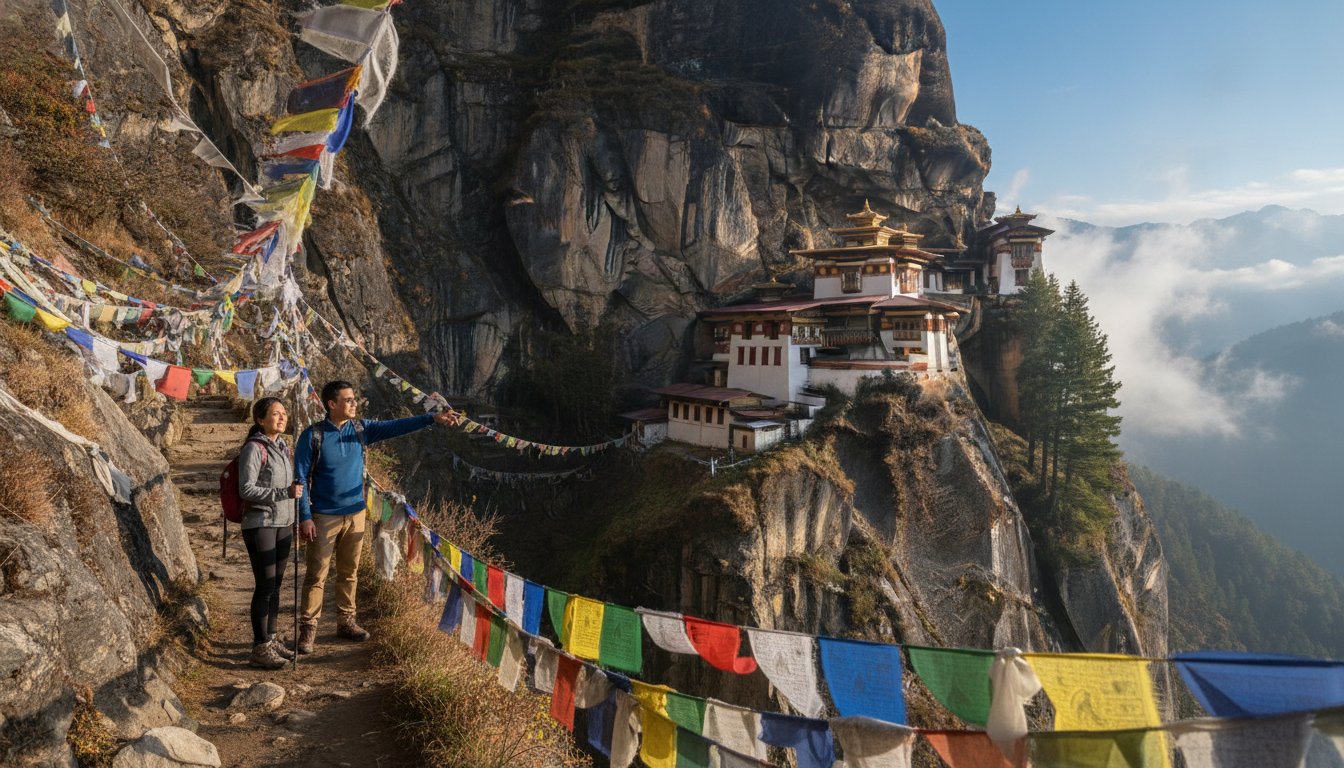
Imagine a cluster of golden-roofed temples seemingly suspended in mid-air, clinging to a sheer granite cliff 900 meters above the valley floor. Known as Paro Taktsang, this is the most sacred Buddhist site in the Kingdom of Bhutan. Sitting at an altitude of 3,120 meters above sea level, it’s a place where the physical world meets the divine. Any comprehensive Paro Taktsang hike guide must begin here, acknowledging that this isn’t just a trail; it’s a gateway to Bhutanese soul and history. While the current structures date back to 1692, the site’s spiritual lineage stretches much further back, surviving devastating fires in 1951 and 1998 to remain a beacon of resilience.
Guru Rinpoche and the Flying Tigress
The story of the “Tiger’s Nest” begins in the 8th century with Guru Padmasambhava, known affectionately as Guru Rinpoche. Legend tells us he flew to this vertical precipice on the back of a tigress to subdue a local demon. He then spent three years, three months, and three days meditating in a cave that still exists deep within the monastery walls. This miraculous arrival marked the birth of Buddhism in Bhutan. Today, pilgrims travel from across the Himalayas to pray at this specific spot, believing the spiritual energy here is potent enough to grant Enlightenment. It’s this deep-rooted mythology that makes the climb feel less like a trek and more like a sacred ascent. For those who wish to maintain this spiritual connection at home, you can learn more about Buddhas Buddhas Buddhas and their selection of fair trade arts and crafts.
Taktsang is far more than a museum or a photo opportunity. It’s a vibrant, living monastery where monks spend their lives in quiet meditation, far removed from the bustle of the modern world. Using a professional Paro Taktsang hike guide helps you appreciate the subtle details of these temples that casual visitors often miss. The site perfectly illustrates Bhutan’s “Gross National Happiness” philosophy, showcasing a nation that prioritizes cultural preservation and environmental harmony over unchecked growth. As you approach the vertical granite face, the sight of prayer flags dancing in the wind serves as a reminder of the reverence required. You’ll feel the hush of the mountain and the weight of centuries of devotion. If you’re planning a journey through our Bhutan tour packages, this experience will likely be the spiritual high point of your entire trip.
Physical Logistics: Distance, Elevation, and Difficulty
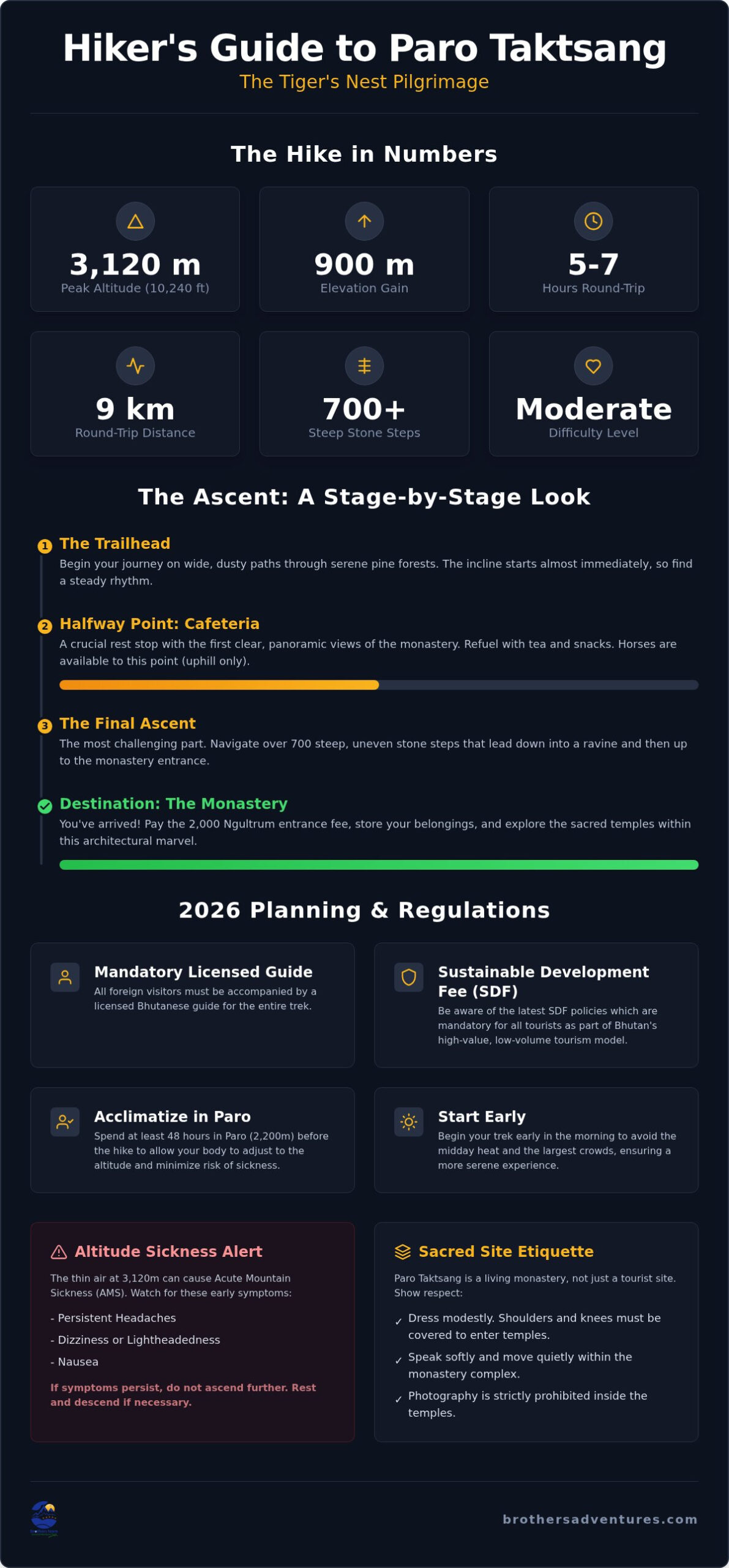
To master the Tiger’s Nest, you need more than just spirit; you need the hard facts. This Paro Taktsang hike guide breaks down the physical reality of the trail so you can arrive prepared. The round-trip journey covers approximately 9 kilometers with a significant elevation gain of 900 meters. For most travelers, the trek takes between 5 and 7 hours. While the distance might seem manageable on paper, the incline is relentless. We classify the difficulty as moderate for those with average fitness, but it quickly becomes challenging if you haven’t accounted for the thinning mountain air. You’ll navigate wide, dusty dirt paths through pine forests that eventually transition into over 700 steep stone steps as you approach the monastery entrance.
Success on this trail is about rhythm rather than speed. You’ll find the path well-maintained, but the vertical nature of the climb requires steady effort. For technical details on the monastery’s layout and its unique architectural placement, you can consult the official tourism information for Paro Taktsang. Understanding these logistics ensures you don’t exhaust yourself before reaching the most photogenic viewpoints.
Managing Altitude at 3,120 Metres
The air at 3,120 meters contains significantly less oxygen than at sea level. You’ll feel your lungs working harder almost immediately. We strongly advise against attempting this hike on your first day in Bhutan. Instead, give your body 48 hours to adjust in Paro. Watch for early warning signs of Acute Mountain Sickness (AMS), such as persistent headaches, dizziness, or sudden nausea. If you feel these symptoms, stop and rest. The secret to a safe ascent is “Himalayan pacing”—take short, frequent breaks and keep your heart rate steady. Rushing is the fastest way to invite altitude fatigue.
The Halfway Point: Cafeteria and Horse Options
The Taktsang Cafeteria serves as a vital psychological milestone. Located about halfway up, it offers a chance to refuel with tea and snacks while enjoying your first clear, panoramic view of the monastery. If you’re concerned about the initial climb, you can hire a horse to carry you to this point. However, remember that horses only go uphill; the descent and the final staircase section must be completed on foot. Many hikers find the descent even more taxing on the knees than the climb. We recommend using trekking poles to absorb the impact during the return journey. If you’re looking for a trip where these logistics are handled by experts, our Bhutan tour packages provide the support needed for a comfortable, well-paced experience.
Planning Your Ascent: 2026 Regulations and Gear
Planning a trip to the Kingdom of Happiness in 2026 requires a firm grasp of current regulations. You can’t wander the trails independently anymore. A licensed Bhutanese guide is now mandatory for every international visitor. This ensures your safety while preserving the sanctity of the site. You’ll also need to account for the Sustainable Development Fee (SDF) of USD 100 per night. This fee directly funds the country’s carbon-neutral initiatives and the conservation of sacred sites like Taktsang. While the SDF covers your stay, the specific entrance fee for the monastery is Nu 2,000 per person. To get the most out of your Paro Taktsang hike guide, we recommend starting your ascent by 7:30 AM. This lets you beat the heat and the larger groups that arrive mid-morning.
Seasonal Guide: When to Hike
Timing your visit changes the very character of the mountain. Spring, from March to May, transforms the trail into a vibrant corridor of blooming rhododendrons. If you’re interested in the biodiversity on the Tiger’s Nest trail, this is the season to witness the local flora at its peak. Conversely, autumn (September to November) offers the crispest air and clearest visibility, mirroring the best time for Everest Base Camp trek in the wider region. Avoid the monsoon months of June through August, as the paths become notoriously slick. For the truly adventurous, winter hiking in December or January provides dramatic, snow-dusted views, though the temperatures at the summit drop significantly.
The Essential Tiger’s Nest Packing List
This Paro Taktsang hike guide wouldn’t be complete without a focus on your gear. Layering is your best friend. The valley might feel warm at the trailhead, but the wind bites once you reach the exposed ridges. Wear moisture-wicking base layers and a light windbreaker. Sturdy hiking boots with deep lugs are non-negotiable; the stone steps can be unforgiving on your ankles. Don’t underestimate the mountain sun. High-altitude UV rays are powerful, so pack high-SPF sunscreen and a wide-brimmed hat. Finally, bring a reusable water bottle. Bhutan is committed to plastic-free tourism, and staying hydrated is the easiest way to combat the effects of the 3,120-meter altitude.
A Step-by-Step Guide to the Tiger’s Nest Trail
Your journey begins at the valley floor, roughly 2,100 meters above sea level. From the trailhead, you’ll immediately enter a steady zig-zag climb through shaded pine forests. The scent of pine needles and the distant sound of prayer wheels set the tone for the ascent. As you gain elevation, the trail opens up to reveal the prayer flag-adorned halfway point. This is where most hikers take their first long break, looking up at the golden roofs that still seem impossibly high. Using a professional Paro Taktsang hike guide ensures you don’t burn through your energy too early, as the most dramatic part of the trek still lies ahead.
Navigating the 800 Steps and the Waterfall
After passing the cafeteria, the path levels out briefly before reaching the famous viewpoint. From here, you look directly across a massive chasm at the monastery clinging to the rock. It’s the ultimate photo-op. To reach the gates, you must navigate a series of roughly 800 stone steps. First, you’ll descend deep into the gorge, crossing a bridge right beside a thundering sacred waterfall. The mist from the falls is refreshing, but the final ascent up the other side to the monastery gates can be the most breathless part of the entire trip. This Paro Taktsang hike guide helps you prepare for the sensory shift as you hear the low hum of butter lamps and smell the rich, earthy aroma of burning incense near the entrance.
Monastery Etiquette: Rules and Rituals
Once you reach the gate, the experience shifts from a physical trek to a spiritual visit. Security is strict. You must leave all cameras, phones, and bags in secure lockers at the entrance; photography is strictly forbidden inside the temples. Ensure your shoulders and knees are covered; shorts and tank tops aren’t permitted in this sacred space. You’ll need to remove your shoes before entering the inner sanctums. Show respect by speaking in whispers and always walking clockwise around shrines and stupas. This silent, mindful exploration is what transforms a simple hike into a true pilgrimage. For a seamless trip where every permit and protocol is handled for you, explore our Bhutan tour packages.
The return journey follows the same path, but don’t rush it. Walking downhill offers entirely different perspectives of the Paro Valley and the emerald forests you climbed through earlier. If you’re ready to stand on the edge of the world, book your Himalayan adventure with Brothers Adventures today.
Trekking Bhutan with Brothers Adventures
Since 1992, Brothers Adventures has acted as a trusted bridge between global explorers and the hidden wonders of the Himalayas. We’re a family-run business with deep roots in Singapore and Kathmandu, meaning we offer the personalized care of a local friend combined with the professional competence of a seasoned specialist. Our Bhutan tour packages are designed to be entirely stress-free. We manage every logistical hurdle, from processing your visa and permits to handling the daily Sustainable Development Fee (SDF), allowing you to immerse yourself fully in the kingdom’s magic. While this Paro Taktsang hike guide provides the technical roadmap, our team provides the cultural heartbeat that makes the journey unforgettable.
The hike to the Tiger’s Nest is often the crowning jewel of a Bhutanese itinerary, but it doesn’t have to be your only stop. Many of our guests choose to expand their horizon by combining their pilgrimage with our 8-Day Nepal Adventure. This regional approach lets you witness the diverse spiritual landscapes of both the Dragon Kingdom and the roof of the world in one seamless, well-organized journey.
Why a Professional Guide is Essential
In Bhutan, a guide is more than a legal requirement; they’re your most valuable asset on the trail. Our experts monitor your physical health and oxygen levels constantly, ensuring your pacing is safe for the altitude. They are rigorously trained in high altitude trekking safety, providing peace of mind as you ascend the granite cliffs. Beyond safety, they act as cultural translators. They’ll facilitate quiet conversations with local monks and explain the intricate rituals you’ll witness inside the temples. We also provide private, seamless transport from your hotel door to the trailhead, so you never have to worry about local logistics.
Customizing Your Bhutanese Itinerary
We believe every traveler’s rhythm is unique. Whether you prefer the structure of a fixed-price group tour or the flexibility of a custom private journey, we can accommodate your vision. If the Tiger’s Nest sparks a hunger for more mountain miles, consider adding the 10Days Bhutan Druk Path Trek to your plans for a more rigorous wilderness challenge. For those who prefer a touch of indulgence, we can arrange luxury retreats where premium spa treatments await you after a long day on the stone steps. Reach out to our family-run team in Singapore for a personalized consultation. We’re ready to help you craft a 2026 adventure that balances rugged exploration with the steady, thorough guidance expected from an established specialist.
Your Journey to the Kingdom of Happiness Awaits
Standing before the golden roofs of the Tiger’s Nest is a moment that stays with you forever. By mastering the 2026 regulations and respecting the sacred protocols we’ve discussed, you’re ready to transform this challenging 900-meter climb into a seamless pilgrimage. Remember to prioritize early morning starts and allow your body the time it needs to adjust to the thin Himalayan air. This Paro Taktsang hike guide is designed to ensure you reach the summit with your spirit high and your logistics perfectly aligned.
Since 1992, our family-owned team has specialized in navigating these high-altitude landscapes with professional authority and deep local warmth. We bring Singapore-based reliability and expert Himalayan guides to every step of your journey, handling everything from permit processing to cultural storytelling. Don’t leave your dream adventure to chance when you can have a seasoned specialist by your side. Take the first step toward the clouds and Book Your Guided Bhutan Adventure Today. The mountains are calling, and we’re ready to lead the way.
Frequently Asked Questions
How long does it take to hike to Tiger’s Nest?
Most hikers complete the round-trip journey in five to seven hours. This timeframe includes the steady ascent, time spent exploring the monastery’s inner temples, and the return descent. This Paro Taktsang hike guide notes that the trail covers 9 kilometers with a 900-meter elevation gain. We recommend starting early in the morning to allow for a relaxed pace and plenty of time for photography at the famous waterfall viewpoint before the afternoon clouds roll in.
Can beginners or seniors complete the Paro Taktsang hike?
Yes, beginners and seniors with average physical fitness can successfully reach the summit. While the incline is relentless, the path is well-maintained and wide. The primary challenge is the altitude of 3,120 meters. Our expert guides monitor your pacing and health throughout the trek to ensure a safe experience. Using trekking poles and taking frequent breaks at the halfway cafeteria makes the journey much more manageable for those less accustomed to mountain trails.
Is it possible to ride a horse to the top of Tiger’s Nest?
You can hire a horse to carry you from the trailhead to the halfway cafeteria, but they cannot go all the way to the top. Horses are strictly for the uphill portion of the first half. Once you reach the cafeteria, you must navigate the remaining trail and the final 800 stone steps on foot. Additionally, safety regulations require all visitors to descend the mountain on foot because riding horses downhill on steep terrain is considered too dangerous.
What is the best time of year to visit Paro Taktsang?
The ideal windows for this trek are spring and autumn. From March to May, you’ll walk through vibrant rhododendron forests in full bloom. September to November offers the crispest air and clearest views of the Paro Valley. While winter provides dramatic snow-dusted scenery, it’s significantly colder. We suggest avoiding the monsoon months of June through August, as the dirt paths can become slippery and the monastery is often shrouded in heavy mist.
Are there toilets and food available on the Tiger’s Nest trail?
Facilities are available at the Taktsang Cafeteria, located roughly halfway up the mountain. Here, you’ll find basic restrooms and a dining area serving tea, snacks, and traditional Bhutanese buffet lunches. It’s the only spot on the trail for a proper sit-down break. Beyond this point, there are no further food or toilet facilities until you reach the monastery entrance. We always suggest carrying extra water and light energy snacks in your daypack to stay fueled.
What should I wear to enter the Tiger’s Nest monastery?
Proper etiquette requires a modest dress code to enter the sacred temples. Both men and women must ensure their shoulders and knees are fully covered; shorts, skirts, and sleeveless tops are not permitted. We recommend wearing comfortable hiking layers that you can adjust during the climb, but keep a light jacket or long-sleeved shirt ready for the monastery entrance. You’ll also need to remove your shoes before stepping into the inner sanctums of the shrine rooms.
Can I take photos inside the Tiger’s Nest temples?
Photography is strictly prohibited inside the monastery’s temples and shrine rooms. Upon reaching the main entrance, you must leave all cameras, mobile phones, and bags in secure lockers provided at the gate. While you can take as many photos as you like on the trail and at the various viewpoints overlooking the cliffs, the interior remains a silent, sacred space for meditation and prayer. This rule is strictly enforced by the local security.
Do I need a special permit to hike to Paro Taktsang in 2026?
In 2026, all international visitors must have a valid Bhutanese visa and a licensed guide to undertake the hike. This Paro Taktsang hike guide confirms that the mandatory Sustainable Development Fee (SDF) of USD 100 per night is required for your stay. Additionally, there is a separate monastery entrance fee of Nu 2,000. When you book with us, we handle all permit processing and logistics, ensuring you have the correct documentation for a seamless experience at the trailhead.



Comments are closed