


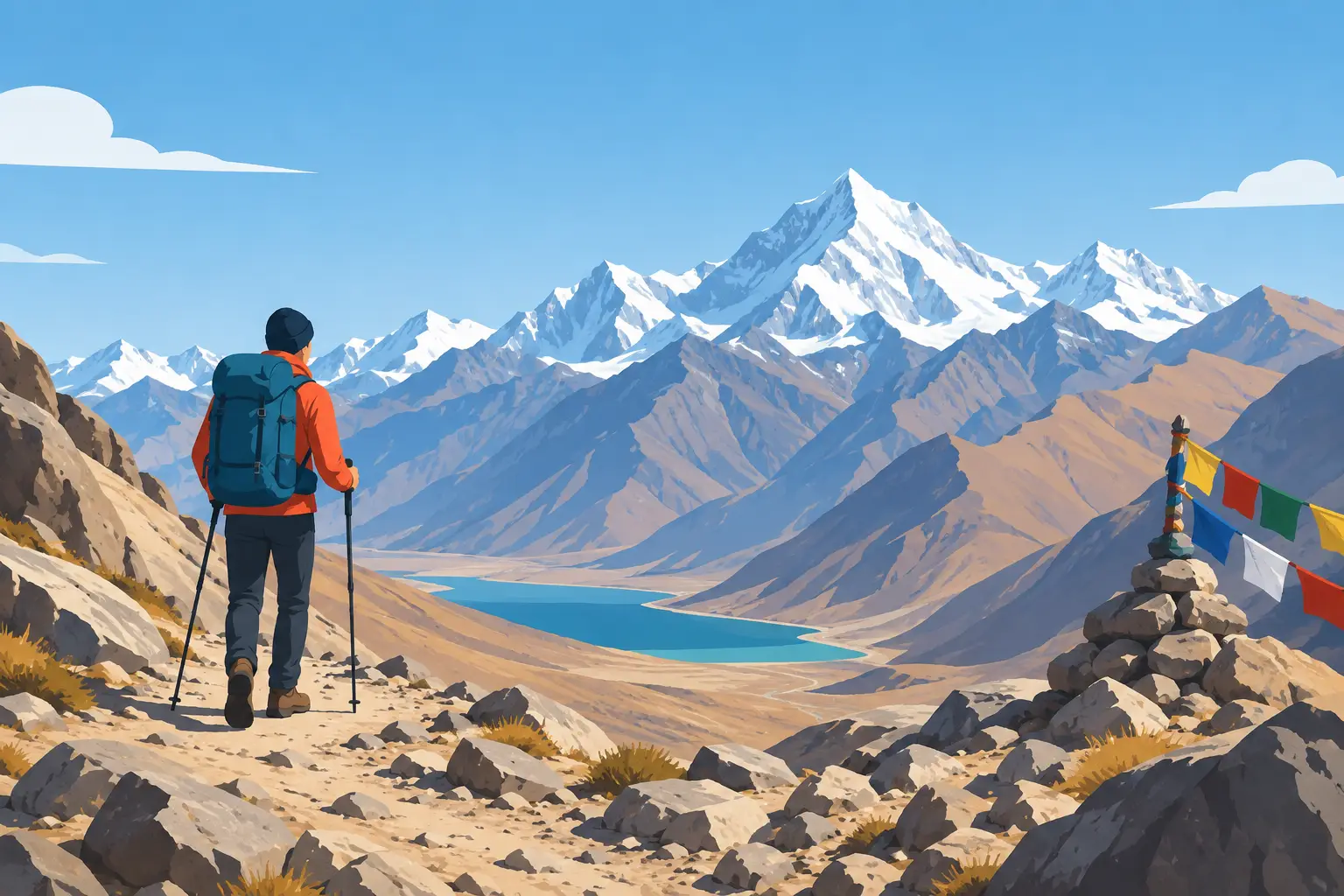
Ladakh Trekking Guide for Your First High Pass
The first morning in Ladakh can feel deceptively easy. Leh sits beneath clear blue skies, prayer flags lift in the wind, and the mountains look close enough to walk into. Yet at around 3,500 metres, even a short climb to a viewpoint can leave a fit traveller breathless. This Ladakh trekking guide starts with the decision that shapes every good journey here: give your body time to adjust before asking it to perform.
Ladakh rewards patience. Its trails pass through stark high-altitude valleys, small Buddhist villages, ancient monasteries and wide, silent landscapes that feel far removed from everyday life. It is an exceptional trekking region, but it is not a destination for rushing from airport to mountain pass. Good route selection, sensible pacing and reliable local support make the difference between merely completing a trek and properly enjoying it.
Why trek in Ladakh?
Often called Little Tibet, Ladakh is a high Himalayan desert in northern India. Rainfall is low, so summer trekking brings dry trails, dramatic rock formations and exceptionally clear mountain views rather than the humid monsoon conditions found in many lower Himalayan regions.
The landscape is only part of the experience. On many routes, trekkers stay in village homestays or camps, meet families whose lives remain closely tied to the mountains, and see monasteries perched above the Indus Valley. A day may begin with butter tea in a home kitchen and end beneath a sky full of stars, with no road or town in sight.
For travellers from Singapore and other low-lying locations, Ladakh can be a striking first introduction to Himalayan trekking. The trails are rarely technical in the climbing sense, but altitude changes the challenge. A moderate ascent at 4,500 metres demands humility, even from regular runners and gym-goers.
When to go: choosing the right trekking season
The main trekking season generally runs from June to September. During these months, most high passes are accessible, daytime conditions are more comfortable, and village-based routes are operating at their best. July and August are often popular because Ladakh lies in the rain shadow of the Himalayas, making it a valuable alternative when Nepal’s monsoon is at its strongest.
June can bring quieter trails and fresh snow on higher ground, although some passes may open later depending on the winter. September offers crisp air, golden fields in some valleys and fewer visitors, but nights become noticeably colder. By October, conditions can change quickly, and many higher trekking routes are no longer suitable for ordinary trekking groups.
Weather in the mountains never follows a guarantee. A clear morning can become windy and cold by afternoon, while snow may affect a high pass even in summer. Build spare time into international flights and onward arrangements, particularly if your itinerary involves remote road transfers.
The Ladakh trekking guide to altitude and acclimatisation
Altitude sickness is the central planning issue in Ladakh. It does not reflect fitness, age or determination. It happens when the body cannot adapt quickly enough to reduced oxygen, and it can affect anyone.
Plan at least two nights in Leh before beginning a trek. On arrival, keep activity gentle: rest, drink regularly, eat light meals and avoid alcohol. A short local walk is fine if you feel well, but save steep climbs, cycling and ambitious sightseeing for later. If your itinerary allows, three nights can be particularly sensible for those flying directly from sea level or travelling with a mixed-experience group.
Once on the trail, the safest itineraries build in gradual gains in sleeping altitude and allow acclimatisation days where needed. Many trekkers use the principle of climbing higher during the day but sleeping lower where the route permits. A thoughtful guide team also watches for changes in appetite, energy, sleep and behaviour, not just obvious headaches.
Headache, nausea, dizziness and unusual fatigue should never be ignored. Tell your guide promptly and do not try to push through symptoms to reach a pass or campsite. The appropriate response may be rest, no further ascent, medication under medical advice, or immediate descent. No photograph is worth gambling with altitude illness.
Which Ladakh trek suits you?
The best route depends on your time, trekking background, comfort with basic facilities and appetite for high passes. There is no single ‘best’ Ladakh trek, only the route that fits your group well.
Markha Valley: culture and classic high-altitude walking
The Markha Valley trek is one of Ladakh’s best-known routes and a strong choice for active first-time Himalayan trekkers who are prepared for altitude. It combines river crossings, broad valleys, village homestays and a crossing of Kongmaru La, which rises above 5,000 metres.
Expect around six to eight days of walking, depending on the approach and acclimatisation schedule. Daily distances are manageable for walkers with good preparation, but the pass day is demanding. This route works particularly well for travellers who want a meaningful balance of landscape, local culture and personal challenge.
Sham Valley: a shorter introduction
For a gentler start, Sham Valley offers lower-altitude village walks west of Leh. It does not provide the same remote, expedition-like feeling as Markha Valley, but it is ideal for travellers with limited time, families, educational groups or those wishing to test their response to altitude before committing to a longer trek.
A Sham Valley itinerary can include monasteries, apricot orchards, traditional villages and modest passes. It is also a good option to combine with wider Ladakh sightseeing, rather than making the entire holiday about trekking.
Snow Leopard Trek: a specialist winter journey
The Snow Leopard Trek in Hemis National Park is very different. It is undertaken in winter, usually with camping in severe cold, and is aimed at experienced, well-prepared travellers who understand that wildlife sightings can never be promised. The reward is a remote landscape, expert tracking and the possibility of seeing one of the Himalayas’ most elusive animals.
This is not simply a harder version of a summer trek. It needs specialist equipment, winter logistics, patient expectations and a team experienced in operating safely in sub-zero conditions.
Preparing your body before departure
You do not need to be an athlete, but you should arrive with a dependable base of fitness. Begin regular training eight to twelve weeks before departure if possible. Brisk hill walking, stair climbing, cycling and long walks with a light daypack are all useful because they strengthen both endurance and confidence on uneven ground.
Include leg strength work for descents. Squats, lunges and step-ups help prepare knees and quadriceps for long downhill days, which many trekkers find tougher than climbing. If you can train on trails, do so. A treadmill is useful, but it cannot fully replicate loose stone, riverbeds and varied Himalayan terrain.
Break in your trekking boots before travel. They should support your feet without causing pressure points, and they should be roomy enough for thicker socks on cold mornings. New boots worn for the first time on a trek are a common and avoidable source of painful blisters.
What to pack for changing mountain conditions
Ladakh’s dry climate can mislead travellers into underpacking for cold. Temperatures may feel warm in direct sun, then drop sharply when cloud, wind or evening arrives. The most effective approach is layering rather than relying on one heavy jacket.
Bring moisture-wicking base layers, a warm mid-layer, an insulated jacket and a waterproof, windproof outer shell. Comfortable trekking trousers, gloves, a warm hat, sun hat and sunglasses are all essential. High-altitude sun is intense, so carry high-factor sunscreen and lip balm, and reapply them during the day.
Your daypack should hold water, snacks, a warm layer, rain protection, personal medication, sun protection and a small first-aid kit. Trekking poles are worthwhile on both ascents and descents, especially where trails are loose or crossings are uneven. Keep electronics and spare batteries warm at night, as cold temperatures reduce battery life.
Permits, logistics and the value of local support
Some areas of Ladakh require permits, and requirements can change according to nationality, route and current local regulations. Remote treks also involve transport to trailheads, food planning, camping or homestay arrangements, guide support and contingency decisions if weather or health changes the plan.
Independent travel is possible on selected routes, but it asks you to manage several moving parts at altitude. For first-time Himalayan trekkers, families and organised groups, a professionally arranged trek provides reassurance where it matters most: realistic acclimatisation, experienced local guides, reliable vehicles, suitable meals and an informed response if someone is unwell.
Brothers Team plans Himalayan journeys with this same practical care, matching the route and pace to the people travelling rather than forcing every group into a fixed template.
Make room for Ladakh beyond the trail
Do not fly out the morning your trek ends if you can avoid it. A final night in Leh gives tired legs time to recover and creates space for a monastery visit, a relaxed meal or simply a quiet look back at the mountains. Ladakh is memorable not because every day must be difficult, but because its high valleys ask you to slow down enough to notice where you are.
Choose a route that leaves you challenged but still curious, allow time to acclimatise properly, and let the journey unfold at mountain pace.




Comments are closed