


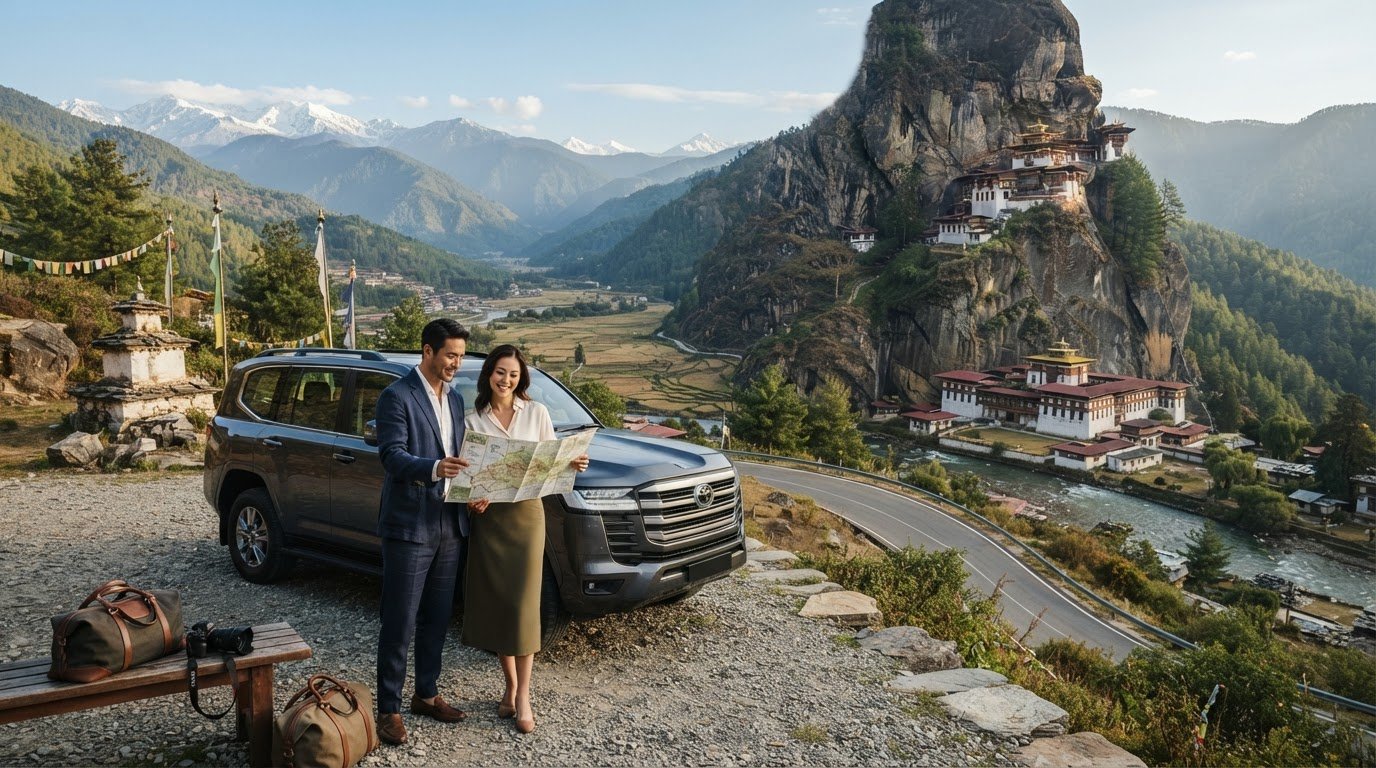
Thimphu and Paro tour package price and inclusions
A Thimphu and Paro tour package that adds Punakha is best planned over 6 to 7 days. That gives you time to experience Bhutan’s capital, the Paro Valley and Punakha’s striking dzong without rushing between them. The package price depends on factors such as group size, accommodation, meals, transport and which sightseeing costs are included; pricing is provided after a quote request.
It’s natural to compare the headline price first, but the inclusions determine the real value of a Bhutan itinerary. Accommodation, meals, entry arrangements and private transport all shape your experience on the ground.
This guide explains how to compare package pricing, accommodation and meals, entry requirements, Paro’s cultural sights and the hike to Tiger’s Nest. It also shows how adding Punakha changes the route and the time needed, helping you choose an itinerary with memorable stops and a comfortable pace.
Key Takeaways
- Compare room-sharing arrangements, room category and meal plans to understand what an advertised package includes.
- Use group size and included services to make a more meaningful package-price comparison, rather than relying on a headline discount alone.
- Allow time for Paro’s cultural sights and the Tiger’s Nest hike, which takes about 2-3 hours one way.
- Consider adding Punakha and allowing 6 to 7 days for a more balanced route through Thimphu, Punakha and Paro.
- Review passport validity and the itinerary’s entry arrangements as part of planning your Bhutan trip from Singapore.
Accommodation and meal plan
Hotel category, room-sharing arrangements and meal coverage shape an itinerary’s comfort and daily rhythm. Compare them alongside the route, especially for packages combining Thimphu, Paro and Punakha.
Accommodation Options and Hotel Categories
Some itineraries specify selected hotels and base-category rooms, with double-sharing accommodation. This describes a shared-room arrangement, not a guaranteed hotel or room upgrade. Check the stated hotel category and room basis before comparing accommodation.
Itineraries can vary in how they allocate overnight stays. One example includes two nights in Thimphu and one in Punakha; another lists one night in Thimphu, two in Paro and one in Phuntsholing. Match each night to the places you want to explore, and check whether the hotel location suits your planned visits.
Some package descriptions list luxury accommodation, including Amankora and Bangkok Peninsula Hotel. These indicate a different accommodation style from base-category rooms, so compare the named hotels and room arrangements rather than assuming every tour includes luxury stays. Hotel category can shape how the trip feels between sightseeing days.
Meal Plan Arrangements
Meal coverage varies by package. One arrangement includes daily breakfast except on the arrival day; another lists dinner and breakfast on a MAP basis. Compare the exact meal plan with your arrival schedule and overnight stops, as different rules may apply on the first day.
Check the itinerary to see which meals are included at each hotel. A breakfast-only arrangement leaves dinner outside the listed coverage, while a dinner-and-breakfast plan includes both. This distinction helps you plan evenings after visiting Thimphu or Paro attractions without assuming every meal is covered.
Compare accommodation separately from international flight inclusions. One listed tour package includes round-trip business-class travel on Thai Airways, while other package descriptions focus on hotels and meals. Treat business-class flights as specific to that package, not a standard feature of every Bhutan itinerary.
Paro International Airport is the arrival point for many routes, and the drive to Thimphu takes approximately two hours. Check how the itinerary connects arrival, hotel check-in and the first included meal. This helps clarify whether breakfast or dinner on arrival day is part of the plan.
Advertised package price and discount
Compare a Thimphu and Paro tour package by its inclusions, not its discount label. September to November is a recommended time to visit Bhutan, with autumn described as probably the best season.
Prices by Group Size
Group size can change the per-person rate because transport, guiding and accommodation costs are shared differently. Compare the quoted basis for two travellers with group rates, and check whether the itinerary assumes a coach tour. One advertised rate is calculated for 30 guests travelling together, so it may not represent a smaller private trip.
Compare the same details across group options. A lower per-person figure may come with shared transport or a different room arrangement. Check group size, hotel category, meals and sightseeing before comparing totals. The magnificent views around Thimphu and Paro shouldn’t distract from these practical differences.
Group Pricing and Taxes
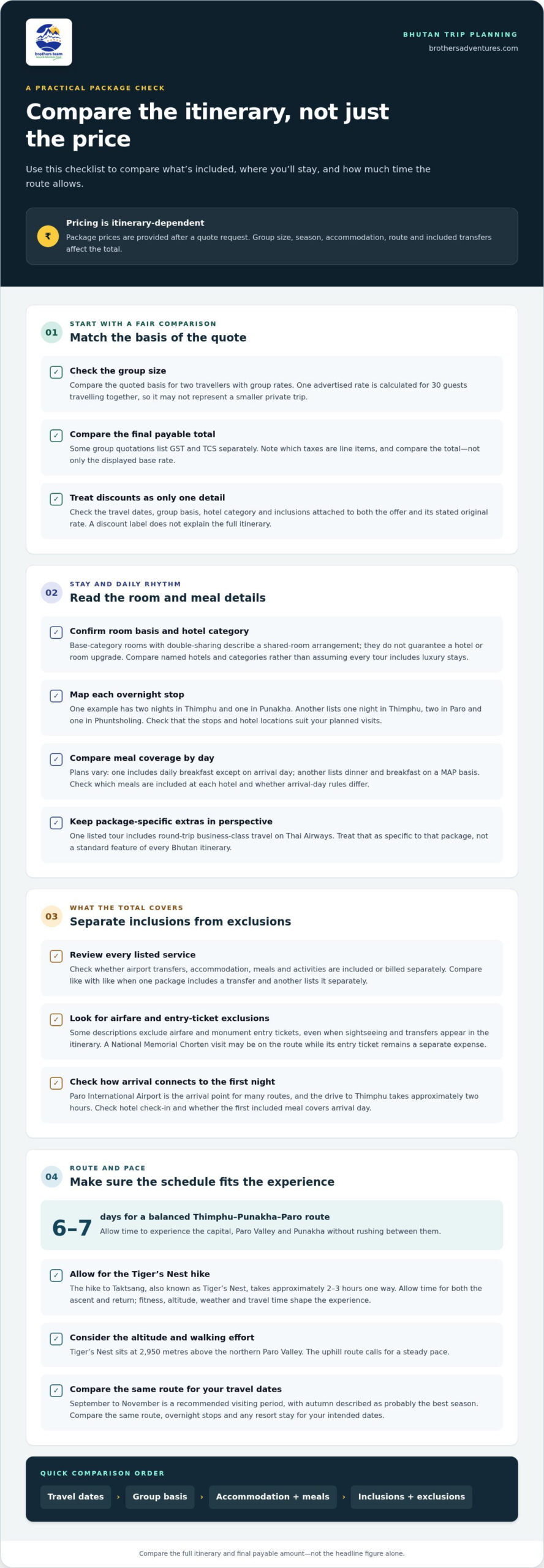
Some group quotations list GST and TCS separately from the package amount. Compare the final payable total, not just the displayed base rate, and note which taxes appear as separate line items. Also check whether airport transfers, accommodation, meals and activities are included or billed separately.
Package prices depend on the itinerary and are provided after a quote request. Group size, season, accommodation, route and included transfers affect the total. Compare like with like, particularly when one package includes an airport transfer and another lists it separately.
Read discount claims carefully. An advertised reduction compares an offer with its stated original rate, but doesn’t explain the full itinerary. Check the travel dates, group basis, hotel category and inclusions attached to both figures, then compare the final amount for the trip you plan to take.
Season matters because travel dates affect demand and accommodation choices. September to November is a recommended visiting period, but the best fit depends on your preferred pace and itinerary. Compare the same route for your intended dates, including nights in Thimphu or Paro and any resort stay. Don’t treat a discount as a guide to seasonal pricing.
Read exclusions as closely as inclusions. Some package descriptions exclude airfare and monument entry tickets, even when sightseeing and transfers appear in the itinerary. This affects your overall travel budget. For example, a visit to the National Memorial Chorten may be part of the sightseeing route, while its entry ticket remains a separate expense.
Use this simple comparison sequence: match the travel dates, confirm the group basis, compare accommodation and meals, then separate included services from exclusions. For routes that extend beyond Bhutan, explore regional travel itineraries as a separate planning option.
Paro sightseeing and Tiger’s Nest hike
Paro sightseeing can pair cultural stops with the climb to Taktsang, widely known as Tiger’s Nest. The hike takes approximately 2-3 hours one way, so allow time for both the ascent and return.
Fitness, altitude, weather and travel time all shape the experience. Tiger’s Nest sits at 2,950 metres above the northern Paro Valley, and the uphill route calls for a steady pace. Consider your comfort with sustained walking and the conditions on your visit day.
Paro Sightseeing Highlights
Look for the National Museum of Paro in the sightseeing plan. It holds around 3,000 artefacts, with some dating back 1,500 years, offering a vivid introduction to Bhutanese history and culture. Check how the museum visit fits alongside other stops and the hike.
Kichu Lhakhang is another Paro attraction. Choose an itinerary that leaves time to appreciate the temple and the valley’s mountain setting, rather than treating every stop as a quick photo opportunity.
Optional Tiger’s Nest Trek
Some itineraries schedule the Paro Taktsang hike on the second day, making it a central part of the visit. If the hike is optional, compare the schedule with your interests and walking ability before choosing that route.
The stated walking time is 2-3 hours one way, so the return journey also needs space in your day. Plan the hike separately from museum visits, especially if you want time to explore Paro after descending.
Tiger’s Nest Monastery Visit
Tiger’s Nest Monastery stands on a cliff more than 900 metres above the valley. Its dramatic position above Paro makes the climb as much about the changing views as reaching the monastery itself. The setting reveals the mountains in a striking new perspective.
Keep the visit focused: follow the trail upward, pause at a comfortable pace, and leave room for the descent. The monastery’s elevation of 2,950 metres adds an important planning consideration, particularly when comparing a hike-focused day with gentler sightseeing.
For a fuller day in Paro, plan the National Museum, Kichu Lhakhang and Taktsang around the time available for walking. If the hike is scheduled for day two, use it as the day’s anchor and leave room for Paro’s cultural landmarks and valley scenery without overcrowding the schedule.
Multi-day tours of Thimphu, Paro and Punakha
Adding Punakha turns a capital-and-valley visit into a broader journey through Bhutanese heritage. Allow 6 to 7 days for the Thimphu-Punakha-Paro route, giving each stop room beyond the road transfers.
Trace the itinerary’s overnight pattern before deciding if its pace suits you. One listed arrangement includes two nights in Thimphu and one in Punakha; other routes allocate one night in Thimphu and two in Paro. These are different trip designs, so check which towns have overnight stays before making your choice.
Start with Thimphu, where the National Memorial Chorten was built in 1974 in memory of Bhutan’s late King Jigme Dorji Wangchuck. A morning visit can introduce the country’s spiritual heritage before the route heads towards Punakha. The overnight stop there can offer a change of scenery and time to visit Punakha Dzong.
The journey towards Punakha can include Dochula Pass, described at an altitude of 3,140 metres. Another tour description identifies Daxiong La as a pass with 108 stupas. Keep those names distinct when comparing itineraries, and follow the exact route stated for each trip. These landmarks turn the drive into part of the sightseeing, rather than simply a transfer between hotels.
From Punakha, continue to Paro for valley scenery, cultural stops and the Tiger’s Nest hike. The drive from Thimphu to Paro takes approximately two hours, so allow for travel time instead of packing in too many visits. An overnight stay in Paro can leave time for sightseeing before departure.
Meal plans affect each overnight stop. One arrangement includes daily breakfast except on arrival day; another lists dinner and breakfast on a MAP basis. Match meal coverage to the hotel nights, especially in Punakha, where an included dinner may shape your evening plans. Selected hotels may also be listed on a double-sharing basis.
Choose the shorter route if Thimphu and Paro are your priorities. Add Punakha if you want a fuller circuit and can set aside 6 to 7 days. Compare the overnight sequence, breakfast arrangements, sightseeing stops and transfer days together. That simple check reveals whether the itinerary gives Punakha meaningful time or only passes through on the way between Bhutan’s better-known valleys.
What are the best Thimphu and Paro tour packages from Singapore?
The best fit depends on your available days, preferred pace and interest in adding Punakha. A 7-day Bhutan tour is one option for combining Thimphu and Paro with guided travel. Compare the route, included services and overnight pattern before choosing.
For a focused visit to the capital and valley, prioritise time in Thimphu and Paro. Check where the itinerary places overnight stays, how sightseeing fits around transfers and whether the Tiger’s Nest hike is scheduled. A shorter route can suit travellers who want these highlights without adding Punakha.
If you want a wider cultural circuit, look for an itinerary that adds Punakha. The recommended duration for a Thimphu-Punakha-Paro tour is 6 to 7 days. This gives the route room for additional stops, instead of treating Punakha as a quick pass-through between hotel nights.
Guiding and transport also distinguish package styles. One 7-day tour description includes a professional guide for the Bhutan portion. Another package specifies a private car with a dedicated Bhutanese driver and guide. These details clarify who supports sightseeing and how the group moves between destinations.
For a trip from Singapore, compare the Bhutan itinerary separately from international flights. Check whether airfare, airport transfers and monument tickets are included or excluded. These details affect the overall arrangements, even when two packages visit the same attractions. Compare the route and included services alongside any advertised offer.
Read the accommodation and meal details just as closely. Compare hotel category, room-sharing basis and breakfast or dinner coverage with the location of each overnight stay. A package listing breakfast except on arrival day differs from one listing dinner and breakfast. Match these inclusions to your arrival time and planned evenings.
Use this practical shortlist before deciding:
- Time: Choose a focused Thimphu-Paro route or allow 6 to 7 days for Punakha too.
- Support: Compare a professional guide with a private car and dedicated Bhutanese driver and guide.
- Inclusions: Separate flights, transfers, entry tickets, meals and accommodation in the itinerary.
- Pace: Make sure sightseeing and the Tiger’s Nest hike have suitable space in the schedule.
Choose the itinerary that matches your priorities, not simply the one with the longest list of stops. If you’re ready to shape a regional adventure, explore guided travel options.
Brothers International Tours & Trading Pte Ltd: 8Days Nepal Adventure Tour
Brothers International Tours & Trading Pte Ltd offers the 8Days Nepal Adventure Tour for travellers whose plans extend beyond Bhutan to Nepal. It’s a natural next step if you’re comparing destinations or want a separate adventure after exploring Thimphu and Paro.
For a Nepal trekking option, consider the 8Days Scenic Nepal Mini Trek. The 5Day Nepal Luxury Tour offers another route for travellers prioritising a luxury tour. These are distinct Nepal itineraries, so choose according to the kind of journey you want rather than treating them as Bhutan package alternatives.
To explore these Nepal trip options, visit brothersadventures.com.
Choose the journey that fits your next chapter
Start with what you most want to experience: Bhutan’s mountain valleys, Nepal’s adventure trails, or both on separate trips. Let your preferred pace and travel style guide the decision instead of trying to fit every destination into one itinerary. A Thimphu and Paro tour package can be the start of a wider journey through the region.
For a separate Nepal adventure, Brothers International Tours & Trading Pte Ltd offers the 8Days Nepal Adventure Tour and the 8Days Scenic Nepal Mini Trek. Travellers drawn to a more luxurious Nepal trip can explore the 5Day Nepal Luxury Tour. Each is a distinct itinerary to consider when Nepal becomes your next destination.
Ready to explore your options? Contact Brothers International Tours & Trading Pte Ltd and take the next step towards a journey that inspires you.
Frequently Asked Questions
How many days are needed for a Thimphu and Paro tour?
Allow four days for a short Thimphu and Paro visit; plan for six to seven days for routes that add Punakha. On a compact trip, prioritise the capital, Paro’s cultural sights and time for the monastery hike. With Punakha included, spread sightseeing across the route instead of squeezing every stop into a transfer day. Your pace and overnight schedule determine how full each day feels.
What is included in Thimphu and Paro tour package prices?
Packages may include selected hotel accommodation, meals, transport and sightseeing, but details vary. Compare the room-sharing basis and hotel category, then match meal coverage to each night. Check the inclusion list for airport transfers and monument tickets, too. Mark each item as included or excluded to see which arrangements you’ll need to make yourself.
How much do Thimphu and Paro tour packages cost, including flights and accommodation?
The price depends on the case and is given after a quote request; group size, travel season, accommodation, meals, transport and inclusions affect the total. Some package descriptions exclude airfare, while another explicitly includes round-trip business-class travel on Thai Airways. Treat these as different package arrangements, not a standard flight inclusion. Compare the exact flight and hotel provisions before assessing the overall cost from Singapore.
What are the main attractions and activities in Thimphu and Paro?
Pair Thimphu’s National Memorial Chorten with Paro’s National Museum, Kichu Lhakhang and Tiger’s Nest. For a broader cultural route, add Punakha Dzong. Choose the day’s focus to suit your interests: museum collections provide context, while temples and dzongs showcase architecture and religious heritage. Keep the hike separate from lighter sightseeing for a less compressed day.
How do travellers get from Paro Airport to Thimphu, and how long does it take?
Travel between towns is by road, and the drive from Paro Airport to Thimphu takes approximately two hours. Some itineraries include a private airport transfer for the journey to the capital. Allow for the drive on arrival day, especially if you plan to check in at your hotel or go sightseeing after landing. Transfer time is travel time, not time spent exploring either town.
What should travellers know about local customs, dress codes, and monastery etiquette in Bhutan?
Wear modest clothing when visiting monasteries and other religious sites, and follow instructions displayed at the entrance. Keep your voice low, avoid touching religious objects and ask before photographing people or sacred interiors. Remove your shoes if a site requires it. These courtesies help you visit respectfully and give local worshippers space to practise without interruption.



Comments are closed