


Island Peak Climbing Package: The Complete 2026 Buying Guide for Aspiring Summiters
Summit success on Island Peak isn’t actually about the final vertical climb; it’s about the quality of the acclimatization and the technical partnership you choose long before you leave home. You probably feel that magnetic pull toward the soaring ridges of the Khumbu, but it’s natural to worry about altitude sickness or whether you’ll feel confident using a jumar on a fixed rope. Choosing a comprehensive Island Peak climbing package is the most critical step in transforming those nerves into a triumphant summit of Imja Tse. We know you want more than just a permit and a tent. You want the security of a seasoned team that treats you like an invited guest rather than just another climber.
In this guide, we’ll reveal how to select a package that ensures a safe, successful, and breathtaking journey to 6,189 meters. You’ll learn about the latest 2026 permit regulations, the importance of expert-led technical training during the trek, and how to spot hidden costs that often compromise safety. We’ll preview the essential logistics from Kathmandu to the peak so you can focus entirely on the wonder of the Himalayas. Get ready to discover how the right support makes the impossible feel like home.
Key Takeaways
- Learn how to verify the safety standards of a professional Island Peak climbing package, specifically focusing on guide-to-client ratios and technical gear quality.
- Compare the benefits of a 19-day Everest Base Camp combo trek versus a direct expedition to find the best acclimatization route for your summit success.
- Discover the targeted Zone 2 cardiovascular and strength training routines necessary to power through the physical challenges of a 6,189m glacial climb.
- Understand how partnering with a long-established, family-owned specialist ensures seamless logistics and a personal touch from Kathmandu to the summit ridge.
Why Island Peak (Imja Tse) is the Premier Entry Point for Himalayan Climbing
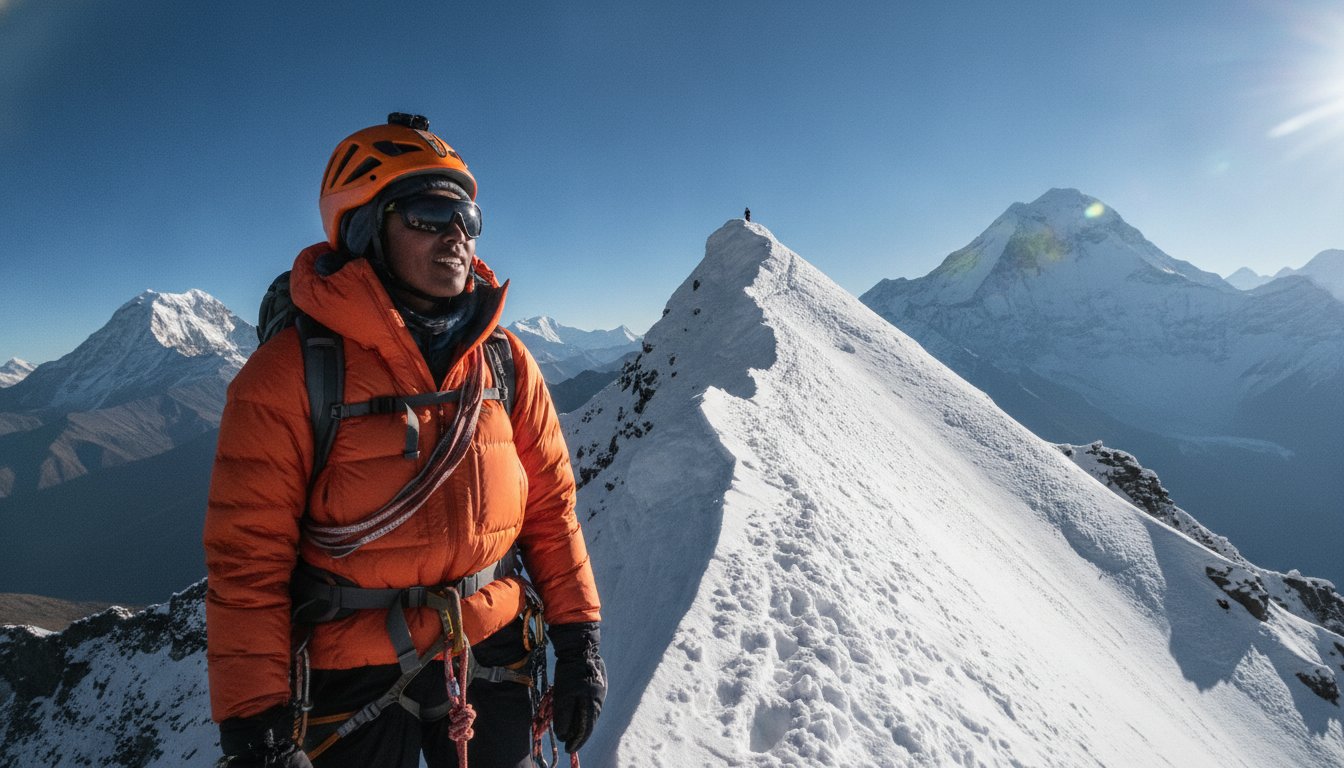
Imagine standing at the center of a frozen sea, surrounded by a ring of the world’s most formidable giants. This is the reality of Island Peak (Imja Tse). Rising to 6,189 meters, it sits like an isolated island in a sea of ice, dwarfed only by the massive south face of Lhotse and the towering presence of Everest just beyond. For many, this isn’t just another trek. It’s the moment you stop looking up at the mountains and start standing among them. Choosing the right Island Peak climbing package is about more than just logistics; it’s about preparing for that specific psychological shift when you cross the 6,000m threshold for the first time.
The “Island” metaphor isn’t just poetic. When Eric Shipton’s party named the peak in 1953, they were struck by how it appeared as an island in a sea of ice, surrounded by the churning Imja Glacier. From the summit, the proximity to Lhotse is so intense you feel as if you could reach out and touch its vertical walls. This vantage point offers a perspective of the Khumbu region that even Everest Base Camp cannot match. It provides a rare, 360 degree panorama of Nuptse, Ama Dablam, and Makalu, creating a sensory experience that stays with you long after you’ve returned to sea level.
The Technical Challenge: What to Expect
Don’t let the “trekking peak” label fool you. While you don’t need to be a professional alpinist, the final summit push requires a significant step up from standard hiking. You’ll move from steady trekking to basic mountaineering as you approach the steep headwall. This is where the real adventure begins. You’ll use fixed ropes and man-hauling techniques to navigate the snow slopes. Our guides provide hands-on technical training at base camp to ensure you’re comfortable with your jumar and carabiners. In a Himalayan context, it’s rated as moderate, meaning it’s accessible for fit hikers who are ready to learn technical skills on the fly.
Island Peak vs. Other Trekking Peaks
Many climbers ask why they should choose this peak over others like Mera Peak. While Mera is technically higher, it’s often considered a “walk-up” with fewer technical requirements. Island Peak offers a more diverse and rewarding challenge, making it the preferred training ground for Everest Base Camp trek veterans who want to test their mettle on actual ice and rock. The infrastructure in the Khumbu region is also far superior to more remote areas. You’ll enjoy better lodges and more reliable support systems, which are vital components of any high-quality Island Peak climbing package. It’s the perfect bridge between high-altitude trekking and full-scale mountaineering expeditions.
Evaluating an Island Peak Climbing Package: 5 Essential Criteria
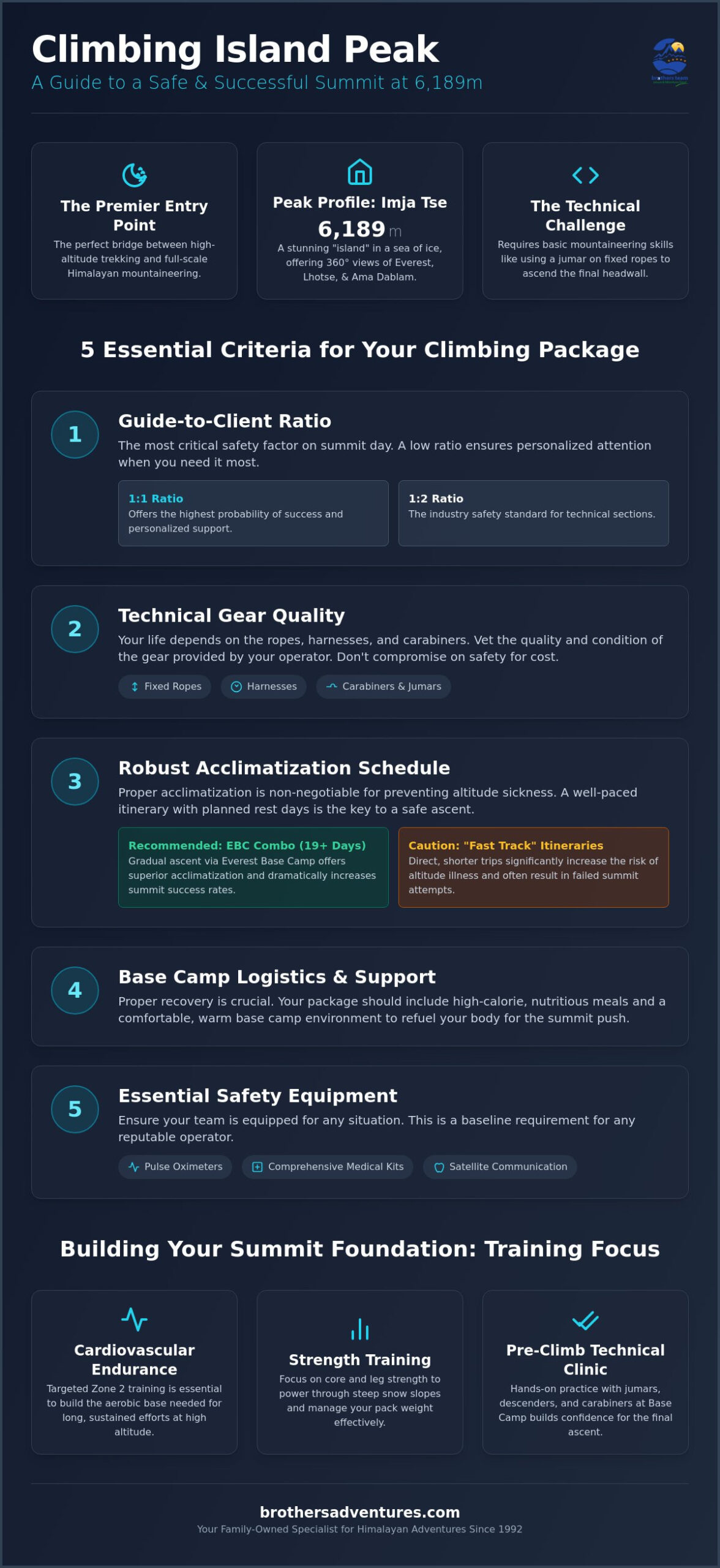
Selecting an Island Peak climbing package is the most critical decision you’ll make for your 2026 expedition. It’s the difference between standing on the summit and turning back early because of avoidable gear failure or poor planning. As a family owned specialist operating since 1992, we believe every climber should be treated like an invited guest, not just another permit number. To ensure your journey is as safe as it is spectacular, look for these five pillars of quality when comparing options.
First, demand a high guide to client ratio. For the summit push, a 1:2 ratio is the industry standard for safety, while a 1:1 ratio offers the highest probability of success. Second, vet the technical gear. Your safety depends on the condition of the fixed ropes, carabiners, and harnesses provided. Third, prioritize a robust acclimatization schedule. Many budget operators offer fast track itineraries that skip vital rest days, but following established protocols for altitude sickness prevention is non negotiable at 6,000 meters. Fourth, examine base camp logistics. You need high calorie, nutritious meals and a comfortable environment to recover between rotations. Finally, ensure your team carries essential safety equipment, including pulse oximeters, comprehensive medical kits, and satellite communication for emergencies.
The Importance of a Pre-Climb Technical Clinic
Most guides treat the approach as a simple hike, but the best packages include a dedicated technical training day at Island Peak Base Camp. You’ll spend hours on a practice slope learning to use jumars for ascending and descenders for the rappels. It’s about more than just technical skills. It’s about building a bond with your Nepal expedition climbing guide before the midnight summit start. This hands on clinic ensures you feel confident in your crampons when the terrain gets steep. Partnering with a seasoned team that prioritizes this training ensures you have the expertise needed for a safe, successful summit.
Hidden Costs to Watch For
Don’t let a low headline price deceive you. A professional Island Peak climbing package should be transparent about permit fees and local taxes. In 2026, the NMA climbing permit fees are set at $250 for Spring, $125 for Autumn, and $70 for the Winter and Summer seasons. Beyond the permit, you’ll need to cover the Sagarmatha National Park entry fee and the Khumbu Pasang Lhamu Rural Municipality fee. Always ask if the package includes the $500 garbage deposit required by the NMA. Clarify the tipping culture and whether technical gear rental is included or an extra expense. Being organized now prevents stressful financial surprises once you’re in the mountains.
Choosing Your Route: EBC Combo vs. Direct Expedition
Choosing the right path is as vital as choosing the right gear. Most climbers face a fork in the road: the classic 19-day “combo” or the shorter “direct” route. When you book an Island Peak climbing package, you’re deciding how your body will adapt to the thin air of Sagarmatha National Park. The classic route integrates Everest Base Camp trek packages, taking you through the heart of the Khumbu before you ever set foot on the glacier. This isn’t just about sightseeing. It’s about survival and success.
The direct approach is for those who are short on time but exceptionally fit. It cuts straight to the mountain. However, the combo route offers a massive physiological edge. By standing on the 5,644m summit of Kala Patthar a few days before your Island Peak attempt, you’re essentially “pre-loading” your lungs. Your body produces more red blood cells, making the 6,189m summit air feel much more manageable. Managing your energy over three weeks is a marathon, not a sprint. While the physical toll is higher over a longer period, the reward is a significantly higher success rate because your body has truly made peace with the altitude.
The Everest Base Camp Advantage
Visit the base of the world’s highest peak first to gain a profound mental boost. Seeing the Khumbu Icefall up close reminds you why you’re here and the scale of the challenge ahead. This longer journey allows for natural pacing. Your body doesn’t just survive; it thrives. We’ve seen that climbers who take the time to wander through the teahouses of the Everest region arrive at Island Peak Base Camp with a quiet confidence. They’ve already spent days at high altitude, meaning their lungs are ready for the final 6,189m push.
Logistics of the Summit Push
The climb itself starts long before the sun rises. We leave at midnight to ensure we reach the summit and descend before the afternoon winds kick in. You’ll navigate the rocky scramble to ‘Crampon Point’ where the real mountaineering begins. Crossing the glacier and balancing on the narrow summit ridge requires intense focus. Remember, the descent is often the most dangerous part of the expedition. Your legs will be tired, but our guides act as knowledgeable companions, keeping you sharp until you’re safely back in your tent. Every Island Peak climbing package we design prioritizes this safe return just as much as the summit itself.
Preparation and Training: Building Your Summit Foundation
Standing on the summit ridge at sunrise is a reward earned through months of disciplined preparation. While selecting a professional Island Peak climbing package is a vital first step, your physical and mental readiness is what ultimately carries you across the finish line. We’ve been guiding climbers since 1992, and we’ve seen that the most successful summiters are those who treat their training as a sacred part of the journey. You don’t need to be an elite athlete, but you do need an aerobic engine that won’t quit when the air gets thin.
Zone 2 training is your secret weapon for the Himalayas. This involves long, steady state cardio sessions where you maintain a conversational pace, building the mitochondrial density required for a 12 hour summit day. Mix this with specific strength training like weighted stair climbing or step ups. These movements mimic the high steps you’ll take on the rocky headwall while wearing heavy mountaineering boots. Don’t forget your core stability; a strong midsection helps you maintain balance on uneven glacial terrain when your pack feels twice its actual weight. Mental fortitude is just as critical. Prepare yourself for the biting -20°C winds and the slow, rhythmic suffering of high altitude. Embrace the cold now, and it won’t surprise you later.
The Ultimate Peak Climbing Gear List
Mastering your gear is about more than just owning it; it’s about knowing how it feels in action. Your mountaineering boots should feel like a second skin long before you reach Lukla. We recommend breaking them in on local trails to avoid expedition ending blisters. Your technical kit must include:
- Technical Essentials: C2 or C3 rated crampons, a lightweight ice axe, a climbing harness, and a jumar (ascender).
- Layering for the Deep Cold: A high quality down parka or suit rated for -20°C, paired with moisture wicking base layers and a heavy duty hardshell.
- Personal Survival Items: Polarized glacier glasses to prevent snow blindness, a 4 season sleeping bag, and high calorie snacks that won’t freeze solid.
Altitude and Safety
Understanding how your body reacts to the heights of the Khumbu is essential for a safe return. Acute Mountain Sickness (AMS) is a reality at these elevations, but it’s manageable with the right pacing and hydration. Always listen to your body and your guide. Many climbers find success using Diamox as a preventive measure, but nothing replaces the golden rule of “climb high, sleep low.” With oxygen saturation levels often dipping between 70% and 80% at 6,000 meters, your pre-trip conditioning determines how well your heart and lungs handle the extreme demand. Start your journey with a team that values your safety as much as your success by exploring our Nepal Expeditions & Peak Climbing options.
Summit with Confidence: The Brothers Adventures Difference
Choosing an Island Peak climbing package is a deeply personal decision. It’s an investment in your safety, your dreams, and your memories. Since 1992, Brothers Adventures has operated as a family owned specialist, bridging the gap between professional mountaineering and the welcoming warmth of a local home. We don’t just provide a service; we act as your knowledgeable companions from the first email to the final celebratory dinner in Kathmandu. Our heritage ensures that every climber is treated with a high touch approach that large corporations simply cannot replicate.
What truly sets us apart is our unique Singapore-Kathmandu connection. With offices in both locations, we offer a seamless logistical bridge that eliminates the uncertainty of booking through third party agents. You get the reliability of a Singapore based contact combined with the deep, on the ground expertise of our Kathmandu team. This structure ensures that your permits are processed without delay, your gear is double checked by experts, and your itinerary is managed with precision. Whether you are planning a private expedition or looking for student group travel Nepal, our dual presence provides a safety net that is rare in the Himalayan climbing industry.
Why Experience Matters in the Himalayas
Decades of experience mean we’ve seen every weather pattern and logistical hurdle the Khumbu can throw at us. Our team has refined the art of the expedition, ensuring that ethical guiding and support for the local Sherpa community are at the core of everything we do. We’ve helped hundreds of adventurers transition from trekking to their first 6,000m peak, providing the steady encouragement needed to overcome the mental and physical challenges of high altitude. Our guides aren’t just staff; they are seasoned Himalayan veterans who prioritize your safety above all else, while never losing the infectious enthusiasm that makes a summit day so magical.
Start Your Expedition Journey Today
Your 2026 summit goals are within reach, and we’re here to help you navigate the path. Our all inclusive Nepal peak climbing expedition packages are designed to take the stress out of planning, covering everything from permits and professional guides to high quality base camp support. We invite you to initiate a custom consultation with our family team to discuss your specific training needs and timeline. Your summit of Imja Tse is waiting. Let’s start building the foundation for your most breathtaking adventure yet. Reach out to us today and discover why thousands of climbers have trusted us with their Himalayan dreams since 1992. If you’re considering extending your Nepal experience beyond the climb, our 5 day Nepal itinerary luxury guide shows how to explore the Kathmandu Valley and Himalayan highlights in executive-level comfort. For educators and group leaders inspired by the transformative power of high-altitude adventure, our Central Asia student expedition guide explores how to bring these life-changing journeys into a structured educational framework across Asia.
Begin Your Journey to the Top of Imja Tse
The path to 6,189 meters is paved with discipline, the right route choice, and a partnership built on trust. You’ve seen how a strategic acclimatization schedule and expert led technical training turn a daunting headwall into an achievable milestone. Whether you choose the immersive Everest Base Camp combo or a focused direct expedition, your success depends on the quality of the support team standing beside you in the thin air.
Selecting the right Island Peak climbing package means looking beyond the price tag to find a legacy of safety and deep local knowledge. Since 1992, our family owned team has provided a unique bridge of reliability between our Singapore and Kathmandu offices. We include hands on technical training and comprehensive logistics so you can focus entirely on the wonder of the climb. Don’t let your Himalayan dreams stay on the horizon. Take the first step toward the summit ridge today and stand where only the brave dare to go.
Book Your 2026 Island Peak Expedition with Brothers Adventures
Frequently Asked Questions
Is Island Peak suitable for someone who has never climbed with an ice axe before?
Yes, Island Peak is an excellent entry point for those new to technical tools. We include a dedicated training day at Base Camp to teach you how to use an ice axe, jumar, and descender. Our guides act as knowledgeable companions, ensuring you feel confident and safe before you ever reach the steep headwall.
How much does a comprehensive Island Peak climbing package cost in 2026?
The total investment for an Island Peak climbing package depends on your group size and the level of service you require. Government fees are a fixed part of the cost, with NMA permits priced at $250 in Spring and $125 in Autumn. You should also consider the value of high-quality logistics, professional guide ratios, and the security of a team with dual offices in Singapore and Kathmandu.
What is the best time of year to book an Island Peak climbing expedition?
Spring (March to May) and Autumn (September to November) offer the most stable weather and clearest views for a summit. Spring provides warmer temperatures and vibrant rhododendron blooms along the trail. Autumn is famous for its crisp, dry air, which offers the most spectacular photography of Lhotse and the surrounding giants.
Do I need travel insurance that covers mountaineering up to 6,500 meters?
You absolutely need specialized travel insurance that covers technical mountaineering and helicopter evacuation up to 6,500 meters. Standard travel policies usually stop coverage at 4,000 meters and exclude the use of ropes or ice axes. Verify that your policy specifically includes high-altitude rescue to ensure you’re protected against unexpected emergencies.
What is the success rate for climbers on Island Peak?
Reputable operators typically see a success rate of approximately 90% for guided groups. Your individual success depends heavily on your acclimatization strategy and physical conditioning. Packages that prioritize a slow approach through the Khumbu and maintain a 1:2 guide-to-client ratio offer the highest probability of standing on the summit.
How heavy will my pack be during the Island Peak summit push?
Your pack will typically weigh between 5 and 8 kilograms during the final push to the top. You only need to carry your water, high-energy snacks, extra warm layers, and a camera. Our logistics team handles the heavy lifting of tents and group gear, allowing you to focus your strength on the technical climbing sections.
Can I rent technical climbing gear in Kathmandu or Lukla?
You can easily rent a full set of technical gear, including double boots, crampons, and harnesses, in both Kathmandu and Lukla. While our family business doesn’t rent gear directly, we’ll personally guide you to trusted local suppliers. We’ll help you inspect the equipment to ensure it meets the high safety standards required for a 6,000m peak.
What happens if I get altitude sickness during the trek to Base Camp?
Safety is our absolute priority, and we’ll initiate an immediate descent if you show symptoms of severe altitude sickness. Our guides monitor your health daily using pulse oximeters to catch early signs of AMS. Depending on your condition, you might rest at a lower village or be evacuated to Kathmandu for professional medical treatment.


Comments are closed