


Mera Peak Climbing Expedition Package: How to Choose the Right Himalayan Summit Journey in 2026
The longest itinerary isn’t automatically the best choice for Mera Peak. What matters is whether the schedule allows time to acclimatise and whether the expedition support suits a demanding high-altitude climb. At 6,476 metres, Mera Peak involves glacier travel, mountaineering equipment and a long, strenuous summit day. Choosing a Mera Peak climbing expedition package is about much more than comparing trip length.
If you’re unsure whether the climb matches your fitness and experience, or what reliable logistics should cover, start by considering the physical demands, altitude challenges and support required at each stage. That gives you a clearer basis for comparing plans than a headline duration alone.
This guide explains how to assess acclimatisation time, summit-day demands and essential expedition arrangements, then prepare for the climb. Brothers International Tours & Trading Pte Ltd plans guided adventure journeys in Nepal, bringing professional guiding and core travel logistics together in its expedition packages. Read on to understand what to look for before committing to a Himalayan summit journey.
Key Takeaways
- Think of the expedition as a sequence of stages, from the approach and altitude adaptation to climbing preparation, summit attempt and descent.
- Assess your endurance separately from your familiarity with crampons, ice axes and rope systems. Trekking fitness and mountaineering skills are not the same.
- Compare a Mera Peak climbing expedition package by how its acclimatisation plan, guide support, logistics, permits and contingency approach fit together.
- Review how professional guidance and core travel arrangements support the expedition as a whole.
Why a Mera Peak climbing expedition package is different from a trek
A Himalayan summit has a powerful pull: immense views, a clear goal and the satisfaction of earning each step. But a climbing expedition also raises practical questions. How does it differ from a trek? What support needs to be coordinated? How does the summit objective shape the journey?
A Mera Peak climbing expedition package brings climbing travel and support together around an ascent, rather than focusing only on a walking route. Package services may include professional guiding, local transport, accommodation and permit processing. Check how these elements fit the planned itinerary, rather than assuming every package has the same inclusions.
A guided peak-climbing expedition is a trekking journey with a summit objective, where terrain, equipment and altitude shape the plan as much as the trail does. Reaching a high point isn’t simply the final day of an ordinary walking holiday.
What makes Mera Peak a climbing expedition?
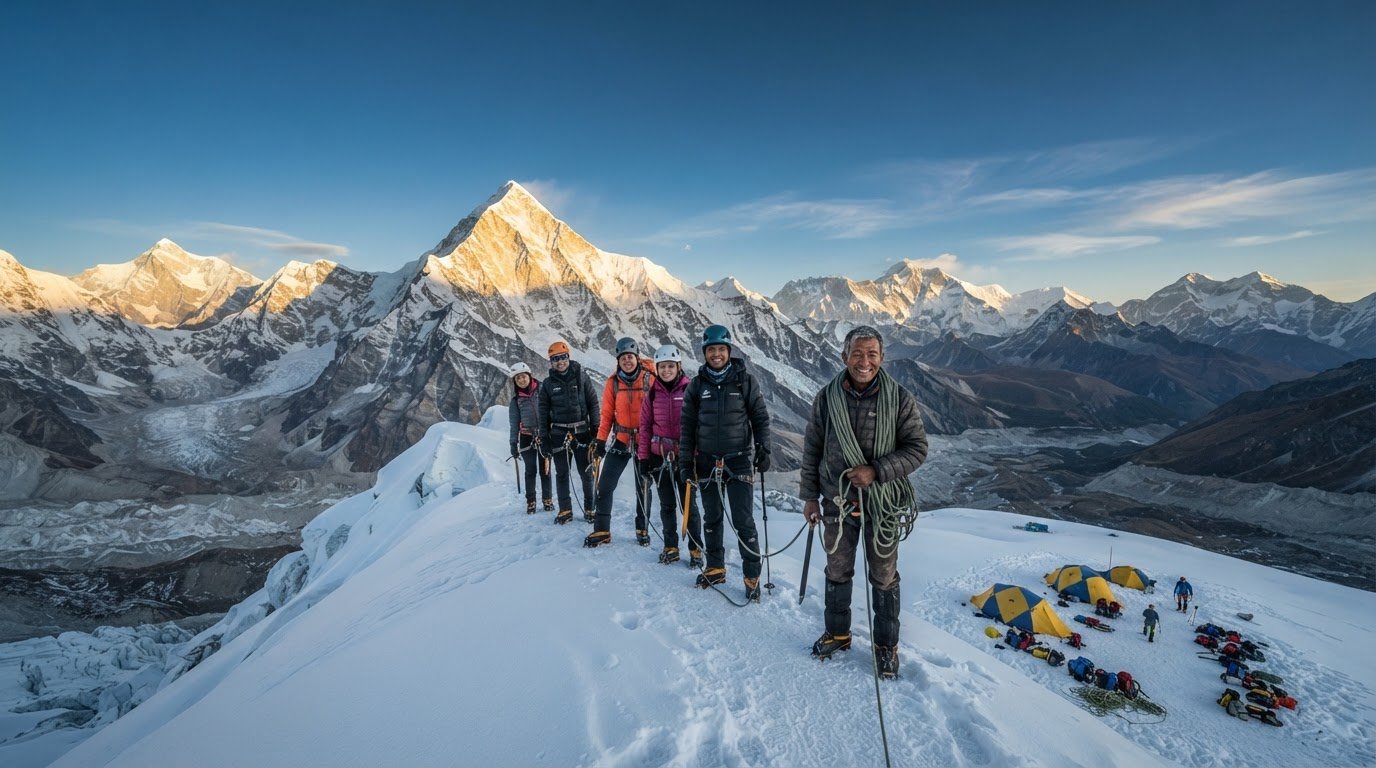
The journey can begin on trekking terrain, but its character changes as the route reaches snow and glacier sections. Glacier travel means moving across ice, sometimes roped together. Crampons provide grip, while an ice axe can help with balance and security. The Mera Peak Wikipedia page describes the peak’s classification and climbing routes, offering context for why “trekking peak” doesn’t mean “just a trek.”
Snow cover, weather and surface conditions affect footing and how a team moves. A general route description can’t predict conditions on your climbing days. The summit plan needs to respond to the mountain and professional judgement, rather than treating the climb as a fixed walk to a viewpoint.
What does a package help coordinate?
An expedition package brings key moving parts into one organised journey. Professional guiding supports decisions on the route; local transport connects stages of travel; accommodation provides places to rest; and permit processing helps manage required climbing and travel paperwork. Coordinating these elements can reduce the burden of arranging them separately, leaving you to focus on preparation and the climb.
Look beyond the package label and review how its arrangements fit the itinerary. The route, schedule and included services determine what is covered. Flights, equipment and insurance are separate considerations unless specifically set out in the itinerary. Understanding those boundaries helps you plan realistically and compare options on the same basis.
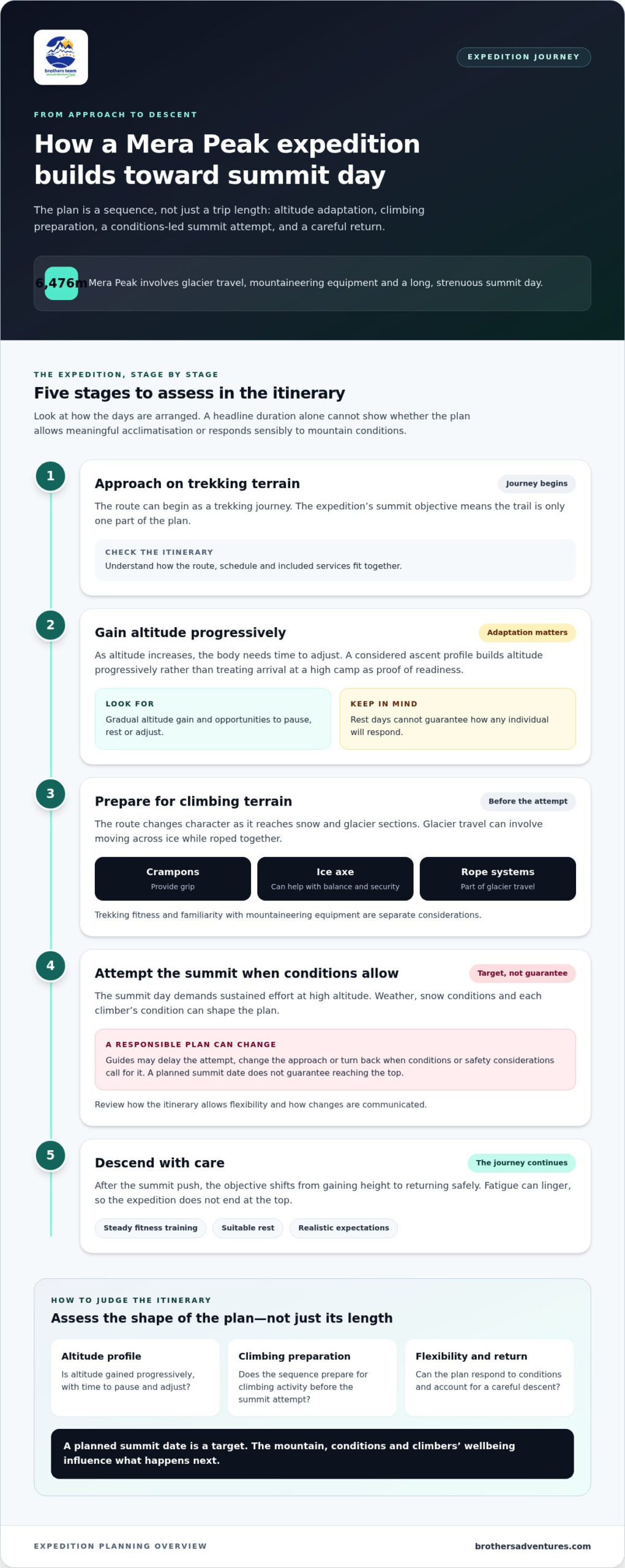
How the Mera Peak expedition journey builds toward summit day
A successful expedition plan is more than a line on a calendar. It allows the journey to progress from the approach to higher ground, prepare for climbing, make a summit attempt when conditions allow, and descend safely. Each stage has a purpose, and the schedule needs to account for both the mountain and the people climbing it.
Itinerary duration alone cannot tell you whether an expedition allows enough time for meaningful acclimatisation. Look at how the days are arranged: gradual altitude gain, opportunities to rest and adjust, and a sensible transition into climbing activity matter more than a headline number. Judge a Mera Peak climbing expedition package by the shape of its plan, not simply its total length.
How acclimatisation fits into an expedition itinerary
As you gain altitude, your body needs time to adjust to changing conditions. A considered ascent profile builds altitude progressively instead of treating arrival at a high camp as proof that you’re ready. Rest or adjustment days may be included, but they can’t guarantee how any individual will respond. For broader destination-planning context, the Nepal Tourism Board official website is a useful reference. For personal preparation, seek qualified medical advice and consult dedicated high-altitude safety guidance.
Read an itinerary as a sequence, not a checklist. Note when the route gains elevation, where the plan allows time to pause, and how climbing preparation fits before the summit attempt. These are useful planning details, not a medical formula or a promise of how your body will adapt.
Why summit day depends on conditions
The summit attempt is demanding and often requires sustained effort at high altitude. Weather, snow conditions and each climber’s condition can shape the day. A planned summit date is a target, not a guarantee of reaching the top or seeing a particular panorama. Leave room in your expectations for the mountain to set the pace.
Guides may adjust the plan if conditions or safety considerations change. That could mean delaying the attempt, changing the approach or turning back. These decisions can feel disappointing when the summit is close, but sound judgement is part of responsible expedition leadership. Review how the itinerary allows for flexibility and how changes are communicated, so you understand the reasons behind them.
On the descent, the objective shifts from gaining height to returning with care. Fatigue can linger after the summit push, so the journey doesn’t end at the top. Prepare with steady fitness training, suitable rest and realistic expectations. The Nepal expeditions and peak-climbing options offer a starting point for planning a wider journey.
Is Mera Peak suitable for your fitness and climbing experience?
Mera Peak may be described as a technically accessible climbing objective, but that doesn’t make it an easy trek or the right first climb for everyone. You’ll need the stamina to keep moving over demanding terrain, manage exertion at high altitude and take part in glacier travel, where conditions and footing can vary. Your fitness, experience and comfort with guided climbing all matter.
Technical difficulty and altitude are separate challenges: straightforward climbing techniques don’t remove the strain of working hard in thin air. Trekking fitness can help you handle long days on foot, but it doesn’t automatically prepare you to use crampons, an ice axe or a rope system. If those skills are new to you, include instruction and supervised practice in your preparation.
What physical preparation should you consider?
Build a foundation for sustained days outdoors. A sensible programme can develop aerobic endurance, leg strength and the ability to keep walking when you’re tired. Gradually practise on varied terrain and, where appropriate, carry a loaded daypack so training resembles a long mountain day more than a short workout.
- Choose regular aerobic activities that you can increase gradually.
- Add strength work that supports your legs and balance.
- Practise longer walks on varied surfaces, with recovery time between demanding sessions.
- Use a pack during some training walks to get used to carrying a load.
These steps can improve readiness for physical effort, but they can’t predict how you’ll respond to altitude or guarantee a summit. Don’t treat a single fitness test or a strong performance at low elevation as proof that you’re prepared for every part of the climb. If you have health concerns, speak with a qualified medical professional before committing to high-altitude travel.
What experience and altitude questions matter?
Consider what you’ve already done: multi-day trekking, walking on snow and using crampons are different kinds of experience. Previous exposure may help you feel more comfortable with equipment and changing terrain. Limited experience can point to skills to practise and discuss with your guide. Be candid about your background when planning a Mera Peak climbing expedition package so preparation and expectations can be realistic.
Altitude can affect people differently, even when they’re fit. A headache, nausea, dizziness or unusual tiredness at elevation can be a reason to stop, tell your guide promptly and follow established safety procedures. Don’t conceal symptoms to keep the schedule on track. Your guide’s advice and the expedition’s safety decisions take priority over a summit target.
Consider the whole picture: your current endurance, experience on uneven or snowy ground, familiarity with climbing equipment and willingness to follow guidance if plans change. Mera Peak can be a rewarding goal for a prepared climber, but suitability is personal, not a blanket promise based on the peak’s label.
How to compare Mera Peak climbing expedition packages
A useful comparison goes beyond the itinerary’s total length. Study how the plan connects acclimatisation, guiding, logistics, permits and decisions when conditions change. These details show how the journey is organised and what support sits behind the summit objective.
Use the criteria below to compare package structures. Look for clear explanations of how each element fits the expedition and which arrangements are included. The overall proposal reflects its scope and organisation, so a headline price alone won’t tell the whole story.
| Criterion | What a useful plan explains | Why it matters |
|---|---|---|
| Acclimatisation design | How the route gains altitude, where the schedule allows time to rest or adjust, and how climbing stages follow the approach. | A visible ascent profile helps you understand how the itinerary makes room for adaptation, rather than judging by duration alone. |
| Guide support | How professional guiding relates to the trekking approach, climbing preparation and summit attempt. | It clarifies where experienced support is part of the journey and how guidance fits the different stages. |
| Logistics | How accommodation and local transport are arranged around the itinerary, and how the package brings these elements together. | A coherent plan makes the journey easier to understand and helps you see which arrangements sit within its scope. |
| Permits | How permit processing is handled as part of expedition planning, with requirements considered in relation to the route. | Permit arrangements are a practical part of organising a climbing journey, not a detail to leave until the last moment. |
| Contingency approach | How the plan allows for weather-related changes and safety-led decisions, including adjustments to the summit schedule. | Flexibility shows that the itinerary can respond to mountain conditions rather than treating the summit date as a guarantee. |
Which expedition details deserve close attention?
Read the itinerary as a connected plan. Look for progressive altitude gain and opportunities to pause and adapt where appropriate. Guiding, accommodation, transport and permit-processing arrangements should be explained clearly. The Mera Peak climbing expedition package should also describe how weather and safety considerations can affect plans, without promising a summit outcome.
How does Mera Peak compare with another climbing objective?
Compare objectives by route context, altitude, technical preparation and what you hope to experience, rather than assuming one is universally easier. The Island Peak climbing package guide offers a related point of comparison. Use it to consider how a different peak objective may call for different preparation and expedition planning.
Brothers International Tours & Trading Pte Ltd brings professional guiding, local transport, accommodation and permit processing together in its Nepal expedition packages, with arrangements shaped by the itinerary. Explore the Nepal peak-climbing options to consider which expedition structure best fits your goals.
Plan your Mera Peak expedition with Brothers Adventures
A summit journey starts well before you reach the mountain. Brothers International Tours & Trading Pte Ltd is a family-owned travel agency established in 1992 that operates adventure packages. Its package model brings professional guiding, local transport, accommodation and permit processing together to organise important parts of a Nepal expedition. Review how the itinerary fits your needs and climbing goals.
What to prepare before planning your climb
Bring a clear picture of your experience and priorities into the planning process. A short, honest summary helps connect your preparation needs with the structure of the expedition. Consider:
- Your multi-day trekking experience and any previous time at altitude.
- Your familiarity with snow, crampons, ice axes or rope systems.
- Your current fitness routine and the areas you want to strengthen before departure.
- Your preferred travel window and the flexibility you may have around dates.
- Your priorities for acclimatisation, guiding, transport, accommodation and permit processing.
Separate essentials from preferences. For example, note whether you’re most concerned about the pace of altitude gain, understanding the climbing stages or how practical arrangements fit together. Then assess the itinerary as a whole rather than focusing on one feature in isolation. For another perspective on planning a Nepal adventure, read the Everest Base Camp trekking guide.
Take the next step toward a Himalayan summit
Before settling on an expedition, weigh four things together: your physical and climbing readiness, the itinerary’s approach to altitude, the support and logistics around the journey, and what you want from a summit attempt. A thoughtful plan should make these elements clear without treating a particular schedule or summit outcome as guaranteed.
Share your trekking and climbing background, the kind of challenge you’re seeking and your planning priorities. Brothers International Tours & Trading Pte Ltd brings its adventure-travel experience and coordinated package approach to Nepal journeys, with professional guiding and core travel arrangements forming the general framework.
Ready to shape your next Himalayan goal? Explore Nepal expeditions and peak-climbing trips to find a journey that fits your goals.
Let your summit goal shape the next step
Choosing a Mera Peak climbing expedition package is ultimately about finding a journey that fits the climber you are and the one you’re preparing to become. Consider what you want from the experience, which skills you’d like to build and how much flexibility you need. Clear priorities make planning more useful and help turn a far-off summit into a considered goal.
Brothers Adventures plans adventure journeys across Nepal and other Asian destinations. Its package model can coordinate professional guiding, local transport, accommodation and permit processing, with arrangements shaped by the expedition. Start by defining your priorities, then explore the journey options that suit your plans.
Explore Nepal expeditions and peak-climbing journeys to begin planning your Himalayan adventure. The summit may be a big goal, but every climb starts with a considered step.
Frequently Asked Questions
How high is Mera Peak, and what is the highest summit?
Mera Peak’s highest summit is commonly identified as Mera North, at 6,476 metres (21,247 feet). Summit names and elevation figures can differ between references, so check the terminology used in current climbing information when comparing routes. At this height, even a non-technical stretch can feel demanding, and reaching the top depends on conditions, preparation and how each climber responds to altitude.
When is the best time of year to climb Mera Peak?
Spring, from March to May, and autumn, from September to November, are commonly considered for a Mera Peak climb. The best fit depends on the route plan and conditions during your travel window, which can change from year to year. Build flexibility into your plans, and consider how the season may affect snow, weather and the timing of the summit attempt rather than choosing dates by scenery alone.
What permits are required for a Mera Peak climbing expedition?
A Mera Peak expedition generally involves a Nepal Mountaineering Association climbing permit, a Makalu Barun National Park entry permit and a local Khumbu Pasang Lhamu rural municipality fee. Requirements can depend on the route; for example, a journey following the Everest Base Camp route may also require a Sagarmatha National Park entry permit. Permit rules can change, so treat the current route plan and official requirements as essential planning details.
What equipment is essential for a Mera Peak climb?
Climbing equipment typically includes mountaineering boots compatible with crampons, crampons, an ice axe, a harness, a helmet and suitable clothing for cold, changeable conditions. Rope systems may also be used on glacier terrain, with equipment needs shaped by the route and conditions. Bring personal items such as warm gloves, protective eyewear and layered clothing, and make sure you understand how technical equipment is fitted and used before the climb.
Can weather change or delay a Mera Peak summit attempt?
Yes. Weather, wind, visibility and snow conditions can lead guides to adjust or postpone a summit attempt. A planned summit day is a target, not a promise that conditions will be suitable or that the team will reach the top. Keep some flexibility in your travel plans where possible, and follow guide instructions if the climbing schedule changes. A safety-led decision may mean waiting, changing plans or turning back.
What views can climbers see from Mera Peak?
On a clear summit day, climbers may see a wide sweep of Himalayan peaks and surrounding mountain ranges. The panorama depends on visibility, cloud cover and conditions at the time, so it can’t be guaranteed. Even if cloud obscures distant summits, the high-altitude landscape itself can be striking. Treat the view as a possible reward, not the sole measure of a successful expedition.

Comments are closed