


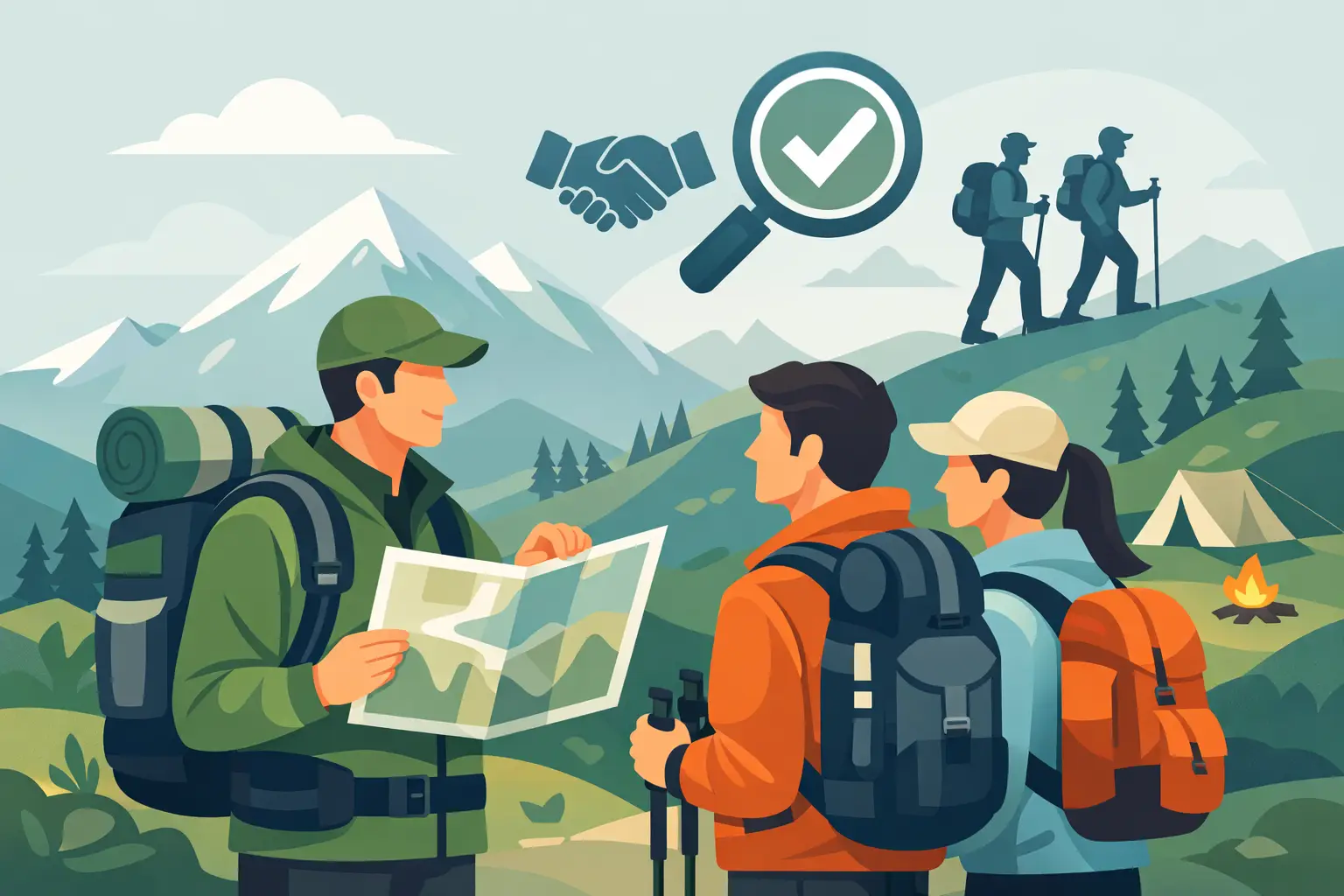
How to Choose Trekking Guides You Can Trust
A trekking guide can turn a demanding mountain route into the journey you remember for the right reasons: the first clear view of Ama Dablam, tea shared in a village lodge, or the confidence to keep walking when a high pass feels further away than expected. The reverse is also true. Knowing how to choose trekking guides is not simply about finding someone to lead the way. It is about placing your safety, time and long-held travel plans in capable hands.
For a trek in Nepal, Bhutan, India or Central Asia, the best guide is rarely the person who makes the boldest promises. Look instead for calm judgement, deep local knowledge and a genuine interest in how every member of your group is coping.
Start with the trek you actually want to do
A guide who is excellent on the Everest Base Camp trail may not be the right match for a remote camping trek, a technical peak-climbing objective or a school expedition. Before comparing operators or individuals, be honest about the route, season, your walking experience and what you want from the journey.
A first Himalayan trekker may value patient explanations of altitude, well-spaced acclimatisation days and help with the practical details of lodges, meals and permits. An experienced trekker crossing Cho-La Pass or aiming for a trekking peak may need a guide with high-altitude leadership, route-specific experience and sound contingency planning. Families, schools and larger groups also need guides who can manage different abilities without making anyone feel left behind.
Ask how often the guide has worked on your proposed route, not merely whether they have visited the region. Trail conditions, lodge standards, domestic flight schedules and local regulations can change. Recent, hands-on knowledge matters.
How to choose trekking guides with safety in mind
Mountain safety is not a badge or a dramatic rescue story. It is the daily discipline of making good decisions early: setting a sensible pace, noticing changes in appetite or energy, adjusting a plan when weather closes in and refusing to push on when symptoms require rest or descent.
Ask direct questions about altitude management. A reliable trekking provider should be able to explain why its itinerary includes acclimatisation days, how it monitors guests and what happens if someone develops signs of acute mountain sickness. Be wary of schedules that race from low valleys to high sleeping altitudes simply to fit a famous route into fewer days.
Also ask about emergency procedures. Who carries first-aid equipment? Is there a communication plan in areas without mobile signal? How are evacuation decisions made, and what support is offered while arrangements are being organised? Travel insurance remains your responsibility, but a guide and operator should have clear, practised processes rather than vague reassurance.
Qualifications are worth checking, particularly for climbing, glacier travel or remote wilderness routes. Yet certificates alone do not guarantee good leadership. The strongest guides combine training with local judgement, humility and the confidence to change a plan when conditions demand it.
A guide should explain the ‘why’
You do not need an expedition lecture at every stop, but you should understand the reasoning behind major decisions. If the group leaves early, takes an extra rest day or turns back short of a pass, a good guide explains the situation clearly and respectfully. This builds trust and helps everyone make sensible choices rather than feeling hurried along.
Look beyond language skills to communication style
English fluency is useful, especially when discussing symptoms, timings, equipment or a change of plan. But the quality of communication matters as much as the language itself. Does the guide listen carefully? Do they answer questions plainly? Are they comfortable saying that conditions are uncertain?
The best guides read people as well as maps. Some trekkers want to know the name of every peak and monastery; others need quiet encouragement through a difficult afternoon. A thoughtful guide can share local stories and mountain knowledge without turning the trip into a rehearsed script.
For groups, ask how the guide handles varied walking speeds. On busy Himalayan routes, there is no need for everyone to hike in a single tight line. There should, however, be a clear system for keeping track of the group, with appropriate support at the front and back where needed.
Check local knowledge and the team behind the guide
A trekking guide is often the face of your holiday, but successful mountain travel depends on a wider team. Porters, assistant guides, drivers, lodge contacts and local office staff all contribute to a safe, enjoyable experience. Find out who is responsible for permits, transport, accommodation and changes caused by weather or trail conditions.
Local knowledge can be practical and cultural at once. It means knowing which lodge is a sensible overnight stop, when a mountain flight may be affected by weather, how to navigate permit requirements and how to act respectfully in villages, monasteries and sacred landscapes. It also means treating local staff fairly and ensuring porters have appropriate clothing, loads and insurance provisions.
Ask whether the operator works directly with its guides and ground team. A company with a destination base is often better placed to respond quickly when plans change than one relying entirely on third-party arrangements from afar. Brothers Team, with operational support in Kathmandu alongside its Singapore base, is built around this kind of close, on-the-ground coordination.
Read reviews for patterns, not perfection
Testimonials can reveal far more than whether somebody enjoyed a view. Look for repeated comments about the guide’s pacing, attentiveness, humour, local insight and response to problems. A detailed review describing how a guide supported a nervous trekker, rearranged plans after a delayed flight or spotted altitude symptoms early is more useful than a string of five-star ratings with no detail.
Read a mixture of recent reviews, including those for routes similar to yours. One disappointed guest does not automatically signal a poor provider, particularly where weather or personal fitness affected a trip. What matters is whether the operator responded fairly and whether the same concerns appear again and again.
If you are booking a private or group trek, request information about the guide proposed for your dates. Experienced operators cannot always guarantee a named guide many months ahead, especially in peak season, but they should be transparent about guide allocation and the standard of their team.
Do not choose on price alone
A low headline price can be tempting, particularly when flights, equipment and insurance are already adding up. However, compare what is included before deciding that one trek is better value than another. Check accommodation, meals, permits, local transport, domestic flights, guide-to-guest ratios, porter support and contingency arrangements.
A cheaper itinerary may have fewer acclimatisation days, minimal staff support or unclear exclusions. That does not make it automatically unsuitable. Independent-minded trekkers with flexible schedules may prefer a simpler arrangement. But if this is your first high-altitude holiday, or if you are travelling with friends, family or students, well-organised support is usually worth more than a small saving.
Tipping expectations should be discussed openly too. In many trekking regions, tips are customary and valued, but your operator should give practical guidance rather than leaving you uncertain at the end of the trip.
Ask these questions before you commit
Before paying a deposit, have a proper conversation with the operator or guide. The answers should be specific to your route, dates and group, not copied from a generic brochure. Useful questions include:
- How many times has the guide led this route, including in the planned season?
- What is the acclimatisation plan, and what would cause the itinerary to change?
- What first-aid training, equipment and emergency communication are carried?
- Who will accompany the group if walkers are moving at different paces?
- How are porters and local staff supported and insured?
- Which costs are included, and which expenses should we budget for separately?
Pay attention to the manner of the reply. A trustworthy specialist will not pressure you towards the hardest route or pretend that altitude affects everyone in the same way. They will ask questions about your fitness, medical history, previous trekking and expectations because these details help them plan well.
Choose the guide who makes space for the journey
The Himalayas reward effort, but they do not need to be treated as a race. Your guide should help you reach a viewpoint, a base camp or a high pass with enough time to look around, learn where you are and appreciate the people who call these mountains home.
Choose someone whose experience gives you confidence, whose planning respects the realities of the mountains and whose manner makes you comfortable speaking up. That combination leaves room for the unexpected moments that make a trek feel deeply personal – and for the quiet satisfaction of arriving safely, strongly and ready for the next adventure.


Comments are closed