


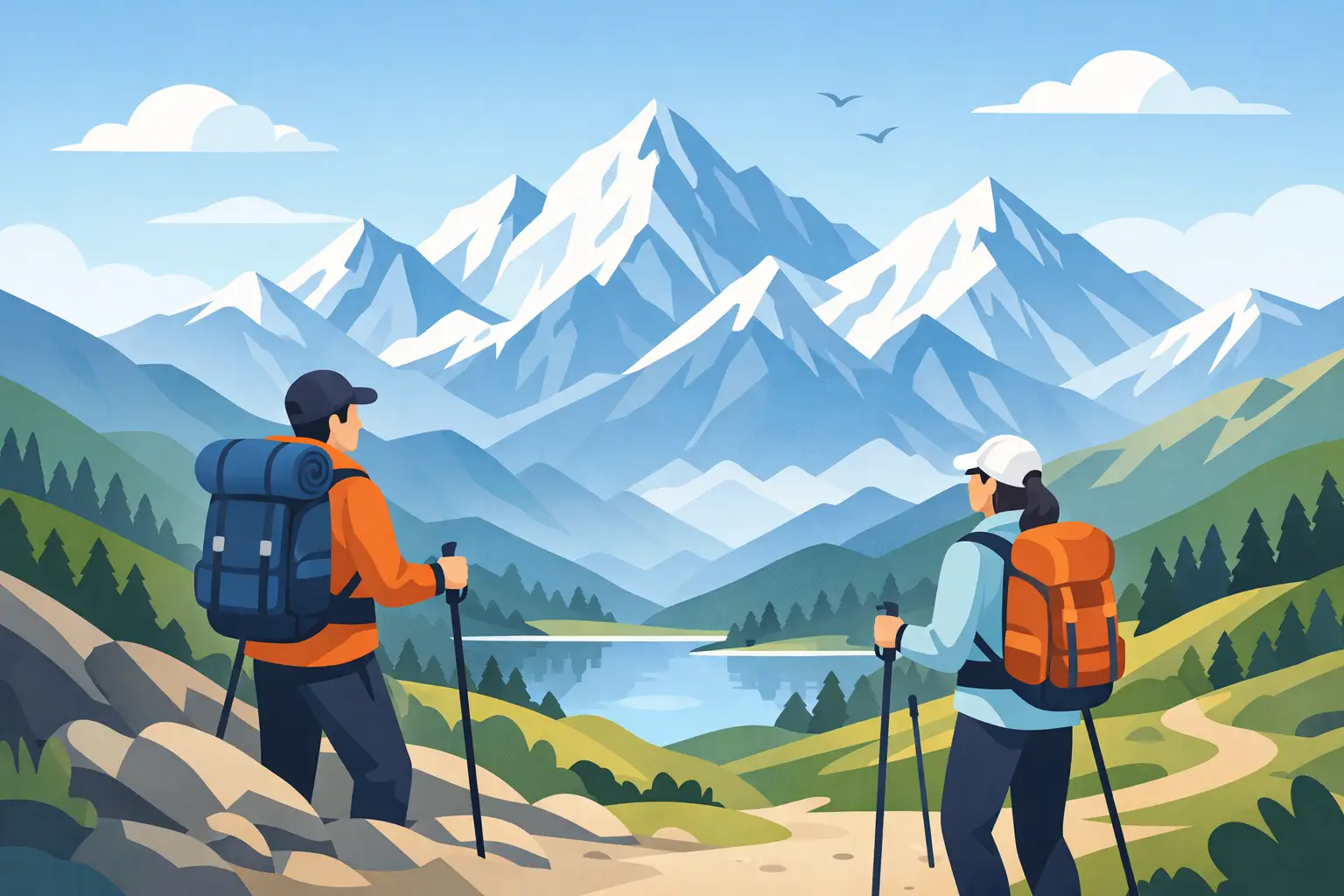
Himalayan Treks for Beginners Made Manageable
The first morning you see the Himalaya from a mountain trail, the scale can feel almost unreal: terraced fields below, snowy summits ahead, and a small path leading through villages that have welcomed walkers for generations. Himalayan treks for beginners make that experience accessible, but they are not simply long walks with better views. A rewarding first trek depends on choosing a sensible route, allowing enough time to acclimatise, and travelling with people who understand the mountains.
For many first-time visitors, Nepal is the ideal introduction. Its established trekking regions combine dramatic landscapes with welcoming teahouses, local food, well-used trails and deeply rooted mountain culture. You do not need technical climbing skills to enjoy them. You do need honest preparation and an itinerary that respects altitude.
Choosing Himalayan Treks for Beginners
The best beginner trek is not necessarily the shortest one or the one with the highest viewpoint. It is the route that matches your fitness, available holiday time and comfort with changing weather and basic mountain accommodation. A lower-altitude trek can still be physically demanding, while a famous route may be manageable only when it includes proper acclimatisation days.
The Ghorepani Poon Hill trek in the Annapurna region is often an excellent first choice. Usually completed in four to six days, it passes through rhododendron forest, traditional Gurung and Magar villages, and stone stairways that provide a genuine workout. The sunrise view from Poon Hill, with Dhaulagiri and Annapurna filling the horizon, offers the high-mountain reward without taking most travellers into the altitudes associated with serious altitude illness.
For those with more time and a stronger walking base, an Annapurna foothills itinerary can be a satisfying next step. Routes that include Ghandruk, Landruk, Dhampus or Australian Camp blend mountain panoramas with cultural encounters and give travellers time to settle into the rhythm of trekking. They are particularly suitable for families, friends travelling together, and school or college groups that want an active journey without an overly demanding schedule.
The Langtang Valley is another appealing option for beginners who want a wilder valley setting and Tibetan-influenced culture. It generally involves more sustained walking and reaches higher elevations than Poon Hill, so pacing matters. It can be a wonderful first Himalayan trek for a fit walker, but it is not the right choice merely because it looks shorter on a map.
Everest Base Camp deserves a realistic mention. It is a non-technical trek, not a climb, but its elevation, length and remoteness make it ambitious for a first Himalayan holiday. Some well-prepared beginners do complete it with careful acclimatisation, yet it should not be treated as a casual introduction. If Everest is your dream, allow adequate days, train consistently and be ready to adjust the plan if your body needs more time.
Altitude Is the Part You Cannot Rush
Fitness helps you enjoy the trail, but it does not make anyone immune to altitude sickness. Above roughly 2,500 metres, the body needs time to adapt to less oxygen. Age, athletic ability and previous hiking experience do not reliably predict who will feel the effects.
A well-designed itinerary climbs gradually and builds in rest or acclimatisation days where needed. These are not wasted days. They allow you to walk gently to a higher point, return to sleep lower, explore a village or simply recover while your body adjusts. The most successful trek is the one that gets everyone home safely, not the one completed at the fastest pace.
Headache, unusual fatigue, nausea, dizziness and poor sleep can all be signs that require attention. A knowledgeable guide will check how you are feeling each day, encourage fluids and food, and make sensible decisions if symptoms worsen. Descent is the most effective response to significant altitude illness. No summit view is worth gambling with your health.
When comparing itineraries, look beyond the final altitude. Ask how many nights are spent above 3,000 metres, whether the programme has contingency time, and how quickly it gains height. These details tell you far more about the route than an attractive photograph ever can.
Train for the Trail, Not Just the Photograph
You do not need to become an ultra-runner before your trek. You should arrive able to walk for several hours on consecutive days, including uphill and downhill terrain. Stairs are especially useful training for Nepal, where stone steps can be a memorable part of the route.
Begin eight to twelve weeks before departure if possible. Build regular walks into your week, then gradually increase duration and elevation. Add simple strength work for your legs, hips and core, and practise with the boots and daypack you intend to use. The goal is not exhaustion in training; it is developing steady endurance and confidence.
Downhill walking is often harder than expected. Strong thighs and well-fitted boots reduce the strain on knees, while trekking poles can provide welcome stability on uneven paths. If you have an existing medical condition or concerns about your ability to trek at altitude, speak with your doctor before committing to a route.
Pack Light, Prepare Well
On a supported teahouse trek, you normally carry only a daypack while a porter carries the main duffel bag within responsible weight limits. This makes the journey more enjoyable, but the items in your daypack still matter. Keep your waterproof jacket, warm layer, water, sun protection, snacks, personal medication and camera close at hand.
Mountain weather changes quickly. A bright, warm morning can become cold, wet or windy by afternoon, especially at higher elevations. Layers work better than one heavy garment: a moisture-wicking base layer, insulating fleece or down layer, and waterproof outer shell cover most conditions. Bring a warm hat and gloves even if the forecast looks kind.
For a first trek, these four items deserve particular attention:
- Broken-in trekking boots with good ankle support and suitable socks.
- A refillable water bottle or hydration system, plus an effective water-treatment method.
- Sunglasses and high-factor sunscreen for strong high-altitude sun.
- A small personal first-aid kit, including any medication prescribed for you.
Teahouses are simple, friendly mountain lodges rather than hotels. Rooms are generally basic, hot showers may be available for a charge, and facilities become more limited as altitude increases. Arriving with flexible expectations is part of travelling well. A warm bowl of dal bhat after a long day, shared in a busy dining room with other walkers, is often more memorable than luxury ever could be.
Let the Journey Include the People and Places
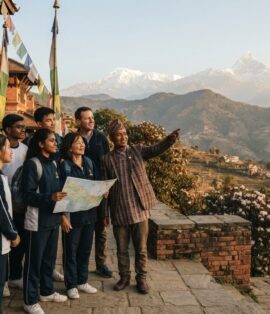
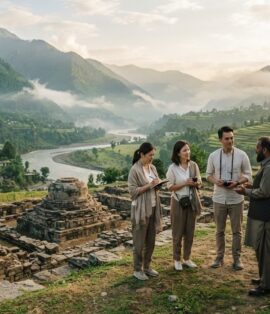
A Himalayan trek is not only about reaching a viewpoint. The path takes you through working villages, Buddhist monasteries, prayer flags, farming terraces and communities whose daily life is shaped by the mountains. Take time to learn the names of the peaks, try local dishes and listen when your guide explains customs or history.
Respect also has practical meaning. Dress considerately in villages and religious sites, ask before photographing people, keep noise low around monasteries, and avoid single-use plastic where possible. Buying a tea, meal or locally made item along the way helps spread tourism income through mountain communities.
A specialist operator can make a noticeable difference here. Brothers Team combines Kathmandu-based destination knowledge with planned permits, transport, lodge arrangements and experienced guides, so travellers can focus on walking rather than solving problems mid-route. This support is particularly valuable when weather alters a flight schedule or when someone needs an extra day to acclimatise.
Give Yourself Permission to Go Slowly
The Himalaya rewards patience. Walk at a pace where you can breathe comfortably, drink regularly, stop to look around and still have energy for tomorrow. There is no prize for overtaking everyone on the trail, and the mountains have a quiet way of teaching that lesson.
Choose a trek that leaves you excited rather than intimidated, prepare with purpose, and let your guide set a sensible rhythm. Your first Himalayan trail need not prove anything to anyone. It can simply be the beginning of a remarkable relationship with the mountains.


Comments are closed