


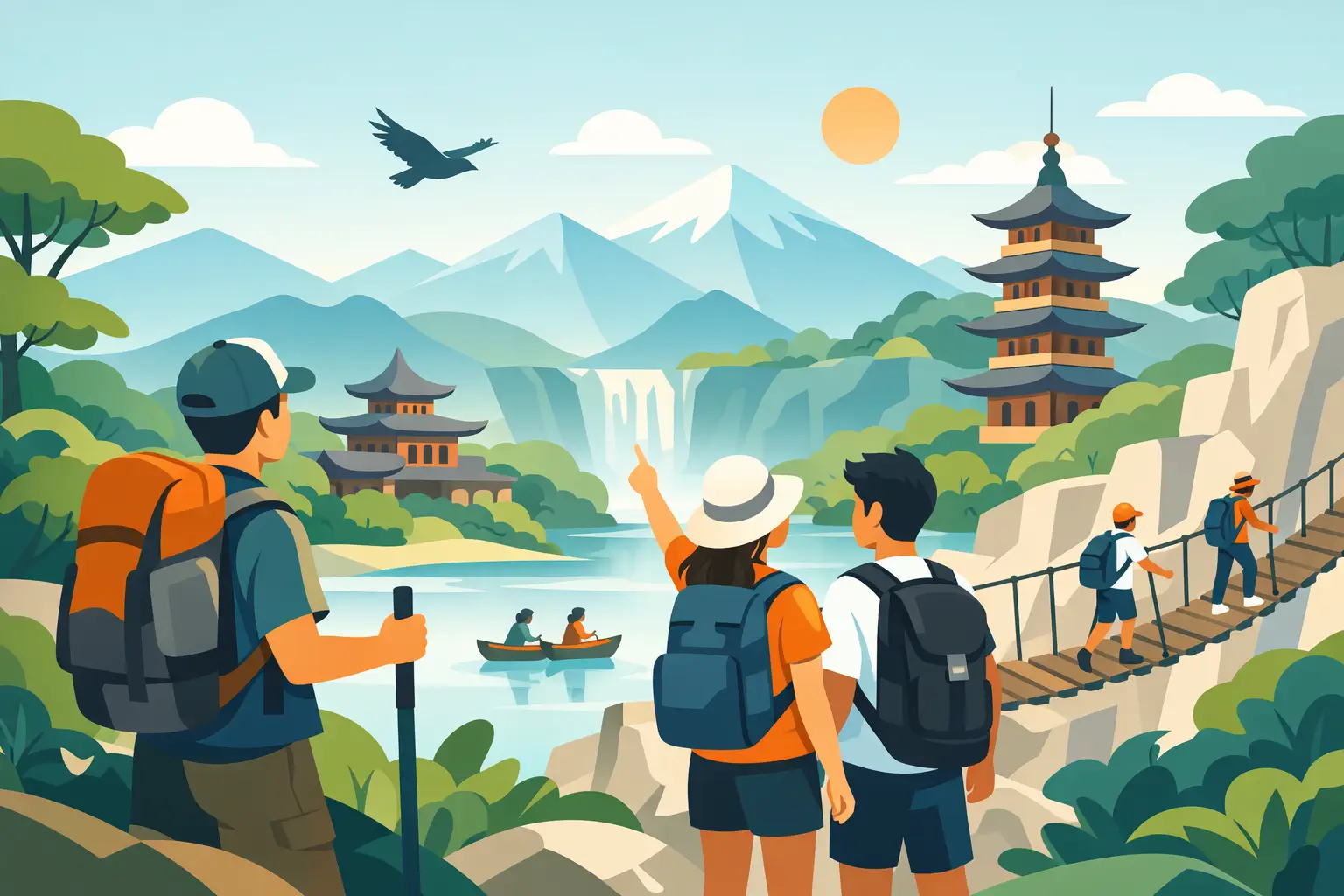
School Adventure Trips Asia That Build Confidence
A student’s proudest moment on a school journey is rarely the photograph at a famous viewpoint. It is often the moment they finish a steep trail they thought they could not manage, order lunch in an unfamiliar language, or help a quieter classmate through a difficult afternoon. School adventure trips in Asia create these moments because they place learning in the real world, with culture, nature and shared responsibility all around.
For educators, the opportunity is considerable, but so is the duty of care. A successful programme must inspire young people without treating challenge as a test of endurance. It needs a sensible pace, experienced local leadership, clear safeguarding procedures and space for reflection. The best journeys are memorable not because every day is difficult, but because every day gives students a new way to see themselves and the world.
Why school adventure trips Asia make learning tangible
Asia offers an unusual range of educational settings within reachable flight times from Singapore and many international hubs. A group can walk through Himalayan foothills, visit living heritage sites, take part in a village activity, learn about conservation in a national park and discuss the realities of sustainable tourism – all within one carefully planned programme.
This variety allows schools to connect travel to subjects already being taught. Geography becomes more immediate when students see how monsoon weather, rivers and mountain terrain shape daily life. History and religion gain context in Kathmandu Valley, Bhutanese dzongs, Angkor’s temple landscapes or the trading towns of northern India. Biology is no longer only a classroom topic when students observe forest ecosystems, farming practices or high-altitude environments.
Just as valuable are the less measurable gains. Young people learn to adapt when plans change, communicate across differences and contribute to a group outside their usual friendship circles. A well-led trek or cultural journey asks students to be present: to listen to local hosts, look after their equipment, respect shared spaces and recognise that comfort can mean different things in different communities.
That does not mean every programme must involve demanding trekking. For some groups, a gentle village walk, cycling route, conservation project or service activity provides the right level of challenge. The destination and activity should match the students’ ages, previous outdoor experience, physical confidence and the school’s learning objectives.
Choosing the right destination and level of challenge
Nepal is a natural choice for schools seeking mountain scenery, cultural depth and achievable outdoor activity. Kathmandu Valley offers temples, traditional settlements and hands-on cultural encounters, while lower-altitude trekking areas can introduce students to the Himalayas without committing them to extreme elevations. Programmes around Pokhara, Annapurna foothills or Poon Hill-style routes can be adapted with shorter walking days, appropriate rest stops and lodge-based accommodation.
Bhutan suits groups looking for a reflective cultural experience with gentle to moderate hiking. Its focus on heritage, landscapes and conservation can support studies in wellbeing, environment and cultural identity. It is particularly rewarding for groups prepared to travel at a calmer pace rather than tick off a long list of attractions.
Vietnam, Cambodia, Sri Lanka, Indonesia and Malaysia can work especially well where schools want a balance of community engagement, history, rainforest or coastal environments, and active exploration. These destinations may be better suited to younger students or first-time international groups, depending on the itinerary. A cycling day, kayaking activity or guided rainforest walk can deliver adventure while keeping daily logistics straightforward.
For older students with good fitness and a genuine interest in mountains, Himalayan routes may offer a stronger sense of achievement. However, higher altitude is never something to treat casually. Everest Base Camp and similar high-altitude journeys require more than enthusiasm. They need carefully designed acclimatisation days, conservative pacing, close health monitoring and the willingness to alter plans if conditions require it. These are generally more appropriate for mature, well-prepared groups than for a standard school tour.
Start with educational outcomes, not a destination wish list
Before choosing a route, group leaders should decide what they want pupils to take away from the experience. It may be greater independence, intercultural understanding, environmental awareness, leadership practice or resilience. Once this is clear, the itinerary can be built around those outcomes rather than overloaded with activities.
A shorter programme with a meaningful community visit, a manageable trek and guided reflection often has more impact than an ambitious itinerary spent largely on the road. Travel days, fatigue and unfamiliar food all affect how students engage. Good planning protects the energy needed for the experiences that matter.
What safe, well-supported school travel looks like
Safety is not a separate part of an adventure programme. It is the foundation that allows students to participate with confidence. Schools should look for an operator that understands both destination realities and the practical demands of supervising young people overseas.
This begins long before departure. Families and staff need clear information on fitness expectations, weather, accommodation, food, packing, behavioural standards and communication arrangements. Medical and dietary details should be gathered early, not as a last-minute formality. In mountainous destinations, students and parents should receive honest guidance about altitude, including why going slowly is part of the programme rather than a sign that something has gone wrong.
On the ground, strong local guides make a decisive difference. They understand trail conditions, road timings, seasonal weather patterns, local customs and the nearest practical options if a plan changes. Their role is not simply to lead the group from place to place. The best guides set a reassuring tone, notice when a student is struggling and bring local history and culture to life in a way no printed itinerary can.
A school programme also needs sensible ratios of adults to students, a clear process for headcounts and room allocations, reliable transport, emergency contacts and a realistic contingency plan. In remote regions, flexibility is essential. Flights may be delayed by weather, roads may take longer than expected and a student may need to rest. A responsible operator builds this flexibility into the schedule instead of promising a rigid timetable that cannot withstand real conditions.
Brothers Team combines Singapore-based group coordination with destination knowledge from its Kathmandu operations, helping schools plan the practical details as carefully as the memorable ones. From permits and transport to accommodation, meals and local guide support, coordinated arrangements reduce the pressure on teaching staff so they can focus on their students.
Designing days students can genuinely enjoy
An adventure itinerary should have rhythm. Early starts are sometimes necessary, especially for flights or mountain weather, but every day should not feel like a race. Build in time to drink water, repack bags, write a journal entry, speak with a local guide or simply look at the landscape.
The right accommodation depends on the destination. City hotels may provide a comfortable base for cultural exploration, while trekking lodges offer a more direct experience of mountain travel. Students do not need luxury to feel cared for, but they do need clean, suitable accommodation, enough rest and clear expectations about shared facilities. Explaining these details beforehand helps prevent small surprises from becoming distractions.
Food is another part of the learning experience. Encourage students to try local dishes while ensuring practical alternatives for allergies, religious requirements and selective eaters. Group meals can become valuable moments for checking in informally, celebrating effort and preparing everyone for the following day.
Reflection turns an enjoyable trip into deeper learning. Teachers might invite students to record one observation, one challenge and one question each evening. A short group conversation can help them move beyond saying a place was “nice” or “different” towards understanding why it mattered. These conversations also give staff a useful sense of the group’s mood and wellbeing.
Preparing students before they travel
Preparation should build excitement while making responsibilities clear. A pre-departure session can cover cultural etiquette, personal safety, waste reduction, basic trekking practice and respectful photography. If students understand why shoes are removed at a sacred site, why modest dress may be expected or why water use matters in a mountain lodge, they are more likely to travel thoughtfully.
For active programmes, a gradual fitness plan is wiser than a last-minute push. Regular walks, stairs, light hikes and practice carrying a day pack help students arrive more comfortable and confident. The goal is not to make every pupil an athlete. It is to ensure the planned activity is within reach and that students know how to pace themselves.
Parents should also be included in the conversation. Reassurance comes from specific, practical information: who is accompanying the group, how luggage is managed, what happens if someone feels unwell, and how the itinerary is adapted for weather or altitude. Clear answers establish trust well before the airport.
The strongest school journeys do not send students home with only souvenirs and photographs. They give them evidence of their own capability: a mountain path completed, a conversation attempted, a new culture treated with respect, and a group challenge met together. Choose a programme that gives those moments room to happen, with the care and support to make them count.


Comments are closed