


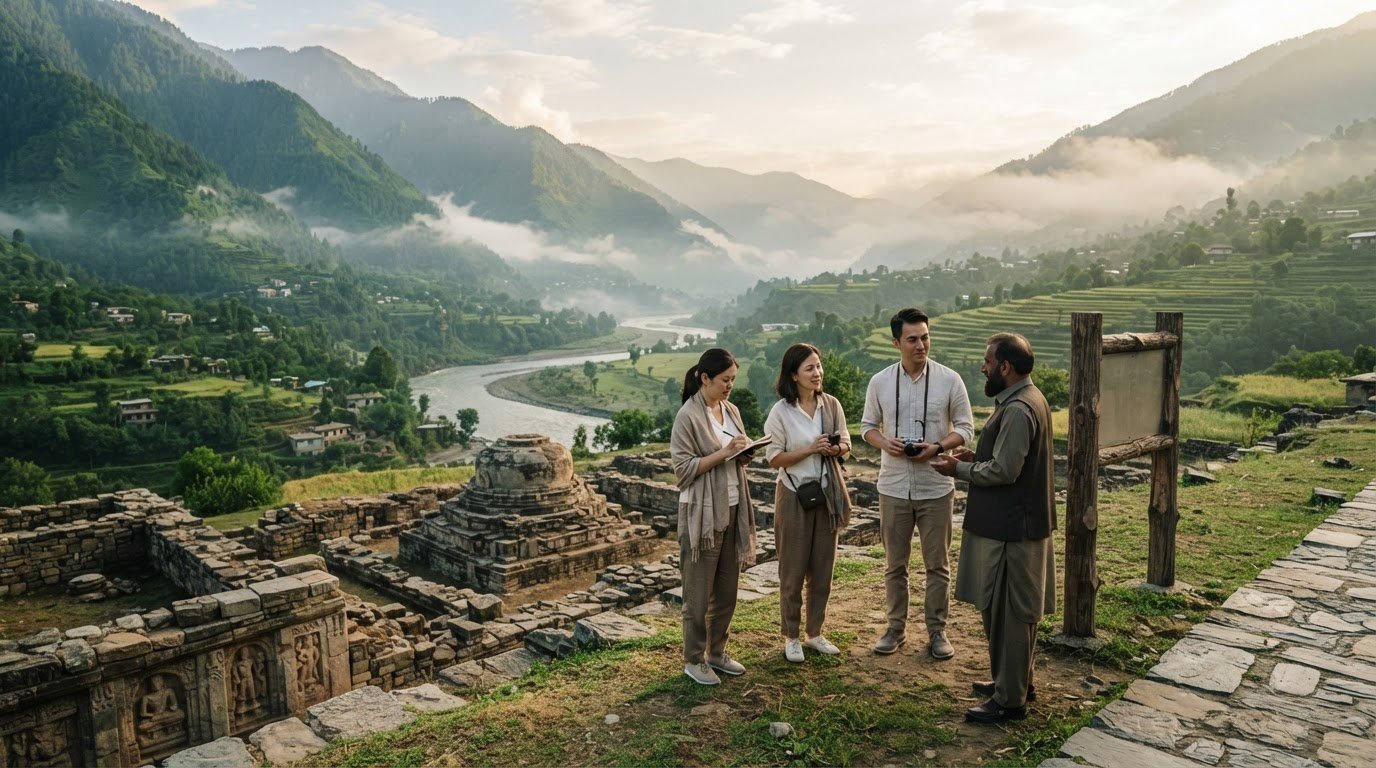
Swat Valley Cultural Tour Package: How to Choose Your 2026 Journey
The most rewarding Swat journey may be the one that leaves room to slow down. A Swat Valley cultural tour package should do more than connect scenic stops: it should give you time to understand the region’s Gandhara heritage, hear thoughtful interpretation, and experience local life respectfully. A packed itinerary can look impressive, but heritage without context is easy to rush past.
Before choosing, compare what the itinerary covers, how much time it allows at cultural sites, and what practical arrangements are included. This guide offers a clear way to assess heritage priorities, guiding, transport, accommodation, and pace. It also covers ways to approach local customs respectfully, including dressing appropriately and following guidance at heritage sites. Travel conditions and site access can change, so review current official advisories before settling on plans. The right balance of discovery and organisation gives Swat’s layered history more room to come alive.
Key Takeaways
- Choose a Swat Valley cultural tour package that makes space for heritage context, local encounters, and an unhurried pace.
- Compare cultural focus, guide support, transport, accommodation, and flexibility as parts of one well-organised itinerary.
- Look beyond site visits: interpretation and time to reflect can make heritage experiences more meaningful.
- Prepare for respectful travel by clarifying your interests, reviewing the itinerary, and choosing modest, context-sensitive clothing.
- Consider how a guided, customised multi-day journey can bring cultural priorities and practical logistics together.
Why choose a Swat Valley cultural tour package for a heritage-led journey?
A cultural tour package is a guided journey shaped around heritage, context, and meaningful encounters, not simply a sequence of stops. A Swat Valley cultural tour package gives history room to make sense by pairing places and traditions with informed explanation and time to take them in. That distinction matters in a valley whose appeal reaches beyond its scenery. A brief stop on a broad sightseeing route may offer only a glimpse, while a heritage-led itinerary makes more room to understand what makes Swat culturally distinctive.
Swat’s story is layered. Its place in the history of Gandhara and Buddhist civilization adds depth to the landscape, while the valley’s living culture gives a visit a present-day dimension. A cultural focus connects those threads instead of treating heritage as a quick photo opportunity between scenic drives. For a broad introduction to the region’s background, explore History and Culture of Swat Valley. The aim isn’t to turn every moment into a lecture. It’s to make room for thoughtful questions and clearer understanding.
This approach differs from trekking or landscape-focused travel, but neither style is better for everyone. A trek may put movement, terrain, and outdoor challenge at the centre. A heritage-led journey gives more attention to interpretation, cultural context, and a considered pace. The interests can overlap, but itinerary priorities matter. If you want to understand what you’re seeing, allow time for more than the drive and the photograph.
What makes a Swat Valley cultural journey different?
Context changes the experience. A guide’s explanation can help visitors connect the valley’s Gandhara heritage with the wider history of Buddhism and the cultural layers that followed. Instead of collecting images without knowing their significance, you can listen, ask questions, and notice how history shapes the way a place is understood. That interpretive thread gives a cultural itinerary its character, even when the journey also includes scenic moments.
Who is this kind of tour best suited to?
This style often suits curious travellers who enjoy history, local culture, and guided explanation. Families and first-time cultural travellers may appreciate the context and clear structure, though the best fit depends on each person’s interests and preferred pace. If your main priority is strenuous outdoor activity or covering as much ground as possible, a slower heritage-led itinerary may feel different from what you’re seeking.
Before choosing, consider what you want to remember: the distance covered, the views along the way, or the stories that connect those views with heritage. A rewarding cultural journey doesn’t need to crowd in every possible stop. It needs a thoughtful balance of interpretation, breathing room, and practical planning, so curiosity can lead the way without the itinerary feeling rushed.
Which cultural experiences should a Swat Valley package make room for?
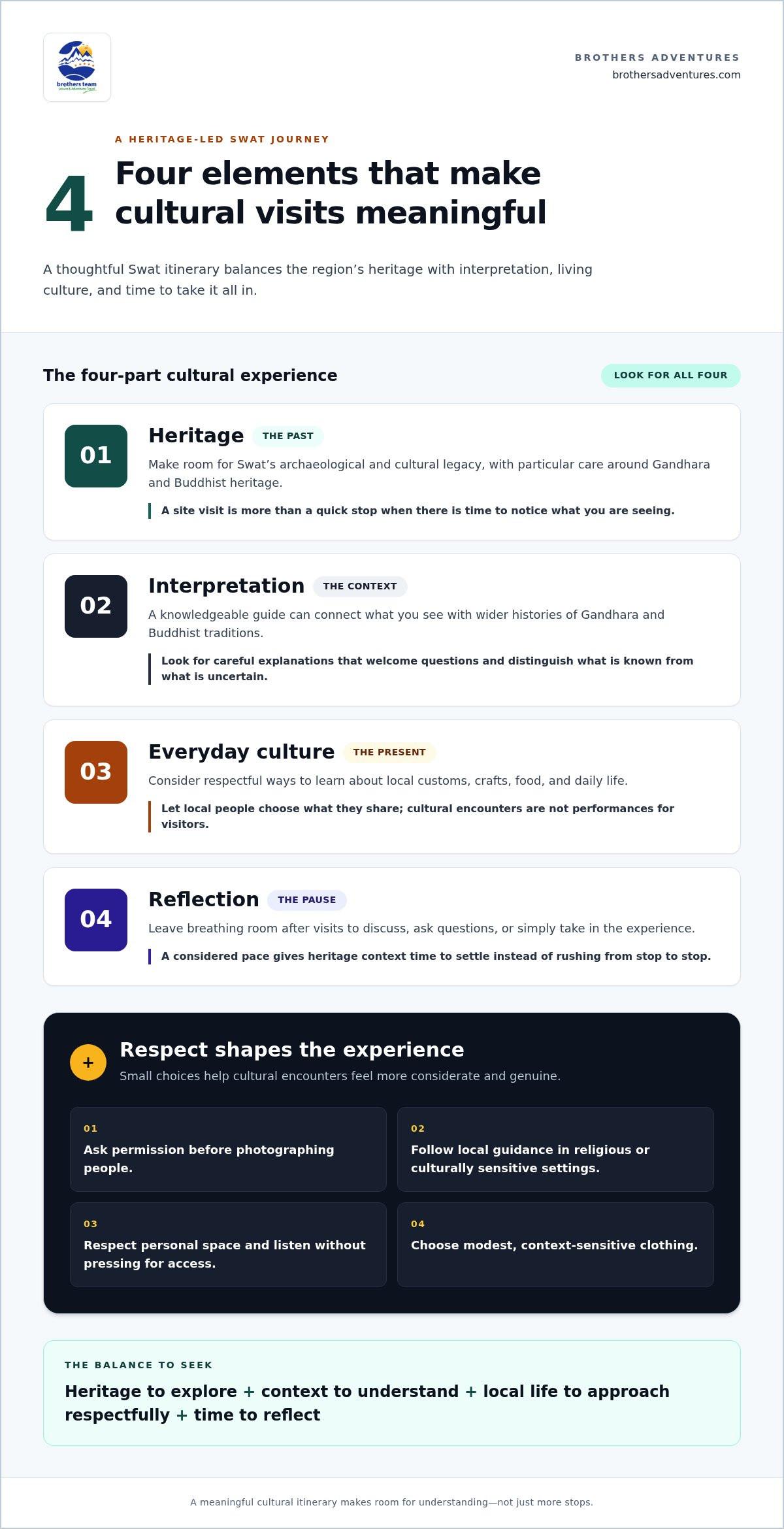
A thoughtful itinerary makes room for more than heritage stops. It balances the past with living culture and gives travellers time to absorb what they’ve learned. When comparing a Swat Valley cultural tour package, look for four complementary elements: heritage, interpretation, everyday culture, and pauses for reflection. Together, they create a fuller picture without reducing the valley to a checklist.
- Heritage: Look for opportunities to explore the region’s archaeological and cultural legacy, with particular care around Gandhara and Buddhist heritage.
- Interpretation: Make space for a knowledgeable guide to explain historical context and distinguish what is known from what is uncertain.
- Everyday culture: Consider respectful ways to learn about local customs, crafts, food, and daily life.
- Reflection: Leave breathing room after visits to discuss, ask questions, or simply take in the experience.
How heritage interpretation brings the past into focus
Archaeological remains can be compelling, but their significance isn’t always obvious at first glance. A guide can help connect what visitors see with broader historical narratives, including the region’s association with Gandhara and Buddhist traditions, without suggesting that one explanation captures every layer of its past. A guide’s cultural context turns a heritage visit from a moment of looking into an opportunity to understand how history, belief, and place intersect.
Interpretation should be careful and grounded, not a stream of dramatic claims. Encourage questions and value explanations that acknowledge complexity. Consider how much time each visit needs: rushing from one point to another can leave little room to listen, notice details, or reflect on what the guide has shared.
How to make room for living culture
Heritage is not only something preserved from the past. Food, crafts, customs, and conversation can offer a window into contemporary life. Approach these encounters with respect and let local people decide what they choose to share. The most meaningful interactions don’t treat local culture as a performance for visitors.
Bring curiosity and courtesy. Ask permission before photographing people; in religious or culturally sensitive settings, follow local guidance and be ready to put the camera away. Respect personal space, listen without pressing for access, and approach customs as something to understand rather than judge. These small choices can help an encounter feel more welcoming and genuine.
Finally, protect time for the experience to settle. A quiet pause after a heritage visit can be as valuable as adding another stop, especially for families or travellers new to cultural travel. If you’re shaping a wider itinerary, explore guided Pakistan journeys as one way to bring cultural interests and practical travel planning together.
How to compare Swat Valley cultural tour packages before choosing
Compare the journey as a whole, not by counting stops or scanning an inclusions list. A heritage-led itinerary should show how cultural experiences fit together, how much time is reserved for them, and what practical arrangements support the trip. Use the framework below to assess whether a Swat Valley cultural tour package matches your interests and preferred pace.
| What to compare | What to look for |
|---|---|
| Cultural focus | Heritage and local context shape the itinerary, rather than appearing as brief additions to general sightseeing. |
| Pace | There is room for interpretation, rest, and unhurried transitions between activities. |
| Guide support | Guiding helps explain cultural and historical context, not just the day’s sequence. |
| Transport | Local transportation is addressed as part of how the multi-day itinerary works. |
| Accommodation | Accommodation arrangements are clear within the overall trip plan. |
| Flexibility | The itinerary can be shaped around heritage interests and preferred pace. |
Read the itinerary alongside its package details. A guide, transport, or accommodation line has limited meaning on its own if the schedule leaves little time for cultural interpretation. Likewise, a long list of heritage-related stops doesn’t necessarily mean the journey is heritage-led. Look for a clear connection between the places visited, the context provided, and the time allowed to experience them.
Check the itinerary’s cultural depth and pace
Notice whether the plan allocates time to guided explanation or mainly lists quick visits and transfers. A stronger cultural focus makes room to ask questions and take in what you’ve learned, while balancing visits with rest and manageable transitions. Customisation can help align a multi-day journey with your interests, whether you’re drawn to heritage interpretation, local culture, or a gentler pace.
Review the schedule in sequence: identify the main cultural focus for each day, then consider whether the timing allows those experiences to feel connected rather than compressed. For a broader framework on evaluating expertise and fit, see this guide to choosing a specialist tour operator.
Compare what the package logistics cover
For a multi-day journey, professional guiding, local transportation, and accommodation each support the experience in a different way. Read the stated arrangements alongside the itinerary to see how they relate to each day’s plans. Permit processing may also be part of package arrangements where relevant; requirements depend on the route and current guidance.
Keep your comparison grounded in the details provided. Don’t assume similar labels mean identical arrangements, or that a package with more listed components offers a better cultural experience. Weigh practical logistics against interpretive depth and pace. The best fit is the plan that brings those elements into balance and gives your priorities meaningful space.
How to prepare for a respectful and rewarding Swat cultural tour
A little preparation helps you travel with curiosity and care. Before setting off, separate choices within your control, such as how you engage with people and heritage, from details that can change, including travel advice and site access.
- 1. Clarify your interests. Decide whether you’re most curious about heritage, local culture, or a balanced mix. Sharing those priorities can help shape a Swat Valley cultural tour package around what you hope to learn and the pace that suits you.
- 2. Review the itinerary. Look at planned visits, travel transitions, and time for rest. Note where cultural interpretation fits, and leave room for questions rather than expecting every moment to be scheduled.
- 3. Prepare respectfully. Choose modest, context-sensitive clothing, while recognising that expectations can vary by setting. Bring practical layers and footwear suited to the activities and conditions described in current guidance.
- 4. Check current guidance. Before departure, review your government’s latest travel advisories and seek current information on site access and opening arrangements through official channels. Details can change, so don’t rely only on an old itinerary or a past traveller’s account.
Respectful etiquette travels well, but travel advisories and site access are time-sensitive, so check both close to departure. This distinction helps you prepare thoughtfully without mistaking general customs guidance for a guarantee about current conditions.
Prepare for heritage sites and cultural encounters
At archaeological or religious locations, follow posted site rules and your guide’s instructions. Ask permission before photographing people, private spaces, or cultural activities, and accept a no without pressing. Learning a few respectful greetings can be a warm gesture, but you don’t need language fluency to show consideration. Listen, observe, and let local people guide what they’re comfortable sharing.
Approach clothing with awareness rather than assuming one rule applies everywhere. Modest choices can help you feel prepared, but adapt to the setting and any current guidance. The same attentiveness applies during conversations: avoid treating people as part of the scenery, and give private or sacred spaces the care they deserve.
Plan for comfort without overpacking the schedule
Pack for the activities in your itinerary, not an imagined checklist. Comfortable footwear, practical clothing, and layers can help you adjust to changing conditions; use current local guidance to decide what makes sense for your dates. Build in time for meals, rest, and possible changes to travel timing. A flexible plan can protect the quality of a cultural visit when arrangements shift.
For a separate destination example, this Nepal cultural-tour itinerary guide explores how heritage and living culture can shape a journey. To plan a guided Pakistan journey around your cultural interests and preferred pace, explore a tailored travel itinerary.
Plan your Swat Valley cultural tour package with Brothers Adventures
Once you know what matters most, bring your cultural priorities and practical trip planning together. Brothers Adventures designs guided, multi-day travel experiences, with customised itineraries shaped around travellers’ interests and preferred pace. When considering a Swat Valley cultural tour package, think about the heritage themes you want to explore and how guiding, travel arrangements, and rest fit into the journey.
Start with the experience you want. You might want to give history and heritage interpretation more attention, learn about local culture, or balance cultural discovery with scenic travel. A clear priority helps shape the itinerary’s rhythm and gives your guide a useful starting point for connecting the journey’s elements, rather than treating each day as a separate list of stops.
Shape the journey around your cultural priorities
A customised itinerary can reflect your interests and preferred pace. Consider whether you enjoy extended explanations and time for questions, or would rather combine cultural learning with a broader range of experiences. Guide support can make a multi-day journey easier to follow, while thoughtful pacing leaves room to absorb context instead of rushing straight on. The aim is a plan that feels purposeful, not overfilled.
Practical logistics matter, too. Package arrangements can include professional guides, local transportation, accommodation, and permit processing. These elements work together: guiding supports interpretation, while transport and overnight arrangements help structure the days. Permit processing is included within package arrangements where relevant, with requirements depending on the journey. Reviewing the itinerary and its arrangements together gives you a clearer picture of how the trip is organised.
Take the next step toward a thoughtfully planned trip
As you compare options, focus on three essentials: cultural depth, a comfortable pace, and clear logistics. Look for an itinerary that gives heritage interests meaningful space and connects guide support with the practical shape of each day. Brothers International Tours & Trading Pte Ltd is a family-owned travel company that has designed guided journeys across South and Central Asia since 1992. Its multi-day packages bring discovery and practical arrangements together.
Brothers Adventures offers the broader Pakistan itinerary 10Days Wonder Of Pakistan. Use the itinerary details to assess how its travel arrangements and cultural focus fit your plans. For a guided Pakistan cultural journey, explore a guided Pakistan cultural journey with Brothers Adventures.
Let your curiosity shape the journey
Before settling on a Swat Valley cultural tour package, picture the moments you hope will stay with you. Is it understanding how a place’s history has shaped its identity, sharing a thoughtful conversation, or having enough space to explore at your own pace? Keep those hopes close as you make your plans. They can help you choose a journey that feels personal rather than simply busy.
Let your questions guide the next step, too. A cultural journey can open doors to new perspectives when you arrive ready to listen, notice, and remain flexible. You don’t need to know everything in advance; curiosity and a respectful approach can make the experience richer.
When you’re ready to turn that curiosity into a considered travel plan, explore a guided Pakistan cultural journey with Brothers Adventures. Start with what you’d most like to discover and plan around meaningful cultural experiences.
Frequently Asked Questions
Is Swat Valley a good choice for a first cultural trip to Pakistan?
It can be a rewarding introduction for travellers interested in heritage and guided interpretation, but check safety advice before making plans. As of March 2026, the US State Department listed Khyber Pakhtunkhwa at Level 4, “Do Not Travel,” and the UK FCDO advised against all travel to Swat district as of April 2026. These advisories can change, so review current official guidance before booking or departure.
When is the best time to take a Swat Valley cultural tour?
The main tourist season is generally March to October, according to travel information available for 2026. Conditions and access can vary across the valley, and higher or more remote areas may open later than the main season. For a heritage-focused trip, choose dates around your planned visits rather than scenery alone, then check current site access, travel advisories, and local conditions before finalising arrangements.
What should I wear on a cultural tour in Swat Valley?
Choose modest, comfortable clothing and adapt it to the setting, planned activities, and current local guidance. Lightweight layers can help you adjust during the day, while comfortable walking shoes are useful for uneven surfaces or extended visits. There isn’t one clothing rule for every place or occasion. If your itinerary includes a religious or culturally sensitive setting, follow your guide’s advice and any posted expectations.
Can I take photographs at Swat Valley heritage sites?
Photography rules can differ by site and may change, so check posted notices and follow staff or guide instructions before taking pictures. Ask permission before photographing people, private spaces, or cultural activities, and respect a refusal without argument. Some locations may restrict photography in particular areas. If a sign or instruction is unclear, pause and ask your guide rather than assuming that a camera is welcome.
How much does a Swat Valley cultural tour package cost?
The cost depends on the itinerary’s length and the arrangements included, so there isn’t one reliable price for every trip. A multi-day package may include professional guiding, local transportation, accommodation, and permit processing within the package price. Compare the stated inclusions with the trip duration and logistics rather than judging by the total alone.
Is a guided Swat Valley cultural tour suitable for families?
It may suit families who enjoy learning together and prefer a planned travel structure, but the right fit depends on each family’s interests, ages, and pace. Before choosing an itinerary, consider how children handle travel transitions, how much walking the planned visits involve, and whether there’s room for breaks. A guided format can help families follow the day’s plan, while flexibility makes it easier to respond to different energy levels.





Comments are closed