


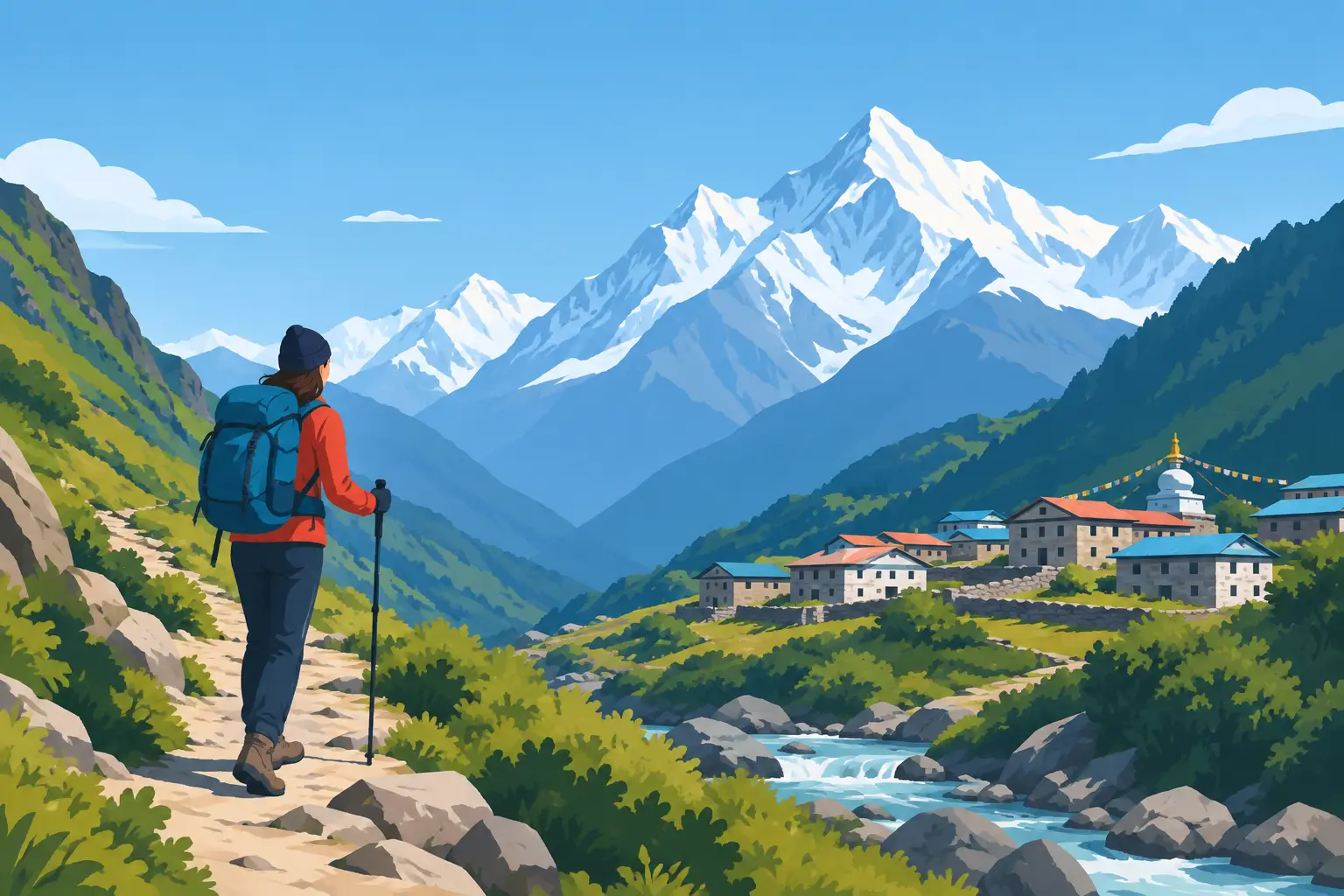
7 Best Langtang Village Treks for Every Walker
The best Langtang village treks bring the Himalaya close without demanding weeks away from home. A few hours north of Kathmandu, the valley combines snow peaks, yak pastures, Buddhist heritage and welcoming Tamang villages in a trek that can be shaped for first-time hikers, families with capable teenagers or experienced walkers looking for a shorter Himalayan challenge.
What makes Langtang special is the rhythm of the journey. You do not simply pass through villages on the way to a viewpoint. You sleep in them, share the trails with local residents and watch the landscape change from terraced hillsides to high alpine country. The right route depends on how much time you have, how comfortable you are with altitude and whether culture, big views or a quieter trail matters most.
How to choose among the best Langtang village treks
Most Langtang holidays begin with a scenic overland journey from Kathmandu to Syabrubesi. From there, the trail follows the Langtang Khola through forest and settlements before reaching the broad upper valley. Lodges make the route accessible, but this is still a mountain trek: daily walking can be long, conditions can change and altitude becomes a real consideration above Langtang Village.
For many travellers, six to nine trekking days offers the best balance. It allows time to acclimatise, enjoy the villages and add a high viewpoint without rushing downhill. A shorter plan can work if fitness is strong and time is limited, but it leaves less room for weather delays or a gentle pace. Travellers who prefer a more cultural walk may be better suited to Helambu or a lower Tamang Heritage Trail itinerary, while those seeking classic Himalayan scenery should continue up the Langtang Valley.
1. Langtang Valley Trek to Kyanjin Gompa
This is the classic choice and the best all-round option for most visitors. The route usually passes through Syabrubesi, Lama Hotel, Langtang Village and Mundu before arriving at Kyanjin Gompa, a high settlement surrounded by dramatic peaks. The walk builds gradually, with bamboo and rhododendron forest giving way to open valleys, stone houses and grazing yaks.
Langtang Village is at the heart of the experience. Rebuilt with extraordinary resilience after the 2015 earthquake, it remains a meaningful place to pause, learn about Tamang life and support local lodges. At Kyanjin Gompa, a rest day provides time to visit the small monastery, sample local cheese and take a day walk into the high valley.
Allow around seven to nine days from Kathmandu. This itinerary suits fit first-time Himalayan trekkers, provided the ascent is paced carefully and a rest day is kept in the programme.
2. Langtang Valley with Kyanjin Ri
Adding Kyanjin Ri transforms the classic Langtang route from a beautiful valley trek into a genuine high-mountain achievement. The viewpoint rises steeply above Kyanjin Gompa and rewards an early start with wide views towards Langtang Lirung, Dorje Lakpa and the surrounding glacier valleys.
The trade-off is altitude and effort. The upper viewpoint is above 4,700 metres, so it should only be attempted after proper acclimatisation and when everyone is feeling well. There is no prize for pushing through headache, nausea or unusual fatigue. A knowledgeable guide will assess the group, set an unhurried pace and recommend the lower viewpoint if conditions are not right.
This is one of the best Langtang village treks for travellers who want a memorable summit-style day without committing to technical climbing. Plan for eight to ten days in total, including contingency time for weather.
3. Langtang Valley with Tserko Ri
Tserko Ri is the bigger challenge from Kyanjin Gompa. Its summit, at roughly 4,984 metres, delivers a spectacular panorama of the Langtang Himal and is often the highlight for experienced trekkers. The route is steep and exposed to cold, especially before sunrise, but it remains a non-technical hike in normal conditions.
This variation is best for walkers with good fitness, previous altitude experience or a willingness to train properly beforehand. A steady climb from Kyanjin rather than a race for the summit makes all the difference. Spring and autumn usually provide the clearest conditions, though mornings can still be very cold.
Because the day is demanding, an itinerary should include a full acclimatisation day at Kyanjin before the ascent. It is a route where thoughtful planning matters more than speed.
4. Tamang Heritage Trail
For culture-led walking, the Tamang Heritage Trail is hard to beat. It travels through villages such as Gatlang, Tatopani, Thuman and Briddim, where Tamang traditions, Buddhist practice and mountain hospitality shape the journey. The trail generally stays lower than the Kyanjin routes, making it an appealing option for travellers who want Himalayan character with less exposure to very high altitude.
The landscapes are still striking, with terraced fields, forest ridges and views towards Ganesh Himal. Tatopani’s natural hot springs can be a welcome pause after a day on the trail, although facilities are simple and expectations should match the remote setting.
A five to seven-day programme works well. This trek is particularly suitable for school and college groups with appropriate supervision, or for travellers keen to spend more time meeting communities than chasing a high summit.
5. Tamang Heritage Trail and Langtang Valley
Combining the Tamang Heritage Trail with the Langtang Valley is the most complete village-focused journey in the region. It begins with cultural immersion in the lower settlements, then continues into the high valley towards Kyanjin Gompa. The result is a fuller picture of the Langtang region: home life, heritage, farming landscapes, forests and glaciated Himalayan terrain.
The main consideration is time. This is not a route to squeeze into a week. Around 11 to 14 days allows the itinerary to breathe, with sensible acclimatisation and enough energy to enjoy each village. It is a strong choice for travellers who have already decided that Nepal is more than a tick-list destination.
6. Langtang Valley with Gosaikunda Lakes
For a more demanding traverse, continue from the Langtang Valley towards the sacred Gosaikunda Lakes. The route crosses high terrain before reaching a remarkable group of alpine lakes revered by both Hindu and Buddhist pilgrims. It then descends towards the Helambu area, creating a varied journey rather than an out-and-back trek.
This is a serious step up from the standard Langtang Valley route. High passes, longer days and potentially snowy conditions require good fitness, dependable equipment and a flexible mindset. It is most suitable for experienced trekkers or fit newcomers travelling with professional support and enough days to acclimatise properly.
Expect around 12 to 16 days, depending on the chosen descent and road arrangements. The reward is a rare combination of village life, high passes and sacred mountain scenery.
7. Short Langtang Village Trek
A shorter Langtang itinerary can reach Langtang Village or Mundu before returning the same way. It does not offer the high viewpoints of Kyanjin, but it provides a genuine taste of the valley for travellers with four to six trekking days available. The forest walking, river valleys and time spent in Tamang settlements remain deeply rewarding.
This option works best for active travellers with a tight Nepal itinerary who accept that they are choosing depth in one section of the valley rather than completing the full classic route. Do not rush the climb simply to cover extra distance. A well-paced shorter trek is safer and more enjoyable than an ambitious schedule that compromises acclimatisation.
Planning a Langtang trek with confidence
Spring, from March to May, brings rhododendron colour and warmer daytime temperatures. Autumn, from October to November, is favoured for crisp skies and reliable mountain views. Winter can be wonderfully quiet but colder, while monsoon months bring greener hillsides, leeches on lower trails and a higher chance of cloud or road disruption.
Pack for changing conditions rather than just the forecast in Kathmandu. Layered clothing, waterproof outerwear, sturdy broken-in boots, a warm sleeping bag and sun protection are essentials. Lodges are comfortable in the context of a remote mountain trail, but rooms are simple, heating is usually in the communal dining area and hot showers or charging may cost extra.
A licensed guide and well-organised logistics bring reassurance, particularly where permits, transport and altitude decisions are concerned. Brothers Team can tailor the walking pace, lodge plan and route extension around the experience of your party, whether you are travelling independently or organising a group.
Choose the trek that gives you time to look up from the trail. In Langtang, a slow cup of tea in a village lodge, a conversation with a host or a clear morning beneath the peaks can become the part of the journey you remember longest.

Comments are closed