


Guided Versus Independent Trekking Compared
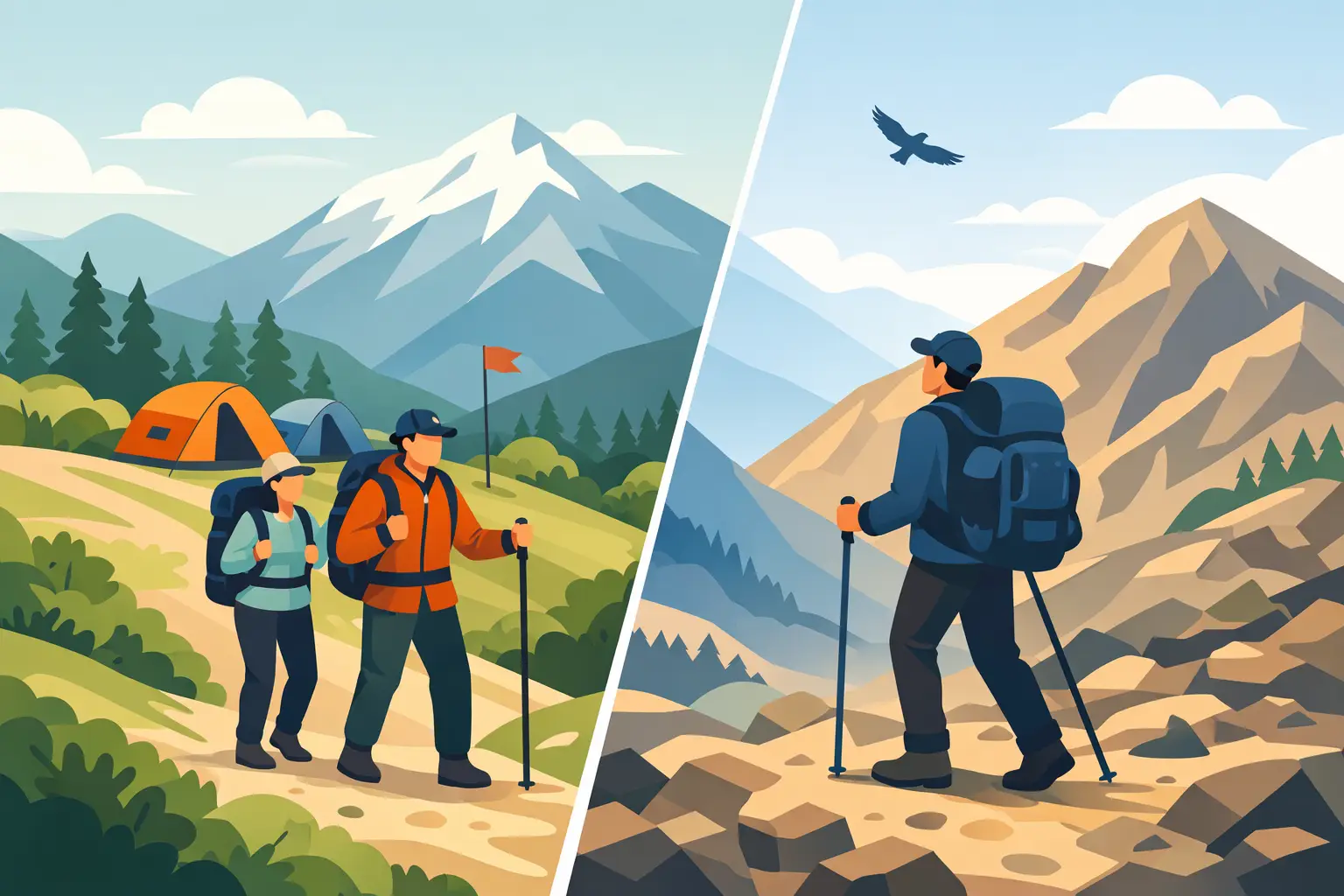
A high mountain trail can look wonderfully simple on a map: one village, one pass, one lodge at a time. In reality, the choice of guided versus independent trekking shapes far more than who walks beside you. It affects how confidently you handle altitude, changing weather, permits, accommodation, route decisions and the unexpected moments that often become the story of the trip.
For some travellers, planning a trek independently is part of the adventure. For others, a knowledgeable local guide turns a demanding journey into a more relaxed and meaningful experience. Neither approach is automatically better. The right choice depends on the route, season, your mountain experience and how much responsibility you want to carry yourself.
What a guided trek really provides
A guided trek is not simply a person showing the way. On a well-run Himalayan journey, the guide is your local route expert, cultural interpreter, practical problem-solver and an important part of your safety support.
On established routes such as Everest Base Camp, Annapurna Base Camp or Poon Hill, trails are often clear and villages are frequent. Yet a guide still adds value when plans change. A delayed mountain flight, a fully booked lodge, a headache at altitude or an incoming storm can require quick, informed decisions. A local team knows which alternatives are realistic and which choices may create further difficulty.
Good guides also set a sensible pace. Many first-time trekkers are fit enough to walk the daily distance but are less familiar with how altitude affects the body. Moving slowly, taking acclimatisation days seriously, drinking enough and recognising early symptoms of altitude illness can make the difference between reaching the destination comfortably and needing to descend early.
A guided arrangement normally removes much of the pre-departure and on-trail administration. Depending on the itinerary, this can include permits, domestic flights or road transport, lodge bookings, meals, porter arrangements and airport transfers. You still need to train, pack appropriately and look after your own wellbeing, but you are not managing every moving part from a mountain lodge after a long day of walking.
When independent trekking can be rewarding
Independent trekking suits travellers who enjoy planning as much as walking. It offers genuine flexibility: you may choose a later start, linger in a village, take an extra rest day or alter your schedule when conditions allow. For experienced trekkers with time, sound judgement and confidence travelling in remote regions, this freedom can be deeply satisfying.
Popular, lower-complexity routes during the main trekking seasons are generally the most practical setting for an independent trip. You may meet other walkers regularly, find basic lodging along the way and have more options if your plan changes. Even then, independence requires preparation. You need to understand your route, realistic walking times, altitude profile, local costs, weather patterns and transport connections.
It also means accepting that decisions are yours. If the forecast deteriorates, a trail junction is unclear or you feel unwell, there is no guide to assess the situation with local context. Carrying offline maps, keeping a cash reserve, securing suitable insurance and allowing spare days in the itinerary are sensible foundations, not optional extras.
Independent trekking should not be confused with unsupported trekking. A traveller can walk without a guide while still using local lodges, hiring a porter where appropriate, consulting reliable route information and making cautious choices. Self-reliance works best when it is paired with humility.
Guided versus independent trekking in the Himalayas
The Himalayas make this decision more significant because conditions can change quickly and elevation is often the main challenge. A route may be busy and straightforward in one section, then become exposed, snow-covered or difficult to navigate after a pass, side valley or weather shift.
For classic Everest Base Camp trekking, a guide is particularly reassuring for first-time high-altitude travellers. The itinerary involves a substantial gain in elevation, remote flight logistics and several points where an extra acclimatisation day may be wise. If you are attempting a more challenging variation through Gokyo Lakes and Cho-La Pass, the case for experienced local support becomes stronger. High passes demand careful timing, suitable conditions and a clear response plan if someone in the group is struggling.
The Annapurna region offers a broad range of experiences. A shorter Poon Hill trek may be manageable for capable independent walkers who are comfortable with basic logistics. Longer journeys, remote routes and high passes require more careful judgement. In less-developed areas, a guide brings practical local knowledge and helps ensure your spending supports communities along the route.
Rules also matter. Trekking permits and guide requirements can differ by region, particularly in restricted or sensitive border areas, and regulations may change. Before committing to an independent plan, confirm the current requirements for your exact route rather than relying on an old forum post or a friend’s previous experience.
The real cost is more than the headline price
An independent trek can appear cheaper because you are arranging each element separately. It may indeed cost less on a simple route when you travel outside peak dates, keep your itinerary flexible and are happy with basic accommodation. But the comparison is rarely as neat as it seems.
A guided package may include transport, permits, lodging, meals, guide and porter support, contingency planning and coordination that would otherwise take hours to arrange. It can also reduce expensive mistakes, such as missing a mountain flight, booking an unsuitable itinerary or rushing at altitude and having to abandon the trek.
It is useful to compare like with like. Ask what is included, what is excluded and who handles disruption. A low initial price is less attractive if every changed plan, cancelled flight or accommodation issue becomes your responsibility.
Choose support that matches your experience
Your fitness is important, but it is not the only measure of trek readiness. Consider your experience of multi-day walking, cold conditions, steep descents, basic lodge facilities and travel at altitude. Also consider your travelling style. Some people feel energised by daily planning; others would rather focus on the mountains, photography and conversations in the teahouse.
A guide is a strong choice if you are new to Himalayan trekking, travelling alone, short on time, taking on a high pass, trekking outside the main seasons or responsible for a school, college or organised group. The same applies if you want cultural insight rather than simply following a route from one overnight stop to the next.
Independent travel may suit you if you have proven mountain experience, a conservative itinerary, sufficient contingency time and the confidence to turn back when conditions are not right. The most experienced trekkers are often the least casual about risk.
A middle path can work well
The choice does not have to be entirely guided or entirely independent. Some travellers arrange core logistics in advance, then walk at their own pace on a straightforward route. Others hire a guide but prefer a small private arrangement rather than joining a fixed group. A porter-guide may be suitable on certain treks, although this role is not a substitute for a fully qualified guide on more demanding terrain.
For families, first-time trekkers and groups with mixed abilities, a customised guided itinerary is often the most comfortable balance. It allows room for individual pacing while retaining the structure needed for safe acclimatisation and dependable logistics.
At Brothers Team, we see that the best treks are rarely defined by how independently they were arranged. They are defined by the confidence to take in the mountains fully, the time to connect with local people and the good judgement to respect the trail when it asks you to slow down. Choose the level of support that lets you do exactly that.


Comments are closed