


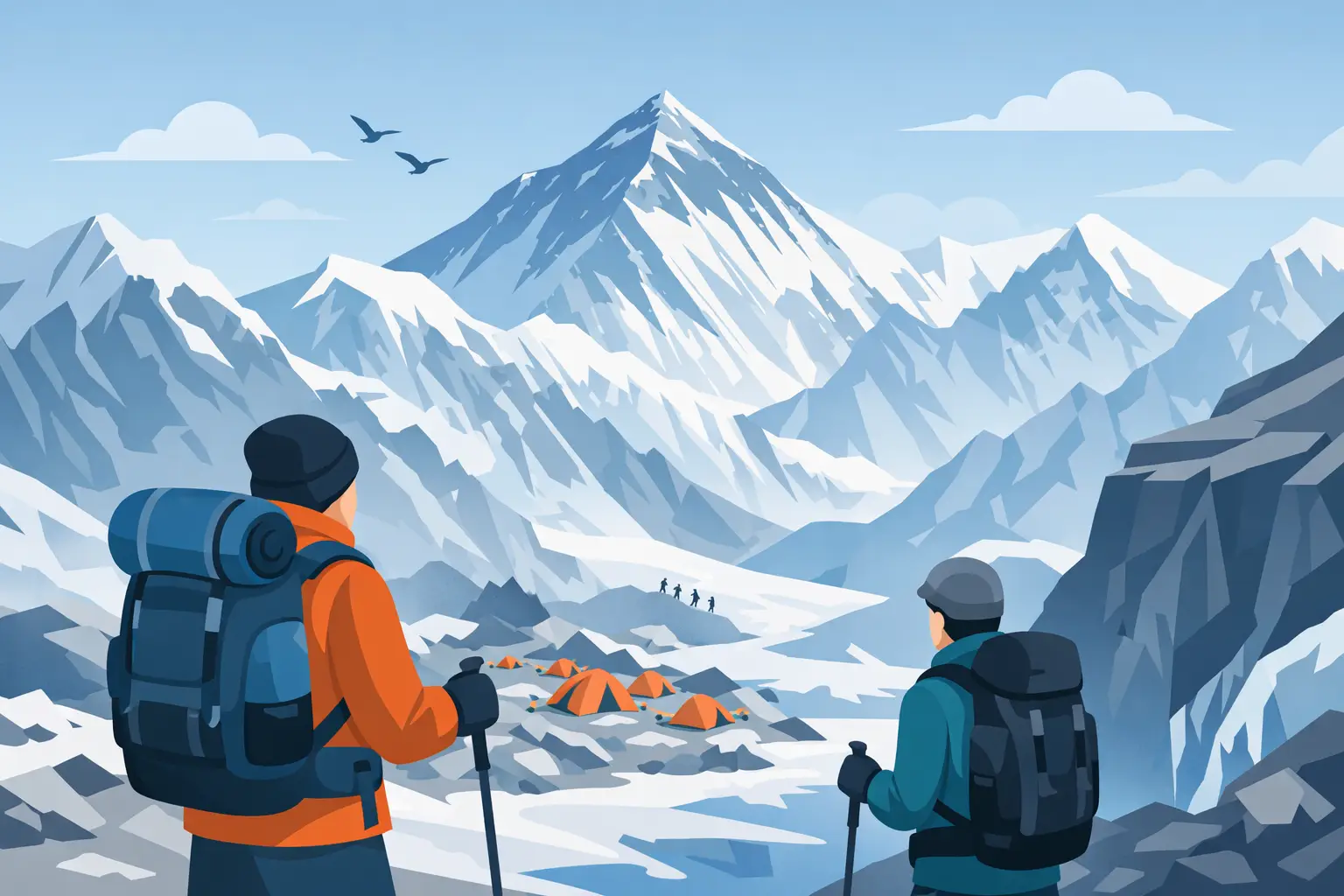
Is Trekking to Everest Base Camp Dangerous?
The first sight of Everest above the Khumbu Valley is unforgettable, but it is earned at high altitude, in changeable mountain weather and far from road access. So, is trekking to Everest Base Camp dangerous? It can be. The route is not a technical climb, and most well-prepared trekkers complete it safely, but it is a serious Himalayan journey that demands sensible pacing, good judgement and respect for the conditions.
The main risk is not a dramatic fall on a cliff edge. It is altitude illness, which can affect fit, experienced walkers just as readily as first-time trekkers. Add cold, fatigue, uneven paths, flight disruption and the possibility of illness away from familiar medical care, and it becomes clear why Everest Base Camp should be planned as an adventure rather than treated as an ordinary holiday hike.
Is trekking to Everest Base Camp dangerous because of altitude?
Altitude is the defining challenge. Everest Base Camp sits at around 5,364 metres, while many itineraries also include Kala Patthar, a viewpoint reaching roughly 5,545 metres. At these heights, the air contains less oxygen. Your body needs time to adapt, and no amount of enthusiasm, gym training or expensive gear can speed up that process.
Acute Mountain Sickness, often called AMS, is relatively common and can begin with headache, nausea, poor sleep, dizziness, loss of appetite or unusual tiredness. These symptoms should never be brushed aside as simply part of trekking. The safe response is to stop ascending, rest, monitor how the person feels and follow the guidance of an experienced guide.
More severe altitude illnesses, including fluid on the lungs or brain, are rare but potentially life-threatening. Warning signs include breathlessness while resting, a persistent worsening cough, confusion, loss of balance, severe headache or unusual behaviour. The essential treatment is immediate descent. A responsible trek leader will not allow summit fever, group pressure or a tight schedule to override this decision.
This is why a thoughtfully paced itinerary matters more than shaving off a day. Acclimatisation days in places such as Namche Bazaar and Dingboche are not idle days. They normally involve walking higher, then returning to sleep lower, helping the body adjust gradually. An itinerary that looks faster on paper may be less suitable in the mountains.
The other risks on the Everest Base Camp trail
The trail to Everest Base Camp is well travelled, with established teahouses and villages along the route. Yet this is still a high Himalayan environment, and conditions can shift quickly.
Weather, cold and changing conditions
Mornings may begin clear and bright before cloud, wind or snow arrives later in the day. At higher villages, temperatures can fall well below freezing overnight, particularly outside the main trekking seasons. Cold hands, wet socks and inadequate layers can quickly make an ordinary day difficult.
The best trekking periods are generally spring and autumn, when conditions are often more stable. Even then, mountain weather offers no guarantees. A flexible plan, proper insulated clothing, waterproof outer layers and spare dry socks are practical safety measures, not luxuries.
Uneven ground and everyday injuries
Most of the route follows clear trails, but the ground is often rocky, dusty, icy or muddy depending on the season. There are long staircases, steep ascents and descents, suspension bridges and sections shared with yaks, dzopkyo and porters. A slipped ankle or sore knee may sound minor at home, but it is more complicated when the nearest road is several days away.
Walking poles can reduce strain on descents and improve balance. Boots should be worn in well before departure, with soles that grip confidently. Trekkers should also give pack animals space, stand on the inside edge of the trail where possible, and listen carefully to their guide around busy sections.
Travel disruption and remoteness
For many travellers, the journey to Lukla is part of the adventure. It can also be the most unpredictable part of the trip. Flights are dependent on weather, and delays or cancellations can happen. Helicopter alternatives may sometimes be available, but they are weather-dependent too and can be costly.
Building spare time into international travel plans is one of the simplest ways to reduce stress. Do not book an important meeting, family event or onward flight immediately after your expected return from the trek. In the Khumbu, a flexible mindset is as useful as a warm jacket.
Hygiene, illness and fatigue
Busy teahouses, unfamiliar food, dehydration and long days can leave trekkers vulnerable to stomach upsets, coughs and exhaustion. Water treatment, careful hand hygiene and regular meals help. So does drinking enough, even when the cold makes thirst less obvious.
The goal is not to force down litres of water without thought. It is to stay consistently hydrated, fuelled and aware of changes in your condition. Alcohol can worsen dehydration and disturb sleep at altitude, so it is wise to avoid it while ascending.
Who is most at risk?
Everest Base Camp is achievable for many people aged 25 to 65 and beyond, provided they have appropriate fitness and medical clearance where needed. The trek does not require mountaineering experience, ropes or technical climbing skills. However, it does involve consecutive days of walking, usually five to seven hours at a time, at increasing altitude.
People with pre-existing heart, lung or circulation conditions should speak to their doctor or a travel-medicine specialist well before booking. Previous altitude problems are also relevant. A history of being fit at sea level is encouraging, but it does not guarantee an easy response in the Himalayas.
Travelling alone is possible, but it brings fewer margins for error. A professionally organised trek provides local support, route knowledge, lodge coordination and someone who can spot when a trekker is becoming unwell or withdrawing into silence. For school, college and organised groups, this structure becomes especially valuable, as leaders need clear supervision, communication and contingency planning.
How to make the trek substantially safer
Preparation begins months before the flight to Nepal. Build steady cardiovascular fitness through brisk walking, cycling, swimming or running, then add hill walking and stair sessions with a daypack. The best preparation is consistent rather than extreme. Strong legs and a calm pace make each trekking day more enjoyable, but they must work alongside acclimatisation.
Choose an itinerary with enough days to ascend gradually and retain room for weather or a rest day. Be cautious of programmes that promise Everest Base Camp in an unusually short time. A lower price or faster finish is poor value if it compromises the most important safety buffer on the route.
Pack for warmth, rain and sun. Conditions can feel hot while walking and bitterly cold once the sun disappears. A layered system, insulated jacket, hat, gloves, sunglasses and high-factor sun protection are all essential. Your daypack should carry water, snacks, basic personal medication and an extra layer, rather than relying entirely on a porter.
It is equally important to be honest each day. Tell your guide about a headache, poor sleep, stomach trouble or breathlessness early. Hiding symptoms because you do not want to delay the group is one of the riskiest choices a trekker can make. The mountain will still be there tomorrow, but your health needs attention today.
A specialist operator such as Brothers Team can make a meaningful difference through realistic itinerary design, experienced local guides, planned acclimatisation, reliable lodge arrangements and support when plans need to change. No agency can remove every mountain risk, but capable on-the-ground judgement reduces unnecessary exposure and gives trekkers reassurance when conditions become uncertain.
The right mindset for Everest Base Camp
Everest Base Camp is not dangerous in the sense that only elite adventurers should attempt it. It is dangerous when altitude is rushed, warning signs are ignored, equipment is inadequate or travellers assume that a popular route cannot present serious consequences.
Approach it with preparation, patience and a willingness to turn back if necessary, and it becomes a remarkably rewarding challenge. The greatest achievement is not simply standing beneath Everest’s vast north-west face. It is returning with powerful memories, respect for the Himalayas and the knowledge that you travelled through them wisely.


Comments are closed