


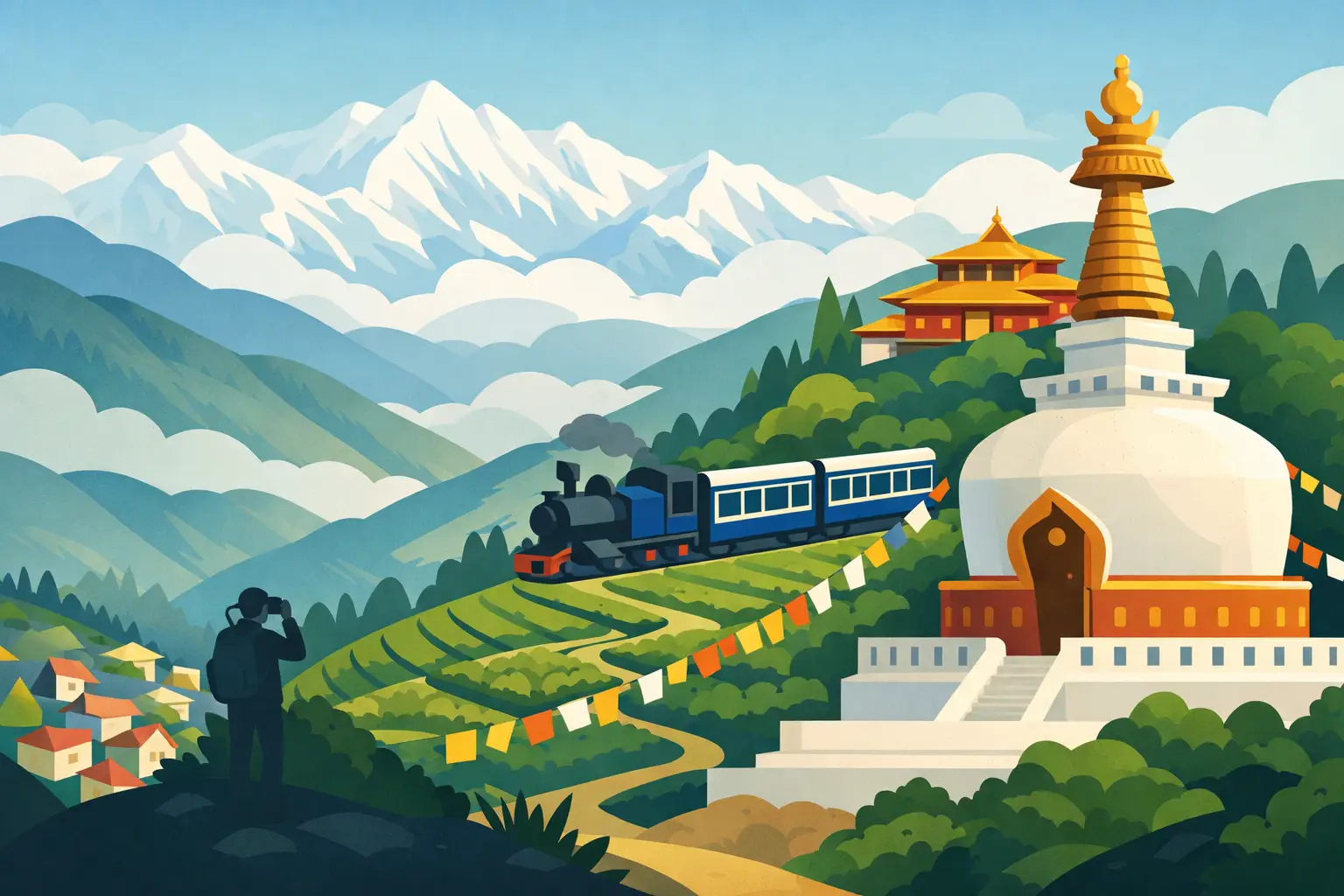
A 9-Day Sikkim Darjeeling Tour Itinerary
The first clear sight of Kanchenjunga can stop an entire breakfast table mid-conversation. That is the reward of a well-paced Sikkim Darjeeling tour itinerary: not simply ticking off viewpoints, but allowing enough time for the mountains, monasteries and tea hills to reveal themselves properly. This is a journey of winding roads and dramatic altitude changes, where good planning matters as much as the places you choose to see.
For most first-time visitors, nine days provides a satisfying balance. It combines Gangtok’s lively mountain character, the quieter landscapes of north or east Sikkim, and Darjeeling’s tea-growing heritage without making every morning a suitcase-and-vehicle rush. Travellers with fewer days can shorten the route, while keen walkers may wish to add time for village walks or a guided trek.
Why nine days works for a Sikkim Darjeeling tour itinerary
Sikkim and Darjeeling may look close together on a map, but Himalayan distances are measured in road hours rather than kilometres. Mountain traffic, weather, road repairs and landslide-prone stretches in the monsoon can all affect journey times. Building in breathing space keeps the holiday enjoyable and gives your driver and guide flexibility when conditions change.
The route below begins in Bagdogra or New Jalpaiguri, the principal gateways for both destinations. It is designed for travellers who want culture and scenery, with gentle activity rather than demanding trekking. Staying two nights in key places also avoids the common mistake of arriving after dark, leaving before sunrise, and never really experiencing a destination.
Days 1 and 2: Arrive in Gangtok and settle into the Himalaya
After landing at Bagdogra Airport or arriving at New Jalpaiguri railway station, travel by private vehicle to Gangtok. The drive generally takes four to six hours, depending on traffic and road conditions. It follows the Teesta River before climbing into Sikkim, so it is worth keeping a camera handy, but resist the urge to make too many stops on arrival day. The mountain air and long drive are enough for a first day.
Gangtok sits at roughly 1,650 metres, making it a comfortable introduction to Himalayan altitude. Spend the evening resting or taking a gentle stroll around MG Marg, the pedestrian heart of town. It is a pleasant place for a hot cup of tea, local snacks and an early night.
The following day is for Gangtok’s cultural side. Enchey Monastery offers a peaceful setting among tall trees, while the Namgyal Institute of Tibetology gives meaningful context to the Buddhist traditions that shape the region. Depending on interests, your programme can include the Flower Exhibition Centre, the Handicrafts and Handloom Institute, or viewpoints overlooking the surrounding hills.
Gangtok is not a silent monastery town, and that contrast is part of its appeal. It has cafés, shops and busy streets alongside prayer flags and prayer wheels. Families and first-time Himalayan travellers often appreciate this gentle beginning before heading into more remote landscapes.
Day 3: Tsomgo Lake and the high-road experience
An excursion to Tsomgo Lake, also known as Changu Lake, introduces the higher reaches of east Sikkim. The glacial lake lies at about 3,753 metres and can be surrounded by snow in colder months, while spring and summer bring changing colours to the slopes. The journey is as memorable as the destination, with the road climbing through forest and open mountain terrain.
This is a high-altitude day trip, so take it steadily. Drink water, avoid overexertion and tell your guide promptly if you develop a strong headache, dizziness or nausea. Most visitors return comfortably to Gangtok the same day, but the point is not to prove fitness. It is to enjoy a remarkable mountain environment responsibly.
A visit to Nathula Pass may be possible for eligible travellers, subject to permits, nationality rules, road conditions and official opening arrangements. It should be treated as a welcome addition rather than a guaranteed feature of the itinerary. Permit applications need passport details in advance, and schedules can change at short notice.
Days 4 and 5: Choose your Sikkim experience
This is where a tailored Sikkim Darjeeling tour itinerary makes a genuine difference. There are two strong directions, and the right one depends on your interests, season and tolerance for longer road journeys.
For an easier cultural route, travel to Pelling in west Sikkim. The journey from Gangtok usually takes five to seven hours. Pelling is known for its broad Kanchenjunga views, particularly on clear mornings, and for the impressive Pemayangtse Monastery. Nearby Rabdentse ruins offer a rewarding forest walk through the remains of Sikkim’s former capital. It is a fine choice for couples, families and travellers who want heritage alongside mountain scenery.
For a more remote mountain experience, consider Lachung in north Sikkim. The drive is long, commonly six to eight hours, and requires permits. The route passes waterfalls, deep valleys and small settlements before reaching a village at around 2,700 metres. On the next day, an early excursion towards Yumthang Valley offers alpine landscapes, grazing yaks and, in the right season, flowering hillsides. Zero Point can sometimes be included, but it takes visitors to even higher ground and depends heavily on weather and permits.
The north Sikkim option is spectacular, but it is not automatically better. It involves more driving, simpler accommodation and greater sensitivity to cold and altitude. Pelling offers a more relaxed rhythm. An experienced local operator can advise honestly based on the month of travel and the needs of your group.
Day 6: Travel from Sikkim to Darjeeling
Leave Sikkim after breakfast for Darjeeling, a journey that commonly takes five to seven hours. The exact route depends on whether you are departing Gangtok, Pelling or another stop. Arrive, settle in, and keep the evening free for the town’s unmistakable atmosphere: hillside lanes, old buildings, cool air and the fragrance of tea drifting from cafés.
Darjeeling has a different personality from Gangtok. Its identity is shaped by the tea industry, Nepali and Tibetan influences, colonial-era history and the famous Darjeeling Himalayan Railway. It can be busy, particularly in peak holiday periods, yet the surrounding views retain a powerful sense of space.
Days 7 and 8: Sunrise, tea gardens and Darjeeling heritage
An early start for Tiger Hill is worthwhile when the weather cooperates. From the viewpoint, the first light can illuminate Kanchenjunga, and on exceptionally clear mornings distant Everest may be visible. Nothing can guarantee a sunrise view in the Himalaya, so approach it as an experience rather than a promise. The changing colours, cold morning air and gathering anticipation are memorable even when cloud arrives.
On the return, visit Ghoom Monastery and Batasia Loop, where the toy train traces a dramatic curve through the hillside. Later, explore the Himalayan Mountaineering Institute and Padmaja Naidu Himalayan Zoological Park, both of which reflect Darjeeling’s relationship with mountain exploration and conservation.
Give one afternoon to tea country. A guided tea-garden visit explains the difference between first flush, second flush and autumnal teas, as well as the labour and craft behind each cup. This is more than a tasting stop. It connects the beautiful green slopes with the communities whose work has made Darjeeling tea known around the world.
Your final full day can be kept flexible. Walk the Mall Road, visit local markets, enjoy a heritage train ride if operating schedules suit, or take a gentle excursion to a nearby village. Travellers seeking more activity may add a guided walk through forested trails, while those travelling with children may prefer a slower day with tea, viewpoints and time to shop.
Day 9: Departure via Bagdogra or New Jalpaiguri
Leave Darjeeling with generous time for the descent to Bagdogra or New Jalpaiguri. The drive often takes around three to four hours, but mountain roads deserve a buffer, especially in wet weather. An afternoon or evening departure is generally more comfortable than a tight early flight.
Practical planning for a smoother journey
October to December and March to May are usually the most popular periods for this route. Autumn often brings sharp mountain views, while spring adds fresh greenery and rhododendrons at higher elevations. Winter can be beautifully clear but cold, particularly for Tsomgo Lake and north Sikkim. The monsoon, broadly from June to September, makes the landscape intensely green but can bring cloud, road disruption and leeches on walking trails.
Pack layers rather than one heavy coat: a warm fleece, waterproof outer layer, comfortable walking shoes, sun protection and a small daypack cover most situations. Mountain weather changes quickly. Carry motion-sickness medication if winding roads affect you, and keep essential medicines in your hand luggage.
Permits are a central part of Sikkim travel. Requirements vary by nationality and by the areas visited, especially protected zones such as Tsomgo Lake, Nathula and north Sikkim. They must be arranged through authorised channels with the correct documents and photographs. Booking with a specialist such as Brothers Team means these details, transport timings and suitable accommodation can be coordinated before you arrive.
The best Himalayan holidays leave room for surprise: a clear peak after a cloudy afternoon, a monastery ceremony heard from a quiet lane, or a cup of tea that tastes different because you have seen where it was grown. Plan carefully, travel patiently, and let Sikkim and Darjeeling set their own pace.


Comments are closed