


12 Nepal Family Adventure Ideas for All Ages
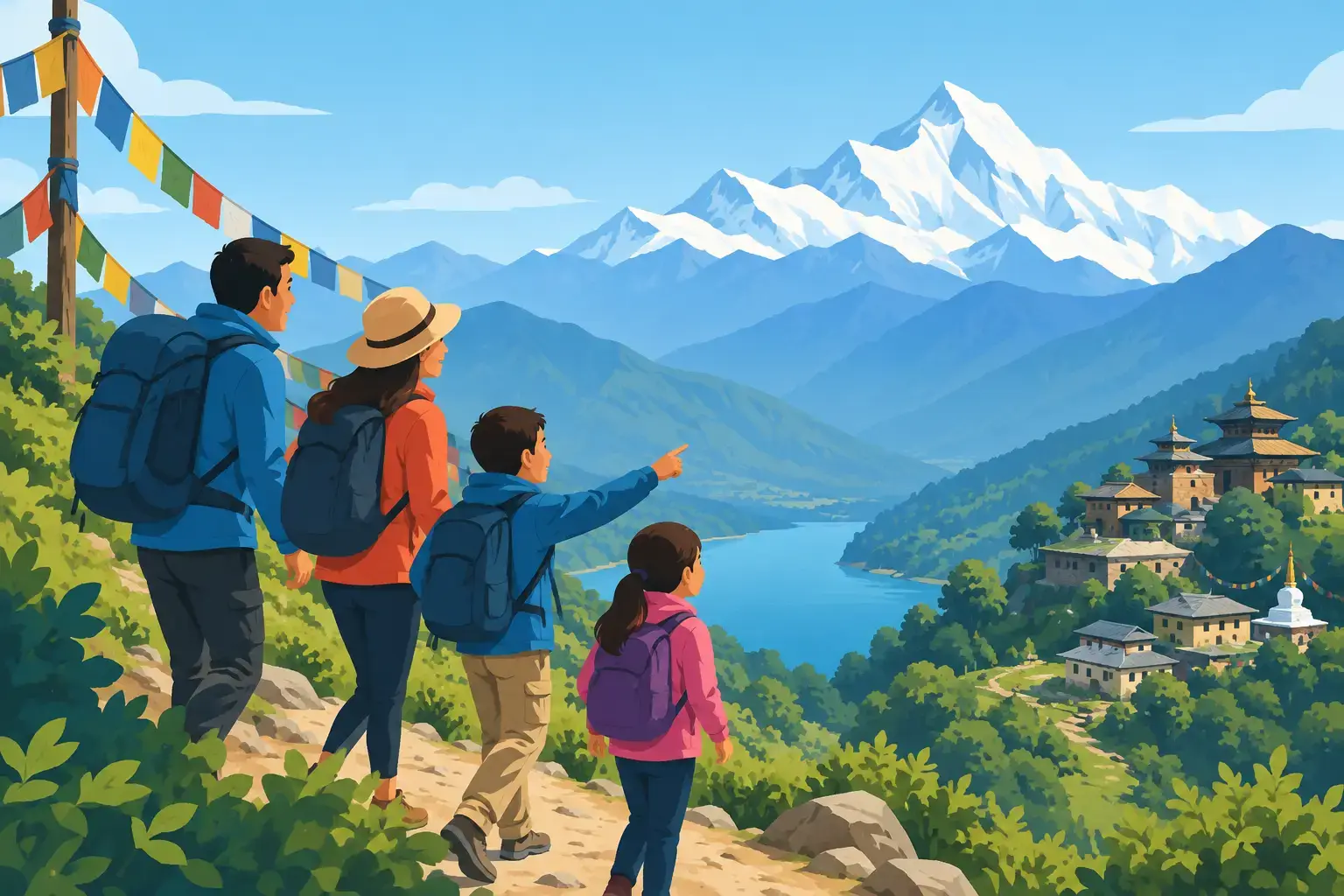
The moment children see the Himalayas rise above Kathmandu Valley, Nepal stops being a place on a map and becomes a real adventure. The best Nepal family adventure ideas combine that sense of wonder with sensible pacing: short walks, welcoming lodges, hands-on culture and enough rest to enjoy every view rather than race through it.
Nepal can suit energetic families, multigenerational groups and school parties remarkably well, but it is not a destination to plan by simply choosing the highest trail. Road journeys can be slow, weather can reshape a day’s schedule, and altitude demands respect. Choose experiences that fit the youngest or least experienced traveller, then build in room for the unexpected.
Nepal Family Adventure Ideas That Feel Truly Local
1. Walk to Australian Camp in the Annapurna foothills
For families who want a first taste of Himalayan trekking without committing to a long expedition, Australian Camp is a rewarding choice. The walk above Pokhara is relatively short, with terraces, forest trails and wide views towards Annapurna South, Hiunchuli and Machhapuchhre. An overnight stay makes the experience feel like a real mountain journey, particularly at sunrise.
It is a better fit for active children and adults with reasonable fitness than for those who dislike uphill walking. The trail is not technically difficult, but steps and uneven ground are part of the experience. A guide can set a comfortable pace and turn pauses into opportunities to spot birds, learn about village life or simply take in the scenery.
2. Paddle and explore around Pokhara
Pokhara is one of Nepal’s easiest places to slow down after time in Kathmandu. Families can take a traditional wooden boat across Phewa Lake, with the white peak of Machhapuchhre often reflected in the water on clear mornings. A gentle lakeside walk, the Peace Pagoda viewpoint and nearby caves can turn a single day into a varied outdoor programme.
This is an excellent lower-altitude option before or after a trek. Weather matters here: mountain cloud can obscure the views, especially later in the day, so early starts are often worthwhile. Even when the peaks remain hidden, the lake, gardens and lively cafés give everyone space to reset.
3. Look for rhinos in Chitwan National Park
A Chitwan safari brings a completely different side of Nepal into view. Instead of snow peaks, families encounter sal forest, elephant grass, crocodile-filled rivers and the possibility of seeing one-horned rhinoceros, spotted deer, monkeys and abundant birdlife. Jeep safaris, guided nature walks and canoe rides can be tailored around ages and confidence.
Wildlife is never guaranteed, and that is part of its value. Set expectations around observing nature rather than ticking off animals. Families often remember the quiet drift along the Rapti River, the alarm calls of deer or an expert naturalist explaining fresh tracks as much as a major sighting.
4. Spend a day living Kathmandu’s heritage
Cultural sightseeing works best when it is active rather than rushed. In Kathmandu Valley, families can watch butter lamps flicker at Boudhanath, see artisans at work around Patan Durbar Square and follow narrow lanes to courtyards that reveal a different detail at every turn. At Swayambhunath, the climb to the stupa can feel like a small challenge with a huge reward.
A knowledgeable local guide is particularly valuable for younger travellers. Stories of living goddesses, trade routes, temples and festivals give context to what might otherwise look like a series of old buildings. Allow time for local snacks and quiet breaks, especially after an international flight.
5. Try a village stay in the Kathmandu Valley or foothills
A family trip becomes more meaningful when there is time to meet people rather than only pass through places. A carefully chosen village stay can include a home-cooked meal, seasonal farm activities, a short nature walk and conversation with local hosts. For schools and youth groups, it also creates a respectful setting to discuss daily life, food traditions and environmental change.
Comfort levels vary between properties, so this is where clear planning matters. Some families will enjoy simple accommodation and a more rural rhythm; others may prefer a day visit followed by a comfortable hotel. Neither choice is less authentic if it allows everyone to stay engaged and well rested.
6. Take a mountain flight for a close Himalayan view
A scenic mountain flight can be a practical alternative for families with limited time or travellers unable to trek. On a clear morning, the aircraft passes a remarkable line of Himalayan peaks, often including Everest in the distance. It offers a powerful introduction to the scale of the range without the physical demands of high-altitude trails.
Flights are weather dependent and occasionally delayed or cancelled. Build flexibility into the itinerary and avoid placing an international departure immediately afterwards. For many children, a mountain flight paired with a short foothill walk gives the best of both worlds: big Himalayan drama and time outdoors.
7. Cycle quiet trails around the Kathmandu Valley
Mountain biking can be adapted from gentle countryside rides to technical downhill routes, so route choice is crucial. Families with older children may enjoy cycling through villages and farmland outside Kathmandu, stopping at viewpoints, temples or tea shops along the way. It is an energetic way to see how quickly city streets give way to terraced hillsides.
A reputable operator should provide properly sized bikes, helmets and a route matched to the group’s experience. Traffic, road surface and weather all affect the day. For first-time riders in Nepal, choose quieter tracks rather than treating the outing as an endurance test.
8. Go rafting on the Trishuli River
The Trishuli offers a lively introduction to white-water rafting, with rapids that are exciting without generally requiring previous experience. It can work well for families with older children and teenagers, especially when combined with an overnight riverside camp. Between rapids, the river journey passes green hills, suspension bridges and small settlements.
Minimum age, water level and suitability depend on the season and the rafting provider’s safety standards. Monsoon conditions are very different from calmer months. A full safety briefing, well-maintained equipment and experienced river guides are essential, not optional.
9. Follow the easy sections of the Poon Hill region
The wider Annapurna region need not mean attempting a demanding trek. A shortened itinerary around Ghandruk, Landruk or lower sections of the Poon Hill trail can bring families into Gurung villages with mountain panoramas, stone paths and comfortable teahouse stays. Ghandruk is especially appealing for its traditional village setting and close views of Annapurna South.
Poon Hill itself involves an early, uphill start and may be better for teenagers and fit adults than very young children. There is no prize for pushing through fatigue. A lower village walk with good weather and a relaxed breakfast can be the wiser family adventure.
10. Learn to cook Nepali food together
A cooking session is a welcome change of pace between active days. Preparing momos, dal bhat or seasonal vegetable dishes gives children and adults a practical connection to Nepali food culture, and everyone gets to enjoy the result. It is also an accessible activity for a mixed-age group when one person needs a gentler day.
Ask for a class that can accommodate dietary requirements in advance. Vegetarian food is widely available in Nepal, while specific allergies need careful communication and realistic choices, particularly once travelling into remote trekking areas.
11. Watch sunrise from Nagarkot or Dhulikhel
Just beyond Kathmandu, Nagarkot and Dhulikhel offer a quieter base with broad Himalayan horizons when conditions are clear. A family can enjoy short walks through villages and fields, then wake early for sunrise rather than undertaking a multi-day trek. The views can include a long sweep of mountains from Langtang towards the Everest region.
These hill stations are ideal at the beginning of a holiday, when everyone is still adjusting, or at the end, when a gentle final night feels right. Visibility varies by season, so present the mountain view as a hopeful highlight rather than a promise.
12. Create a school-style conservation challenge
For families travelling with curious children, turn part of the trip into a small learning project. Keep a wildlife notebook in Chitwan, record the stages of a trekking day, compare food grown at different elevations or ask a guide how communities manage waste on mountain trails. These small observations give the adventure a purpose without making it feel like homework.
This approach works particularly well for organised school and college groups, where a clear framework supports reflection and responsible travel. The most valuable lessons often come from practical details: carrying a refillable bottle, staying on a trail, respecting religious sites and recognising that mountain communities live with the landscape every day.
Planning a Family Adventure in Nepal Safely
The right itinerary is usually slower than first-time visitors expect. Allow at least two nights in Kathmandu around international flights, avoid stacking long road transfers on consecutive days, and keep one flexible day where possible. Domestic flights and mountain weather can change plans, while road conditions can make a seemingly short distance take longer than expected.
Altitude deserves special care. Kathmandu and Pokhara are manageable for most visitors, but high trekking routes require acclimatisation and an itinerary with gradual ascent. Headache, nausea and unusual tiredness should never be ignored or pushed through for the sake of a viewpoint. For a family holiday, lower-altitude routes are often more enjoyable than an ambitious Everest itinerary with insufficient time.
Pack layers for changing temperatures, waterproof outerwear, sun protection, comfortable walking shoes and a small daypack each. Children should carry only a light load. For trekking, confirmed lodge arrangements, reliable transport, permits, meals and an experienced guide remove much of the pressure from parents and group leaders. Brothers Team plans these details around the group rather than forcing families into a one-size-fits-all route.
The most memorable Nepal family adventure is not necessarily the longest trek or the biggest rapid. It is the trip where everyone comes home with a story they can tell proudly: the first snowy peak through the clouds, a rhino in the grass, a shared plate of momos, and the feeling that the Himalayas were not beyond reach after all.


Comments are closed