


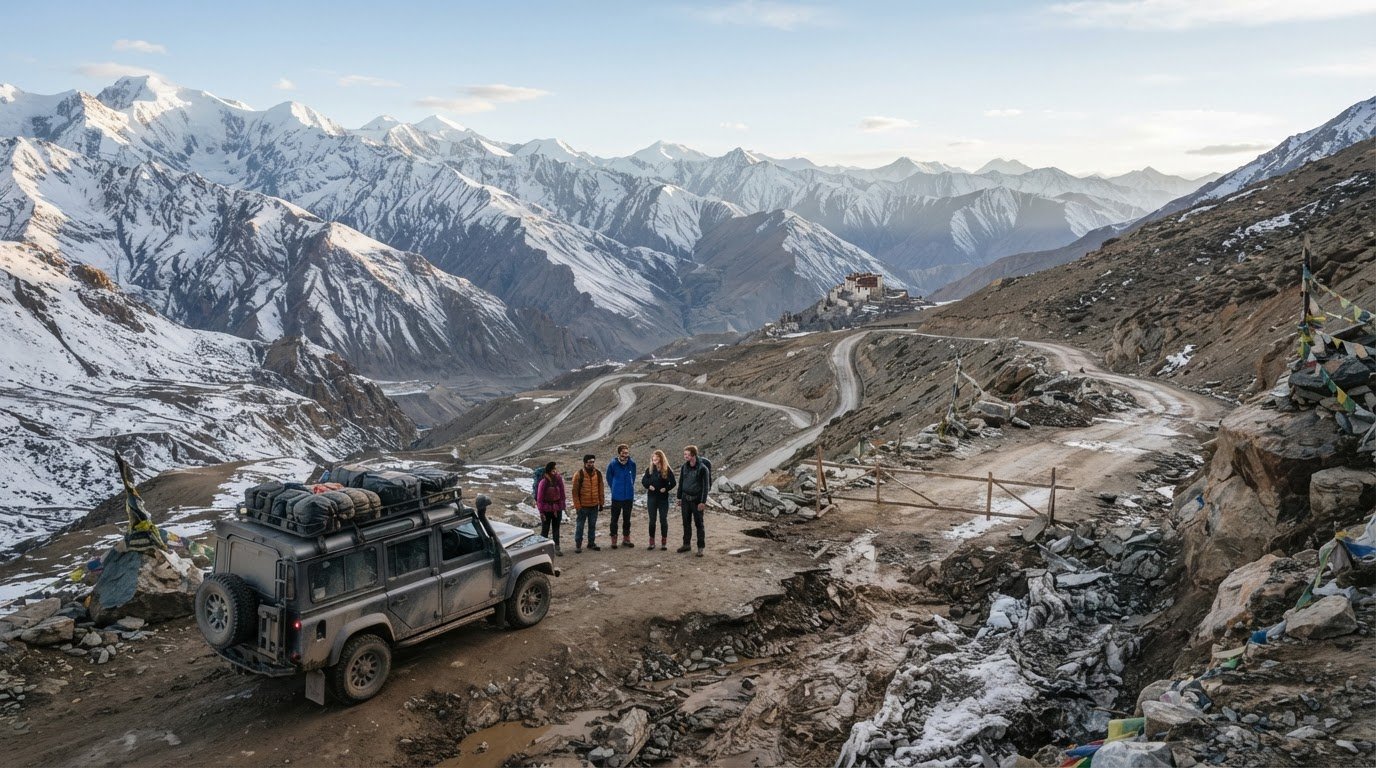
Kathmandu to Lhasa Overland Tour: 2026 Guide
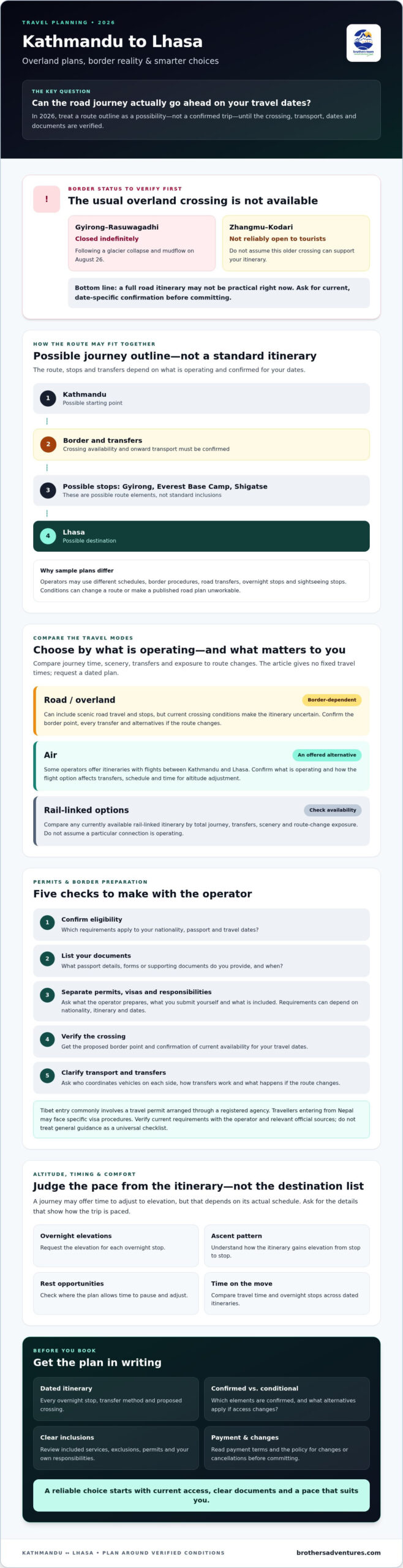
What if the biggest question about a Kathmandu to Lhasa overland tour is whether the road journey can go ahead at all? As of October 2026, the usual Gyirong-Rasuwagadhi crossing is closed indefinitely after a glacier collapse and mudflow on August 26. The older Zhangmu-Kodari crossing is not reliably open to tourists either, so an overland itinerary may not be practical right now.
It’s easy to picture the journey as a scenic drive through the Himalayas, with time to adjust to the altitude along the way. But current border conditions call for flexible planning, and some operators are offering itineraries that include flights between Kathmandu and Lhasa. The right option depends on what is operating, how much time you have and how comfortably you can manage the elevation.
This 2026 guide covers the typical route and possible variations, what to confirm about border access, Tibet permits and tour inclusions, and how to assess altitude adjustment in an itinerary. It also outlines questions to ask a tour operator so you can compare realistic options and choose a journey that fits your priorities.
Key Takeaways
- A Kathmandu to Lhasa overland tour can vary in route, timing and stops. Compare dated itineraries and verify that the proposed crossing is currently usable.
- Clarify which visa and permit arrangements the operator coordinates, and which documents or steps you must handle yourself.
- Compare road, air and any currently available rail-linked options by journey time, scenery, transfers and exposure to route changes.
- Ask for overnight elevations, the ascent pattern and planned rest opportunities to judge whether the pace suits your comfort and needs.
- Before booking, review written inclusions, exclusions, payment terms and the policy for changes or cancellations.
What Does a Kathmandu to Lhasa Overland Tour Usually Involve?
A Kathmandu to Lhasa overland tour is a cross-border journey linking Nepal and Tibet by road, using the route and border arrangements available at the time of travel. A route outline describes possible roads and stops. It is not a confirmed itinerary until an operator verifies the crossing, transport, overnight stops and dates for your trip.
That distinction matters in 2026. The Gyirong-Rasuwagadhi crossing has been closed indefinitely since a glacier collapse and mudflow on August 26, while tourist access at the older Zhangmu-Kodari crossing is not reliably available. A sample itinerary does not prove that the full road journey can currently operate. Confirm the latest conditions before making plans.
Which places may appear on the Kathmandu-to-Lhasa route?
Kathmandu may be the starting point and Lhasa the destination, but the route between them depends on what is confirmed. One listed option runs through Gyirong, Everest Base Camp and Shigatse before reaching Lhasa. Gyirong is relevant only if the itinerary includes that border area and crossing. Everest Base Camp and Shigatse are possible stops, not standard inclusions.
The Friendship Highway provides background on the road corridor’s geography and landmarks. Use it to understand the landscape, not as a real-time guide to road access or border operations.
Why do sample itineraries differ?
Operators may offer different schedules, border procedures, road transfers and sightseeing stops. Conditions can also change the route or make a published overland plan unworkable. Even when two itineraries list the same destinations, their overnight stops and time spent travelling may differ.
Published trip lengths are examples, not promises of current availability. Before comparing options, request a dated itinerary that lists every overnight stop, transfer method and border crossing. Ask which elements are confirmed and what alternatives apply if a road or crossing cannot be used. This gives you a more reliable basis for comparing trips than a destination list alone.
How Do the Route, Border Crossing, and Permits Fit Together?
Route planning and entry clearance are separate checks. An itinerary can show where you hope to travel, but only current border conditions and confirmed documentation can establish whether you can make the crossing. For a Kathmandu to Lhasa overland tour, verify each step before paying or making non-refundable arrangements. As of October 2026, Gyirong is closed indefinitely and Zhangmu is not reliably open to tourists, so do not assume a published road route is operating.
Work through these preparation steps with the operator:
- 1. Confirm eligibility. Ask which entry requirements apply to your nationality, passport and travel dates.
- 2. List your documents. Check which passport details, forms or supporting documents you must provide, and when.
- 3. Confirm permits and visas. Ask which applications are needed, who prepares each one and what you must submit yourself.
- 4. Verify the crossing. Get the proposed border point and confirmation of its current availability for your travel dates.
- 5. Clarify transport. Confirm vehicle transfers on each side, who coordinates them and what happens if the route changes.
What should travellers confirm about entry requirements?
Requirements can depend on nationality, itinerary and travel dates, and they can change. Ask for a written breakdown of the visa, Tibet permits and supporting documents that apply to your trip. Tibet entry commonly involves a travel permit arranged through a registered agency, while travellers entering from Nepal may face specific visa procedures. Verify the current rules rather than treating either point as a universal checklist. Review official travel advice for Tibet, then confirm details with the operator and relevant official sources.
Separate tasks the operator coordinates, such as permit processing where included, from your own responsibilities, such as supplying accurate documents or completing an application. Ask who checks the information, what you need to submit and what happens if an approval or border arrangement changes. Do not assume a service is included just because it appears in a sample itinerary.
What happens at the overland border crossing?
Ask the operator to explain the planned sequence: where you leave one vehicle, how you meet onward transport and who guides you through each transfer. Confirm which meals, overnight stays and local transfers are included around the crossing. If procedures, opening conditions or road access change, find out what alternatives are proposed and how extra costs or schedule changes are handled.
Brothers International Tours & Trading Pte Ltd designs guided Nepal and Tibet packages, with services that can include transport, accommodation, guiding and permit processing. If you are exploring a cross-border journey, you can enquire about a guided Nepal and Tibet itinerary and request route-specific arrangements in writing. Verify proposed dates, availability and inclusions directly before booking.
How Should You Compare an Overland Tour with Other Tibet Travel Options?
The best way to reach Tibet depends on your priorities: seeing the landscape unfold by road, reducing travel time or including a rail segment. In October 2026, the Kathmandu-to-Lhasa road crossing is not dependable. Gyirong is closed indefinitely, while Zhangmu is not reliably open to tourists. Operators are offering itineraries that use flights instead, but confirm current arrangements before planning around any route.
| Travel option | Scenery | Travel time and flexibility | Transfers and route changes |
|---|---|---|---|
| Overland | Offers a continuous ground journey and the chance to see landscapes and intermediate stops along the route. | Can involve long road transfers; timing depends on the route and conditions. The Nepal-Tibet crossing is currently unreliable. | Border procedures and vehicles may require transfers. Road access can affect the itinerary. |
| Air-based | Less time travelling overland between Kathmandu and Lhasa, with fewer road landscapes on that leg. | May suit a tighter schedule, subject to flight availability and the itinerary offered. | Check flight arrangements, airport transfers and any onward ground travel included in Tibet. |
| Rail-linked | Can add a rail journey where a suitable service forms part of the itinerary. | Depends on the route, train availability and connection timings. Confirm the exact stations and journey dates. | May involve additional transfers to connect with the rail network; check how these fit with the rest of the trip. |
Overland travel prioritises the route experience and ground logistics, rather than simply reaching Lhasa quickly. With the main Nepal-Tibet road crossing unavailable to tourists and the alternative uncertain, treat a Kathmandu to Lhasa overland tour as an option to verify, not an assured trip. Air-based travel is the practical alternative operators are currently offering. Rail-linked approaches depend on the specific connections available.
Who may prefer the overland route?
Travellers drawn to mountain scenery, intermediate stops and a continuous ground journey may find the road experience especially appealing. However, long transfers and changing road conditions will not suit everyone. Weigh the appeal of the route against your available time, comfort preferences and mobility needs, then check whether the crossing can be used for your dates.
Which tour arrangements are worth comparing?
Compare private and group formats only if an operator confirms both are available for your dates. Ask for the group size, guide support, vehicle arrangements, accommodation and included transfers in writing. Then review how schedule changes, route disruptions, cancellations and alternatives are handled. These details can tell you more than the tour label alone.
What Should You Check About Altitude, Timing, and Comfort?
A route may pass through high-altitude locations, but place names and night counts alone cannot show whether the pace is suitable for you. People respond differently to altitude, and an itinerary is not a medical assessment. Before committing to a Kathmandu to Lhasa overland tour, review the elevation changes and travel demands, and discuss personal health concerns with a qualified medical professional.
How can you assess whether the itinerary allows time to adjust?
Ask for the overnight elevation at every stop and the order in which the route gains altitude. Look at the full pattern, not just the total number of days. Long drives, sightseeing and rest periods all affect how demanding each day may feel. There is no set number of nights that can guarantee acclimatisation for every traveller.
Ask the operator what support is available if someone feels unwell, needs to slow down or faces a delay. Clarify whether the schedule can change, who makes that decision and what alternatives are possible. These are planning questions, not a substitute for medical advice.
Altitude-readiness checklist: Check the pacing, available support, itinerary flexibility and your personal readiness before choosing a trip.
When should you travel, and what comfort details matter?
There is no useful “best season” answer without checking your proposed route and dates. Road conditions and access can change, so ask the operator for current, route-specific guidance and whether the itinerary suits your travel window. Confirm that advice close to booking and again before departure, especially if the planned route includes remote stops.
Comfort depends on the details. Request clear information about accommodation standards and heating, meals, luggage handling, vehicle comfort and the length of road transfers. If rest is important to you, ask how much unstructured time the schedule allows and whether overnight stops can change. Make sure the written itinerary reflects the arrangements discussed.
Your personal needs matter, too. Consider how you manage long vehicle journeys, changing facilities and busy travel days, and share relevant concerns with the operator before confirming. A thoughtful plan should make the day-to-day experience clear while leaving room to respond if conditions or your comfort level change.
Brothers International Tours & Trading Pte Ltd designs guided packages across Nepal and Tibet, with services that can include transport, accommodation and guiding. Discuss your Nepal and Tibet itinerary and comfort requirements with the team, then confirm the proposed route, dates and inclusions directly before booking.
How to Choose a Kathmandu-to-Lhasa Tour Operator?
A useful proposal should explain more than the places on a map. For a Kathmandu to Lhasa overland tour, look for route-specific experience and clear written details, then verify whether the proposed crossing and transport can operate on your travel dates. Familiarity with a route is useful, but it does not replace current confirmation.
What questions should you ask before booking?
Ask the operator for a dated itinerary that names overnight stops, transfers and the proposed border crossing. Request written inclusions and exclusions, payment terms, and a change or cancellation policy. Check how the operator will share schedule updates and what alternatives may apply if a road, crossing or transport plan changes.
- Route and logistics: Who coordinates permits, border transfers, accommodation and local transport? Which arrangements are confirmed, and which depend on current conditions?
- Guiding and support: What guide support is included, and how can travellers contact the operator during the trip or if plans are disrupted?
- Costs and changes: What is excluded from the proposal? What payment conditions apply, and how are cancellations, delays or itinerary changes handled?
Get the answers in writing. This makes it easier to compare proposals based on the details that shape your experience, not just the headline route or trip length.
How can Brothers International Tours & Trading Pte Ltd help with trip planning?
Brothers International Tours & Trading Pte Ltd is a family-owned travel agency operating since 1992, with experience designing guided travel packages across Nepal and Tibet. Depending on the package, services can include guides, local transport, accommodation and permit processing. No specific Kathmandu-to-Lhasa itinerary is confirmed, so ask about current route options, proposed dates, availability and what each arrangement includes.
Before making plans, Discuss your Himalayan travel plans and request a proposal that sets out the route and terms clearly. Use it as a starting point for questions, then confirm all current arrangements directly with the operator.
Plan Your Nepal-Tibet Journey with Confidence
A Kathmandu to Lhasa overland tour promises a remarkable Himalayan route, but in 2026 the usual Gyirong crossing is closed indefinitely and Zhangmu is not reliably open to tourists. Check current border conditions before treating any road itinerary as bookable, and consider alternatives if the crossing is not operating.
Before choosing a journey, compare the route and transfers, verify which documents and permits apply to you, and request a dated itinerary with clear inclusions and contingency terms. Review overnight elevations, the pace of ascent and opportunities to rest as well. A schedule can help you understand the demands of a trip, but it cannot determine whether high-altitude travel is medically suitable for you.
Brothers International Tours & Trading is a family-owned travel agency operating since 1992, designing guided packages across Nepal and Tibet. Depending on the package, services can include guiding, transport, accommodation and permit processing. Ask about current route options, availability and exactly what a proposed itinerary includes.
Discuss your Himalayan travel plans and take the next step toward a journey shaped around your priorities. With clear information and flexible planning, you can approach the Himalayas with confidence and curiosity.
Frequently Asked Questions
How long does a Kathmandu to Lhasa overland tour take?
There is no fixed duration because routes, stops and border arrangements vary. An eight-day itinerary has been advertised as a sample, but it combines a flight between Kathmandu and Lhasa with overland travel within Tibet, so it is not a fully road-based crossing. Treat published trip lengths as examples, not confirmation of current availability. Ask for a dated itinerary showing travel days, overnight stops and transfers before planning your schedule.
Can travellers cross from Nepal to Tibet overland?
As of October 2026, the usual Gyirong-Rasuwagadhi crossing is closed indefinitely, and the older Zhangmu-Kodari crossing is not reliably open to tourists. A continuous road crossing from Nepal to Tibet therefore cannot be assumed to be possible. Check current border conditions with your tour operator before booking or making onward plans. Operators are offering flight-based itineraries as an alternative, subject to current arrangements and availability.
What permits or visas are needed for a Kathmandu to Lhasa tour?
Requirements depend on your nationality, itinerary and travel dates, so confirm them before booking. Foreign travellers need a Tibet Travel Permit arranged through a registered Tibetan travel agency as part of a guided tour. Travellers entering Tibet from Nepal may need a China Group Visa, though reported procedures can vary. Ask the operator which applications they coordinate, what documents you must provide, and verify current requirements with official sources.
Is a Kathmandu to Lhasa overland tour difficult because of the altitude?
It can be demanding, but individual responses to altitude vary, and an itinerary cannot determine whether the journey is medically suitable for you. Ask for overnight elevations, the ascent pattern, rest opportunities and what support is available if you feel unwell or need to slow down. Discuss personal health concerns with a qualified medical professional before travel. Do not assume that a particular number of nights guarantees acclimatisation.
What is the usual route from Kathmandu to Lhasa by road?
A sample route has run from Kathmandu through Gyirong, then Everest Base Camp and Shigatse, before reaching Lhasa. Stops and sequence vary by itinerary, and Everest Base Camp or Shigatse are not included on every trip. In 2026, the Gyirong crossing is closed indefinitely and Zhangmu is not reliably open to tourists, so this route is an outline, not confirmation that a road journey can operate. Verify current access before planning.
Is an overland tour better than flying to Lhasa?
Neither option is best for everyone. Overland travel prioritises the road experience, landscapes and possible intermediate stops, but involves ground transfers and exposure to changing road and border conditions. Flying may suit travellers who prioritise time, and operators are offering flight-based itineraries while the land crossings are unreliable. Compare current availability, transfer details and time commitments, then choose based on your comfort, schedule and travel priorities.
How much does a Kathmandu to Lhasa overland tour cost?
Costs vary with the itinerary, transport, accommodation, guiding and included services. The current border situation can also affect what is offered. No price confirms that a particular route is available. Request a current written quote and check what it covers, such as permits, local transport and accommodation, along with exclusions and payment terms. Compare proposals with the same inclusions in mind, and confirm all arrangements directly with the operator.
What should be included in a Kathmandu to Lhasa tour package?
A proposal should clearly list the dated itinerary, transport and transfers, accommodation, guide support, permit coordination, inclusions and exclusions. Ask whether meals, border-area overnight stays and contingency arrangements are covered, and get payment, cancellation and schedule-change terms in writing. Package services can include guiding, transport, accommodation and permit processing, but inclusions vary. Confirm who handles each arrangement and which documents or actions remain your responsibility.



Comments are closed