


Kashmir Great Lakes Trek: 2026 Route & Planning Guide
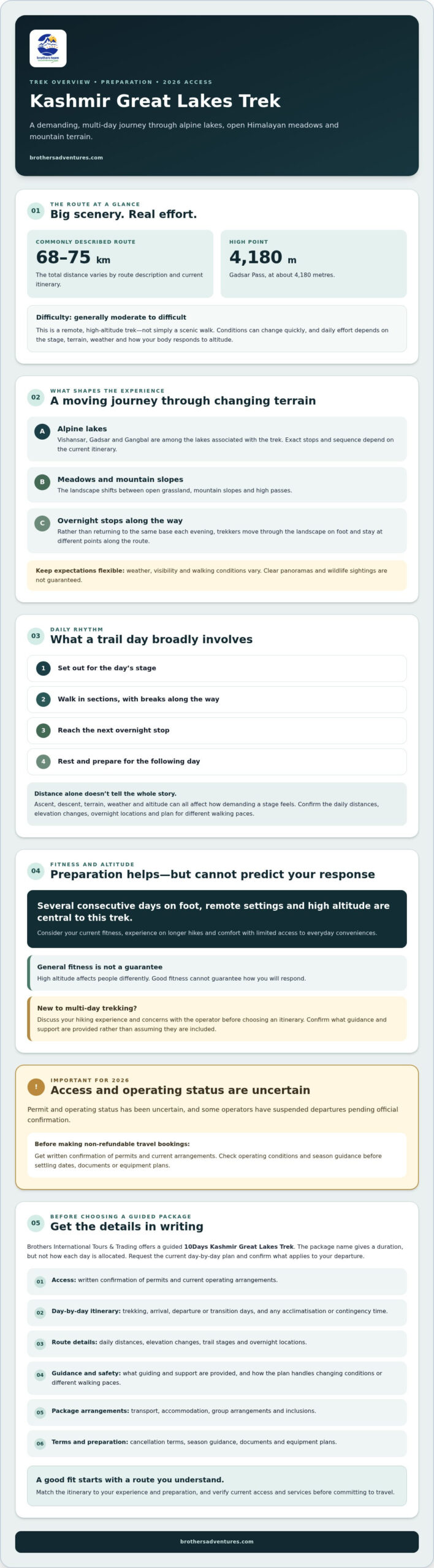
Could a trek known for mirror-bright lakes and sweeping Himalayan meadows be the right adventure for you, even if you’re unsure about the altitude, daily effort or 2026 access? The Kashmir Great Lakes trek is a demanding journey, not simply a scenic walk. The commonly described route covers roughly 68 to 75 kilometres and crosses Gadsar Pass at about 4,180 metres.
The trek is generally considered moderate to difficult, and conditions can change quickly at high altitude. Another important consideration for 2026 is that permit and operating status has been uncertain, with some operators suspending departures pending official confirmation. Get written confirmation of permits and current arrangements before making non-refundable travel bookings.
This guide explains the fitness and experience the route demands, what the days and high-altitude conditions may involve, and what to ask about guidance, safety, itinerary details and package inclusions. It also introduces Brothers International Tours & Trading’s guided 10Days Kashmir Great Lakes Trek and the details to confirm before choosing it. Use the guidance below to decide whether the journey fits your plans and preparation.
Key Takeaways
- Explore what makes the Kashmir Great Lakes trek a journey through alpine lakes, open meadows and mountain terrain.
- Learn how route details, daily walking demands and overnight stops shape the experience, and what to verify in the current itinerary.
- Assess your fitness and trekking experience, while remembering that preparation can’t predict how you’ll respond to altitude.
- Check current operating conditions and season guidance before settling dates, documents or equipment plans.
- Compare guided options by requesting written details on permits, guiding, transport, accommodation, group arrangements and cancellation terms.
What Is the Kashmir Great Lakes Trek, and What Makes the Journey Special?
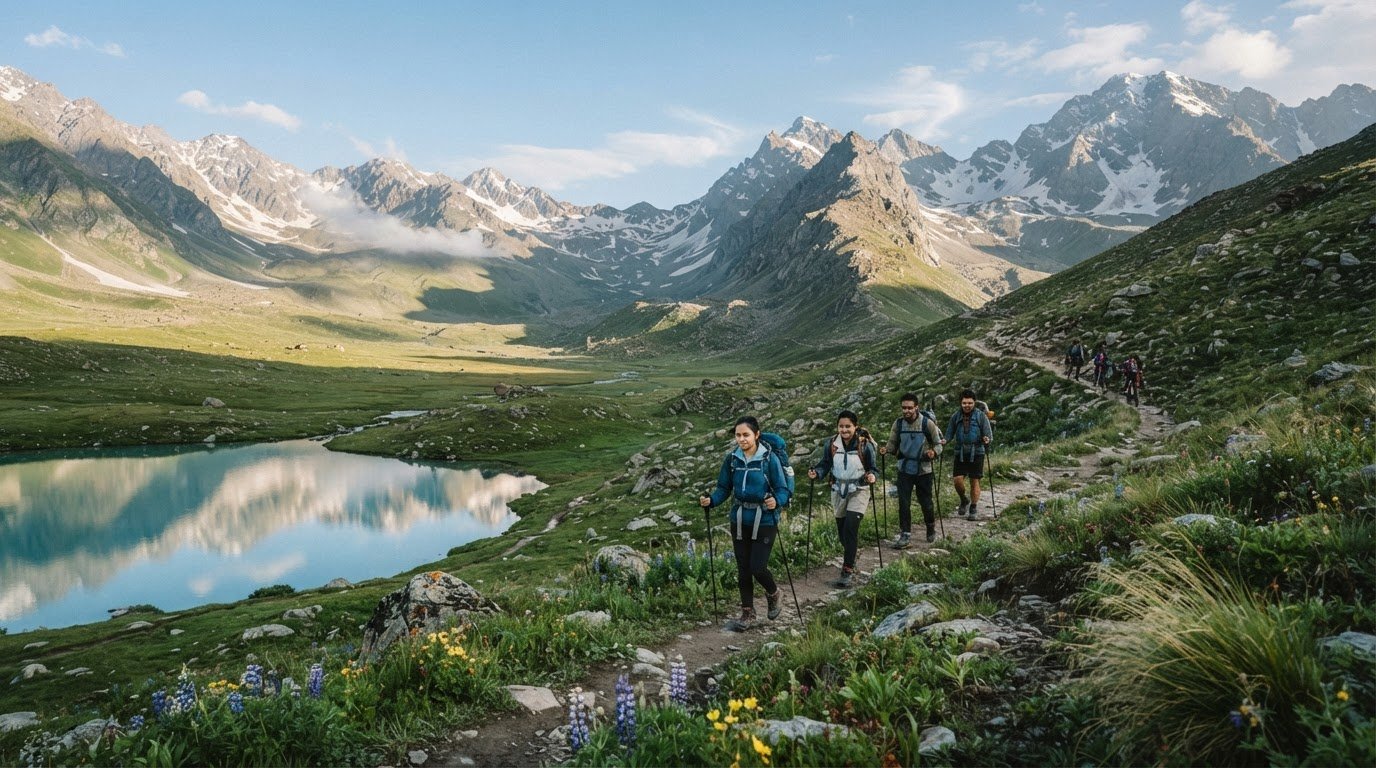
The Kashmir Great Lakes trek is a multi-day, high-altitude hike through mountain terrain, linking alpine lakes, broad meadows and overnight stops along a remote route. Rather than returning to the same base each evening, trekkers move through the landscape on foot, with each day bringing a new stretch of trail and a different place to camp or rest. For a neutral overview of the route and lakes, see the Kashmir Great Lakes Trek.
In one sentence: The trek’s central appeal is travelling on foot between remote alpine lakes and open Himalayan scenery, while taking on the effort and preparation a high-altitude journey requires.
What landscapes and experiences can trekkers expect?
The scenery shifts between open grassland, mountain slopes and high passes, with lakes serving as memorable landmarks along the way. Vishansar, Gadsar and Gangbal are among the lakes associated with the trek, though the exact stops and sequence depend on the current itinerary. At each overnight stop, the pace changes: walking gives way to time to rest, take in the surroundings and prepare for the next day.
Expect a journey shaped by the trail, not a guaranteed postcard view at every turn. Weather, visibility and walking conditions can vary, so wildlife sightings and clear mountain panoramas aren’t guaranteed. Before booking, ask the operator for the current route, daily stages, elevations and overnight locations.
Who is the Kashmir Great Lakes trek suited to?
This trek may suit travellers who enjoy several consecutive days on foot, are comfortable in remote settings and want a moving journey rather than a resort-based holiday. A love of hiking is a good start, but enthusiasm alone won’t prepare your legs for sustained walking or your body for altitude. Consider your current fitness, experience on longer hikes and comfort with limited access to everyday conveniences.
High altitude affects people differently, and good general fitness can’t guarantee how you’ll respond. If you’re new to multi-day trekking or unsure about the physical demands, discuss your experience and concerns with the operator before choosing an itinerary. On a remote route, reliable guidance and clearly explained arrangements matter. Confirm what support is provided rather than assuming it’s included.
Brothers International Tours & Trading offers a guided 10Days Kashmir Great Lakes Trek. Treat the advertised duration as a starting point for questions, not a substitute for a day-by-day plan. Ask how the itinerary fits your experience, what services are included and what current access arrangements apply. A well-matched trek starts with honest preparation and a route you understand.
How the Kashmir Great Lakes Trek Route and Daily Rhythm Work
A trek itinerary is more than a list of place names. It shows how walking days, overnight stops and any travel or transition days fit together. The commonly described route crosses the region, but the exact stages, camps and daily distances for a particular departure must be confirmed with its operator.
Daily stages and trail conditions matter more than a single distance figure: the same number of kilometres can feel very different depending on ascent, descent, terrain, weather and how your body responds to altitude.
What does a typical day on the trail involve?
Expect a repeated rhythm of setting out, walking in sections, pausing for breaks and reaching the next overnight stop. After arrival, there’s time to rest and prepare for the following day. Treat this as a broad picture, not a confirmed timetable: start times, walking hours and break frequency depend on the actual itinerary and conditions.
Your pace may differ from another trekker’s, and trail conditions can change how demanding a stage feels. Ask the operator for daily distances and elevation changes, overnight locations, and how the plan accounts for different walking paces or weather. Don’t treat an illustrative schedule as a promise of exact timings.
How should readers interpret a 10-day itinerary?
The name 10Days Kashmir Great Lakes Trek tells you the package duration, but not how those days are allocated. The available information doesn’t confirm which days are for trekking, arrival, departure or transitions, or whether the plan includes acclimatisation or contingency time. Request the current day-by-day itinerary before deciding whether its pace suits you.
A stage table is useful only if its route names, distances, elevations and overnight stops are verified for this specific package. Don’t assume a standard route description matches the operator’s current plan. Request written details, including any changes that may apply to current access or operating conditions.
Use a specialist tour operator guide to shape your questions about route clarity, support and what happens if plans need to change. Before booking, ask the provider to explain the full itinerary and confirm which services are included. This helps you assess the guided trip against your own pace and expectations.
Is the Kashmir Great Lakes Trek Too Difficult? Assess Fitness, Altitude and Safety
There isn’t one answer for every trekker. The challenge of the Kashmir Great Lakes trek depends on your fitness, the route’s terrain and daily pace, trail and weather conditions, and how your body responds to altitude. Someone comfortable with long walks at lower elevations may still find consecutive trekking days or high-altitude conditions demanding.
Physical preparation can build strength and endurance, but it can’t replace acclimatisation or predict an individual response to altitude. Take both seriously when deciding whether the trek suits you.
What fitness preparation is useful before the trek?
Build up progressively rather than relying on a few strenuous workouts just before departure. Regular walks can help develop endurance; add strength work and practise on varied terrain where possible. Once you have the confirmed itinerary, ask the operator what walking distances, elevation changes and carried load to prepare for. Practise with a backpack at an appropriate weight, based on those arrangements.
Consistency matters more than a last-minute burst of effort. If you have a health concern, a history that may affect strenuous exercise, or questions about high-altitude travel, speak with a qualified medical professional before committing. A general fitness assessment can’t guarantee that the trek will feel manageable.
What should trekkers know about altitude and safety?
Altitude-related illness can involve symptoms such as headache, nausea, dizziness or unusual tiredness. These symptoms can have different causes, so don’t use a short list to diagnose yourself or decide that it’s safe to keep walking. Ask a qualified medical professional for advice before travel, and clarify with the operator how concerns are reported and assessed on the trek.
Before booking, request clear answers about support arrangements. Ask who will guide the group, how trekkers can communicate an emergency, what evacuation planning is in place, and how the team responds if someone becomes unwell or cannot continue. These are details to verify for the specific departure, not procedures to assume are included.
Also ask how the itinerary handles pace, rest and altitude, and whether acclimatisation arrangements are built into the confirmed plan. If the answers are vague, seek clarification before deciding. The right choice isn’t about proving you can push through; it’s about matching your preparation and comfort level to the actual route and available support.
Kashmir Great Lakes Trek: Preparation & Timing Guide
Good planning starts with current information, not a fixed assumption about the season. Weather, trail conditions, access and permit arrangements can change, so confirm the operating window and your departure date with the trek operator before making non-refundable travel commitments. General seasonal advice is a starting point, not a guarantee of conditions on your dates.
How do trekkers choose suitable dates?
Ask whether the planned route is currently accessible, whether permits have been confirmed for your departure, and what happens if conditions or official guidance change. Request the answer in writing, along with the operator’s cancellation and change terms. Keep separate travel arrangements flexible until you understand the trek’s status and meeting instructions.
What should you organize before departure?
Work through this sequence for the Kashmir Great Lakes trek:
- Confirm dates and access. Get written confirmation of the departure, current route plan and permit arrangements before committing to other bookings.
- Check your fitness. Use the confirmed itinerary to guide your preparation, and speak with a qualified medical professional if you have health concerns or questions about high-altitude travel.
- Verify documents. Ask which identification and travel documents are required for your circumstances, and check current requirements with the relevant authorities. Confirm any medical documentation or permits the operator expects.
- Finalize equipment. Request the current packing list and ask what the package provides before buying or packing gear.
For clothing, plan a layering system that lets you adjust as conditions change. Ask the operator what warmth and rain protection are appropriate for the confirmed route and dates. Check footwear recommendations, and allow time to wear in suitable walking shoes or boots. Plan personal medication in consultation with your healthcare professional, and confirm any luggage or backpack limits before departure.
Separate what you arrange yourself from what the package explicitly includes. Multi-day packages may include transport, accommodation, guiding and permit processing, but confirm each item for this specific trek. Also clarify where and when to meet, what luggage can be carried, and whether any equipment is supplied.
Brothers International Tours & Trading offers a guided 10Days Kashmir Great Lakes Trek. Review the guided trek details and confirm current arrangements directly with the operator before finalizing your plans.
Choosing a Guided Kashmir Great Lakes Trek Package: What to Confirm Before Booking
A package’s headline duration tells you only part of the story. Compare what the days involve, what support is provided and what you’ll need to arrange yourself. For a remote trek, clear written answers are more useful than assumptions based on what another operator includes.
What should a guided trek package clearly explain?
Use this checklist to compare options. Ask the operator to confirm each point for the specific departure:
- Itinerary: Request the day-by-day route, walking stages, distances, elevations and overnight locations. Clarify which days are for trekking, travel or transitions.
- Guiding and support: Ask who guides the trek, what support staff are included, how the group is organized and what arrangements apply if someone needs help.
- Transport and accommodation: Confirm which local transport and overnight stays are covered, and identify any transfers or accommodation you must arrange separately.
- Permits and current access: Ask whether permit processing is included and request written confirmation of the current status for your dates before making non-refundable travel bookings.
- Meals and equipment: Check what meals and trekking equipment, if any, are provided. Ask for the current packing list and any luggage limits.
- Group and booking terms: Confirm group arrangements, exclusions, payment terms and cancellation or change policies, including what applies if access or permits affect the departure.
Get the answers in writing. Compare the full itinerary and support arrangements, not just the advertised number of days. Brothers International Tours & Trading Pte Ltd offers a guided 10Days Kashmir Great Lakes Trek; confirm its specific inclusions and current arrangements directly rather than assuming they match general package practices.
How can you decide whether this trek package fits?
Match the confirmed daily stages and support to your walking experience, fitness, available time and comfort with remote travel. If the schedule feels rushed or key details remain unclear, ask questions before committing. The right package should make both the journey and your responsibilities as a traveller clear.
Ready to explore the Kashmir Great Lakes trek? When you enquire, ask for the current day-by-day itinerary, permit and access status, inclusions and exclusions, group arrangements, safety and support details, and cancellation terms. Share your trekking experience and any practical constraints, too. A thoughtful conversation can help you decide whether this guided journey fits your plans.
Make Your Next Trekking Decision with Confidence
The Kashmir Great Lakes trek can suit travellers ready for consecutive walking days, remote conditions and the uncertainty of high-altitude travel. Choose carefully: assess your fitness and comfort with the demands, then review the current itinerary, support arrangements and package inclusions rather than relying on the trip duration alone.
For 2026, confirm current access and permits with the operator, and get written confirmation before making non-refundable travel bookings. Conditions and arrangements can change, so check them both during the planning process and close to your intended departure.
Brothers International Tours & Trading Pte Ltd is a family-owned travel agency operating since 1992, and offers the 10Days Kashmir Great Lakes Trek. Ask for the current route, itinerary and exact inclusions to decide whether the guided option fits your plans.
Contact Brothers International Tours & Trading to request current trek details before making your booking.
Frequently Asked Questions
How difficult is the Kashmir Great Lakes trek?
The Kashmir Great Lakes trek is generally considered moderate to difficult, with consecutive walking days, high-altitude terrain and changing trail conditions. Typical stages may involve several hours of walking, but the exact effort depends on the confirmed itinerary, pace, ascent and descent. Build endurance before departure, and remember that fitness alone can’t predict how you’ll respond to altitude. If you have health concerns, seek advice from a qualified medical professional.
When is the best time to do the Kashmir Great Lakes trek?
July to September is commonly cited as the trekking window, but suitable dates depend on current access, weather and trail conditions. For 2026, verify that the trek is operating and that permits and arrangements are confirmed for your departure. Ask the operator for written confirmation before making non-refundable travel bookings. Seasonal guidance doesn’t guarantee clear skies or specific trail conditions on your dates.
How many days does the Kashmir Great Lakes trek take?
The walking route is commonly completed in about seven to eight days, while Brothers International Tours & Trading offers a 10Days Kashmir Great Lakes Trek. A package’s full duration may include days beyond the trek itself, so don’t assume how time is allocated. Request the current day-by-day itinerary and check which days involve trekking, arrival, departure or transitions, along with the planned overnight stops.
Do I need a guide for the Kashmir Great Lakes trek?
A guided trip can help with route logistics and coordination. Permits and access arrangements make it important to clarify current requirements with an operator. Confirm who provides guiding, what support is available and how the group handles changes or difficulties. Don’t assume every package includes the same services, or that a guide removes the physical and altitude-related challenges of a remote trek.
What should I pack for the Kashmir Great Lakes trek?
Start with the operator’s current packing list, since recommended equipment and luggage limits depend on the confirmed itinerary and what the package provides. Ask about suitable walking footwear, clothing layers and rain protection. Plan personal medication with advice from a qualified medical professional, and confirm whether trekking equipment is supplied or must be arranged separately. Avoid buying bulky gear until you know what’s included and what you’ll need to carry.
What is included in a Kashmir Great Lakes trek package?
Inclusions vary by operator and departure. Brothers International Tours & Trading’s multi-day packages include guiding, local transport, accommodation and permit processing, but confirm each item for this specific trek. Ask for written details on meals, equipment, group arrangements, support staff, exclusions and cancellation terms. Also verify current permit and access arrangements. A clear list helps you identify what you must organize separately before travelling.
How much does a Kashmir Great Lakes trek package cost?
Package prices depend on the operator and what the specific trip includes, so request a current quote directly rather than relying on a general estimate. Compare the confirmed itinerary, guiding, transport, accommodation, permit processing and stated exclusions alongside the total price. Ask whether meals or equipment are included, and check the payment and cancellation terms in writing before committing to the package or other travel arrangements.


Comments are closed