


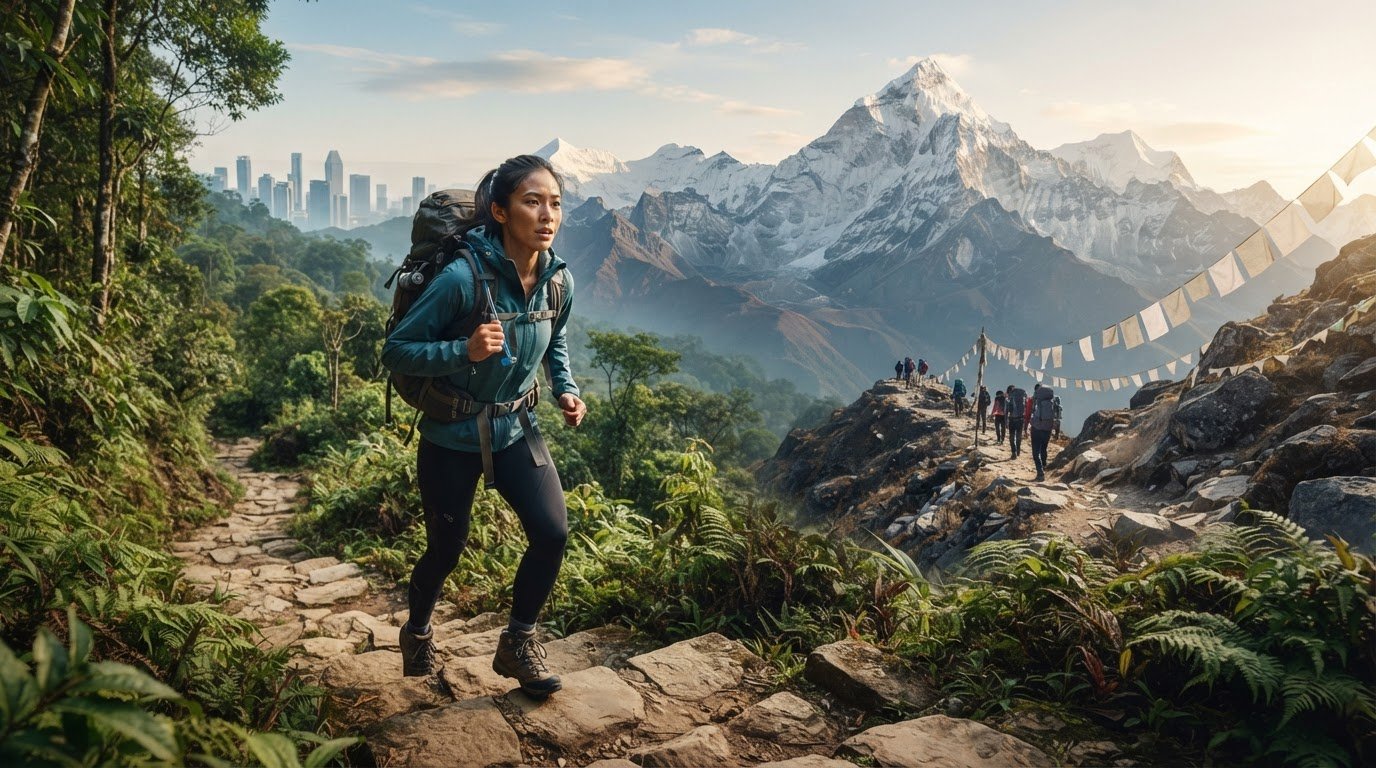
How to Prepare for Everest Base Camp: A Practical 2026 Guide
What if getting fitter for Everest Base Camp doesn’t protect you from altitude sickness? If you’re wondering how to prepare for Everest Base Camp, that distinction matters: training can build the stamina to keep walking, but it can’t replace a gradual ascent and proper acclimatisation.
It’s normal to question whether your current fitness is enough or how many hikes and cardio sessions you need before you go. You don’t need to become an elite athlete. A steady, progressive routine can help you manage long walking days while giving you time to prepare realistically.
This practical 2026 guide explains how to build hiking fitness, add useful cardio and strength work, and recognise warning signs of altitude sickness. You’ll also find steps for discussing health concerns, testing your equipment and checking travel logistics. Prepare with care, take the trek one step at a time, and make more room to enjoy the mountain trail ahead.
Key Takeaways
- To learn how to prepare for Everest Base Camp, build a steady routine that combines walking or hiking, aerobic exercise, and leg and core strength.
- Increase training gradually and tailor the pace to your current fitness rather than comparing yourself with other trekkers.
- Strong cardio fitness doesn’t prevent altitude sickness. Gradual acclimatisation is a separate safety priority.
- Discuss health conditions, medication and altitude concerns with a qualified clinician before departure.
- Test your gear and confirm trip details, including the itinerary and package inclusions, before you travel.
How to Prepare for Everest Base Camp: Understand the Challenge First
It’s exciting to picture the trail leading towards Everest, and reasonable to wonder what your body will need to handle. A useful plan for how to prepare for Everest Base Camp won’t promise you’ll finish. It will help you build capacity, make informed choices and understand what training can’t control.
Think of preparation in four parts: physical conditioning for repeated walking, awareness of altitude and its risks, practical planning for your trip, and realistic expectations about how you may feel day to day. The Nepal-side Everest Base Camp sits at approximately 5,364 metres. Read this Everest Base Camp overview for context, then check your operator’s current itinerary for its walking schedule and demands.
What makes the Everest Base Camp trek physically demanding?
The challenge comes from accumulating effort over multiple walking days, not from one dramatic workout. The route includes changing terrain, and carrying a daypack adds a steady load. Your pace, breaks and itinerary all affect how each day feels, so generic distance or elevation figures can’t predict how demanding it will be for you.
Consistency is a more useful benchmark. Regular walks help you get used to spending time on your feet and recovering between efforts. One impressive hike tells you less about readiness than a routine you can sustain. Ask about the current itinerary and use its walking pattern to shape your practice.
Fitness and altitude readiness are not the same thing
Improved fitness can make walking and exertion feel more manageable, but it doesn’t prevent acute mountain sickness. At altitude, less oxygen is available in each breath, and the body needs time to adjust. People respond differently, and fitness can’t reliably predict who will develop altitude-related symptoms.
Preparation also means understanding the itinerary’s approach to acclimatisation and knowing where to seek advice if you feel unwell. Discuss pre-existing health conditions, medication and altitude concerns with a qualified medical professional before travel. Train for the physical effort, not as a substitute for medical guidance or a carefully planned ascent.
Before committing to a training plan, confirm the trip’s current itinerary and what it involves. Clear expectations help you prepare sensibly and adjust your routine without guesswork.
How to Train for Everest Base Camp: Build Endurance
A useful training plan doesn’t need to be complicated. When considering how to prepare for Everest Base Camp, focus on walking steadily, handling varied terrain and recovering well enough to walk again. Start with what you can comfortably manage, then gradually increase the duration or difficulty of your activity rather than changing everything at once.
Which fitness areas should your training cover?
Combine walking practice, aerobic conditioning and strength work. Each supports a different part of the trek:
- Walking and hiking: Build time on your feet with regular walks. When safely accessible, include slopes, stairs or uneven surfaces to practise adjusting your stride and pace.
- Aerobic conditioning: Brisk walking, cycling or another activity you enjoy can develop general endurance. Choose a sustainable pace, especially if you’re new to regular exercise.
- Leg, hip and core strength: Begin with controlled movements such as sit-to-stands, step-ups, calf raises and supported lunges. Add simple core exercises, such as a bridge or bird-dog, and prioritise steady form over heavy resistance.
- Balance and daypack practice: Try balance exercises near support, then take occasional walks wearing a lightly loaded daypack. Increase the load conservatively, and stop if it causes pain or changes how you walk.
How to build a progressive hiking routine
Let your starting point set the pace. If walking is already part of your week, extend one walk slightly or choose a more challenging route. If you’re less active, begin with manageable walks and build consistency before adding hills, pack weight or longer outings.
After a few weeks of steady activity, you might add a longer walk. Consider back-to-back walking days only if you’re recovering comfortably. This is an adaptable example, not a fixed schedule or a guarantee of readiness. Keep a simple log of walking time, terrain, perceived effort and how you feel the next day. If soreness lingers or fatigue builds, ease off and allow more recovery.
Check with a qualified medical professional before starting or changing your exercise routine if you have health concerns. Training improves physical readiness, but doesn’t prevent altitude illness. The CDC’s guidance on preventing altitude sickness explains why acclimatisation needs separate attention.
To understand the trek’s current itinerary and what preparation it may involve, review the Everest Base Camp Trek details and confirm trip specifics with the operator.
Can Training Prevent Altitude Sickness? Separate Fitness from Acclimatisation
No. Excellent cardio fitness can help you manage the physical effort of trekking, but it doesn’t prevent acute mountain sickness. Altitude affects people differently, and a strong training record can’t predict how your body will respond as oxygen availability decreases.
Acclimatisation is your body’s gradual adjustment to altitude. A carefully planned ascent, including appropriate rest days, gives your body time to adapt. These measures support acclimatisation but can’t guarantee that you’ll avoid altitude illness. Your preparation for how to prepare for Everest Base Camp should include both physical training and a clear understanding of the trek’s altitude plan.
What acclimatisation can, and cannot, do
Follow the itinerary’s planned pace and your guide’s instructions instead of walking faster because you feel fit. Ask how the schedule allows for adjustment to altitude, and check current itinerary details before departure. For more context, read the CDC guidelines on high-altitude health. If you’re considering medicine to help prevent altitude illness, discuss it with a qualified clinician who can advise based on your health and travel plans.
Rest days are part of the plan, not a test of fitness. Even if you feel strong, don’t assume that a day off or extra training makes you immune to altitude-related problems.
Recognise symptoms and respond early
Headache, nausea, dizziness and unusual fatigue can occur with acute mountain sickness. These symptoms can have other causes, so don’t try to diagnose yourself or simply push through. Tell your guide and companions promptly if you feel unwell, even if symptoms seem mild. Honest communication helps the group respond safely.
Some symptoms need urgent attention. Confusion, difficulty walking straight or breathlessness while resting can signal a serious problem at altitude. Don’t continue uphill or conceal symptoms to keep pace. Follow your guide’s safety instructions and seek medical assessment; descent may be necessary. If symptoms worsen or you’re unsure what to do, take the situation seriously and get professional help.
Fitness prepares your muscles and heart for walking. Acclimatisation addresses a different challenge, calling for a measured ascent, attention to symptoms and a willingness to change plans when safety requires it.
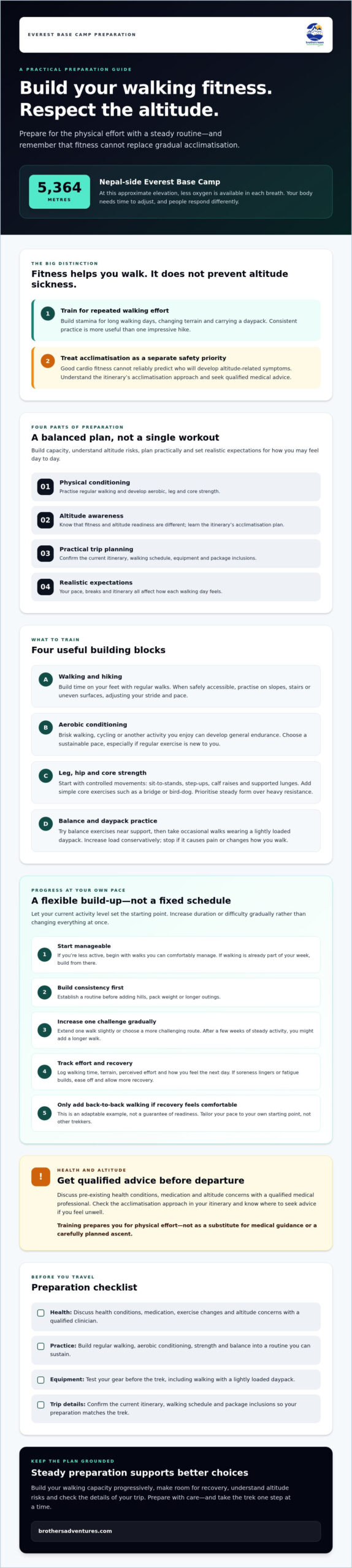
Your Everest Base Camp Preparation Checklist: Health, Practice, and Practical Planning
A checklist turns preparation into manageable steps. Work through these checks, then leave time before departure to rest rather than squeezing in last-minute training or equipment changes. Knowing how to prepare for Everest Base Camp means covering personal health, practical skills and trip details as well as fitness.
Health and equipment checks before the trek
Book a medical appointment early enough to discuss pre-existing conditions, medication and concerns about high altitude with a qualified clinician. Ask what precautions are appropriate for your circumstances, and use the advice to shape a personal health checklist. This can be helpful if you’re unsure how exertion, altitude or regular medication may affect your plans.
Test your footwear, clothing layers and daypack on training walks. Notice whether shoes rub, layers stay comfortable as your effort changes, and the pack sits securely without shifting. Testing your setup before departure gives you time to make adjustments. Ask your trek operator for its current gear guidance, then practise with the items you plan to take.
Confirm the practical details with your trek operator
Before you travel, confirm the current itinerary and ask how it allows for acclimatisation. Check what the package includes, who leads the trek, and how accommodation, local transport and permit arrangements are handled. Don’t rely on an older itinerary or another trekker’s experience, as details can vary by trip.
Use this sequence to keep the essentials on track:
- Health: Discuss personal risks and questions with a qualified clinician.
- Practice: Continue progressive walks and check how you recover.
- Equipment: Test footwear, layers and daypack setup while walking.
- Logistics: Confirm the itinerary, acclimatisation plan and package inclusions directly with the operator.
- Recovery: Ease off strenuous training before departure and arrive rested, not worn out.
If you’re comparing operators or want a framework for asking the right questions, read this specialist tour operator guide. A guided trip can help organise logistics, but it doesn’t replace your own preparation or medical advice.
Once you’ve worked through the checklist, explore the Everest Base Camp Trek and confirm its current itinerary and inclusions with the operator. Finish your planning early, then give yourself room to rest before the journey.
Ready for Everest Base Camp? Turn Preparation into a Supported Trek Plan
You’ve built a foundation when you can maintain a sustainable walking routine, have tested your footwear and daypack, and know which health questions to raise before travelling. The next step in how to prepare for Everest Base Camp is to connect your personal preparation with a clear understanding of your trip. Training supports physical readiness; it doesn’t prevent altitude illness or replace medical advice.
Keep your final checks simple. Review your walking practice and recovery, speak with a qualified clinician about personal health concerns, and ask the trek operator how the itinerary addresses altitude. Confirm current trip details and package inclusions directly instead of relying on old information or assumptions.
What a guided package can help organise
Brothers International Tours & Trading Pte Ltd is a family-owned travel agency operating since 1992 and offers an Everest Base Camp Trek. Its multi-day packages include guiding, local transportation, accommodation and permit processing. These arrangements can make trip planning more straightforward, while fitness preparation, health decisions and attention to altitude remain your responsibility.
Before booking, ask about the specific trip you’re considering. Confirm the itinerary, how acclimatisation days are planned, who leads the trek, and which services and permits are included. Check details directly with the operator, as inclusions and arrangements can differ between trips. A guided package can support logistics, but it can’t guarantee how you’ll respond to altitude or replace professional medical care.
A final readiness check before committing
Consider whether you’ve started a training routine you can maintain and tested your walking setup on practice outings. Have you discussed relevant conditions, medication and altitude concerns with a qualified clinician? Do you understand the trip’s planned pace and know how to report symptoms if you feel unwell? These questions help you plan with care, without promising a particular outcome.
If you’re still deciding, ask the operator about the current itinerary, inclusions and preparation it recommends for that trip. Brothers International Tours & Trading Pte Ltd can help clarify the logistics of its Everest Base Camp Trek. Confirm the details that matter to you before booking.
Explore the Everest Base Camp Trek and ask about current trip details. Take your time, get the advice you need, and look forward to the mountain journey with a thoughtful plan in place.
Take Your Everest Base Camp Plans One Step Further
A thoughtful approach to how to prepare for Everest Base Camp brings together three essentials: build walking endurance gradually, treat acclimatisation as separate from fitness, and check your health and trip arrangements before departure. Training can help you manage the effort, but it can’t prevent altitude illness or guarantee how your body will respond. Follow medical advice and take symptoms seriously on the trail.
Guided logistics can make planning clearer, but your preparation still matters. Brothers International Tours & Trading Pte Ltd is a family-owned travel agency operating since 1992 and offers an Everest Base Camp Trek. Its packages include guiding, local transportation, accommodation and permit processing. Confirm the current itinerary and exact inclusions for your chosen trip before booking, and ask what preparation the operator recommends.
Ready to explore the possibilities? Explore the Everest Base Camp Trek and ask about current trip details. Start with a steady plan, seek the advice you need, and look forward to each step towards the mountains.
Frequently Asked Questions
How fit do you need to be for Everest Base Camp?
You don’t need to be an elite athlete, but you should prepare to walk for several hours on repeated days and manage varied terrain at a steady pace. Build endurance with regular walks, gradually add hills or stairs where suitable, and practise with the daypack you plan to carry. Your readiness depends on your starting fitness and chosen itinerary, so check its walking demands before setting training goals.
How many months should I train before Everest Base Camp?
There’s no single training duration that suits every trekker. The time you need depends on your current activity level, health, walking experience and itinerary. Start as early as practical, build your routine gradually, and allow time to practise longer walks and recover between them. If you’re unsure where to begin, ask a qualified clinician about exercise and your trek operator what preparation it recommends.
Can you train for altitude sickness before the Everest Base Camp trek?
No. Exercise can improve your ability to manage physical effort, but it can’t train your body to avoid acute mountain sickness. Acclimatisation happens as your body adjusts gradually to lower oxygen availability at altitude. Follow the planned ascent and rest schedule, and tell your guide promptly if you feel unwell. If you’re concerned about altitude illness or prevention options, discuss your personal situation with a qualified medical professional before travel.
What exercises should I do to prepare for Everest Base Camp?
Build a balanced routine with regular walking or hiking, aerobic activity and basic strength exercises. Brisk walking or cycling can develop endurance; sit-to-stands, step-ups, calf raises and supported lunges work the legs and hips. Add simple core and balance movements, then practise walking with a lightly loaded daypack. Increase duration and challenge gradually, and ease back if you’re not recovering well between sessions.
Is Everest Base Camp suitable for beginners?
It may be achievable for beginners who prepare carefully, but it’s a demanding multi-day trek at high altitude, not a casual first walk. Build walking endurance progressively, understand that fitness doesn’t prevent altitude illness, and review the current itinerary to assess its demands. Speak with a qualified clinician about health concerns, and ask the operator about the pace and acclimatisation plan. No training plan can guarantee completion or predict an individual response to altitude.
What happens if I develop altitude sickness during the trek?
Tell your guide and trekking companions as soon as you notice symptoms such as headache, nausea, dizziness or unusual fatigue. Don’t hide how you feel or continue uphill without guidance. Your guide can help follow the trek’s response plan, but medical assessment may be needed, and descent may be necessary. Confusion, difficulty walking straight or breathlessness at rest require urgent attention. Seek professional help rather than trying to diagnose yourself.
Do I need to see a doctor before trekking to Everest Base Camp?
A pre-travel appointment is a sensible step, especially if you have a medical condition, take regular medication or have concerns about high altitude. A qualified clinician can discuss your personal health, exercise plans and travel-specific precautions. Ask about altitude-related concerns well before departure so you have time to follow their advice. Your trek operator can explain the itinerary, but that guidance doesn’t replace individual medical care.



Comments are closed