


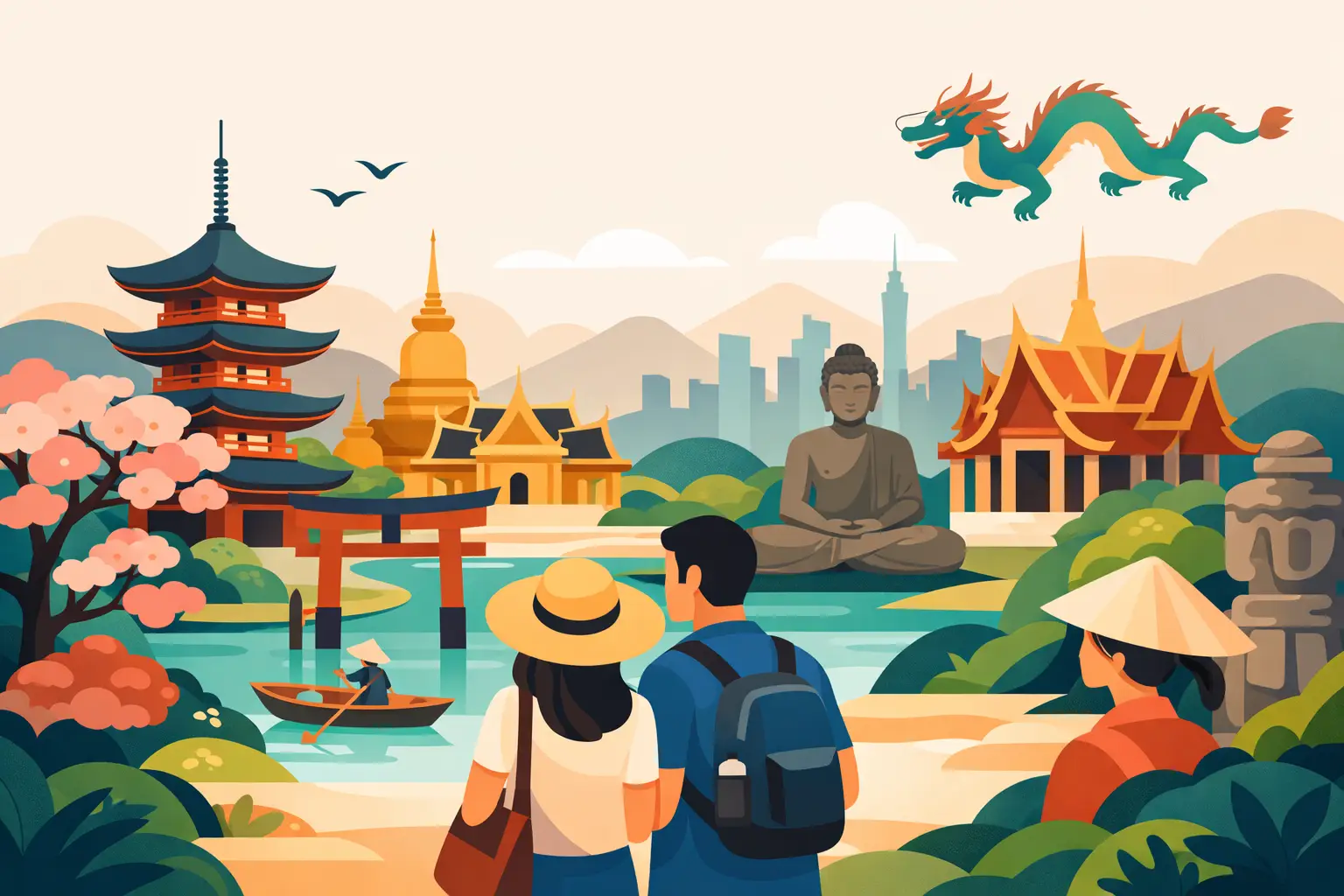
Cultural Tourism That Brings Asia Closer
A prayer flag snapping above a high Himalayan trail, the first bell from a Bhutanese dzong, a family recipe prepared in a village home – these are the moments that give cultural tourism its lasting pull. They cannot be reduced to a photograph or ticked off between hotel transfers. They ask travellers to slow down, listen and see a destination as a living place rather than a backdrop.
For travellers drawn to Nepal, Bhutan, India and the wider Asian region, culture is rarely separate from the journey. It is present in the trail-side tea house, the monastery above the valley, the market at dawn and the stories shared by the people who guide you through them. A well-planned trip makes room for these encounters while giving you the support to travel responsibly and comfortably.
What cultural tourism really means
Cultural tourism is travel shaped by a genuine interest in how people live, remember, celebrate, create and relate to their landscapes. It can include historic monuments, museums and architecture, but it reaches further. Local food, music, crafts, faith, language, farming traditions and everyday hospitality are all part of the experience.
The difference lies in intent. A rushed stop at a famous temple may be sightseeing. Visiting with a knowledgeable local guide, understanding its place in community life and following the expected customs turns that visit into something more meaningful. Neither style of travel is wrong, but the second tends to stay with you long after the journey home.
In the Himalayas, culture and geography are deeply connected. Sherpa communities in the Everest region, for example, have developed ways of life shaped by altitude, trade routes and Tibetan Buddhist traditions. In the Annapurna region, Gurung and Thakali heritage appears in village architecture, food and festivals. Trekking there is not simply a walk through dramatic scenery. It is an opportunity to understand the people whose home lies along the route.
Why cultural tourism matters to travellers and hosts
A culturally focused journey can give active travel a stronger sense of purpose. Reaching a high pass or completing a demanding trek is a real achievement, yet the route becomes richer when you know why mani walls are treated with respect, what a monastery means to its village or how local livelihoods have changed with tourism.
It can also spread the value of travel more widely. When travellers stay in locally run lodges, employ local guides, eat regional dishes and buy thoughtfully made crafts, more of their spending can remain in the destination. This is not a guarantee – tourism has complex supply chains and every region operates differently – but choosing local knowledge and locally rooted services is a practical starting point.
There are trade-offs. Popular heritage areas need visitor income, but they can also face congestion, rising prices and pressure on sacred or fragile sites. Remote villages may welcome guests while still wanting privacy and control over how their culture is presented. Responsible travel means accepting that access is a privilege, not an entitlement.
For schools and organised groups, these journeys can be particularly valuable. A student who learns about water access in a mountain settlement, joins a guided heritage walk or sees traditional agriculture in practice gains a more grounded understanding than any classroom lesson alone can offer. The best educational trips pair these experiences with clear preparation, sensible group management and time for reflection.
Cultural tourism in the Himalayas: more than monuments
Nepal offers an especially vivid mix of cultural and outdoor experiences. In Kathmandu Valley, ancient stupas, temple squares and artisan neighbourhoods reveal centuries of Hindu and Buddhist heritage. Beyond the city, trekking routes lead through communities where daily life continues alongside tourism.
A journey towards Everest Base Camp may include visits to monasteries, encounters with Sherpa hosts and evenings in lodges where travellers share a meal with people from the region. The Gokyo Lakes and Cho-La Pass route adds quieter valleys and high mountain scenery, but it should never be treated as a race. Proper acclimatisation improves safety and creates time to notice the villages, customs and changing landscapes along the way.
The Annapurna region offers a different rhythm. Trails pass through terraced fields, forests, stone villages and viewpoints looking towards some of the world’s most recognisable peaks. Shorter options such as Poon Hill can suit travellers who want a rewarding introduction to Himalayan walking alongside cultural sightseeing. Longer treks require more fitness and commitment, yet both benefit from good pacing and guides who can interpret what you see.
Bhutan brings another perspective, where carefully managed tourism supports a distinctive national approach to heritage, landscape and community values. Fortresses, monasteries and festivals carry deep meaning, so respectful behaviour matters as much as a well-timed photograph. In India, Sri Lanka, Cambodia, Vietnam, Indonesia and Central Asia, the same principle applies: each destination has its own protocols, histories and pace. It is better to arrive curious than to assume one version of Asia fits them all.
How to travel with curiosity and respect
Preparation begins before departure. Read about the destination’s faiths, recent history and basic etiquette, particularly if you will enter monasteries, temples, homes or rural communities. Modest clothing is often appropriate at religious sites, and your guide can advise on local expectations for footwear, photography and behaviour.
Ask before photographing people, ceremonies or private spaces. A smile and a gesture towards your camera are often enough to begin the conversation, but accept a refusal without argument. Some places and moments are not for recording. Giving them your full attention may be the better souvenir.
Food is another direct route into culture. Try regional dishes where hygiene and dietary needs allow, and ask what is in season or locally produced. A simple meal of dal bhat in Nepal, a home-style curry in Sri Lanka or dishes shared around a village table can say more about a place than a polished restaurant menu. At the same time, travellers with allergies or medical requirements should communicate them clearly in advance rather than hoping for improvisation in remote areas.
Shopping deserves the same care. Buy directly from makers where possible, be polite when negotiating and avoid antiques, wildlife products or religious objects of uncertain origin. The cheapest price is not always the fairest outcome. A good guide can help distinguish meaningful local crafts from mass-produced souvenirs.
Finally, allow space in the itinerary. Cultural connection is difficult when every hour is scheduled. A free afternoon in Bhaktapur, a market visit in Kathmandu or an unhurried tea stop on a trekking day can produce the conversation you remember most. This does not mean abandoning structure. In high-altitude regions, dependable transport, permits, accommodation, meals and emergency planning are what make relaxed moments possible.
Choosing the right level of support
Independent travel can work well for confident visitors on straightforward routes, especially if they have time to research and adapt. But mountain conditions, altitude, domestic flight changes and permit requirements can make Himalayan journeys more demanding than they first appear. Travelling with an experienced local team provides context as well as coordination.
The right guide does more than point out landmarks. They help interpret customs without speaking over local voices, explain how to behave at religious sites and adjust the day when weather, health or local events require a change. For treks, they also monitor acclimatisation and help maintain a pace that is safe for the group.
At Brothers Team, our local knowledge and careful trip planning are designed to support both sides of the experience: the thrill of reaching remarkable places and the confidence to engage with them thoughtfully. Whether you are joining a cultural journey, a school programme or a Himalayan trek, the most rewarding itinerary is one that leaves room for people as well as landmarks.
Bring patience, ask good questions and let a destination set some of the rhythm. The mountain view may draw you in, but the human stories around it are often what bring you back.



Comments are closed