


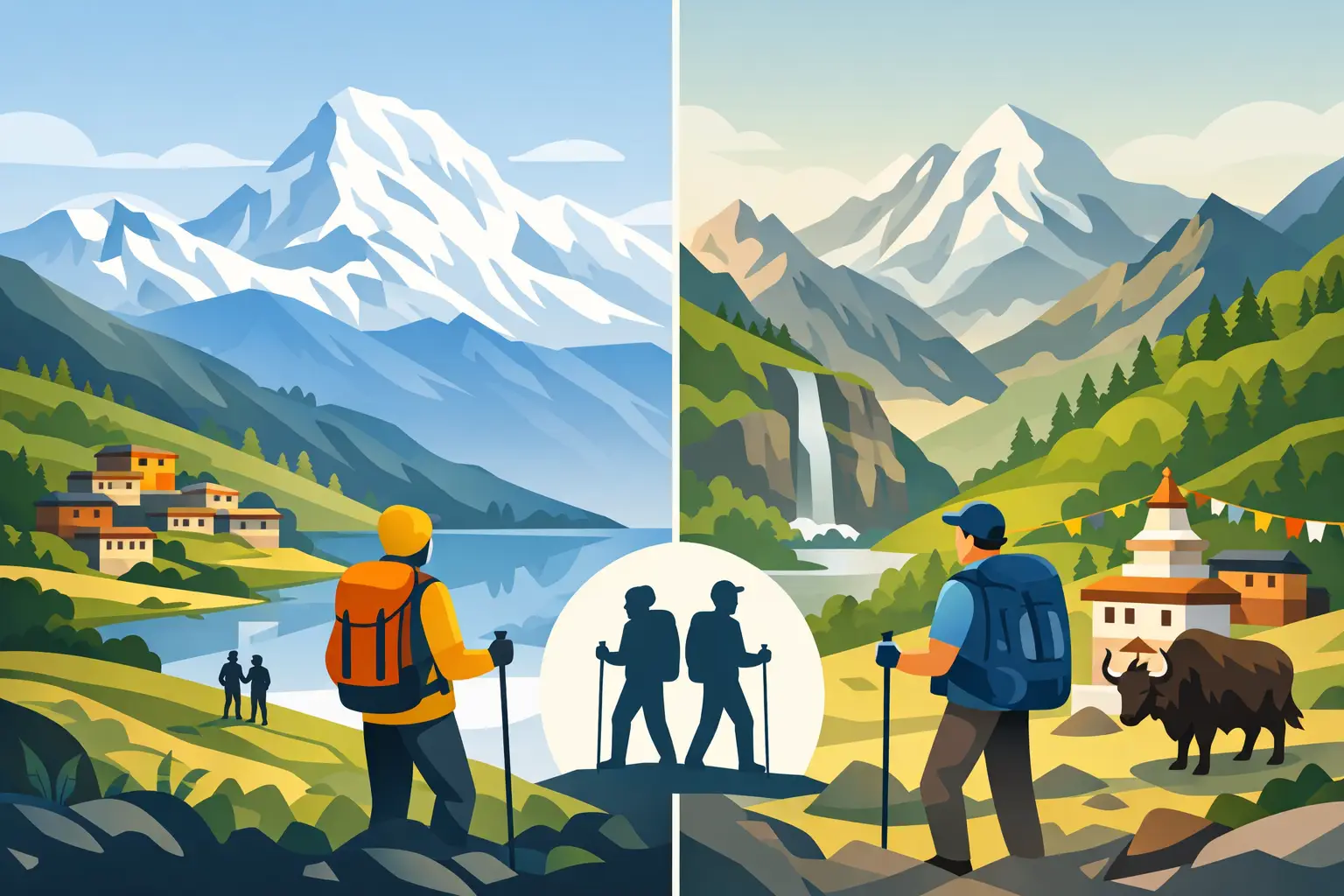
Annapurna versus Langtang trek – which fits you?
A Himalayan trek is not chosen only by the height of its viewpoints. The Annapurna versus Langtang trek decision is really about the kind of days you want to have: broad mountain panoramas and bustling trail villages, or a quieter valley framed by ice peaks and Tibetan Buddhist heritage. Both are rewarding first major treks in Nepal, yet they create very different memories.
For travellers flying in from Singapore or planning a limited Nepal holiday, the practical details matter too. Road transfers, acclimatisation, walking duration, lodge comfort and the pace of the group all shape how confidently you enjoy the mountains. Here is how the two regions compare.
Annapurna versus Langtang trek at a glance
| Consideration | Annapurna region | Langtang region | |—|—|—| | Best known for | Classic Himalayan panoramas, Poon Hill, varied landscapes | A dramatic glacial valley, Kyanjin Gompa and Tamang culture | | Typical duration | 5-12 walking days, depending on route | 7-10 walking days for the classic valley trek | | Highest common point | Poon Hill at 3,210m or Thorong La at 5,416m on longer routes | Kyanjin Ri at about 4,773m | | Trail atmosphere | More developed and social on popular routes | Generally quieter, with a strong valley-to-mountain progression | | Access from Kathmandu | Usually a longer drive towards Pokhara or trailheads | A full-day drive to Syabrubesi | | Ideal for | Travellers wanting variety and flexible route choices | Travellers seeking a focused, high-mountain valley experience |
Neither region is automatically easier. A short Annapurna Poon Hill itinerary can be gentler than Langtang, while the Annapurna Circuit with Thorong La is a more serious high-altitude undertaking. The right comparison is between the specific routes, not simply the names of the regions.
Choose Annapurna for variety and classic views
The Annapurna region offers an impressive range of trekking experiences. On a shorter route, such as Ghorepani Poon Hill, you pass through terraced farmland, rhododendron forest and Gurung and Magar villages before an early-morning climb to a celebrated viewpoint. As the sun rises, Dhaulagiri, Annapurna South, Machhapuchhre and Hiunchuli begin to show their colour and scale. It is a fitting reward for travellers who want a manageable walking challenge with a huge Himalayan payoff.
Longer Annapurna journeys change character completely. The Annapurna Base Camp trek leads through dense forest and narrow river valleys to a natural amphitheatre of peaks. The Annapurna Circuit moves through increasingly dry, high-altitude landscapes and crosses Thorong La, demanding sound fitness, proper acclimatisation and flexibility for mountain weather. This breadth is Annapurna’s great strength: there is an itinerary for many abilities and timeframes.
It also means more choices to make. Popular sections can feel lively in peak spring and autumn seasons, particularly around Ghorepani and the principal teahouse stops. For some, that sociable atmosphere is part of the pleasure. You meet fellow walkers over dinner, enjoy a wider choice of lodges and feel the energy of a well-loved Himalayan trail. For others, it can feel less remote than expected.
Annapurna is especially suitable if your group includes people with different trekking ambitions. A carefully designed itinerary can keep daily distances realistic, build in gradual ascent and combine trekking with Pokhara’s lakeside setting or cultural time in Kathmandu. It works well for first-time trekkers, families with fit older teenagers and organised groups, provided the route matches the group’s pace.
The altitude question in Annapurna
Altitude depends entirely on the itinerary. Poon Hill reaches a moderate height for a Himalayan trek, but people can still feel breathless on steep ascents. Annapurna Base Camp reaches 4,130m, where gradual ascent and attentive monitoring become increasingly relevant. The Circuit is higher again, so rest days, route pacing and readiness to change plans are essential rather than optional.
A good trek leader will never treat a planned schedule as more important than a guest’s wellbeing. Headache, poor sleep, loss of appetite and unusual fatigue deserve early attention, particularly as the trail climbs. The safest approach is to walk steadily, drink regularly and give the body time to adapt.
Choose Langtang for a close-up mountain valley
Langtang begins north of Kathmandu, following a valley that feels increasingly enclosed by steep hills and then by high, rugged peaks. The trail passes through settlements shaped by Tamang culture, prayer wheels, mani walls and monasteries. There is a strong sense of place here: this is not just a route to a viewpoint, but a living mountain valley where rebuilding, hospitality and tradition are visible along the way.
The classic goal is Kyanjin Gompa, a high settlement surrounded by dramatic peaks, glaciers and grazing yaks. From there, an ascent of Kyanjin Ri offers a remarkable close-range perspective of the Langtang range. The panorama may be less expansive than Poon Hill’s famous sweep, but it feels more immediate. Snow and rock rise sharply from the valley, and the effort of reaching the viewpoint makes the scale of the landscape deeply felt.
Langtang often suits walkers who prefer one clear route with less logistical complexity once the trek begins. You generally walk up the valley, spend time around Kyanjin for acclimatisation and exploration, then return by a similar route. That return journey is not repetitive in the disappointing sense. Walking in the opposite direction reveals new views, and you have more time to notice villages and details that passed quickly on the ascent.
The trade-off is that the approach road to Syabrubesi can be long and conditions vary. The road journey is part of the expedition, not merely a transfer. Travellers who dislike winding mountain roads or have very tight schedules may find Annapurna’s route options more convenient, depending on the itinerary.
How demanding is Langtang?
The Langtang Valley trek is often described as suitable for beginners, but that label needs care. It involves consecutive days of uphill walking, uneven paths and sleeping at significant altitude. Kyanjin Gompa lies at roughly 3,870m, and a side hike to Kyanjin Ri climbs much higher. A generally active person who prepares with regular hill walking, stair training and cardiovascular exercise can enjoy it greatly. Someone with no preparation may find it tougher than anticipated.
What makes Langtang approachable is the sensible progression of the trail. A well-paced itinerary allows time to settle into the rhythm of trekking before reaching the higher valley. The extra day at Kyanjin is valuable not only for the views, but also for giving your body more time at altitude before a viewpoint ascent.
Scenery, culture and the feeling of the trail
If your dream is a changing landscape every day, Annapurna has the advantage. You may move from rice terraces and subtropical vegetation to oak and rhododendron forest, then into alpine terrain or a high desert, depending on the route. The region’s mountain views are iconic for good reason, and the villages offer a rich mix of Gurung, Magar, Thakali and other local cultures.
Langtang is more concentrated, but that is part of its appeal. The valley develops like a story: wooded lower slopes, open grazing land, stone settlements and, finally, a glacial basin beneath high peaks. Tamang Buddhist culture gives the walk a distinctive character. Prayer flags, chortens and the quiet routines of village life add meaning to the physical journey.
For photographers, Annapurna gives more varied compositions and a larger catalogue of famous viewpoints. Langtang offers intimacy: yak pastures beneath snowy ridges, monastery details, changing weather around Kyanjin and powerful close-up mountain terrain. If you prefer silence over a busy tea-house evening, Langtang may be the stronger choice outside its busier periods.
Timing, preparation and support
Spring and autumn are the usual preferred seasons for both regions. Spring brings rhododendrons in lower Annapurna and generally pleasant walking conditions. Autumn often provides crisp skies and especially clear mountain views. Winter can be beautiful but colder, with snow affecting higher routes. The summer monsoon brings green landscapes and fewer trekkers, but also rain, leeches at lower elevations and a greater chance of disrupted road travel.
Whichever trek you choose, preparation should be practical rather than extreme. Build endurance through regular walking, add hills or stairs, and break in the boots you intend to wear. Bring layered clothing, a waterproof outer shell, a warm insulated jacket, sun protection and a daypack that feels comfortable for several hours. A duffel carried by porters can reduce strain, but you should still keep water, warm layers, valuables and essential medication with you.
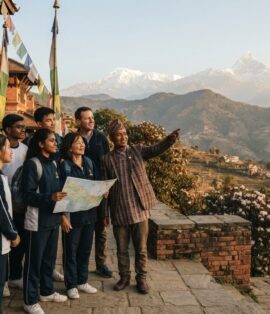
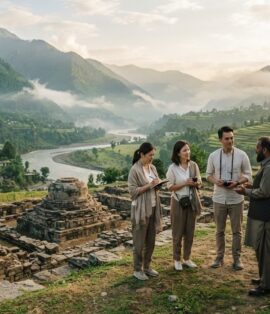
For first-time Himalayan trekkers, local guidance makes a meaningful difference. Brothers Team plans routes around acclimatisation, manages permits and transport, and provides experienced guides who understand when a guest needs encouragement, a slower pace or a change of plan. That support allows you to focus on the trail, the people you meet and the mountains ahead.
Choose Annapurna if you want flexibility, classic sunrise views and a trek that can be tailored from a short introduction to a demanding high pass. Choose Langtang if a close-knit valley, Tamang culture and a purposeful journey towards Kyanjin Gompa speak more strongly to you. The best choice is the one that leaves enough time to walk well, breathe steadily and look up often.



Comments are closed