


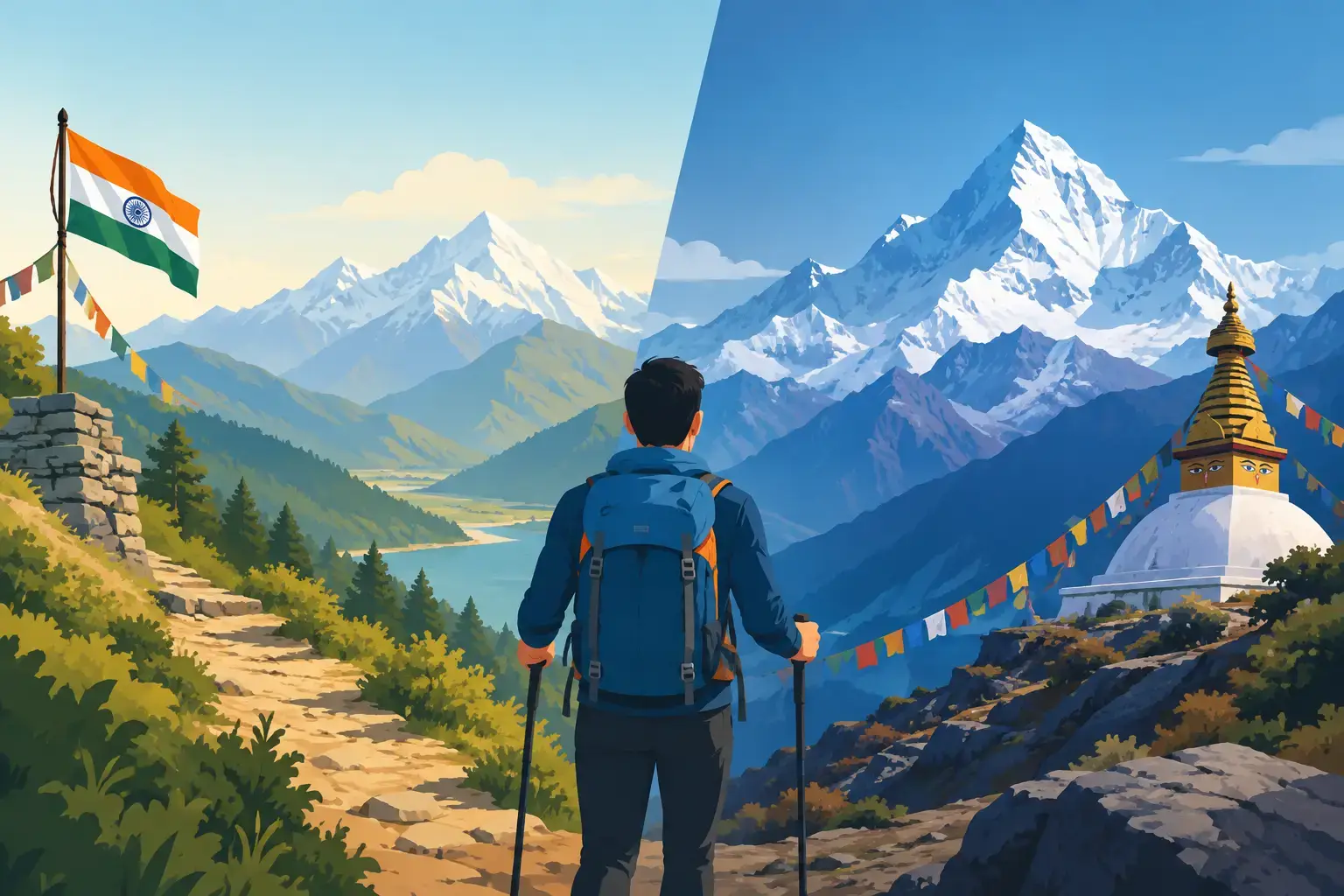
India Trekking Versus Nepal Trekking Compared
A trail can look close on a map yet feel entirely different underfoot. In the conversation around India trekking versus Nepal trekking, the choice is not simply between two Himalayan neighbours. It is a choice between different mountain cultures, trekking rhythms, levels of remoteness and ways of travelling. Both can be extraordinary. The better destination is the one that matches your fitness, available time and idea of a meaningful mountain holiday.
India Trekking Versus Nepal Trekking: The Key Difference
Nepal is often the natural first choice for trekkers who want the classic Himalayan experience: high passes, famous peaks, village-to-village walking and well-established teahouses. Routes such as Everest Base Camp, Gokyo Lakes, Annapurna Base Camp and Poon Hill have earned their reputation because they combine spectacular mountain scenery with a strong sense of progression. Each day brings new terrain, changing vegetation and a closer view of the high Himalaya.
India offers a much broader range of trekking settings. In the Indian Himalaya, you might walk through flower-filled valleys in Uttarakhand, follow a high-altitude route in Ladakh, travel through forests in Himachal Pradesh or camp beneath remote peaks in Sikkim. The mountains are no less dramatic, but the trekking experience is often less uniform. Some routes are supported by village homestays or basic camps, while others require a fully organised camping expedition.
For many travellers, Nepal feels more straightforward as a first Himalayan trek. India can reward those looking for quieter trails, a particular regional culture or a more self-contained wilderness experience. Neither is automatically harder. The route, season and itinerary design matter far more than the country name.
Scenery: Famous Mountain Icons or Wider Variety?
Nepal delivers the scale that many people picture when they imagine the Himalaya. On the Everest routes, the landscape is defined by enormous glaciers, icefall views and some of the world’s highest summits. In the Annapurna region, terraced farmland gives way to rhododendron forest, deep river valleys and snow-covered amphitheatres. The scenery is not a distant reward at the end of the trek – it is part of every day’s walk.
India’s strength is variety. Ladakh can feel stark, dry and almost lunar, with monasteries perched above broad valleys and trails crossing exposed high passes. Himachal Pradesh may offer cedar forest, alpine meadows and green valleys beneath jagged ridges. Uttarakhand is particularly appealing for trekkers drawn to lakes, forests and the changing colours of the monsoon and post-monsoon seasons.
If seeing Everest, Ama Dablam or Annapurna is a personal milestone, Nepal is the clear answer. If your idea of a memorable trek includes less familiar mountain landscapes and regional contrasts, India may be more compelling. A well-chosen itinerary matters more than chasing the biggest name.
Accommodation and Day-to-Day Comfort
One of Nepal’s major advantages is its teahouse trekking network. On popular routes, trekkers sleep in simple mountain lodges and eat in communal dining rooms. Standards vary with altitude and remoteness, but the routine is reassuring: walk, arrive, have a hot meal, rest and share stories with other trekkers. This structure makes multi-day trekking accessible without carrying camping equipment.
The Everest and Annapurna regions are particularly well developed, although comfort should be understood realistically. Rooms are usually basic, heating is commonly limited to shared dining areas, and hot showers or charging may cost extra. As elevation increases, choices become fewer. The lodges are part of the experience, not a hotel stay transplanted into the mountains.
In India, camping is more common on many classic high-altitude routes. A supported trek can include tents, a cook team, dining arrangements and fixed camps, giving the journey an expedition-style atmosphere. Some treks use guesthouses, homestays or forest rest houses, but facilities can be less predictable than on Nepal’s principal trails.
Camping can be wonderfully immersive, particularly for experienced outdoor travellers who enjoy waking close to the mountains. It also requires greater attention to weather, equipment and camp organisation. Travellers who prefer consistent lodge-based logistics will often find Nepal more comfortable, while those seeking a more remote camp-based adventure may favour India.
Altitude: The Shared Challenge That Needs Different Planning
Both countries demand respect for altitude. Nepal’s best-known routes frequently rise above 4,000 metres, with high points such as Kala Patthar, Cho-La Pass and Thorong La reaching considerably higher. India also has very high trekking terrain, especially in Ladakh, where even towns and trailheads can sit above 3,000 metres.
The key is not to judge a trek by its maximum altitude alone. How quickly you gain height, where you sleep, the number of acclimatisation days and the option to adjust the plan all affect safety. A shorter itinerary is not necessarily a better one if it removes the time your body needs to adapt.
Nepal’s established trekking routes have made acclimatisation planning a central part of the journey. On an Everest Base Camp itinerary, for example, rest and acclimatisation days in places such as Namche Bazaar and Dingboche are sensible safeguards, not wasted days. In India, itineraries should also allow for a gradual approach, especially where road travel may deliver trekkers quickly to high elevations.
Headache, fatigue and poor sleep can occur even to very fit people. Good guiding, regular monitoring and the confidence to slow down make a real difference. Mountain achievement is never worth ignoring warning signs.
Culture on the Trail
Trekking in Nepal is closely tied to village life. In the Khumbu, Buddhist monasteries, mani walls and Sherpa traditions shape the journey. In Annapurna, Gurung, Magar and Thakali communities add a rich cultural layer to the mountain landscape. The trail often feels like a living route between communities rather than a path created solely for visitors.
India’s cultural range is even more varied between regions. A Ladakh trek may bring Tibetan Buddhist heritage, prayer flags and monastery visits. In Himachal, Hindu villages and local mountain customs shape the experience. Sikkim offers a distinct blend of Himalayan communities, Buddhist traditions and dramatic Eastern Himalayan terrain.
Nepal generally makes it easier to combine a major trek with cultural sightseeing in Kathmandu or the Kathmandu Valley. India can be ideal for travellers who want to focus deeply on one state or combine trekking with destinations such as Delhi, Rajasthan, Amritsar or Ladakh. Consider whether you want one concentrated Himalayan journey or a broader holiday built around the trek.
Logistics, Permits and Travel Time
Nepal’s main trekking regions are accustomed to international visitors. Permits, domestic flights, jeep transfers, luggage arrangements and teahouse bookings still need careful coordination, especially in peak season, but the system is familiar and proven. The journey to the Everest region is a good example: weather can affect mountain flights, so a responsible itinerary includes contingency time rather than a tightly packed onward schedule.
India can involve more regional variation. Some areas have restricted permits, seasonal road access or trekking regulations that change according to local conditions. Domestic connections may be longer, and road journeys to remote trailheads can take a full day or more. This is not a reason to avoid India. It simply means that local planning and realistic pacing are essential.
For travellers departing from Singapore, Nepal can often be an efficient choice for a focused one- to two-week Himalayan trek. India works especially well when you have more time, a strong interest in a particular region or a desire to combine mountain walking with wider cultural travel.
Which Trekking Destination Is Better for You?
Choose Nepal if you want an iconic Himalayan route, dependable teahouse infrastructure and a well-tested trekking rhythm. It is especially suitable for first-time high-altitude trekkers who want experienced support without feeling detached from the mountain environment. Nepal is also a strong choice for groups, as established trails and lodge networks make daily operations easier to manage.
Choose India if you value diversity, quieter terrain and the prospect of a more wilderness-oriented trek. It can suit trekkers who are comfortable with camping, flexible travel days and less predictable facilities. India is also an excellent return destination for people who have already completed Nepal’s classic routes and want to experience a different face of the Himalaya.
Your trekking style should guide the decision. If you want lodge evenings, familiar trail services and a famous summit-view goal, look towards Nepal. If you picture tents, remote passes and a route that feels further from the international trekking circuit, India may be your match.
Plan for the Trek You Want to Remember
The strongest Himalayan itineraries build in room to acclimatise, recover and respond to weather rather than treating every day as fixed. That is true whether you are walking beneath Everest or setting out across Ladakh. Brothers Team can help shape routes around your experience, group needs and available time, with local guidance and practical support from arrival to departure.
Choose the mountains that call to you, then give yourself enough time to meet them properly. The right trek should leave you with tired legs, clear memories and the feeling that every careful step was worth it.


Comments are closed