


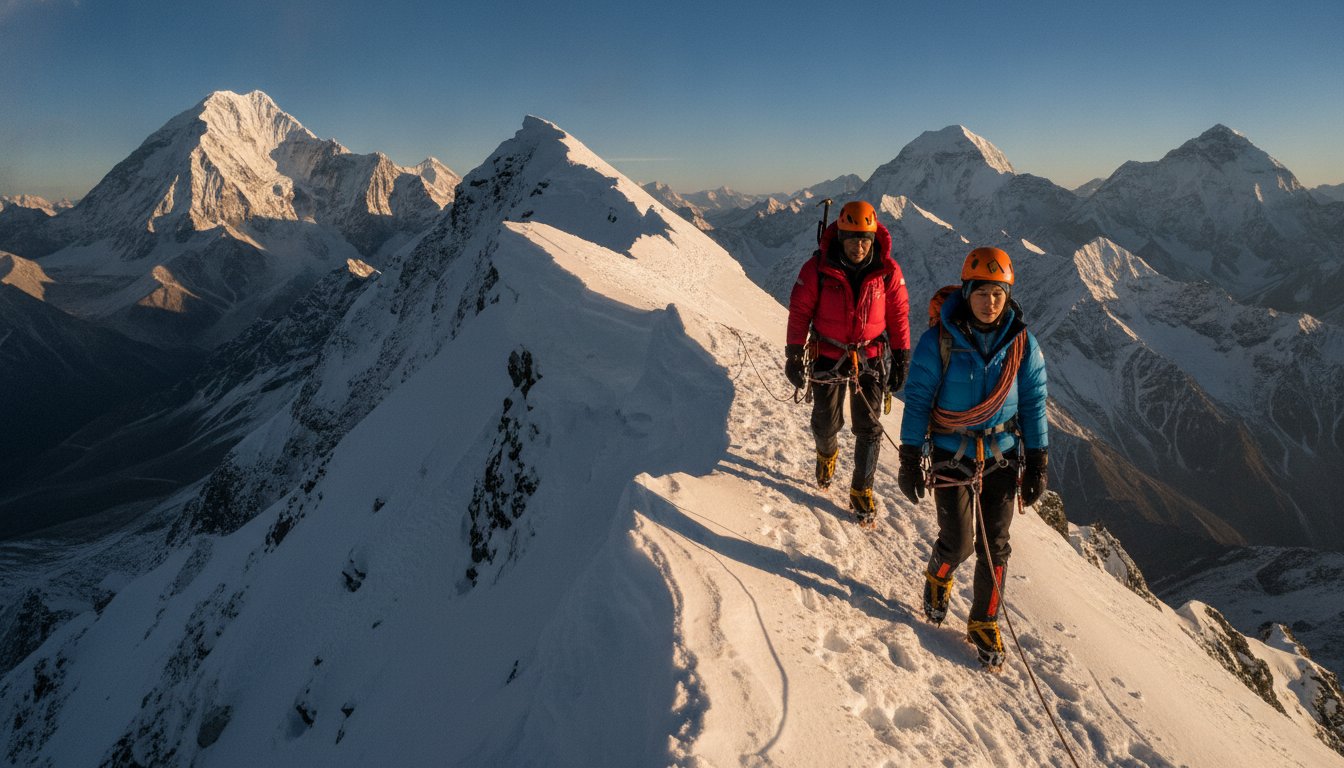
The Essential Role of a Nepal Expedition Climbing Guide: A 2026 Specialist Perspective
What if the difference between a life-changing summit and a dangerous retreat isn’t your physical stamina, but the person walking two steps ahead of you? Standing at the base of a towering Himalayan peak, it’s completely normal to feel a surge of adrenaline mixed with genuine worry. You might be losing sleep over the threat of altitude sickness, the confusing maze of 2026 permit regulations, or whether your technical skills will hold up on a sheer ice face. These aren’t just small hurdles; they’re the high-stakes realities of the world’s most demanding terrain.
We understand that weight of responsibility because we’ve been bridging the gap between Singapore and the summits of Nepal since 1992. This article promises to show you how a professional Nepal expedition climbing guide acts as your technical strategist and life-support system, turning a risky gamble into a calculated success. You’ll learn exactly how expert oversight manages medical emergencies, streamlines complex logistics from Kathmandu, and provides the safety net you need to climb with confidence. From understanding permit costs in S$ to choosing a specialist with deep local roots, we’re diving into everything that makes a successful 2026 expedition possible.
Key Takeaways
- Understand how a professional Nepal expedition climbing guide manages technical rope work and vital medical monitoring to maximize your summit success.
- Learn how the latest 2026 government regulations affect your climbing permits and why early planning is essential for a smooth departure from Singapore.
- Discover the importance of balancing international safety certifications with the deep local experience of veteran Himalayan Sherpas.
- Identify the specific questions you must ask regarding guide-to-client ratios and acclimatisation schedules before committing to a peak.
- Find out how a legacy of over 30 years and a dual-office presence provides the seamless logistics needed for a stress-free expedition.
Why a Professional Nepal Expedition Climbing Guide is Essential in 2026
Your journey to a Himalayan peak begins long before you touch down at Tribhuvan International Airport. It starts with a vision of standing on a summit like Island Peak or Mera Peak. While physical training in Singapore’s humidity gets your heart rate up, the mountain reality is a different beast entirely. A professional Nepal expedition climbing guide bridges the gap between your gym sessions and the thin air of the death zone. They transform your raw stamina into a successful summit through technical mastery and tactical patience.
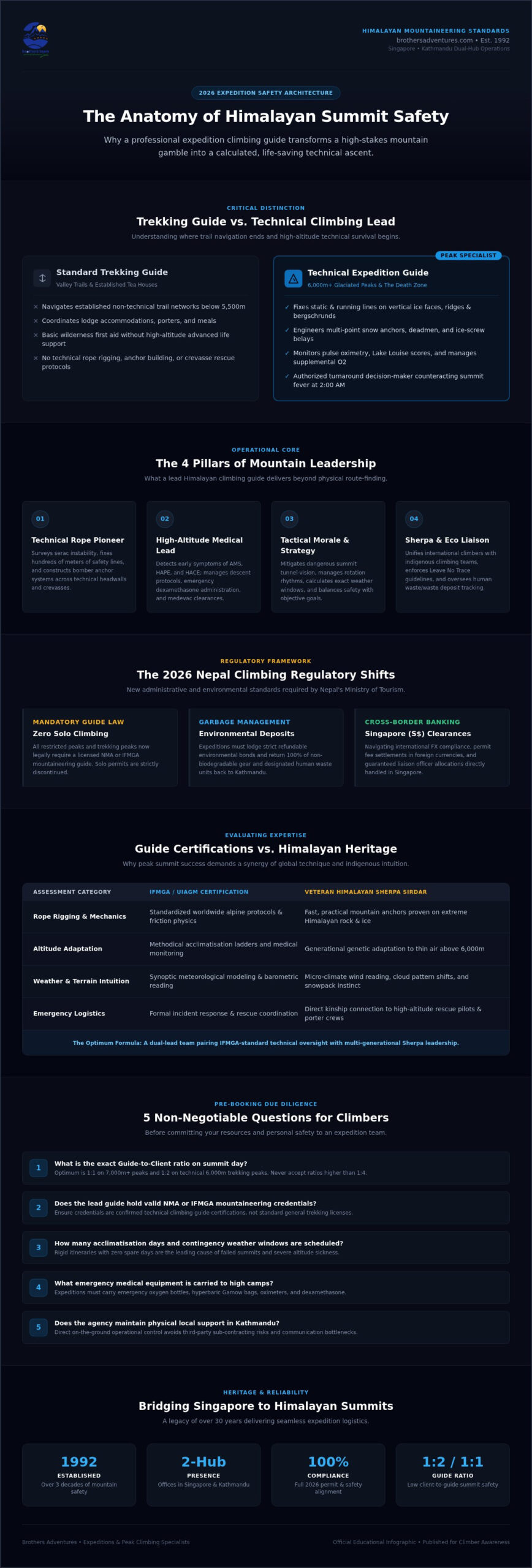
It’s vital to distinguish between a trekking guide and a technical climbing lead. A trekking guide leads you through established trails to tea houses. A climbing guide, however, is responsible for fixing ropes on vertical ice, managing complex anchor systems, and making life-or-death decisions when the weather turns. These professional mountain guides aren’t just walking with you; they’re building the path ahead of you. They’re the ones who decide if the wind is too high or if the snow is stable enough for a summit push.
Navigating Himalayan Complexity and Risk
Objective hazards don’t care about your fitness level. Avalanches, hidden crevasses, and sudden whiteouts are part of the landscape. A specialist Nepal expedition climbing guide reads the snowpack and the sky with an intuition developed over decades of service. They manage the complex logistics of high-altitude camps, ensuring oxygen supplies and food reach the higher camps exactly when needed. This local knowledge is the ultimate safety feature on any 6,000m+ peak, providing a safety net that no amount of solo research can replicate.
The 2026 Regulatory Environment for Climbers
The 2026 landscape in Nepal has evolved significantly. The government has introduced stricter mandatory guide requirements for restricted peaks to enhance safety and environmental protection. You’ll need to manage climbing permits and environmental deposits, which can be a bureaucratic headache for an individual. Partnering with a reliable tour operator ensures your expedition stays legally compliant. Since we’ve operated since 1992 with offices in both Singapore and Kathmandu, we handle these S$ transactions and permit filings with a high-touch, personal approach. This allows you to focus on your training while we navigate the complex paperwork of the Himalayas.
The Multi-Faceted Role of a Lead Climbing Guide
Think of your guide as more than just a mountain escort. In reality, a seasoned Nepal expedition climbing guide acts as the anchor for your entire safety system. They serve as the technical lead, calculating the exact placement of fixed lines on treacherous slopes to ensure every team member moves securely. Whether you’re tackling a 6,000m peak or preparing for an 8,000m giant, their role involves managing rope teams with surgical precision. They ensure that technical errors don’t lead to catastrophic falls, providing a level of oversight that’s essential in the unpredictable Himalayan environment.
They also act as your vital cultural liaison. They bridge the gap between international climbers and the local Sherpa teams who make these journeys possible. Many of these specialists are certified through the Nepal Mountaineering Association, ensuring they meet rigorous national standards for leadership and technical skill. This partnership fosters a sense of mutual respect and safety. It’s especially important when living in close quarters at high-altitude camps where communication can be the difference between success and failure.
Beyond the Rope: Psychological and Tactical Support
Success isn’t just about physical strength; it’s about making the right choice at 2:00 AM. Your guide manages “summit fever,” that dangerous tunnel vision that can cloud a climber’s judgment. They maintain team morale during grueling acclimatisation rotations, keeping spirits high when the cold sets in. Essentially, the guide serves as the tactical brain of the expedition. They also ensure environmental stewardship by enforcing “Leave No Trace” principles, protecting the pristine wilderness for future generations. If you’re looking for a partner to help you navigate these challenges, consider our Nepal Expeditions & Peak Climbing services for your next journey.
Medical Monitoring and Emergency Response
Safety isn’t a feeling; it’s a data-driven process. A professional Nepal expedition climbing guide conducts daily health checks using pulse oximetry to monitor oxygen saturation levels. They use the Lake Louise Score to track symptoms of Acute Mountain Sickness (AMS) before they escalate into something more serious. If a climber shows signs of High Altitude Pulmonary Edema (HAPE) or Cerebral Edema (HACE), the guide initiates immediate emergency protocols. They coordinate helicopter evacuations and mountain rescue logistics with our dual offices in Singapore and Kathmandu, providing a seamless safety net that operates 24/7 during your climb.
Evaluating Guide Qualifications: IFMGA vs. Local Expertise
Choosing the right Nepal expedition climbing guide requires a careful balance between formal certification and raw mountain experience. IFMGA or UIAGM certifications are the gold standard for international technical training. These qualifications ensure your leader has mastered global rescue protocols and advanced alpine techniques. However, the “Mountain Wisdom” of local Sherpa guides who have stood on multiple 8,000m summits is equally invaluable. This lived experience allows them to read subtle shifts in the wind or snow that a textbook simply cannot teach. When you combine formal safety standards with deep local roots, you create the safest possible environment for your climb.
Communication skills are another critical safety factor often overlooked by novice climbers. Language proficiency isn’t just about making small talk at base camp; it’s about clear, decisive instructions during a high-altitude storm. You should also evaluate the agency behind the individual. A professional operator follows rigorous expedition preparation guidelines to manage communal gear, staff insurance, and emergency logistics. High-quality equipment and well-insured staff are clear indicators of a safety-first culture that values human life over profit margins.
The Strength of the Singapore-Kathmandu Bridge
Our dual-office presence in both Singapore and Kathmandu offers a unique advantage for local climbers. This structure ensures total accountability from your first enquiry in SG to the moment you return from the summit. You don’t have to worry about your requirements getting lost between a middleman and a ground team. Brothers Adventures has spent over 30 years refining this high-touch service. We leverage our local heritage to provide seamless communication and logistical support, making the complex world of Himalayan climbing feel accessible and organized.
Safety Protocols: What Separates the Professionals
Strict guide-to-client ratios are the hallmark of a professional Nepal expedition climbing guide. For technical peak climbing, a ratio of 1:1 or 1:2 is the industry standard for ensuring individual safety during the summit push. It’s also vital to vet your guide’s specific experience on the peak you intend to climb. If you’re looking to build your technical foundation, our specialized Island Peak climbing packages provide the structured training and expert mentorship needed for a successful first summit. These protocols ensure you’re never just a number on a rope but a climber with a dedicated safety system.
Planning Your Expedition: What to Ask Your Guide
Booking a high-altitude climb is a deep consultative process, not an instant transaction. Before you commit your time and hard-earned S$ to a Nepal expedition climbing guide, you need to peel back the layers of their operational strategy. Start by asking for a specific acclimatisation schedule. A professional will provide a day-by-day breakdown that includes vital rest days; rushing the process is the fastest way to trigger AMS. You must also verify the guide-to-client ratio for the summit push. While trekking ratios can be flexible, technical climbing requires a strict 1:1 or 1:2 ratio to ensure your safety when the terrain becomes vertical.
Nutrition is another pillar of success that often gets overlooked in the planning phase. Discuss high-altitude nutrition plans to ensure the kitchen staff provides calorie-dense, easy-to-digest meals that keep your energy levels stable. Finally, confirm the contingency plans for bad weather or sudden illness. A reliable Nepal expedition climbing guide always has a “Plan B” that includes extra weather windows and clear protocols for descending safely if the conditions turn sour. These details separate a well-organized expedition from a chaotic gamble.
Pre-Trip Consultation and Preparation
Your preparation begins in Singapore, long before you see the Himalayas. We recommend using the Everest Base Camp trek from Singapore as a baseline for understanding how your body reacts to altitude. During our pre-trip consultations, we’ll discuss technical gear requirements in detail. We’ll clarify what specialized equipment you need to bring from home versus what our team provides in Kathmandu. We also offer tailored training advice, helping you adapt your fitness routine at Bukit Timah or local climbing gyms to meet the specific technical demands of your chosen peak.
Logistics: From Kathmandu to High Camp
The “Lukla factor” is a reality every climber must face. Flight delays due to mountain weather are common; therefore, we build buffer days into every itinerary to keep your expedition on track. Your guide plays a central role here, managing base camp infrastructure and coordinating with the kitchen staff to maintain a comfortable “home away from home” at 5,000m. We also ensure your permits and high-risk zone insurance are correctly processed, removing the bureaucratic stress from your shoulders. Ready to take the first step? Start your journey by exploring our Nepal Expeditions & Peak Climbing options today.
Summiting with Brothers Adventures: A Legacy of Himalayan Excellence
Standing on a Himalayan summit is an achievement that stays with you forever. Since 1992, Brothers International Tours & Trading Pte Ltd has been the bridge between Singaporean explorers and these towering peaks. Our family-owned approach means we don’t treat you as a booking number. Instead, we offer the personal attention that large, impersonal marketplaces simply cannot replicate. Every Nepal expedition climbing guide we employ is part of a legacy built on trust, warmth, and professional authority. We invite you into our family, ensuring you feel supported from the moment you step into our Singapore office until you return home safely.
Our safety-first philosophy is the backbone of our operations. We believe that high success rates aren’t accidental; they’re the result of meticulous preparation and a refusal to cut corners. Because we maintain offices in both Singapore and Kathmandu, we manage every technical detail of your journey. This dual presence ensures that the logistics discussed during your planning phase are executed perfectly on the ground in Nepal. You get the reliability of a local partner with the deep expertise of a Himalayan specialist who understands the specific needs of climbers traveling from Singapore.
Why Our Guides are Different
Our team consists of specialists who undergo continuous training in high-altitude medicine and technical rescue. This isn’t just a job for them; it’s a calling rooted in the history and spirit of the mountains. They share the stories of the peaks and the vibrant culture of the people who live there. We prioritize the ethical treatment and fair pay of all our mountain staff. We believe a happy, well-supported team is a safer team. When your guide is respected and cared for, they can focus entirely on your safety and success. This commitment to our people translates directly into a higher quality experience for every guest.
Your Journey Starts Here
Ready to begin your 2026 Nepal climbing expedition? Your journey starts with a personal consultation where we dive into your specific goals and experience level. Whether you’re planning a private group adventure, a School & College Trip, or a corporate team-building challenge, we customize every itinerary to fit your needs. We handle the complex permit filings and S$ transactions, allowing you to focus on your physical training. Ultimately, the right Nepal expedition climbing guide is the difference between a simple trip and a legendary achievement. Let’s make your summit dream a reality together. Reach out today to start your next great adventure.
Your Path to the Himalayan Horizon
Standing on a Himalayan peak is a transformative experience that demands more than just grit; it requires a partnership built on absolute trust. We’ve seen how a professional Nepal expedition climbing guide serves as your technical strategist, medical monitor, and cultural bridge. By prioritizing rigorous acclimatisation and choosing a team with deep local roots, you turn a high-stakes gamble into a calculated, life-changing success. The mountains are calling, and the right preparation makes all the difference between a simple trek and a true summit achievement.
Since 1992, our family-owned team has bridged the distance between Singapore and Kathmandu with seamless, high-touch support. We leverage over 30 years of history and a dual-office presence to ensure your logistics are flawless and your safety is never compromised. It’s time to stop dreaming and start doing. Plan your 2026 Himalayan summit with our expert guides today and experience the wonder of the high peaks with a partner you can rely on. Your journey to the top of the world is waiting, and we can’t wait to welcome you to the team.
Frequently Asked Questions
Do I need a technical climbing guide if I have already done the Everest Base Camp trek?
Yes, you definitely need a technical guide because peak climbing is a significant step up from trekking. While the Everest Base Camp trek follows established dirt trails, an expedition involves technical terrain like glaciers, headwalls, and crevasses. Your guide manages the fixed ropes and anchor systems that keep you safe on steep slopes. We recommend transitioning from trekking to peak climbing with a specialist who understands technical safety protocols beyond simple trail navigation.
What qualifications should I look for in a Nepal expedition climbing guide?
Look for a Nepal expedition climbing guide certified by the Nepal Mountaineering Association (NMA) or the international IFMGA. These certifications ensure your leader has passed rigorous tests in high-altitude rescue and technical rope work. Beyond paperwork, prioritize guides with multiple successful summits on your target peak. Since we’ve operated since 1992, we ensure our leads possess both formal qualifications and the deep mountain wisdom that only decades of Himalayan experience can provide.
How much experience do I need before booking a peak climbing expedition in Nepal?
You should have a solid foundation of high-altitude trekking experience before attempting a peak. Completing the Annapurna Base Camp trek or Everest Base Camp is an excellent baseline for understanding how your body reacts to thin air. While we teach basic technical skills like crampon use and rope descending at base camp, arriving with peak physical fitness is vital. We help you customize your preparation in Singapore to ensure you’re ready for the mountain’s demands.
What is the typical guide-to-client ratio on a technical peak like Island Peak or Mera Peak?
For technical summits like Island Peak or Mera Peak, we maintain a strict ratio of 1:1 or 1:2. This ensures you have a dedicated professional watching your every move during the summit push. High-altitude environments don’t allow for large, unmonitored groups on a rope. Having a personal Nepal expedition climbing guide by your side means your safety and technical needs are the top priority when oxygen levels are at their lowest.
Can a climbing guide help if I show symptoms of altitude sickness (AMS)?
Your guide is your first line of defense against altitude sickness. They conduct daily health checks using pulse oximeters and the Lake Louise Score to monitor your oxygen saturation. If symptoms of AMS appear, they’ll manage your descent or administer emergency oxygen and medication if necessary. Our guides are trained in high-altitude medicine, ensuring that a headache doesn’t turn into a life-threatening situation. Safety always comes before reaching the summit.
What language do the climbing guides speak on a Brothers Adventures expedition?
All guides on a Brothers Adventures expedition are proficient in English. Clear communication is a vital safety requirement, especially during technical sections of the climb or in emergency situations. You’ll find our guides are not just technical experts but also engaging storytellers who share the rich history of the Himalayas. This ensures you feel like an invited guest, building immediate trust through clear and warm conversations throughout your journey from Kathmandu to the summit.
Is it possible to hire a female climbing guide in Nepal for my expedition?
Yes, it is possible to hire a female climbing guide in Nepal. While the industry has traditionally been male-dominated, a growing number of highly skilled female Sherpas are now leading technical expeditions. If you have a specific preference for a female lead, let us know during your pre-trip consultation in Singapore. We’ll do our best to match you with a qualified specialist who meets our rigorous 30-year safety and experience standards for all peak climbing trips.
How do guides handle emergency evacuations in remote Himalayan regions?
We handle emergency evacuations through a coordinated system between our Kathmandu and Singapore offices. Guides carry satellite phones or long-range radios to call for helicopter support immediately. Because we’ve operated since 1992, we have established relationships with rescue pilots and medical facilities in Nepal. Your guide manages the ground logistics, ensuring you’re safely moved to a lower altitude while our office team handles the insurance communication and hospital arrangements for a seamless rescue process.


Comments are closed