


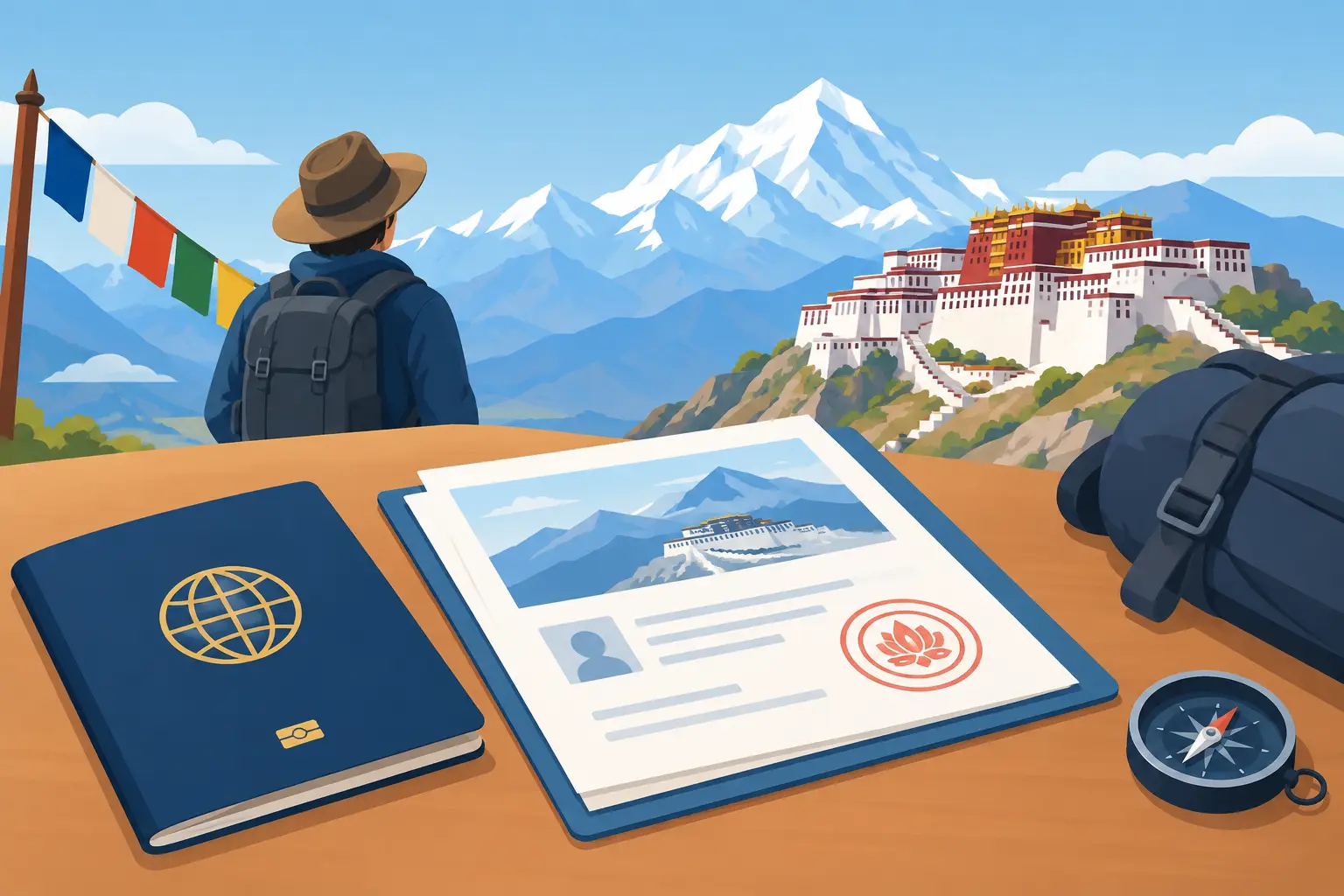
How to Arrange Tibet Permits for Your Trip
Tibet is not a destination where you arrive with a passport, book a hotel and decide tomorrow’s route. Knowing how to arrange Tibet permits early is part of making the journey possible – and it also gives you the confidence to focus on the extraordinary landscapes, monasteries and high Himalayan passes ahead.
For most international travellers, Tibet travel must be arranged through a registered local tour operator. Your operator submits the required applications, confirms your approved itinerary and provides the guide and vehicle arrangements required for travel in the Tibet Autonomous Region. The process is straightforward when planned properly, but the documents, timing and route matter.
The permits most travellers need for Tibet
The permit usually referred to as a “Tibet permit” is the Tibet Travel Permit. It is the core document required by foreign passport holders entering Tibet. It is issued through a Tibet-based travel operator, not through an individual application at an embassy or online portal.
Your itinerary may also require further approvals. Travellers visiting places beyond Lhasa and the main open routes, including areas around Mount Kailash, Lake Manasarovar, Everest Base Camp and certain border regions, may need an Alien’s Travel Permit and, for some sensitive areas, a Military Permit. These are normally arranged by your operator as part of the complete journey.
The exact combination depends on where you plan to go. A Lhasa cultural programme has different requirements from an overland journey to Everest Base Camp or a pilgrimage-style route to Mount Kailash. This is why it is wise to choose your route before submitting documents rather than treating permits as an item to add later.
How to arrange Tibet permits step by step
The first step is to select a registered operator and agree your itinerary. Independent foreign travel in Tibet is generally not permitted, so your confirmed programme needs to include transport, accommodation and a licensed guide. A good operator will advise whether your preferred dates, border crossing and places of interest are realistic before applying for approvals.
You will then provide a clear colour scan of your passport, normally with at least six months’ validity remaining, plus the necessary visa details. Your name, passport number, nationality and date of birth must match exactly across every document. Even a small mismatch can delay an application or create problems at check-in.
Once the itinerary and paperwork are confirmed, the operator applies for the Tibet Travel Permit and any additional route permits. Processing times vary by season, public holidays and current administrative requirements, so there is no benefit in leaving this until the final week before departure. For peak travel months, group trips and specialised routes, allow generous lead time.
Your operator will explain how you receive the approved documents. If you fly or travel by train from mainland China, the Tibet Travel Permit is commonly checked before boarding. If you enter Tibet overland from Nepal, the procedure is different and usually involves collecting or handling documentation in Kathmandu before the border crossing.
Entering Tibet from mainland China
If you are travelling to Tibet from cities such as Beijing, Chengdu, Shanghai or Xi’an, you will normally need a valid Chinese visa before beginning the trip, alongside the Tibet Travel Permit arranged by your operator. Your permit must match your entry point and planned dates.
Flying is the quickest option, while the Qinghai-Tibet railway is a memorable choice for travellers who would like to watch the landscape rise from the high plateau. The train can also offer a gentler transition psychologically, although it does not replace sensible acclimatisation once you arrive in Lhasa at high altitude.
Entering Tibet from Nepal
The Kathmandu to Lhasa route is one of the great Himalayan journeys, whether you fly across the mountains or travel overland via the border. However, visa arrangements from Nepal work differently from entering Tibet through mainland China.
In many cases, travellers entering Tibet from Nepal require a Chinese Group Visa arranged in Kathmandu through the Tibet operator’s process. An existing Chinese visa may not be used for this entry route, so do not assume that a visa already in your passport will cover the journey. Your operator should give you a clear document timetable before you arrive in Nepal, particularly if you are joining an overland group or continuing onward into mainland China.
Allow enough time – especially around holidays
As a practical rule, send your passport scan and trip details as soon as you commit to the journey. Your operator may request documents several weeks before travel, and more time is sensible if you are travelling in spring, during the summer holiday period, around major Chinese public holidays or with a school, college or larger private group.
Permit processing can also be affected by temporary administrative changes. Tibet sometimes has restricted periods or altered procedures, particularly around significant local or national events. These decisions are outside a travel operator’s control, but an experienced specialist can monitor the situation, advise honestly and suggest suitable adjustments if needed.
Avoid booking non-flexible international flights before your Tibet travel arrangements have been reviewed. This is especially valuable for travellers planning a multi-country holiday through Nepal, Bhutan or India, where one changed border date can affect hotels, domestic flights and onward connections.
Your Tibet permit checklist
Before your operator can begin, you will typically need to provide:
- A high-quality colour scan of your passport information page, with sufficient passport validity.
- Your China visa information if entering Tibet from mainland China, or the details needed for the Kathmandu group visa process if entering from Nepal.
- Your confirmed route, travel dates, accommodation plan and border or flight entry point.
- Accurate personal details for every member of your party, including children.
For schools, colleges and organised groups, appointing one group coordinator makes a major difference. A single checked document list, shared deadline and clear rooming plan help the operator process permits efficiently and reduce last-minute changes.
Why changing the itinerary can cause trouble
Tibet permits are issued against an approved itinerary, not simply against a traveller’s name. That means a late decision to add Everest Base Camp, change from a Lhasa flight to a Nepal border crossing, or extend a Mount Kailash programme may require fresh approvals.
Small changes within Lhasa can often be manageable, but route changes involving restricted areas deserve particular care. Tell your operator about every intended stop, even if it seems like a simple detour. This protects the practical side of the journey and ensures your guide, vehicle and accommodation plans remain properly coordinated.
There is also a safety reason for sticking to a considered programme. Tibet’s distances are long, roads cross high passes and elevations can change quickly. A well-paced itinerary allows time to acclimatise in Lhasa before travelling higher, rather than rushing towards a landmark and hoping your body catches up.
A few important exceptions
Rules described here apply to ordinary foreign leisure travellers. Chinese nationals and travellers holding certain residence or travel documents may follow different procedures. Journalists, diplomats and travellers on official assignments have separate approval requirements and should not use the standard tourist process.
Travel regulations can change, so treat general guidance as a starting point rather than a substitute for current confirmation. A trusted specialist should check the latest requirements for your nationality, entry route and intended travel dates before any application is submitted.
At Brothers Team, our Himalayan travel experience means we look beyond the permit itself. We help coordinate the route, border logistics, accommodation, transport and sensible acclimatisation that turn a complicated paperwork process into a journey you can genuinely enjoy. Start early, keep your itinerary clear, and let the anticipation belong to Tibet’s high passes and prayer-flag-lined valleys – not to last-minute documents.




Comments are closed