


Tibet Travel Restrictions: What to Plan For
The first glimpse of the Potala Palace, the high grasslands beyond Shigatse or the turquoise waters of Yamdrok Lake can feel wonderfully remote. Reaching these places, however, involves more preparation than a typical holiday. Tibet travel restrictions are real, detailed and subject to change, but they need not put Tibet out of reach. With the right route, permits and local arrangements in place, the journey can be exceptionally rewarding.
For most international visitors, Tibet is best approached as a fully supported cultural and high-altitude journey rather than an independent trip. That is part of its character: a knowledgeable guide, carefully paced road travel and a planned itinerary make space to appreciate the landscape, monasteries and everyday Tibetan life without carrying the burden of complex logistics yourself.
Why Tibet travel restrictions are different
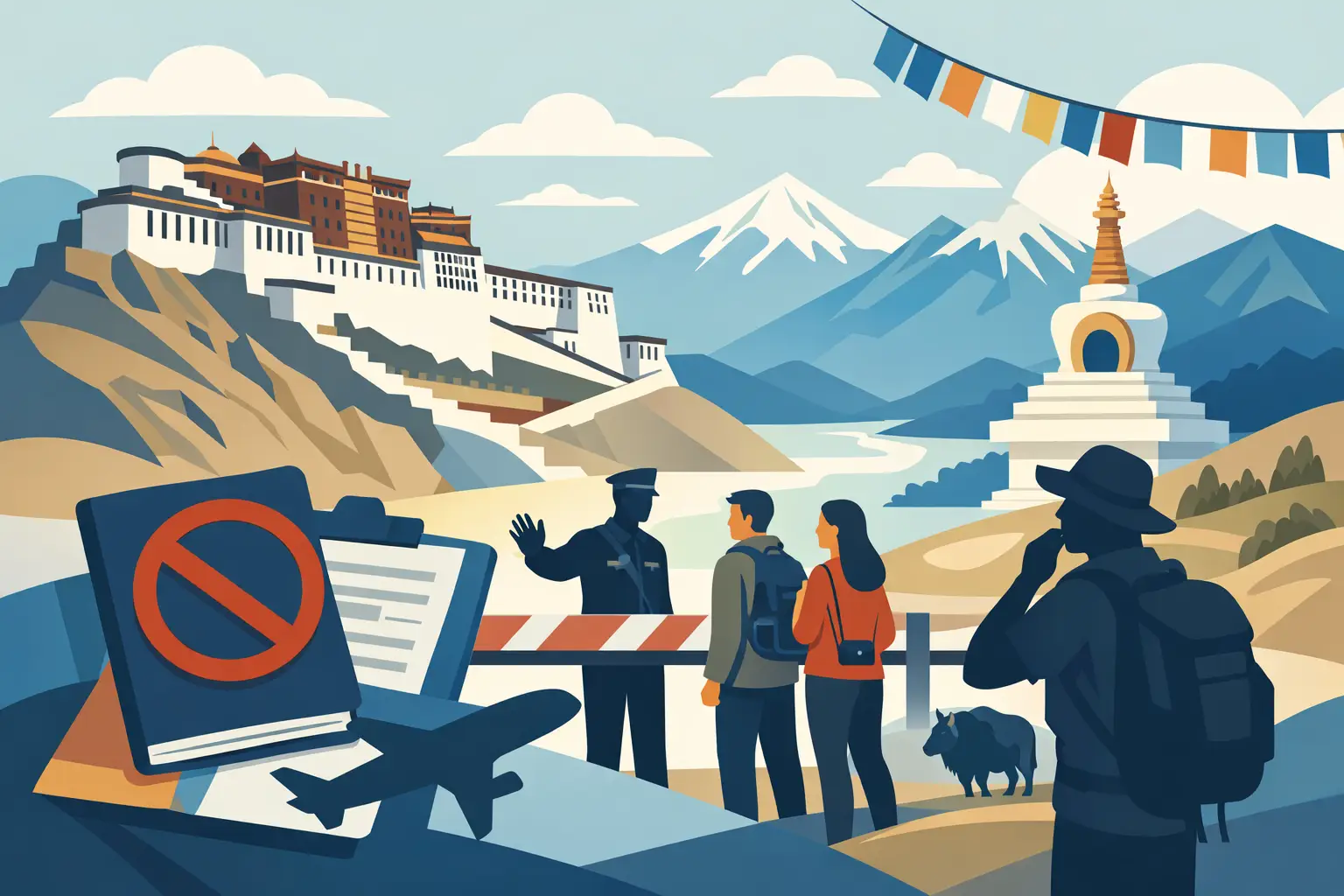
The Tibet Autonomous Region is administered under regulations that differ from most other parts of China. Foreign passport holders generally cannot travel there independently. Visitors are required to travel on an organised itinerary arranged through an authorised Tibet-based operator, with the necessary permits issued in advance.
This does not mean every traveller must join a large coach group. Private journeys for couples, families and friends can often be arranged, while schools and organised groups can follow a tailored programme. The key requirement is that transport, guide services, accommodation and the approved itinerary are coordinated through the local operator.
The rules also apply differently depending on where you enter Tibet. A traveller flying or taking the train from mainland China follows a different visa process from someone crossing overland or flying from Kathmandu. This is why it is wise to settle your route before applying for visas or booking non-refundable flights.
The permits you may need for Tibet
The central document for foreign visitors is the Tibet Travel Permit, sometimes called the Tibet Entry Permit. It is issued by the Tibet Tourism Bureau and is checked before boarding flights or trains into Lhasa from mainland China. Your tour operator normally applies for it using a passport copy, visa details and your confirmed itinerary.
For travel beyond Lhasa, further documents may be required. An Alien’s Travel Permit is commonly needed for areas such as Shigatse, Everest Base Camp, Mount Kailash and certain border districts. Some strategically sensitive locations also require a Military Permit. These names can sound intimidating, but a capable operator arranges them as part of the journey rather than asking you to visit offices during your holiday.
Permit requirements depend on your precise route. A Lhasa cultural stay and a Lhasa to Kathmandu overland programme do not involve exactly the same paperwork. Nor does an Everest Base Camp journey have the same permissions as a Mount Kailash pilgrimage. Be accurate about every destination you hope to visit from the outset. Last-minute route changes can be difficult or impossible once permits have been issued.
Entering Tibet from mainland China
If you enter from Beijing, Chengdu, Xi’an, Shanghai or another mainland Chinese city, you will normally need the appropriate Chinese entry visa as well as the Tibet Travel Permit. Your operator needs sufficient lead time to process the permit and deliver it to the city from which you will depart for Tibet.
Train travel from mainland China to Lhasa is a memorable option, particularly for travellers who enjoy watching the landscape rise from high plateau to vast Himalayan country. It does, though, add time and may not suit everyone before a demanding high-altitude itinerary. Flying gives more time in Tibet, but the rapid gain in elevation makes a gentle first few days in Lhasa especially important.
Entering Tibet from Nepal
The Kathmandu to Lhasa route is one of the great Himalayan crossings, whether travelled overland via the Kyirong border or by flight. Its visa procedure is distinct. Foreign visitors entering Tibet from Nepal generally require a Chinese Group Visa arranged in Kathmandu through the authorised process, even if they already hold a Chinese visa in their passport.
The practical implication is simple: do not apply for a standard Chinese visa without first confirming your route with your Tibet operator. You will usually need to be in Kathmandu several working days before departure so that passport handling, visa approval and final permits can be completed. Public holidays and official processing schedules can extend this window.
Timing matters as much as paperwork
Tibet is not always open to foreign tourism throughout the year. Periodic closures, often around March and occasionally at other times, can be announced by local authorities with limited notice. These restrictions may affect the whole region rather than one particular route.
Spring and autumn are often appealing for clearer mountain views and comfortable touring temperatures, although nights can still be cold. Summer brings greener valleys and a livelier feel in rural areas, while rain can affect road conditions. Winter is quieter, crisp and strikingly beautiful, but colder and more demanding, with some services and high passes limited.
There is no single best month for every traveller. A photographer may favour sharp autumn light; a cultural traveller might prefer a festival period; a family may value milder daytime weather. The sensible approach is to keep dates flexible until your operator confirms that travel is running normally and the required permits can be processed.
Altitude is the restriction you can feel
Lhasa sits at about 3,650 metres, and many classic road journeys climb considerably higher. The permit system gets most attention, yet altitude deserves equal respect. Fitness is helpful, but it does not make anyone immune to altitude illness.
A well-planned itinerary starts gently. Spend the first two or three days in Lhasa with light activity, unhurried sightseeing and plenty of fluids. Avoid rushing straight to Everest Base Camp or crossing a high pass on arrival. Guides should monitor how guests are feeling, and drivers need the freedom to adapt the pace if someone develops symptoms.
Headache, poor sleep, tiredness and reduced appetite can occur during acclimatisation. Tell your guide early if you feel unwell, especially if symptoms worsen or include breathlessness at rest, confusion or loss of coordination. The appropriate response may be rest, medical assessment or descent. A meaningful Himalayan journey is never improved by trying to prove toughness.
Travel insurance should specifically cover high-altitude travel, medical treatment and emergency evacuation for the elevations on your itinerary. Check the policy wording rather than assuming a standard policy is enough.
What travellers should prepare before booking
Your passport should normally have at least six months’ validity remaining, with sufficient blank pages where relevant. Share a clear passport scan early, and make sure your name, passport number and date of birth match every booking exactly. Small discrepancies can delay permits.
It is also sensible to plan around a confirmed itinerary. Keep accommodation, border crossings and internal transport aligned with the route submitted for approval. Carry printed and digital copies of key documents, but remember that your guide will normally hold or present permits at checkpoints.
Pack for large temperature changes rather than relying on a single heavy coat. Lhasa afternoons can be pleasantly warm in sunshine while evenings turn sharply cold. Layered clothing, sun protection, refillable water bottles, comfortable walking shoes and any personal medication belong high on the list. Internet access and international payment methods can be limited, so bring an appropriate cash reserve and prepare your offline travel tools before arrival.
A supported journey gives you more freedom to experience Tibet
Tibet’s regulations can appear restrictive when viewed as a checklist. On the road, their practical effect is often the opposite: the right local team handles permits, checkpoints, transport timing and accommodation, leaving you free to look out across the Himalaya and be present in the places you came to see.
For travellers considering Lhasa, Everest Base Camp or a Kathmandu-to-Tibet overland adventure, Brothers Team can coordinate the route, permissions and acclimatisation pace as one carefully managed journey. Confirm the latest requirements before committing to flights, travel with patience at altitude, and let Tibet reveal itself at the unhurried pace it deserves.



Comments are closed