


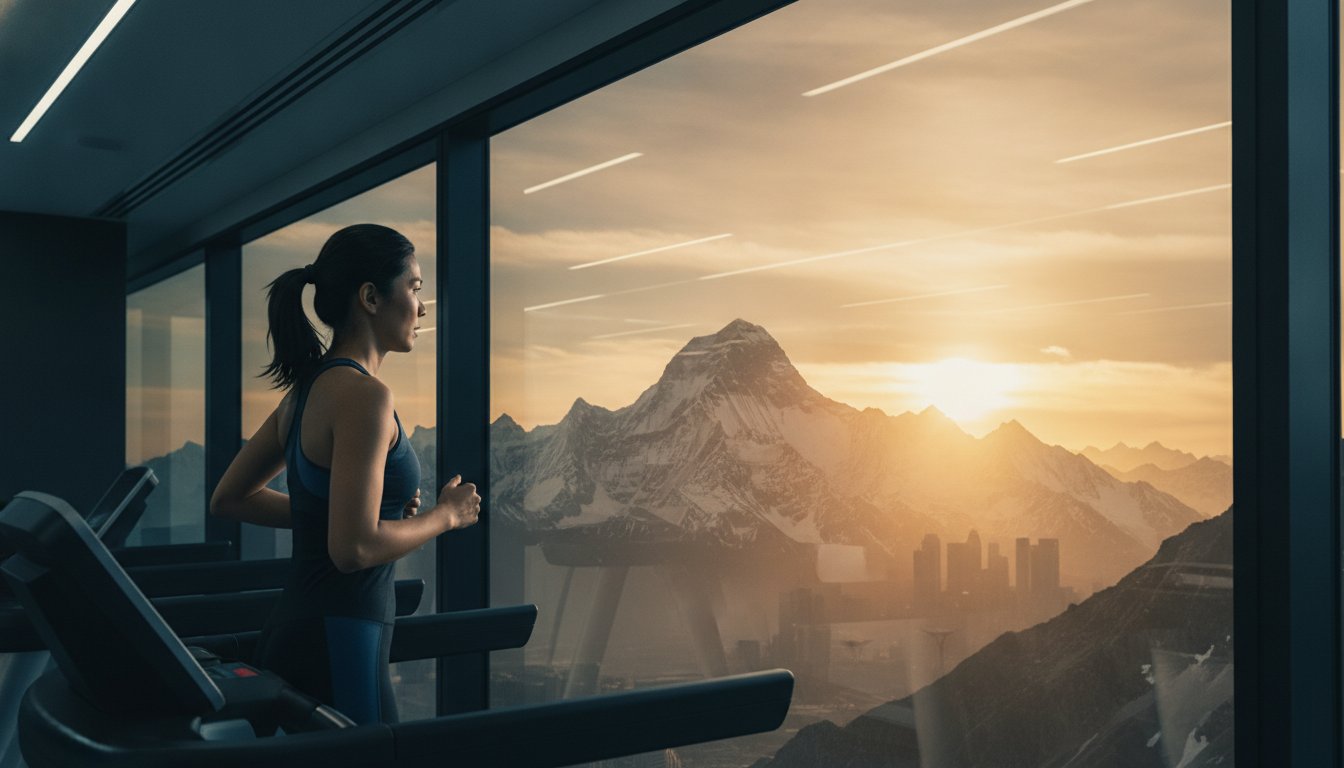
Everest Base Camp Trek: Ultimate 2026 Training Guide
You don’t need to be an Olympic athlete to stand at the foot of the world’s highest peak, but you do need to be a master of the slow burn. Success on the Khumbu trail isn’t about how much you can bench press; it’s about how many hours your legs can carry you through the thin, crisp air. We know the questions keeping you up at night. You might wonder if your cardio is enough or if that nagging fear of altitude sickness will cut your journey short. It’s a natural part of the adventure, and we’ve helped thousands of trekkers turn that anxiety into pure, focused energy.
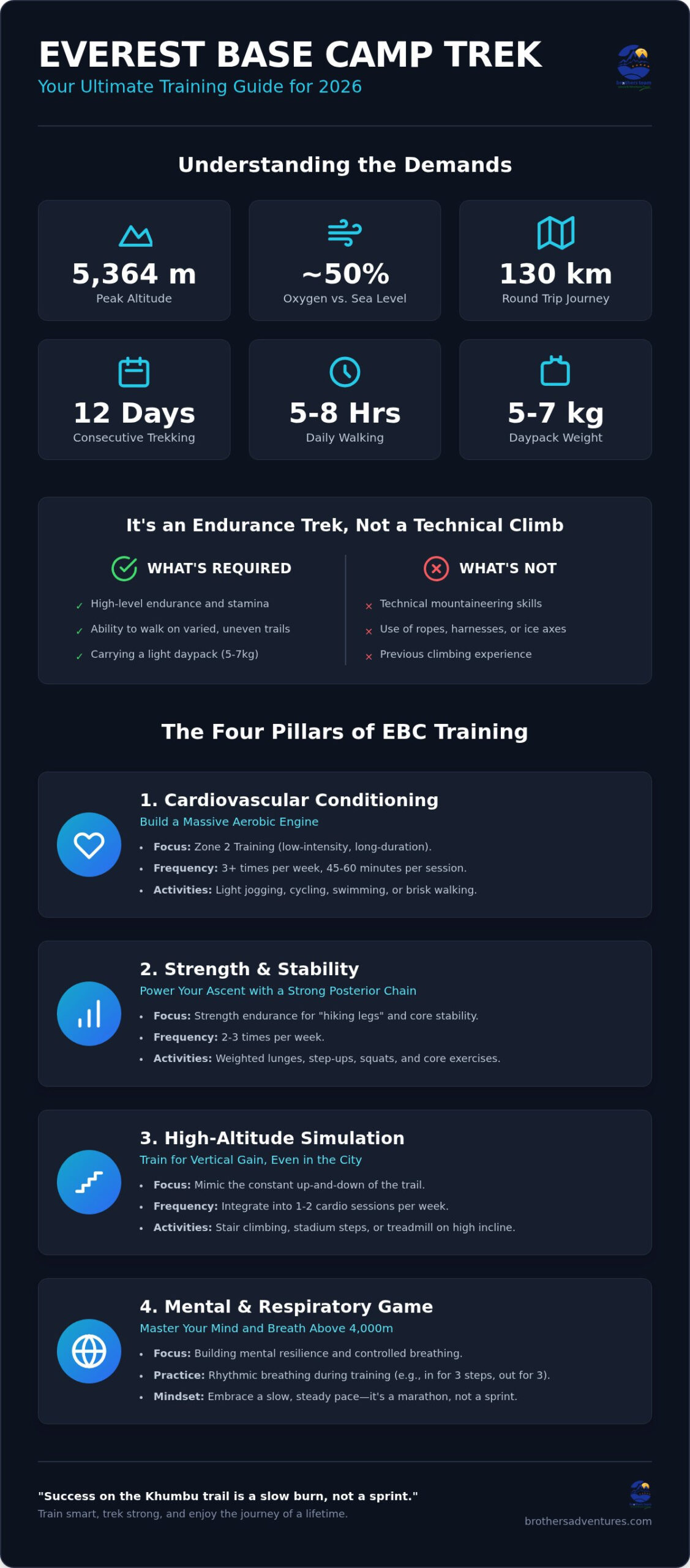
In this ultimate guide, we’ll help you master the training for Everest Base Camp trek with a plan designed specifically for the 2026 season. You’ll gain the physical and mental stamina required to reach 5,364 metres with total confidence. We’re laying out a clear 12 to 16 week schedule that balances strength and endurance, alongside proven strategies to minimize AMS risks. Drawing on our family’s heritage of guiding since 1992, we’ll bridge the gap between your local gym sessions and the rugged beauty of Nepal. Let’s start building the foundation for your greatest adventure yet.
Key Takeaways
- Distinguish between technical mountain climbing and the endurance required for the daily 5 to 8 hour marches across varied Himalayan terrain.
- Develop a robust 12-16 week programme for training for Everest Base Camp trek that prioritises cardiovascular conditioning and posterior chain strength.
- Learn to simulate high-altitude vertical gain in an urban environment using specific stairwell strategies and progressive treadmill incline intervals.
- Master the mental game and rhythmic breathing techniques needed to stay composed and focused as the air thins above 4,000 metres.
- Discover how professional local guidance and expert pace management are essential for navigating the updated 2026 safety standards and AMS protocols.
Understanding the Demands of the Everest Base Camp Trek
Before you lace up your boots, let’s clear up a major misconception. The journey to the foot of the world’s highest peak is a trek, not a climb. You won’t need ropes, harnesses, or ice axes to navigate the standard trail. Instead, you’ll be walking on a mix of rocky paths, ancient stone staircases, and swaying suspension bridges. Effective training for Everest Base Camp trek starts with acknowledging this distinction. It’s a test of endurance and consistency rather than technical mountaineering skill. You’re preparing for a 130km journey that demands a steady, rhythmic pace over nearly two weeks of constant movement.
The daily reality of the Everest Base Camp trek involves walking for five to eight hours each day. You’ll carry a daypack weighing between 5kg and 7kg, containing your water, snacks, and extra layers. This isn’t about maximum strength or how much you can lift in a single gym session. It’s about your aerobic capacity, the ability of your heart and lungs to supply oxygen to your muscles for hours on end. Your nervous system also plays a silent, vital role. It must learn to manage the multi-day physical stress of constant movement and recovery in a high-altitude environment. We often see very fit athletes struggle because they treat the trek like a sprint. Our local guides focus on managing your pace to help your body and nervous system adapt gradually to the load.
The Elevation Factor: Why 5,364 Metres Matters
As you ascend toward the Khumbu Glacier, the air becomes significantly thinner. By the time you reach Base Camp at 5,364 metres, you’re breathing roughly 50% of the oxygen available at sea level. This physiological shift changes everything. A fast 5km run time at home is impressive, but it doesn’t always predict success at altitude. High-altitude performance depends on how efficiently your body utilizes the limited oxygen it receives. Your training must focus on building a massive aerobic base that allows your heart to work less hard while you’re under the pressure of elevation.
Terrain and Duration: The 130km Round Trip
The trail is famous for “Himalayan Flats”, a local term for constant, punishing undulation. You’re rarely walking on level ground; you’re either ascending or descending. This creates a cumulative fatigue effect over 12 consecutive trekking days. Your muscles don’t just get tired from one day of effort; they carry the weight of every previous kilometre. This is where mental grit becomes your greatest asset. When your legs feel heavy on day nine, your mind must take over. We believe the bridge between your training and the actual journey is this mental resilience, supported by the steady encouragement of a seasoned guide who knows exactly when to push and when to rest.
The Four Pillars of an Effective EBC Training Programme
Building your fitness for the Himalayas doesn’t require an elite mountaineering background. It requires a smart, balanced approach that addresses the specific stressors of high-altitude trekking. We’ve refined these four pillars over decades of guiding to ensure our guests feel strong from the first step in Lukla to the final push toward the glacier. Establishing a consistent routine for training for Everest Base Camp trek early on is the best way to replace pre-trip anxiety with genuine excitement.
Cardio: Zone 2 Training for Altitude
Your primary goal is to build a massive aerobic engine. We recommend Zone 2 training, which is low-intensity, long-duration cardio where you can still hold a conversation. This type of effort mimics the steady pace you’ll maintain on the trail. Incorporating swimming, cycling, or light jogging for 45 to 60 minutes three times a week is ideal. Research into physical training for hiking suggests that this steady-state work improves how your muscles use oxygen, a critical advantage when levels drop at 5,000 metres. Monitor your heart rate to stay in that “easy” effort range; building this base is more important than chasing high speeds.
Strength: Powering the Ascent
You don’t need to be a bodybuilder, but you do need “hiking legs.” Focus on strength endurance through movements that mimic the trail. Weighted lunges, step-ups, and Bulgarian split squats are your best friends here. These exercises build the stability needed for uneven, rocky paths while strengthening your posterior chain. Don’t ignore your core; a strong midsection helps you carry a daypack without straining your lower back. We also suggest light upper body conditioning. Efficiently using trekking poles for 12 days requires more shoulder and tricep stamina than most people expect. If you’re curious about how this strength translates to the trail, take a look at our Everest Base Camp Trek details to see the daily elevation profiles.
Flexibility: The Secret to Longevity on the Trail
Stiff muscles are more prone to injury and fatigue. Focus on your hip flexors and calves, as these areas take the brunt of the work on steep inclines. Use dynamic stretching like leg swings before your training sessions and save static holds for the evening. In 2026, the most successful trekkers will be those who view rest and mobility as active components of their preparation rather than signs of weakness. This recovery-first mindset ensures you aren’t just fit, but also resilient enough to handle the cumulative fatigue of the journey.
The Urban Trekker’s Strategy: Simulating the Himalayas
Living in a concrete jungle shouldn’t dampen your Himalayan dreams. Whether you’re in the heart of Singapore or another bustling city, you can build a mountain-ready body without a peak in sight. Successful training for Everest Base Camp trek is about mimicking the specific stressors of the trail using the tools you have at hand. You don’t need a mountain range in your backyard to prepare your legs for the 130km journey; you just need a bit of creativity and a solid plan.
Mastering the Stair Climb
High-rise buildings are your secret weapon for building vertical gain. Start your sessions with just your body weight to build a foundation of movement. As your fitness improves, progress to wearing a 10kg pack. Don’t rush the descent; the downward journey builds essential eccentric leg strength that prevents knee pain on the steep Himalayan drops. A great 45-minute workout involves consistent loops of a 20-story stairwell. This builds the specific muscular endurance you’ll need for the thousands of stone steps leading to Namche Bazaar.
The Incline Treadmill Routine
If you prefer the gym, the treadmill is a precision tool for incline training. Set the incline to between 10% and 15% to simulate the long, grinding ascent of the Namche Hill. Keep your speed slow, between 1.5 and 2.5 mph. This might feel easy at first, but it perfectly mimics the “talk pace” you’ll actually use at high altitude. While you build this stamina, it’s also wise to review medical guidance on preventing altitude sickness. Understanding the physiological transition ahead is just as important as your physical reps. You can also mix in interval training, increasing the incline for three minutes before returning to a flatter walk to build cardiovascular resilience.
Packing for Practice
Never let the first time you wear your boots be in Nepal. Use your weekend warrior hikes on national trails to test your full gear setup under real conditions. Reviewing our Nepal adventure tour 8 days checklist will help you identify exactly what you need to carry during your practice runs. A 5kg pack feels manageable for twenty minutes, but after four hours of walking, it becomes a true test of your core stability. Training with your actual gear ensures there are no surprises like blisters or shoulder chafe when you land in Lukla in 2026. This gear testing turns your urban training into a true dress rehearsal for the mountains.
Altitude Preparation and the Mental Game
Fitness isn’t a magical shield against altitude sickness. Even elite marathoners can feel the effects of the thin air if they ascend too quickly. However, a dedicated programme for training for Everest Base Camp trek makes your body significantly more efficient. By improving your cardiovascular health, you lower your resting heart rate. This means your heart doesn’t have to work as hard to perform basic tasks at 5,000 metres, leaving you with more “internal bandwidth” to cope with the physiological stress of the altitude. It’s about making every breath count.
Mastering the art of pressure breathing is a game-changer. Exhale through pursed lips as if you’re blowing out a candle. This technique creates back-pressure in your lungs, helping oxygen cross into your bloodstream more effectively. Pair this with rhythmic pacing where every step matches your breath. If you’re gasping, you’re moving too fast for the elevation. Hydration is also non-negotiable. Plan to drink 3 to 4 litres of water daily. The air in the Khumbu is incredibly dry, and dehydration often mimics the symptoms of altitude sickness, making it harder for your guide to assess your health.
Minimising AMS Risk Through Pacing
Our guides live by the philosophy of “Bistari, Bistari”, which means “slowly, slowly” in Nepali. This isn’t just a suggestion; it’s a vital safety strategy. When you prepare with an everest base camp trek from singapore mindset, you focus on the endurance foundation needed to maintain this slow, steady pace. This physiological foundation gives your body the best chance to acclimatise as you move between villages. Always listen to your body. If you feel a dull headache or slight nausea, tell your guide immediately. Our 2026 expeditions follow strict AMS monitoring protocols, ensuring that we catch early symptoms before they become serious.
Mental Conditioning for the Trek
The “Khumbu Grind” is as much a mental battle as a physical one. You’ll face cold nights, shared teahouses, and the cumulative fatigue of twelve days on the trail. Prepare your mind by breaking the journey into small, manageable milestones. Don’t fixate on the total distance; focus on the hot ginger tea waiting for you at the next village. Visualise yourself standing at the prayer-flag-strewn Base Camp. That singular focus will pull you through the toughest climbs. If you’re ready to turn these visualisations into reality, explore our Nepal Expeditions & Peak Climbing packages to start your journey.
From Training to the Trail: Why Professional Guidance Wins
You’ve spent months building your aerobic engine and strengthening your legs, but the transition from the gym to the Himalayas requires a different kind of expertise. While your training for Everest Base Camp trek provides the foundation, a professional tour operator acts as the bridge to your success. In the high-altitude environment of the Khumbu, local knowledge isn’t just a luxury; it’s a critical safety requirement. As we look toward the 2026 trekking season, having a team that understands the nuances of the trail ensures your hard work in training actually pays off at the finish line.
Our local expertise, rooted in our Kathmandu operations, allows us to maintain the highest safety standards. We don’t just lead the way; we actively monitor your physiological response to the altitude. Our guides use pulse oximeters and detailed AMS tracking charts twice daily to check your oxygen saturation and heart rate. This data-driven approach takes the guesswork out of acclimatisation. It allows us to make informed decisions about your pace and health, ensuring that every guest moves safely toward the goal. This level of professional oversight is what separates a difficult struggle from a triumphant journey.
Brothers International Tours & Trading Pte Ltd carries a deep family legacy of Himalayan exploration that dates back to 1992. We aren’t a cold, corporate entity; we’re a family-owned agency that treats every trekker like an invited guest in our home. This personal touch means we’re deeply invested in your journey. We understand the specific anxieties that come with such a massive undertaking, and we’re here to provide the steady, encouraging guidance you need to overcome them.
The Brothers International Tours & Trading Pte Ltd Difference
We provide seamless support from your initial planning in Singapore to the moment you step onto the trail in Lukla. Our 2026 Everest Base Camp trek packages are designed to remove the stress of logistics, allowing you to focus entirely on your physical readiness. From managing permits to securing the best teahouse accommodation, we handle the details so you can soak in the wonder of the mountains. You’ll feel the difference that three decades of local experience makes in every meal, every rest stop, and every breathtaking view.
Next Steps: Booking Your 2026 Expedition
As you enter the final four weeks of your training for Everest Base Camp trek, it’s time to shift your focus toward recovery. The final seven days before you depart for Kathmandu should be a “taper week.” Reduce your volume by 50% to ensure you arrive in Nepal fresh, energized, and ready for the challenge. Don’t let your preparation go to waste by overtraining at the last minute. If you’re ready to turn your training into a reality, Book your Everest Base Camp Trek with the experts today! We’re ready to guide you to the roof of the world with the care and competence you deserve.
Step Toward Your Himalayan Dream
The path to 5,364 metres is paved with the consistency of your preparation. By mastering the four pillars of endurance and utilizing creative urban strategies to simulate the terrain, you’ve already laid the foundation for success. Remember that effective training for Everest Base Camp trek isn’t just about the physical miles; it’s about building the internal resilience to handle the thin air and the mental grit to keep moving when the trail gets steep. You’ve transformed your local environment into a mountain training ground, and that dedication will be your greatest asset in the Khumbu.
Since 1992, Brothers International Tours & Trading Pte Ltd has acted as the bridge between your hometown training and the majestic Khumbu Glacier. With offices in Singapore and Kathmandu, we provide a seamless support network that maintains a 100% focus on high-altitude safety. You don’t have to face the mountains alone. Join an Expert-Led Everest Base Camp Trek with Brothers International Tours & Trading Pte Ltd and let our family guide yours to the roof of the world. Your 2026 adventure is waiting; lace up your boots and let’s make it happen together.
Frequently Asked Questions
How many months before the trek should I start training for Everest Base Camp?
Ideally, start your preparation 4 to 6 months before your departure date. This timeframe gives your body enough time to build a solid aerobic base and strengthen your joints without rushing. If you’re already active, a focused 12 to 16 week programme for training for Everest Base Camp trek is usually sufficient. Starting early allows for a gradual progression in pack weight and hiking duration, which significantly reduces the risk of overuse injuries.
Do I need to be a marathon runner to reach Everest Base Camp?
No, you don’t need to be a marathon runner or an elite athlete to succeed. The trek is a test of steady endurance rather than speed. While runners often have great cardiovascular fitness, the specific demands of trekking involve walking for 5 to 8 hours daily on uneven terrain. Focus on “time on feet” and low-intensity cardio rather than high-speed training. Consistency in your weekly walks is far more valuable than a single long-distance run.
Can I train for high altitude while living at sea level?
Yes, you can effectively prepare for high altitude while living at sea level by building a massive aerobic engine. Since you can’t simulate the thin air at home, focus on improving your body’s ability to utilize oxygen efficiently. Use incline treadmills, stairwells, and weighted hikes to push your cardiovascular limits. This preparation ensures that when you arrive in Nepal, your heart and lungs are strong enough to handle the increased workload that altitude demands.
What is the best type of cardio for EBC preparation?
Low-intensity, steady-state cardio is the gold standard for EBC preparation. Activities like hiking, swimming, cycling, or walking on an incline treadmill are perfect. These exercises build the aerobic base required for long trekking days. Aim for sessions that last at least 60 minutes to simulate the endurance needed for the trail. This type of training for Everest Base Camp trek teaches your body to burn fat efficiently and maintain energy over 12 consecutive days.
How much weight should I carry in my pack during training?
Start with a light pack of 2kg to 3kg and gradually increase it to 7kg or 8kg. Your goal is to train with slightly more weight than you’ll actually carry on the trail. Most trekkers carry a 5kg to 7kg daypack containing water, layers, and snacks. By building up to 8kg during your urban training sessions, the actual weight you carry during the expedition will feel much lighter and more manageable as you ascend toward the glacier.
Should I focus more on strength or cardio for the Himalayas?
You need a balanced mix, but cardiovascular endurance is the primary requirement. While strength in your legs and core helps you navigate rocky steps and carry your pack, your heart and lungs do the heavy lifting at altitude. A good ratio is 70% cardio and 30% strength training. Focus your strength work on the posterior chain, including your glutes, hamstrings, and lower back, to support your body during the long, undulating descents.
What happens if I get altitude sickness despite my training?
Even the fittest trekkers can experience Acute Mountain Sickness (AMS), as fitness isn’t a guaranteed shield. If you show symptoms like persistent headaches or nausea, our expert guides will follow strict safety protocols. We use oximeters to check your oxygen levels and refer to AMS charts to decide the best course of action. Often, a rest day or a slight descent is enough, but your safety is always our absolute priority during the journey.
Is it necessary to use trekking poles during my training sessions?
Yes, it’s highly beneficial to incorporate trekking poles into your training, especially during long hikes or stair sessions. Using poles reduces the impact on your knees by up to 25% and engages your upper body, which builds specific shoulder and tricep stamina. Practicing with them now ensures you’ve mastered the rhythm and technique before you reach the steep, rocky sections of the Khumbu trail where they become essential for balance and stability.




Comments are closed