


Altitude Sickness Guide for Himalayan Expeditions (2026)
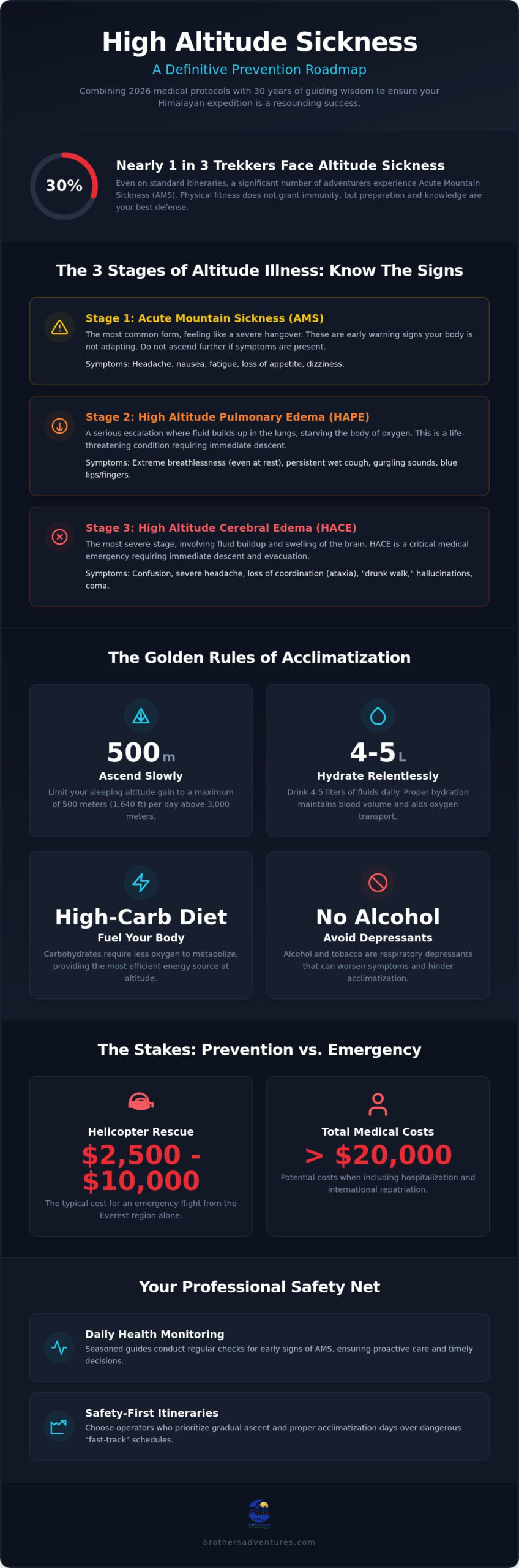
Did you know that nearly 30% of trekkers in the Himalayas experience acute mountain sickness even when following standard schedules? It’s completely natural to feel a flutter of anxiety about your body’s reaction to the thin air of the Khumbu or Annapurna regions. You’ve spent months training and dreaming of that summit; the last thing you want is for a medical emergency to cut your journey short. This guide provides a definitive roadmap for high altitude sickness prevention. We combine the latest 2026 medical protocols with the “slow and steady” wisdom we’ve gathered over 30 years of family-led guiding to keep your dream alive.
You’re likely looking for more than just a list of symptoms. You want a clear, actionable plan that replaces confusion with confidence. We’ll walk you through the Wilderness Medical Society 2024 guidelines, explaining why staying below a 500 meter sleeping altitude increase per night is your best defense. You will learn the specific signs to watch for, the truth about Acetazolamide dosages, and how to evaluate your tour operator’s safety protocols. By the end of this article, you’ll feel like an invited guest of the mountains, prepared with the professional strategies needed to ensure your Himalayan expedition is a resounding success.
Key Takeaways
- Master our “Slow and Steady” philosophy to ensure your body adapts gracefully to the thinning air of the majestic Himalayas.
- Discover why high altitude sickness prevention depends on a synergy of proper hydration and strict sleeping altitude limits.
- Learn how a high-carbohydrate diet and targeted cardiovascular training provide the energy and resilience needed for high-altitude success.
- Understand how daily health checks and professional monitoring by seasoned guides act as a vital safety net during your journey.
- Identify the red flags of dangerous “fast-track” itineraries and learn to choose routes designed for maximum safety and enjoyment.
Understanding High Altitude Sickness: Why Prevention is Critical
High altitude sickness is not a reflection of your grit or your training. It is a physiological response to the body’s failure to adapt to decreased atmospheric pressure as you climb higher into the sky. When you ascend, the weight of the air above you decreases, making the air “thinner” and less dense. For many adventurers, this transition is the biggest hurdle to reaching their goal. Even the most elite athletes, from marathon runners to professional cyclists, remain susceptible to altitude issues. Physical fitness helps you manage the daily exertion of a trek like the Everest Base Camp Trek, but it doesn’t change your cellular biology. In fact, being exceptionally fit can sometimes be a disadvantage if it leads you to push a pace that exceeds your body’s ability to acclimatize.
The stakes of high altitude sickness prevention are both emotional and financial. Imagine spending months training and thousands of dollars on gear and flights, only to be forced to turn back just a few miles from your goal. An aborted expedition is heartbreaking, but the logistical fallout is also significant. Research shows that a helicopter rescue from the Everest region can cost between USD 2,500 and USD 10,000 for the flight alone. If hospital treatment and repatriation are required, those costs can soar above USD 20,000. This is why we treat high altitude sickness prevention as a discipline of “preventative logistics.” Success in the Himalayas depends on a synergy between your personal health and the professional design of your itinerary.
AMS, HAPE, and HACE: The Three Stages of Altitude Illness
Understanding the progression of altitude illness is vital for every trekker. A comprehensive overview of altitude sickness categorizes the condition into three distinct levels of severity. Acute Mountain Sickness (AMS) is the most common form, often feeling like a heavy hangover with symptoms like headaches, fatigue, and nausea. If these early warning signs are ignored, the condition can escalate into High Altitude Pulmonary Edema (HAPE), which involves fluid buildup in the lungs. You might notice a persistent, chesty cough or extreme breathlessness even while resting. The most severe stage is High Altitude Cerebral Edema (HACE), where the brain begins to swell. Guides often use a “drunk-walk” test to check for ataxia; if a trekker cannot walk in a straight line, it is a medical emergency requiring immediate descent.
The Science of Thin Air: What Happens Above 2,400 Meters
As you cross the 2,400-meter threshold, your body enters a new environment. It’s a common misconception that the percentage of oxygen in the air decreases; it actually stays at roughly 21 percent. However, the partial pressure of oxygen drops significantly. This means there are fewer oxygen molecules available in every breath you take. Your body’s immediate response is to increase your breathing rate and heart rate to compensate for the deficit. Hypoxia is the state where the body’s tissues are deprived of an adequate oxygen supply, serving as the primary trigger for all altitude symptoms. By understanding this biological shift, you can better appreciate why our “Slow and Steady” philosophy is the only way to successfully navigate the high peaks of Nepal and Pakistan.
The Golden Rules of Acclimatization: How to Ascend Safely
Success in the high peaks of Nepal isn’t about who reaches the top first. It’s about who adapts the best. At Brothers Adventures, we live by the “Slow and Steady” mantra because we’ve seen it work for over three decades. This philosophy forms the bedrock of high altitude sickness prevention. Your body is a remarkable machine, but it needs time to manufacture more red blood cells to carry oxygen in the thinner atmosphere. Pushing too hard too fast is the most common reason trekkers fail to reach their destination. Listen to your body and respect the rhythm of the mountains. It’s better to arrive a day late than not to arrive at all.
Hydration is your second biological requirement. At high altitudes, you lose moisture through rapid breathing and the dry mountain air. Water is essential for maintaining blood volume and ensuring that oxygen reaches your vital organs. We recommend drinking four to five liters of fluids daily. This isn’t just about comfort; it’s about survival. You must also avoid alcohol and tobacco during your ascent. Alcohol is a respiratory depressant that can mask symptoms of AMS, while tobacco reduces the oxygen-carrying capacity of your blood. Treat your rest days as “active recovery” periods. These days aren’t for sitting still; they are for allowing your blood chemistry to stabilize before the next push.
The ‘Climb High, Sleep Low’ Philosophy
This classic mountaineering tactic is one of the most effective tools in your arsenal. The idea is simple: you trek to a higher elevation during the day and return to a lower altitude to sleep. This brief exposure to higher altitudes stimulates your body to produce more red blood cells without the stress of trying to recover overnight in a low-oxygen environment. You’ll see this strategy used extensively on an Everest Base Camp trek, where we might hike to a nearby ridge before descending to our teahouse for the evening. It’s a proven way to jumpstart your acclimatization while ensuring you get the restorative sleep you need.
Managing Your Daily Vertical Ascent Limits
The most critical metric for your safety is your sleeping altitude. According to the CDC guidelines on acclimatization, once you are above 3,000 meters, you should not increase your sleeping altitude by more than 300 to 500 meters in a single night. While you might feel strong enough to climb further, your internal chemistry needs time to catch up. We also recommend scheduling a full rest day for every 1,000 meters of elevation gained. If an itinerary doesn’t include these buffer days, it’s a red flag. You can explore our expertly designed routes to see how we prioritize your health and safety. Always prioritize high altitude sickness prevention over a fast-track schedule.
Preparing Your Body: Fitness, Nutrition, and Medication
Your preparation begins long before you step off the plane in Kathmandu or Skardu. While we’ve discussed the importance of ascent logistics, your physical readiness acts as the engine for your journey. It’s a common myth that being a marathon runner makes you immune to the thin air. In reality, physical fitness doesn’t guarantee high altitude sickness prevention, but it significantly reduces the overall strain on your heart and lungs. A conditioned body operates more efficiently, allowing you to maintain a steady pace without overexerting yourself. This efficiency is your best friend when oxygen levels start to dip. By arriving with a robust aerobic base, you give your body the best possible chance to focus its energy on the complex process of acclimatization.
Fueling your body correctly is just as vital as your training. At high altitudes, your metabolism shifts. Carbohydrates become the preferred fuel source because they require less oxygen to metabolize compared to fats or proteins. We encourage our guests to embrace a high-carb diet during their trek. Think of it as high-octane fuel for your cells. Digestion also slows down in the thin air, so eating smaller, frequent, carb-rich meals helps maintain your energy levels without bloating. Along with nutrition, many trekkers consider Medication for altitude sickness as part of their strategy. Acetazolamide, commonly known as Diamox, is the gold standard for prevention. Research indicates it can reduce the incidence of AMS by approximately 50 percent when taken at the standard adult dosage of 125 mg twice daily. Always consult a travel medicine specialist before starting any new regimen, especially when planning a demanding expedition.
Pre-Trek Conditioning for Thin Air
Focus your training on Zone 2 cardio. This means long, steady sessions where you can still hold a conversation. Building this aerobic base months in advance teaches your body to utilize oxygen more effectively. We also recommend incorporating breath-control exercises and targeted leg strength training to prepare for the steep, rocky descents common in the Himalayas. VO2 Max represents the maximum amount of oxygen your body can utilize during intense exercise, serving as a key indicator of your aerobic efficiency in oxygen-sparse environments. Train hard. Breathe deep. Your future self will thank you at 5,000 meters.
Hydration and Electrolyte Management
Water is the lifeblood of high altitude sickness prevention. You need to aim for four to five liters of fluids every day. However, be careful not to flush out your system entirely. Over-hydration without electrolyte replacement can lead to hyponatremia, a dangerous drop in blood sodium levels. Mix in electrolyte powders to maintain your mineral balance. In the sub-zero temperatures of the high Himalayas, keeping your water liquid is its own challenge. Store your water bottles upside down in your pack; ice forms from the top down, so this keeps the lid from freezing shut. Insulated bottle sleeves are also a smart investment for those crisp, alpine mornings.
Professional Monitoring: How Expert Guides Manage Safety
When you’re trekking through the high passes of the Khumbu or the Karakoram, your guide is your most valuable asset. Choosing a tour operator with local expertise ensures that your journey is managed by someone who understands the nuances of the terrain and the air. At Brothers Adventures, we’ve spent over 30 years refining our safety protocols. Our guides don’t just lead the way; they act as vigilant health monitors. Every morning and evening, we conduct thorough health check-ins. We look for the subtle shifts in your behavior or physical state that you might miss yourself. This proactive approach is the core of effective high altitude sickness prevention.
We maintain a strict “Honesty Policy” with all our guests. It’s tempting to hide a dull headache or a touch of nausea because you don’t want to hold back the group. However, transparency is vital. A small symptom caught early can often be managed with a rest day or extra hydration. A hidden symptom, on the other hand, can quickly escalate into a dangerous emergency. Trust your guide’s experience. We’re here to help you succeed, and that means making the right call at the right time. Your safety is always our primary objective, far outweighing any summit goal.
The Pulse Oximeter: Your Scientific Safety Net
Our guides carry pulse oximeters to measure your blood oxygen saturation (SpO2) levels daily. This tool provides a scientific snapshot of how well your body is adapting to the altitude. We establish a baseline for you at lower elevations and track how those numbers change as we climb. A single low reading isn’t always a cause for alarm; it might just mean you need more water or a slower pace for the afternoon. However, a significant, sustained drop in SpO2 tells us your body is struggling. We interpret these numbers alongside your heart rate and physical symptoms to make informed decisions about your ascent.
Knowing When to Descend: The Ultimate Protocol
We follow a non-negotiable “Golden Rule” in the mountains: a trekker never ascends if they are experiencing symptoms of AMS. If you have a headache that doesn’t resolve with rest, that’s your body’s way of telling you to stay put. When a headache becomes severe or is accompanied by a loss of coordination, it becomes a medical emergency. Descent is the only definitive cure for advanced altitude illness. If a trekker cannot walk down, we coordinate evacuation logistics immediately. Our deep local connections allow us to arrange support quickly, ensuring you receive the care you need. Discover how we prioritize your well-being on every Himalayan adventure.
Planning for Success: Selecting the Right Itinerary
If you’re new to high-altitude environments, consider building your confidence with a scenic mini trek before attempting 5,000 meter peaks. These shorter journeys allow you to experience the magic of the Himalayas while testing how your body responds to moderate elevation. Some travelers also choose to begin their Himalayan exploration with a gentler introduction to the region’s mountain culture, such as a 7 day Bhutan itinerary, which offers stunning high-altitude scenery and acclimatization benefits at a more accessible pace before tackling Nepal’s higher peaks. For those wondering about the investment involved, understanding the Bhutan private tour cost for a 7-day scenic journey can help you plan a well-paced introductory high-altitude experience before committing to a more demanding Himalayan expedition. At Brothers Adventures, we design every route to maximize both safety and enjoyment. We build in buffer days and ensure that our sleeping elevations follow the strictest safety standards. A successful trek isn’t just about reaching the destination; it’s about feeling strong and present every step of the way. By selecting an itinerary crafted by experts, you turn a high-risk expedition into a manageable and life-changing discovery.
Evaluating Trekking Packages for Safety
When you’re comparing different trekking packages, you need to look beyond the beautiful photos. Use this checklist to vet any potential itinerary for safety:
- Count the rest days: Does the plan include a full day of rest for every 1,000 meters of elevation gained?
- Check the sleeping jumps: Ensure the increase in sleeping altitude stays between 300 and 500 meters per night once you’re above 3,000 meters.
- Inquire about local support: Does the agency have a dedicated Kathmandu office to manage rapid responses and emergency logistics?
- Ask about medical gear: Confirm that your guide will be equipped with a pulse oximeter and a comprehensive first-aid kit.
The Brothers Adventures Commitment
Since our founding in 1992, Brothers Adventures has operated as a family-owned specialist with deep roots in Kathmandu. We’ve spent over 30 years guiding explorers through the world’s most spectacular landscapes, from the Everest region to the remote valleys of Pakistan. Our unique bridge between Singapore and Kathmandu ensures that you have seamless safety management from the moment you book until you return home. We treat every guest like a member of our own family, prioritizing your well-being above all else. Are you ready to witness the scale and beauty of the high peaks with a team you can trust? Plan your safe Himalayan adventure with us today and let’s make your mountain dreams a reality.
Your Path to the Roof of the World
Reaching the base of the world’s highest peaks is a feat of logistical discipline as much as physical endurance. You now possess the essential protocols for high altitude sickness prevention, from mastering the “Climb High, Sleep Low” method to fueling your cells with a high-carb diet. Success in the Himalayas isn’t about rushing to the top; it’s about respecting the rhythm of the mountains and choosing an itinerary that prioritizes your biology over a fast-track schedule. Your preparation and your choice of partner are what turn a daunting challenge into a triumphant journey.
We’ve been a family-owned and operated specialist since 1992, and we bring over 30 years of Himalayan expertise to every adventure we design. Our guides undergo rigorous pulse oximetry training, ensuring you have a scientific safety net on every ridge and pass. We handle the complex health monitoring and logistics so you can immerse yourself in the sheer wonder of the landscape. Trust in a partner who treats you like a guest, not a customer. Your dream of standing among the giants is within reach, and we’re here to ensure you get there safely.
Book Your Safe Himalayan Expedition with Brothers Adventures
The mountains are waiting for you. Step forward with confidence, breathe deep, and let the adventure begin.
Frequently Asked Questions
Can I prevent altitude sickness by being physically fit?
No, physical fitness is not a guarantee for high altitude sickness prevention. While being fit helps you manage the daily physical exertion of a trek, it doesn’t change how your blood chemistry adapts to lower oxygen levels. Even elite athletes can suffer from AMS if they ascend too quickly. Focus on your pace and acclimatization schedule rather than relying solely on your gym training.
What is the best medication to take for high altitude sickness prevention?
Acetazolamide, commonly known as Diamox, is the most effective medication for high altitude sickness prevention. It works by increasing the acidity of your blood, which stimulates your brain to breathe faster and more deeply, especially during sleep. You should always consult with a travel medicine specialist before starting this medication to discuss potential side effects and ensure it’s safe for your specific health profile.
How much water should I drink daily to avoid AMS?
You should aim to drink between 4 and 5 liters of fluids every day during your trek. The air in the Himalayas is incredibly dry, and your body loses moisture rapidly through increased respiration. Proper hydration helps maintain your blood volume, which is essential for transporting oxygen to your vital organs. Mix in electrolytes to ensure you maintain a healthy mineral balance throughout the day.
Is it safe to trek to Everest Base Camp if I have never been to high altitude?
Yes, it’s perfectly safe for first-timers as long as you choose a professionally designed itinerary with a gradual ascent. Most people have never experienced elevations above 5,000 meters before their first Himalayan journey. The key is to select a route with built-in rest days. Our guides will monitor you closely using pulse oximeters to ensure your body is adapting correctly to the new environment.
What should I do immediately if I start feeling symptoms of altitude sickness?
Stop ascending immediately and inform your guide about your symptoms. The most important rule in the mountains is to never go higher if you’re feeling unwell. Often, a few hours of rest and extra hydration at your current altitude will help. If symptoms persist or worsen, you must begin a descent to a lower elevation until you feel better, as descent is the only definitive cure.
Can children or elderly travelers safely participate in high-altitude expeditions?
Yes, travelers of all ages can enjoy the Himalayas with the right preparation and medical clearance. Children and seniors may require a more conservative ascent schedule and extra rest days to ensure their bodies have ample time to adjust. We often recommend starting with a more accessible route, such as the 8Days Scenic Nepal Mini Trek, to test comfort levels before tackling higher peaks.
How do professional guides monitor for altitude sickness on the trail?
Our guides use a combination of scientific tools and seasoned observation to keep you safe. We perform daily health checks using pulse oximeters to measure your blood oxygen saturation levels and heart rate. Beyond the numbers, we watch for subtle changes in appetite, sleep patterns, and coordination. This high-touch approach allows us to catch early warning signs of AMS before they become serious.
Does ‘climb high, sleep low’ really work for everyone?
The ‘climb high, sleep low’ strategy is the most effective method for stimulating red blood cell production, but it isn’t a 100 percent guarantee. While it works for the vast majority of trekkers, everyone’s body adapts at a different rate. It remains the gold standard for acclimatization because it provides the necessary physiological stimulus while allowing for better recovery and deeper sleep at lower elevations.



Comments are closed